How Long Should You Run a Pond Aerator Each Day?

Nature doesn't have an 'Off' switch for oxygen, and neither should your pond. Turning off your aerator at night to 'save money' is the fastest way to kill your fish. Learn why mimicking the wild's constant movement is the only way to guarantee a healthy pond. Aquatic ecosystems operate on a 24-hour cycle of production and consumption. During daylight hours, photosynthesis from algae and submerged plants saturates the water with oxygen. When the sun sets, this process reverses. Plants, fish, and aerobic bacteria begin a process called respiration, consuming the very oxygen they helped produce. This creates a critical window...

10 Signs Your Pond Aeration Compressor Needs Maintenance

If the heart of your pond stops beating, the life inside follows shortly after. Vibration, heat, and noise are the three warning signs of a failing compressor. Don't wait for a total breakdown to check your air filters and diaphragms. A subsurface aeration system operates as the primary life-support mechanism for a managed aquatic environment. The compressor serves as the mechanical engine, driving compressed air through submerged diffusers to facilitate gas exchange. When this mechanical component fails, the biological oxygen demand of the pond quickly exceeds the available dissolved oxygen, leading to catastrophic system failure. Maintaining peak mechanical efficiency is...

How to Tell if Your Pond Has Low Oxygen Without a DO Meter

Your fish will tell you they can't breathe long before a meter ever does. You don't need expensive sensors to save your fish. Learn the biological 'red flags'—from gasping at the surface to sluggish behavior—that signal an oxygen crisis. Dissolved oxygen (DO) is the primary limiting factor in intensive aquaculture and high-density pond ecosystems. While electronic sensors provide precise numerical data, the biological responses of aquatic organisms serve as real-time, high-fidelity indicators of environmental stress. Maintaining an aerobic environment is essential for metabolic efficiency, waste processing, and the prevention of mass mortality events. Relying solely on instrumentation can lead to...

Do Fountains Really Oxygenate an Entire Pond?

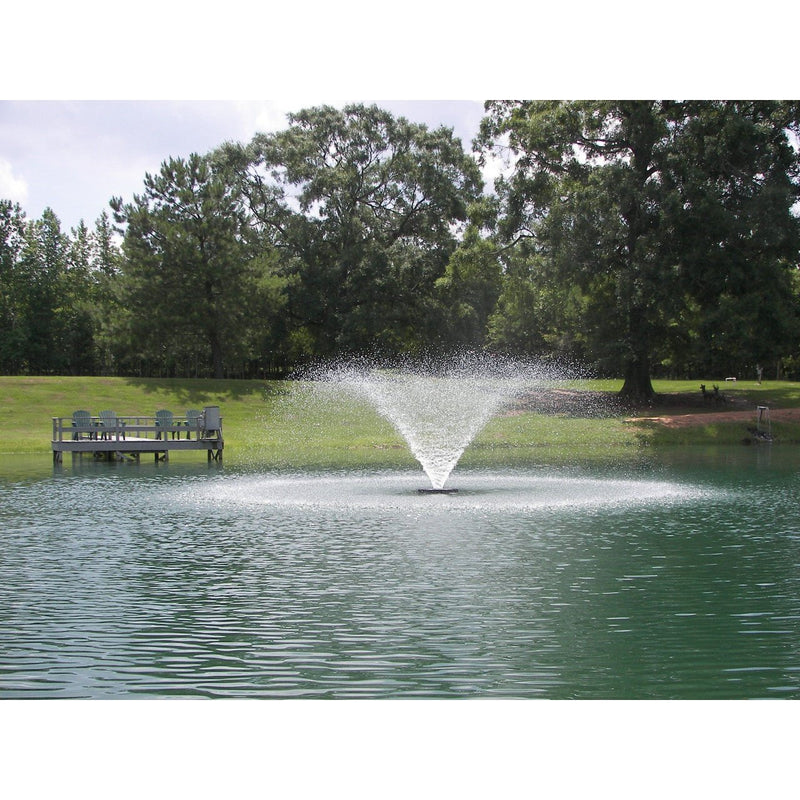
Fountains are for looks; diffusers are for life. Does your pond have both? Fountains look amazing, but they only oxygenate the top few inches of water. If you have deep water, your fish might still be suffocating. Understanding the mechanical differences between surface spray and subsurface aeration is critical for maintaining a healthy aquatic ecosystem. Pond management requires a data-driven approach to dissolved oxygen (DO) levels. Surface aesthetics often mask underlying biological crises such as anaerobic decomposition and thermal stratification. Achieving a balance between visual appeal and biological stability requires an analysis of gas exchange physics. Aeration systems are tools...

Why Did My Aerator Pressure Suddenly Drop? Troubleshooting Guide

One tiny crack in your airline can starve your entire pond of oxygen in hours. In high-density aquatic environments, the window between a mechanical failure and a total "fish kill" event is dangerously narrow. A sudden drop in pressure usually means one of three things. Before you buy a new pump, check these hidden failure points. Maintaining a subsurface aeration system is not merely about keeping the bubbles rising; it is an exercise in mechanical optimization and fluid dynamics. If you are noticing reduced surface agitation or a change in the acoustic signature of your compressor, your system is already...

How to Tell if Your Pond Has Low Oxygen Without a DO Meter

You don't need a $300 meter to know your fish are struggling for air. Your fish are telling you they're suffocating. Learn the 5 visual signs of low oxygen before it's too late for your ecosystem. Dissolved oxygen (DO) is the most critical limiting factor in aquaculture and pond management. While digital sensors provide precise numerical data, the biological indicators within the water column offer immediate, real-time feedback on system health. Understanding these signals allows for rapid intervention before mass mortality events occur. Oxygen solubility in water is governed by physical laws, primarily temperature and atmospheric pressure. As temperature rises,...