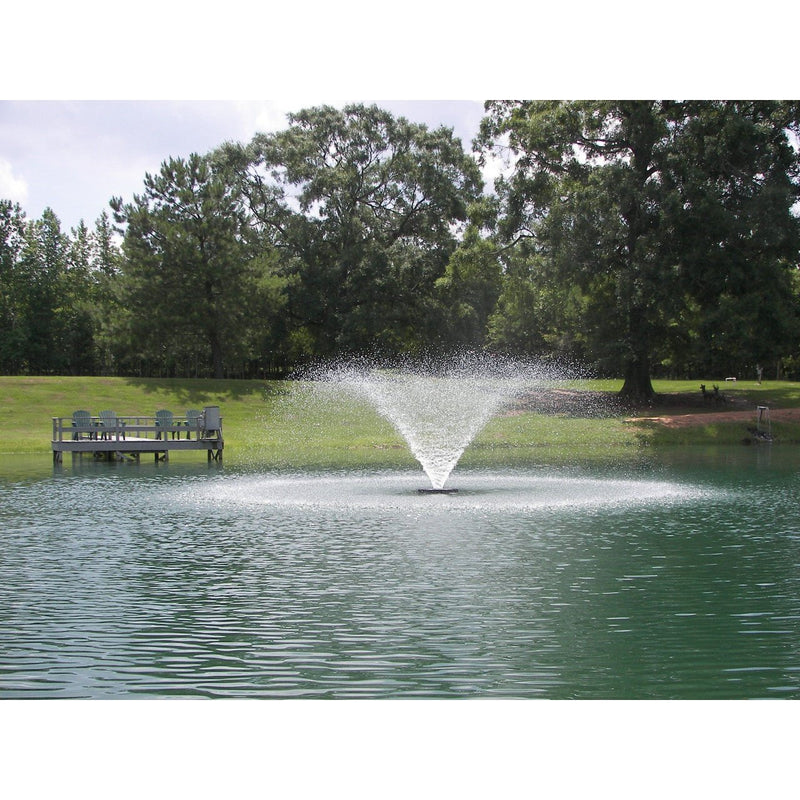
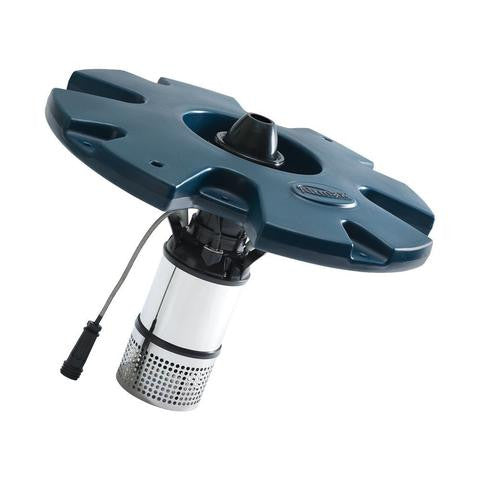
When you take all things that make up a great pond aerator into consideration, and then add in a very good price point...this particular aerator stands out as my choice for the best pond aerator on the market in 2026.
There is nothing more frustrating that treating an algae bloom with an algaecide, only to see it grow back in a few weeks time. Why didn't the treatment last very long? Bottom line, it didn't address the root cause of why you have an algae problem in the first place.
Cold water holds more oxygen, but it doesn't matter if it's not circulating. Then we thought cold water meant we could relax. Now we know that fall organic load makes aeration more vital than ever. Don't fall for the myth. The transition from late summer to early autumn introduces a fundamental shift in pond thermodynamics. While it is a biological fact that colder water has a higher physical capacity to hold dissolved oxygen, this theoretical capacity does not equate to actual oxygen availability. In many cases, the onset of cooler weather creates a period of peak risk for aquatic ecosystems...
Those beautiful fall leaves are an oxygen-sucking time bomb. A single tree can drop enough leaves to deplete a pond's oxygen overnight. Discover how aeration turns a 'Nuisance' pile of muck into an 'Asset' for your ecosystem. Pond management often focuses on visible issues like algae or weeds. However, the true biological engine of a pond resides at the bottom, where organic matter accumulates. When autumn arrives, the volume of organic material entering the water column increases exponentially. Without a mechanical intervention, this influx creates a massive biochemical oxygen demand (BOD) that a stagnant water body cannot satisfy. Aeration provides...
Don't let the 'Fall Turnover' turn your pond into a swamp. When a pond 'turns over' in the fall, it can be a disaster for fish. Learn why keeping your aerator running transforms a chaotic event into a healthy transition. Understanding the transition from summer stratification to winter dormancy is critical for maintaining a stable aquatic environment. In many ponds, particularly those exceeding six feet in depth, the water column undergoes a physical separation during the summer months known as thermal stratification. This process creates distinct layers that do not mix, leading to significant chemical imbalances between the surface and...
Fall isn't the end of the season; it's the start of the survival race. As temperatures drop, your pond's layers want to flip. Without 'Dynamic' aeration, that flip can be deadly. Here is why fall is the most critical time to keep the bubbles flowing. Pond ecosystems operate on a delicate thermal and chemical balance that shifts radically as ambient air temperatures decrease. While summer management focuses on algae control and recreational clarity, autumn management is a strictly mechanical necessity to prevent catastrophic biological collapse. This period marks the transition from thermal stratification to a state of potential instability known...
We regularly update our blog here at American Aeration. You'll find countless tips here on how to fit and manage an aeration system or fountain for your pond. If you have any questions and don't see something covered here, be sure to reach out to us anytime!
Visual separator
Keep Up With Us!
Enter your email address below to join our mailing list and have our latest news and member only deals delivered straight to your inbox.