

Do Fountains Really Oxygenate an Entire Pond?
Fountains are for looks; diffusers are for life. Does your pond have both?
Fountains look amazing, but they only oxygenate the top few inches of water. If you have deep water, your fish might still be suffocating. Understanding the mechanical differences between surface spray and subsurface aeration is critical for maintaining a healthy aquatic ecosystem.
Pond management requires a data-driven approach to dissolved oxygen (DO) levels. Surface aesthetics often mask underlying biological crises such as anaerobic decomposition and thermal stratification. Achieving a balance between visual appeal and biological stability requires an analysis of gas exchange physics.
Aeration systems are tools designed to facilitate the transfer of oxygen from the atmosphere into the water column. While both fountains and diffusers move water, they utilize different physical principles to achieve gas exchange. Choosing the wrong system based on pond depth or volume can lead to wasted energy and suboptimal fish health.
Do Fountains Really Oxygenate an Entire Pond?
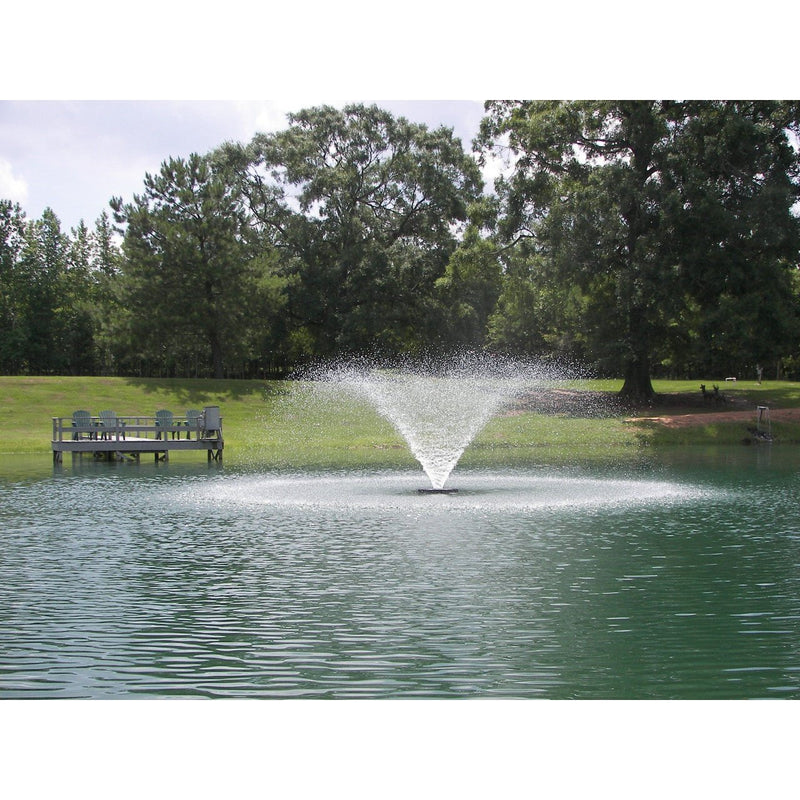
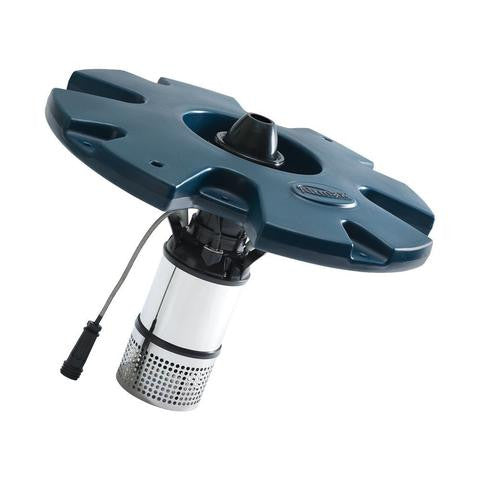
Fountains operate primarily as surface aerators. They draw water from the top 1 to 3 feet of the pond and propel it into the air. Oxygen transfer occurs when the water droplets come into contact with the atmosphere and when the falling water creates surface agitation.
Data indicates that fountains are highly effective at oxygenating the immediate surface layer. However, they lack the vertical lift necessary to reach deeper water. In ponds deeper than 6 feet, the water typically separates into layers based on temperature, a process known as thermal stratification. The top layer (epilimnion) remains warm and oxygen-rich, while the bottom layer (hypolimnion) becomes cold and oxygen-depleted.
A fountain does not possess the mechanical force to break the thermocline, which is the transition layer between the warm and cold water. Consequently, the bottom of the pond remains stagnant. This stagnation allows for the accumulation of hydrogen sulfide and methane, which are toxic to fish and beneficial aerobic bacteria.
Fountains are ideal for shallow ponds or as supplemental aeration in decorative settings. They provide a high rate of gas exchange at the surface but offer negligible turnover for deep-water reservoirs. Relying solely on a fountain in a deep pond environment creates a high risk of "turnover events" where sudden mixing (due to storms or temperature drops) brings toxic bottom water to the surface, causing mass fish die-offs.
How Subsurface Diffused Aeration Works
Subsurface aeration relies on an air compressor located on the shore and a diffuser membrane placed at the bottom of the pond. The compressor pushes air through weighted tubing to the diffuser. The diffuser then releases thousands of tiny bubbles into the water column.
The primary mechanism of oxygenation in this system is the "airlift" or "plume" effect. As the bubbles rise, they create a friction-driven current that pulls cold, oxygen-poor water from the bottom toward the surface. This mechanical movement is far more efficient at moving large volumes of water than a surface pump.
Oxygen transfer occurs in two stages with a diffuser. First, a small amount of oxygen dissolves directly from the bubbles into the water as they rise. Second, and more importantly, the rising bubbles break the surface tension and force the entire water column to circulate. This brings deoxygenated water into contact with the atmosphere, where it can absorb oxygen naturally.
Efficiency in diffused aeration is measured by the Standard Oxygen Transfer Rate (SOTR). This metric quantifies how many pounds of oxygen are transferred per horsepower per hour. Deep-water diffusers typically have a higher SOTR than surface fountains because they leverage the buoyancy of air to move massive amounts of water with minimal energy input.
Benefits of Deep-Tissue Oxygenation
Implementing a subsurface diffuser provides several mechanical and biological advantages that surface fountains cannot match. The most significant benefit is the elimination of thermal stratification. Constant circulation ensures that the temperature and oxygen levels are uniform from the surface to the pond floor.
Aerobic bacteria require oxygen to decompose organic matter like fish waste, leaves, and dead algae. When oxygen is present at the bottom of the pond, these bacteria can process waste efficiently. This reduces the accumulation of "muck" or organic sludge, which otherwise serves as a fuel source for algae blooms and pond weeds.
Diffused aeration also assists in the venting of harmful gases. Gases like carbon dioxide and ammonia are pushed to the surface and released into the atmosphere. This gas exchange stabilizes the pH levels of the water and prevents the acidification of the bottom layer.
Fish health is significantly improved when the entire pond volume is habitable. In stratified ponds, fish are often forced into the narrow top layer of water where oxygen is present. During summer heatwaves, this layer becomes dangerously hot. A diffused system allows fish to retreat to the cooler bottom water while still having access to sufficient oxygen levels.
Challenges and Common Engineering Failures
The most common failure in pond aeration is improper sizing of the compressor. A compressor that is too small will not produce enough Cubic Feet per Minute (CFM) to lift the water column effectively. This results in localized aeration around the diffuser rather than a total pond turnover.
Pipe friction loss is another technical challenge often overlooked during installation. If the air compressor is located far from the pond, the air must travel through long lengths of tubing. Using a tube diameter that is too small creates backpressure, which overheats the compressor and reduces its lifespan. High-density polyethylene (HDPE) or weighted PVC tubing is required to handle the pressure and remain at the bottom.
Diffuser membrane clogging is a frequent maintenance issue. In ponds with high mineral content or heavy organic loading, the tiny pores in the diffuser can become blocked. This increases backpressure on the system and reduces bubble size, which lowers oxygen transfer efficiency. Regular cleaning or replacement of membranes is necessary to maintain performance metrics.
Placement of diffusers is critical for maximizing turnover. Placing a diffuser in a "hole" or the deepest part of the pond is generally effective, but irregularly shaped ponds (like L-shapes or ponds with islands) require multiple diffuser heads. Failing to account for pond geometry results in "dead zones" where water remains stagnant and anaerobic.
Limitations of Diffused Aeration
Diffused aeration is not a universal solution for every aquatic environment. In shallow ponds (less than 4 feet deep), the "rise time" of the bubbles is too short to create a significant airlift effect. The bubbles reach the surface before they can entrain a large volume of water, making the system less efficient than a surface aerator or fountain in these specific conditions.
Environmental constraints also play a role in system selection. In very small ornamental ponds, the vigorous boiling action of a diffuser may be aesthetically unpleasing or disturb delicate aquatic plants like water lilies. Fountains provide the necessary oxygenation for these small volumes without creating excessive turbulence.
Power availability is a practical boundary. While diffusers are more energy-efficient per gallon of water moved, they still require a continuous power source. In remote locations, the cost of running electrical lines may outweigh the benefits. Solar-powered aeration systems exist, but they often lack the battery capacity for 24/7 operation, which is critical during the night when oxygen levels naturally drop.
Surface Beauty vs. Professional Deep-Tissue Oxygen
The choice between a fountain and a diffuser often comes down to the primary goal of the pond owner: visual impact or biological health. The following table compares the two systems across key performance metrics.
| Metric | Surface Fountain | Subsurface Diffuser |
|---|---|---|
| Oxygen Transfer Efficiency | Low (Surface Only) | High (Entire Water Column) |
| Circulation Depth | 1 - 4 Feet | Up to 40+ Feet |
| Aesthetic Value | High (Visual/Audible) | Low (Surface Bubbling) |
| Energy Efficiency (per HP) | Moderate | Very High |
| Maintenance Complexity | High (Motor in Water) | Low (Compressor on Shore) |
| Operational Cost | Higher | Lower |
Standard Surface Beauty vs Professional Deep-Tissue Oxygen is not always an "either/or" scenario. Many high-performance pond management plans utilize both. The fountain provides the visual center-piece and surface agitation, while the diffuser ensures the bottom of the pond remains aerobic and healthy.
Practical Tips for System Optimization
Calculate the total pond volume before purchasing any equipment. Use the formula: Surface Acreage × Average Depth × 43,560 = Total Gallons. Most diffused systems are rated by the number of "turnovers" they can provide in 24 hours. A goal of 1 to 2 turnovers per day is standard for maintaining high dissolved oxygen levels.
Install a pressure gauge at the compressor. This allows for real-time monitoring of system health. A sudden increase in pressure usually indicates a clogged diffuser or a kinked line. A sudden drop in pressure indicates a leak in the tubing or a failing compressor seal.
Position the compressor in a well-ventilated, shaded area. Heat is the primary enemy of air compressors. Standard piston or rocking-piston compressors generate significant heat during operation. Ensuring adequate airflow prevents premature bearing failure and maintains the integrity of the internal seals.
Use weighted tubing for all underwater runs. Non-weighted tubing will float to the surface once filled with air, creating a navigation hazard and an eyesore. Weighted tubing stays on the pond floor and is resistant to punctures from fishing hooks or wildlife.
Advanced Considerations: BOD and SOD
Serious pond practitioners must account for Biological Oxygen Demand (BOD) and Sediment Oxygen Demand (SOD). BOD represents the amount of oxygen required by microorganisms to break down organic matter in the water. SOD represents the oxygen consumed by the layer of muck at the bottom of the pond.
In older ponds with heavy sludge layers, the SOD can be so high that a standard aeration system cannot keep up. In these cases, supplemental treatments like beneficial bacteria injections or physical dredging may be required alongside aeration. Aeration provides the oxygen necessary for the bacteria to work, but if the "fuel" (muck) is too abundant, the process can take years to balance out.
Nitrogen and phosphorus cycles are also influenced by aeration. In an oxygen-rich environment, phosphorus tends to bind with iron and settle into the sediment. This makes the phosphorus unavailable to algae, naturally reducing bloom frequency. Without deep-tissue oxygenation, phosphorus is released from the sediment back into the water column, fueling aggressive algae growth.
Example: 1-Acre Pond Case Study
Consider a 1-acre pond with an average depth of 8 feet. The total volume is approximately 2.6 million gallons. A standard 1-HP fountain might move 300 gallons per minute (GPM). In 24 hours, this fountain moves 432,000 gallons, which is only 16% of the pond's total volume. Furthermore, this movement is restricted to the surface.
Contrast this with a 1/2-HP rocking piston compressor and a four-head diffuser system. This system can move approximately 2,000 to 3,000 GPM through the airlift effect. In 24 hours, it can move between 2.8 and 4.3 million gallons. This achieves a full turnover of the entire water column, ensuring that every drop of water is exposed to the surface for gas exchange.
The energy consumption of the 1/2-HP compressor is significantly lower than the 1-HP fountain motor. For the pond owner, the diffuser system provides 10 times the circulation for half the electrical cost. This technical efficiency is why diffused aeration is the standard for professional pond management.
Final Thoughts
Fountains and diffusers serve different mechanical roles in pond management. Fountains are highly effective at providing surface aesthetics and localized aeration for shallow water. They are the correct choice for visual impact and high-turnover requirements in the top few feet of a pond.
Diffused aeration is the superior choice for deep-water health and total pond circulation. By leveraging the physics of rising air, these systems eliminate thermal stratification and support the aerobic processes necessary for a clean, muck-free pond. Relying on a fountain for a deep pond is a mechanical mismatch that often leads to biological failure.
Successful pond owners evaluate their needs based on depth, volume, and biological load. Implementing a diffused system ensures that the fish have oxygen where they need it most—at the bottom. Experimenting with placement and monitoring pressure metrics will allow for a highly efficient system that protects the aquatic investment for years to face.