

How Long Should You Run a Pond Aerator Each Day?
Nature doesn't have an 'Off' switch for oxygen, and neither should your pond. Turning off your aerator at night to 'save money' is the fastest way to kill your fish. Learn why mimicking the wild's constant movement is the only way to guarantee a healthy pond.
Aquatic ecosystems operate on a 24-hour cycle of production and consumption. During daylight hours, photosynthesis from algae and submerged plants saturates the water with oxygen. When the sun sets, this process reverses. Plants, fish, and aerobic bacteria begin a process called respiration, consuming the very oxygen they helped produce. This creates a critical window of vulnerability between 2:00 AM and sunrise, where dissolved oxygen (DO) levels can plummet below lethal thresholds.
Understanding pond aeration requires a shift from viewing it as a mechanical luxury to recognizing it as a fundamental life-support system. In a closed environment like a backyard pond or a managed lake, the natural gas exchange at the surface is often insufficient to support high biomass densities. Mechanical aeration bridges this gap, ensuring that the biological oxygen demand (BOD) never exceeds the available supply.
This guide examines the technical requirements of aeration, the physics of gas transfer, and the mechanical efficiency of different systems. Maintaining optimal water quality is not about guesswork; it is about managing the metrics of dissolved oxygen, temperature, and nutrient load.
How Long Should You Run a Pond Aerator Each Day?
Running a pond aerator 24 hours a day, 7 days a week is the standard operational requirement for any pond containing fish or high organic loads. This continuous operation ensures that the water column remains destratified and that dissolved oxygen levels remain stable throughout the most dangerous part of the diurnal cycle: the pre-dawn hours.
While some pond owners attempt to run systems for 12 hours a day during daylight to save on electricity, this strategy is counterproductive. Oxygen levels are naturally at their peak during the day due to photosynthesis. The time your pond actually requires mechanical assistance is at night when photosynthesis stops and respiration peaks. If you must choose a part-time schedule, running the system from dusk until several hours after sunrise is technically more beneficial than daytime operation, though 24/7 run-time remains the only way to prevent "oxygen sag."
In real-world applications, such as commercial aquaculture or high-end koi keeping, 24/7 aeration is non-negotiable. The cost of electricity is a minor operational expense compared to the total loss of a fish population. Furthermore, consistent aeration supports the nitrogen cycle by providing the oxygen necessary for nitrifying bacteria to convert toxic ammonia into nitrites and then into relatively harmless nitrates. Disrupting this flow for 12 hours a day can lead to localized "dead zones" in the pond bottom where anaerobic bacteria take over, releasing toxic hydrogen sulfide gas.
The Mechanics of Gas Exchange and Aeration
Aeration works through two primary mechanisms: surface agitation and diffused aeration. Both methods aim to increase the surface area of the water in contact with the atmosphere. According to Henry's Law, the amount of dissolved gas in a liquid is proportional to the partial pressure of that gas above the liquid. By breaking the surface tension, you facilitate the release of carbon dioxide and the absorption of oxygen.
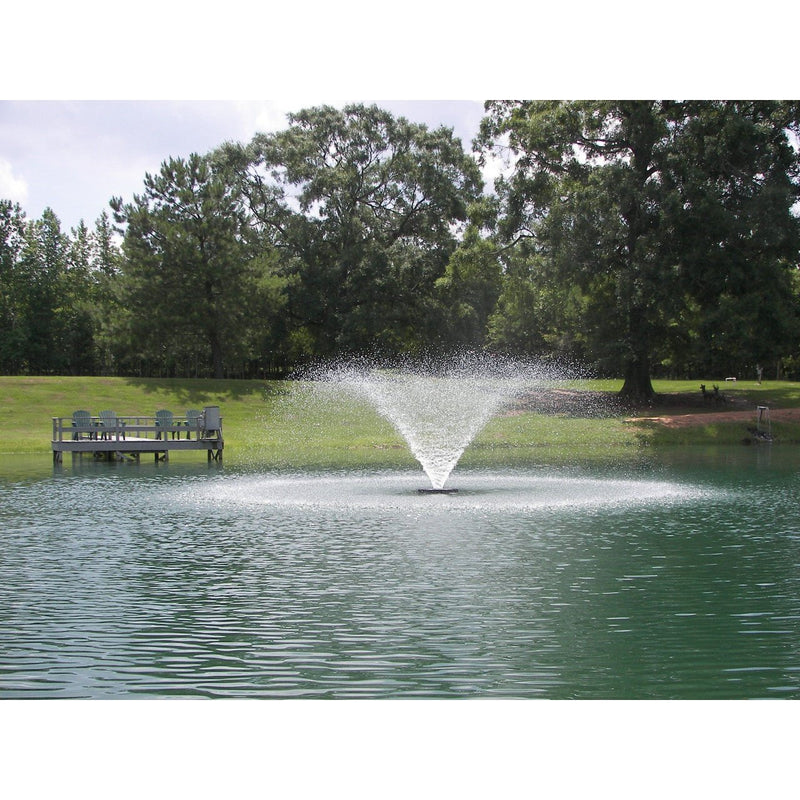
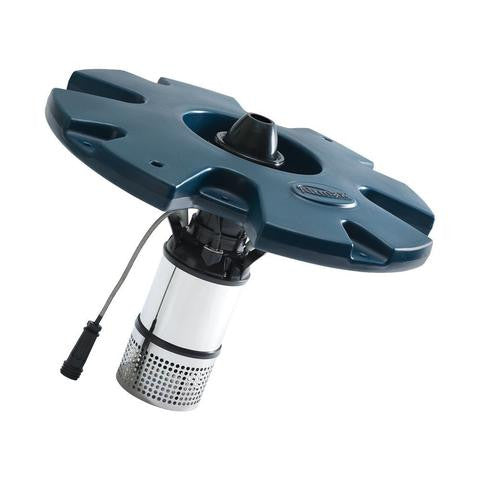
Surface aerators, such as fountains or splashers, work by lifting water into the air. As the droplets fall back, they trap atmospheric air and carry it into the pond. This is highly effective for shallow ponds but often fails to address the "hypolimnion"—the cold, oxygen-poor water at the bottom of deeper ponds. Because oxygen diffuses slowly through water, a surface-only approach can leave the bottom 50% of the pond in a state of hypoxia.
Subsurface diffused aeration uses a shore-mounted compressor to pump air through weighted tubing to a diffuser located at the pond's deepest point. The diffuser breaks the air into millions of tiny "fine bubbles." As these bubbles rise, they create a "lifting" effect, pulling oxygen-depleted water from the bottom to the surface. This process, known as total lake turnover, ensures that the entire volume of water is exposed to the atmosphere, preventing thermal stratification and the buildup of toxic gasses at the floor.
Benefits of Continuous Aeration
Consistent aeration provides measurable improvements in water chemistry and biological health. The primary advantage is the stabilization of dissolved oxygen. Fish generally require a minimum of 5 mg/L (milligrams per liter) of DO for optimal health. When levels drop below 3 mg/L, fish experience stress, reduced immune function, and loss of appetite. Levels below 2 mg/L are frequently fatal for many species.
The secondary benefit is the acceleration of organic decomposition. Ponds accumulate "muck" or sludge consisting of fish waste, uneaten food, and decaying plant matter. Aerobic bacteria are approximately 20 times more efficient at breaking down this waste than anaerobic bacteria. Continuous aeration keeps the pond floor oxygenated, allowing these beneficial microbes to digest sludge rapidly. This prevents the "rotten egg" smell associated with stagnant ponds and reduces the nutrient load that fuels unsightly algae blooms.
Temperature management is another key benefit. In the summer, water temperature rises, which inversely affects its ability to hold oxygen. Cold water holds more oxygen than warm water. By circulating the water, an aerator prevents the surface from becoming excessively hot, helping to maintain a more uniform and hospitable temperature throughout the water column.
Challenges and Common Mistakes
The most common mistake pond owners make is undersizing their equipment. An undersized aerator may create a visible bubble plume but lack the CFM (cubic feet per minute) of airflow required to turn over the entire volume of water. If the "turnover rate" is less than once every 24 hours, the aerator is essentially decorative rather than functional.
Another critical error is the "Summer Startup" mistake. If a pond has been stagnant for months, the bottom layer is likely anoxic and filled with toxic gasses. Turning on a powerful aerator at full capacity can instantly mix this toxic water with the surface water, causing a massive fish kill. In these scenarios, a "staged startup" is required: running the aerator for only 30 minutes the first day, 1 hour the second, and doubling the time each day until the system runs 24/7.
Failing to maintain the air filter on the compressor is a frequent mechanical oversight. A clogged filter forces the compressor to work harder, increasing heat and reducing the lifespan of the diaphragms or pistons. This leads to a drop in CFM output, meaning the pond receives less oxygen while the owner pays the same electrical cost.
Limitations and Environmental Constraints
Aeration is not a "magic bullet" for all pond problems. In extremely shallow ponds (less than 3 feet deep), diffused aeration is remarkably inefficient. The bubbles do not have enough "rise time" to create a significant water current, meaning the turnover rate remains low. In these environments, a surface circulator or a waterfall is often more effective.
High temperatures also represent a physical limit. As water approaches 85°F to 90°F, its maximum oxygen saturation point drops significantly. Even with an industrial-grade aerator, you cannot force water to hold more oxygen than physics allows at a given temperature. In these cases, reducing the fish load or providing shade are the only viable solutions to complement aeration.
Furthermore, aeration does not "kill" algae. It manages the nutrients that algae feed on, but in a pond with high phosphorus runoff from surrounding lawns, algae will still thrive. Aeration is one component of an integrated management plan that should also include beneficial bacteria additions and nutrient binders.
Comparison: Surface Aeration vs. Subsurface Diffusion
Choosing the right system depends on pond depth and goals. The following table compares the two primary methods based on Standard Aeration Efficiency (SAE), which measures the pounds of oxygen transferred per horsepower-hour (lb O2/hp-hr).
| Feature | Surface Aerator (Fountain) | Subsurface Diffused Aeration |
|---|---|---|
| Ideal Depth | 0 to 6 feet | 6 to 40+ feet |
| SAE Rating | 1.5 to 2.5 lb O2/hp-hr | 3.0 to 4.5+ lb O2/hp-hr |
| Primary Goal | Aesthetics and top-water O2 | Total volume turnover and muck reduction |
| Energy Efficiency | Lower (high friction/lift) | Higher (leverages bubble buoyancy) |
| Maintenance | High (motor in water) | Low (compressor on shore) |
Subsurface systems are generally the superior choice for pond health because they address the thermocline—the boundary between the warm upper layer and the cold, anoxic bottom layer. Breaking this boundary is essential for long-term ecological stability.
Practical Tips and Best Practices
To optimize your aeration system, start by placing diffusers in the deepest part of the pond. This ensures maximum "hang time" for the bubbles and the largest possible "lifting" cone. If the pond is irregular in shape, such as a long "L" or "U" shape, you will need multiple diffusers to prevent stagnant pockets from forming in the corners.
- Monitor your fish: If fish are "piping" at the surface (gulping air) in the morning, your aeration is insufficient for the current fish load or temperature.
- Check the bubbles: A "boil" on the surface that appears smaller than usual suggests a leak in the airline or a clogged diffuser membrane.
- Winter operation: In cold climates, moving the diffuser to shallower water (about half the max depth) prevents the aerator from chilling the deep "warm" pocket where fish hibernate, while still keeping a hole open in the ice for gas exchange.
- Electrical safety: Always use a GFCI-protected outlet and housing for shore-mounted compressors to prevent moisture damage and electrical shorts.
Regularly cleaning your diffuser membranes—typically once every 1–2 years—prevents back-pressure buildup. High back-pressure is the leading cause of premature compressor failure. Installing a pressure gauge on your compressor manifold allows you to monitor the health of the system at a glance.
Advanced Considerations: BOD and COD
Serious practitioners must understand Biological Oxygen Demand (BOD) and Chemical Oxygen Demand (COD). BOD represents the amount of oxygen required by aerobic organisms to break down organic matter. COD represents the oxygen required for chemical oxidation. Together, these determine the "Oxygen Load" of the pond.
If you feed your fish 1 pound of high-protein pellets, the resulting waste and metabolic activity will consume approximately 1.25 pounds of oxygen to fully process. If your aerator only provides 1 pound of oxygen per hour, and you have 20 pounds of fish already consuming oxygen, you are operating at a deficit. This deficit eventually leads to a "crash" where the water can no longer support the biomass.
Calculations for aeration should also account for the Standard Oxygen Transfer Rate (SOTR). Manufacturers provide these ratings based on clean water at 20°C at sea level. In a real-world pond with "dirty" water and higher temperatures, the actual transfer rate (?SOTR) can be 30% to 50% lower than the rated capacity. Always over-spec your compressor by at least 25% to account for these environmental losses.
Examples and Scenarios
Consider a 1-acre pond with an average depth of 8 feet. A typical 1/2 HP rocking piston compressor for a diffused aeration system draws roughly 4.1 amps at 115V. Using the formula (Amps x Volts = Watts), we find this system uses 471.5 Watts. Running this 24/7 results in 11.3 kWh per day.
At an average electricity rate of $0.14 per kWh, the cost to run this system is approximately $1.58 per day, or $47.40 per month. Some owners might try to save $23 a month by running the system only 12 hours a day. However, if that pond contains $5,000 worth of koi or sport fish, the "savings" are statistically insignificant compared to the risk of a single night of low oxygen. The 24/7 run-time is essentially an insurance policy for the ecosystem.
In another scenario, a solar-powered aerator may be used for a remote pond. Because solar systems often lack battery backup for night-time operation, they are sized to "oversaturate" the water during the day. These systems are designed to push DO levels to 120% or 150% of saturation during the 8–10 hours of sunlight, creating a "buffer" that carries the pond through the night. This is a viable alternative where AC power is unavailable, but it requires much larger compressors and diffusers than a standard plug-in system.
Final Thoughts
Oxygen is the most critical limiting factor in any pond's health. While it is tempting to view an aerator as an appliance that can be toggled to save on utility bills, the biological reality of the pond does not allow for such breaks. A pond is a living, breathing organism, and respiration never takes a night off. Continuous aeration maintains the delicate balance between nutrient input and waste decomposition, ensuring the water remains clear and the fish remain active.
Investing in a high-quality, continuous-duty aeration system is the single most effective step a pond owner can take toward long-term success. By understanding the physics of gas exchange and the diurnal oxygen cycle, you can move away from reactive "emergency" aeration toward a proactive management style that mimics the constant, life-giving movement of natural spring-fed systems.
Success in pond management is measured by stability. The goal is to eliminate the highs and lows of water chemistry, creating a predictable environment where life can thrive. Running your aerator 24/7 is the foundation upon which that stability is built. As you move forward, consider investigating high-efficiency diffusers or automated DO sensors to further refine your pond's life-support system.