

10 Signs Your Pond Aeration Compressor Needs Maintenance
If the heart of your pond stops beating, the life inside follows shortly after. Vibration, heat, and noise are the three warning signs of a failing compressor. Don't wait for a total breakdown to check your air filters and diaphragms.
A subsurface aeration system operates as the primary life-support mechanism for a managed aquatic environment. The compressor serves as the mechanical engine, driving compressed air through submerged diffusers to facilitate gas exchange. When this mechanical component fails, the biological oxygen demand of the pond quickly exceeds the available dissolved oxygen, leading to catastrophic system failure. Maintaining peak mechanical efficiency is a matter of precision and data-driven monitoring.
Regular maintenance ensures that the compressor operates within its designed pressure and temperature ranges. Neglecting these metrics results in premature wear of high-friction components, such as piston cups or rubber diaphragms. Monitoring the mechanical signature of your hardware allows for proactive intervention before a critical failure occurs.
10 Signs Your Pond Aeration Compressor Needs Maintenance
Mechanical degradation often manifests in subtle shifts in performance metrics. Identifying these signs early prevents secondary damage to the motor or electrical components. Use this technical checklist to evaluate the current state of your aeration hardware.
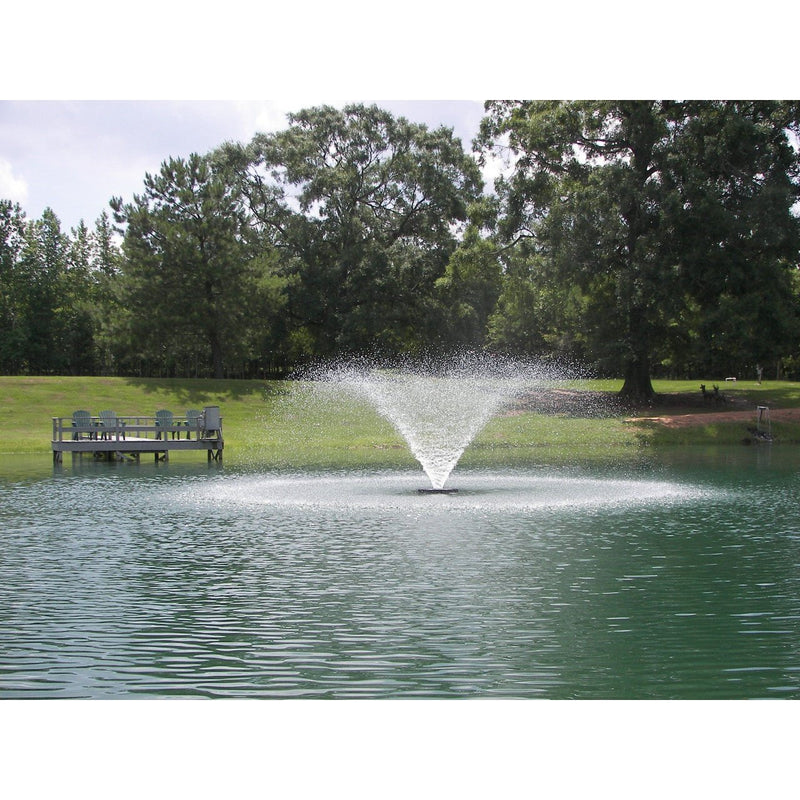
- Reduced Surface Boil Diameter: A decrease in the visible turbulence at the pond surface indicates a drop in Cubic Feet per Minute (CFM) output. This is typically caused by worn internal seals or a compromised diaphragm that can no longer maintain volume under pressure [1.5.2, 1.1.5].
- Abnormal Pressure Gauge Readings: If the system pressure exceeds the baseline established at installation, the diffusers are likely restricted by biological growth. Conversely, a drop in pressure suggests a leak in the airline or a failure of the compressor's compression stroke [1.1.3, 1.4.1].
- High-Frequency Vibrations: While all compressors generate a baseline vibration, an increase in amplitude or a shift toward higher frequencies often signals bearing wear or shaft misalignment. These vibrations can loosen fasteners and cause structural fatigue in the compressor housing [1.3.2, 1.3.6].
- Excessive Thermal Output: Compressors generate heat during the compression cycle, but excessive external temperatures usually indicate a clogged intake filter or internal friction. Operating above the rated thermal limit significantly reduces the lifespan of EPDM rubber components [1.3.5, 1.5.4].
- Audible Mechanical Chattering: In rocking piston compressors, a rhythmic clicking or chattering sound often indicates that the piston cup has worn thin, allowing the piston to make slight contact with the cylinder wall. In diaphragm pumps, this may signal a loose magnetic rod [1.3.4, 1.1.7].
- Pressure Relief Valve Activation: The activation of a pressure relief valve (PRV) is a clear indicator of a downstream blockage. If the PRV is "popping," the system is experiencing backpressure that exceeds the safe operating threshold of the motor [1.3.1, 1.5.6].
- Constant Humming Without Airflow: If the unit hums but does not start, the start capacitor has likely failed or the motor bearings have seized. Continuing to apply power in this state will eventually burn out the motor windings [1.3.1, 1.5.1].
- Frequent GFI Tripping: Repeated tripping of the Ground Fault Interrupter (GFI) suggests an electrical short or moisture ingress. This is often caused by failed seals or condensation buildup within the electrical housing [1.1.1, 1.6.7].
- Condensation in the Discharge Line: Excessive moisture at the compressor outlet suggests that the unit is running too hot or that the intake air has high humidity and is not being properly managed. This moisture can lead to valve corrosion [1.1.1].
- Discolored or Brittle Air Filters: An intake filter that has turned dark grey or black is saturated with particulate matter. This restricts airflow, forcing the compressor to work harder to achieve the same CFM, which leads to rapid thermal degradation [1.1.3, 1.2.7].
How Subsurface Aeration Compressors Function
The mechanical process of aeration relies on two primary compressor architectures: linear diaphragm and rocking piston. Each utilizes a different mechanical method to achieve the compression of atmospheric air.
Linear diaphragm compressors use an electromagnetic coil to move a magnetic rod back and forth at high speeds. This rod is attached to rubber diaphragms that expand and contract within a housing. This movement creates a vacuum that pulls air through a one-way intake valve and then forces it out through a discharge valve. Because there are no rotating parts or friction-heavy pistons, these units are highly efficient and quiet, though they are limited in the pressure they can generate [1.2.8, 1.1.5].
Rocking piston compressors function similarly to an internal combustion engine but without the combustion. An electric motor turns a crankshaft, which moves a piston up and down inside a cylinder. The "rocking" motion comes from the fact that the piston is fixed to the connecting rod, causing it to tilt slightly as it moves. A flexible cup (usually made of a specialized polymer) maintains the seal against the cylinder wall. This design allows for much higher PSI ratings, making them suitable for deeper ponds where water pressure is significant [1.2.8, 1.1.2].
Benefits of Proactive Compressor Optimization
Systematic maintenance of the aeration compressor yields measurable improvements in the pond ecosystem and operational costs. A well-tuned compressor ensures that the dissolved oxygen (DO) levels remain stable, which is critical for the aerobic bacteria responsible for nutrient cycling.
One primary benefit is the reduction in electrical consumption. A compressor struggling against a clogged filter or a leaking diaphragm will draw more amperage to maintain its output. Keeping the mechanical components in peak condition ensures the unit operates at its designed efficiency rating, lowering monthly utility costs.
Furthermore, proactive maintenance prevents "silent" failures. Often, an aeration system may appear to be running, but its actual oxygen transfer efficiency has dropped by 50% or more due to worn seals. Regular maintenance identifies these performance gaps before they result in an oxygen crash that could kill fish or trigger an algae bloom [1.2.4, 1.1.7].
Challenges and Common Maintenance Mistakes
One frequent error is the failure to account for backpressure when installing or servicing a system. Backpressure is the resistance the compressor must overcome to push air through the lines and out of the diffusers. If a user replaces a compressor with a unit that has a lower PSI rating, or if they fail to clean diffusers regularly, the backpressure will exceed the compressor's capacity, leading to rapid failure [1.4.1, 1.4.3].
Another challenge is the environment in which the compressor is housed. Many owners place their units in unventilated cabinets or "fake rocks" to hide them. Without adequate airflow, the heat generated by the motor cannot dissipate. This thermal stress causes the rubber diaphragms to lose elasticity and crack prematurely. Always ensure the cabinet has an active cooling fan or significant passive venting [1.3.5, 1.5.4].
Mistakes during rebuilds are also common. When installing a maintenance kit, users often overlook the flapper valves. These small rubber or plastic tabs regulate the direction of airflow. If they are installed backward or are not replaced along with the diaphragms/piston cups, the unit will fail to build pressure despite having "new" parts [1.6.2, 1.2.2].
Limitations of Aeration Hardware
Aeration compressors are not universal solutions. Each model has a specific "performance curve" that dictates how much air it can move at a given depth. A linear diaphragm pump, for example, may produce 4.0 CFM at the surface but drop to 0.5 CFM at 8 feet of depth. Attempting to use a diaphragm pump in deep-water applications will lead to over-pressurization and immediate mechanical failure [1.2.8, 1.4.1].
Environmental constraints also play a role. In high-altitude locations, the air is less dense, which can affect the cooling efficiency of the motor and the volume of air delivered. Similarly, in extremely humid environments, the risk of moisture accumulation in the valves is higher, necessitating more frequent inspections and the possible use of moisture traps [1.3.6].
Comparison: Linear Diaphragm vs. Rocking Piston
Choosing the correct maintenance strategy requires understanding the differences between these two primary technologies.
| Feature | Linear Diaphragm | Rocking Piston |
|---|---|---|
| Max Pressure (PSI) | 3 - 7 PSI | 30+ PSI |
| Noise Level | Low (30-40 dB) | Moderate (50-65 dB) |
| Maintenance Cycle | 12 - 24 Months | 18 - 36 Months |
| Primary Wear Part | Rubber Diaphragms | Piston Cup & Cylinders |
| Best Application | Shallow Ponds (< 8ft) | Deep Ponds (> 8ft) |
Rocking piston compressors are generally more robust for deep-water applications but require more expensive rebuild kits. Linear diaphragm pumps are more affordable to maintain but are highly sensitive to backpressure [1.2.8, 1.1.5, 1.3.5].
Practical Tips and Best Practices
Establish a technical log for your aeration system. Document the baseline pressure (PSI) and the amperage draw when the system is new or immediately following a rebuild. These numbers serve as the "gold standard" for future comparisons.
Check the intake air filter every 3 to 6 months. In dusty environments or during pollen season, this may need to be done monthly. If the filter is felt-based, it can often be washed with mild soap and dried completely before reinstallation. Paper filters must be replaced [1.1.3, 1.2.6, 1.2.7].
Use a soapy water solution to check for leaks at the manifold and along the visible airline connections. Even a small leak can significantly reduce the amount of oxygen reaching the bottom of the pond. Tightening a loose hose clamp is the simplest way to restore lost efficiency [1.3.1, 1.6.7].
Advanced Considerations: Calculating Friction Loss
Serious practitioners should calculate the total dynamic head (TDH) of their system to ensure the compressor is sized correctly. The pressure the compressor feels is not just the depth of the water; it is the sum of three factors:
- Static Pressure: The water depth. Every 2.31 feet of water depth equals 1 PSI of backpressure [1.4.1, 1.4.2].
- Friction Loss: The resistance caused by the air rubbing against the inside of the airline. Longer runs or smaller diameter tubing increase this value significantly [1.4.1].
- Diffuser Resistance: The pressure required to "crack" the pores of the diffuser membrane. A clean EPDM membrane usually adds 0.5 to 1.0 PSI [1.4.2, 1.4.3].
If the total calculated PSI is 8.5, but your compressor is only rated for a maximum of 7.0 PSI, the unit will operate in a state of constant stress. This will lead to the magnets in a linear pump hitting the internal safety switch or the piston in a rocking pump overheating the motor.
Example Scenario: 1/2 Acre Pond Aeration
Consider a 1/2-acre pond with a maximum depth of 10 feet. The compressor is located in a shed 100 feet away from the water's edge.
First, calculate the water pressure: 10 feet / 2.31 = 4.33 PSI. Next, estimate the friction loss for 100 feet of 1/2-inch weighted tubing, which might add approximately 0.2 PSI. Finally, add the diffuser resistance of 0.7 PSI. The total system pressure is roughly 5.23 PSI.
A linear diaphragm pump rated for only 4.0 PSI would fail in this scenario. A small 1/4 HP rocking piston compressor, however, would operate comfortably at 5.23 PSI, well within its 30 PSI limit, ensuring a long service life and consistent oxygenation [1.4.1, 1.4.3, 1.2.8].
Final Thoughts
The longevity of a pond aeration system depends entirely on the mechanical health of the compressor. Monitoring the three warning signs—vibration, heat, and noise—is the most effective way to prevent a total ecosystem collapse. By adhering to a strict maintenance schedule and understanding the technical requirements of your specific hardware, you can extend the life of your equipment significantly.
Consistent data logging of pressure and airflow allows for a proactive rather than reactive approach. Replacing a $50 maintenance kit today is far more efficient than replacing a $600 compressor next month. Every mechanical adjustment made to the system contributes to the overall stability of the pond's nitrogen cycle and the health of its inhabitants.
Take the time to inspect your filters and listen to your motor today. Small optimizations in mechanical efficiency lead to large gains in environmental quality. Applying these technical principles ensures that the heart of your pond continues to beat reliably for years to come.