Why Your Pond Smells Bad (And How Aeration Helps)
That 'rotten egg' smell isn't just gross—it is a signal that your pond is suffocating. Here is how to flip the switch. Don't let pond muck and sulfur gases ruin your backyard experience. Discover why oxygen is the ultimate deodorizer and how to turn a stagnant nuisance back into a clear liquid asset.
Why Your Pond Smells Bad (And How Aeration Helps)
Hydrogen sulfide (H2S) is the primary chemical compound responsible for the "rotten egg" odor in stagnant water bodies. This colorless, flammable, and highly toxic gas forms when the redox potential at the pond's benthic layer drops below approximately -150 to -200 mV. In these anoxic environments, sulfate-reducing bacteria (SRB) utilize sulfate ions (SO4^2-) as terminal electron acceptors for the oxidation of organic matter. The resulting metabolic byproduct is sulfide (S^2-), which protonates into H2S gas when the pH is below 9.0.
Ponds with high organic loads—often referred to as "the toxic nuisance"—accumulate thick layers of sediment known as muck. This muck consists of leaves, fish waste, and decaying algae. In the absence of dissolved oxygen (DO), aerobic decomposition ceases, and anaerobic pathways take over. Anaerobic metabolism is significantly less efficient than aerobic respiration, leading to the slow accumulation of partially decomposed organic acids and the continuous release of H2S and methane (CH4).
Aeration serves as the mechanical countermeasure to this biological decay. Introducing atmospheric air into the water column initiates two critical processes: chemical oxidation and biological stimulation. Oxygen directly oxidizes sulfides into odorless sulfates, effectively neutralizing the gas before it can volatilize at the surface. Simultaneously, the increase in dissolved oxygen shifts the microbial community from anaerobic to aerobic. Aerobic bacteria decompose organic sludge at rates up to 10 to 20 times faster than their anaerobic counterparts, transforming the pond back into a liquid asset.
The Mechanics of Gas Transfer and Fluid Dynamics
Oxygenation of a water body relies on the principles of gas-liquid interface transfer. The rate at which oxygen enters the water is governed by the gas transfer equation: dC/dt = KL(A/V)(Cs – Cm). Understanding these variables is essential for optimizing system efficiency.
The Role of Surface Area and Bubble Size
Aeration systems increase the "A/V" (surface area to volume) ratio. Fine bubble diffusers produce bubbles typically between 0.5 mm and 2.0 mm in diameter. According to the geometry of a sphere, smaller bubbles provide a significantly higher surface area per unit of air volume than larger bubbles. For instance, a single 20 mm bubble has far less total surface area than the thousands of 1 mm bubbles required to equal the same volume of air. This increased surface area facilitates a higher rate of oxygen diffusion across the gas-liquid film.
Stokes' Law and Contact Time
Bubble rise velocity, described by Stokes' Law, determines the "contact time" between the air and the water. Smaller bubbles experience higher drag relative to their buoyancy, causing them to rise more slowly through the water column. A slower ascent ensures that the oxygen within the bubble has more time to dissolve into the surrounding fluid. Deeper pond placement further enhances this effect. Increased hydrostatic pressure at the bottom of the pond elevates the saturation point (Cs) of the water, creating a steeper concentration gradient that drives oxygen into solution more aggressively.
Types of Aeration Systems and Their Technical Metrics
Selecting the correct aeration technology requires an analysis of Standard Oxygen Transfer Rate (SOTR) and Standard Aeration Efficiency (SAE). These metrics allow for the comparison of mechanical performance across different designs.
Subsurface Diffused Aeration
Diffused systems utilize an onshore compressor to push air through weighted tubing to diffusers located on the pond floor. These systems are categorized by the bubble size they produce:
- Fine Bubble Diffusers: These utilize EPDM or silicone membranes with micro-perforations. They offer high SAE, often ranging from 2.0 to 4.0 lbs of O2 per horsepower-hour. They are ideal for deep water where hydrostatic pressure can be leveraged.
- Coarse Bubble Diffusers: These use larger orifices and are primarily used for high-velocity mixing and destratification rather than efficient oxygen transfer. SAE is typically lower, ranging from 0.8 to 2.0 lbs of O2/hp-hr.
Surface Aeration and Fountains
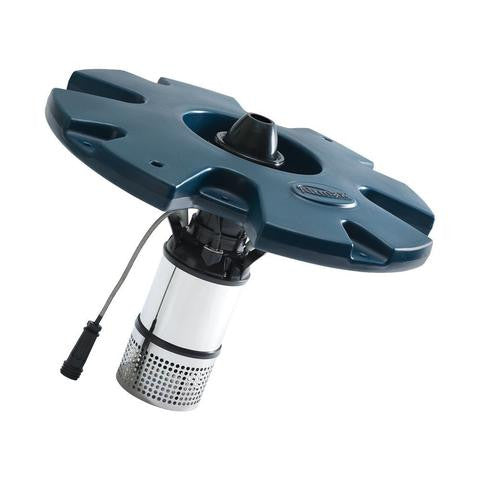
Surface aerators utilize a motor and propeller to splash water into the atmosphere.
- High-Speed Agitators: These units focus on high-volume water turnover and gas stripping. They are effective at venting H2S but are limited to the upper 5 to 10 feet of the water column.
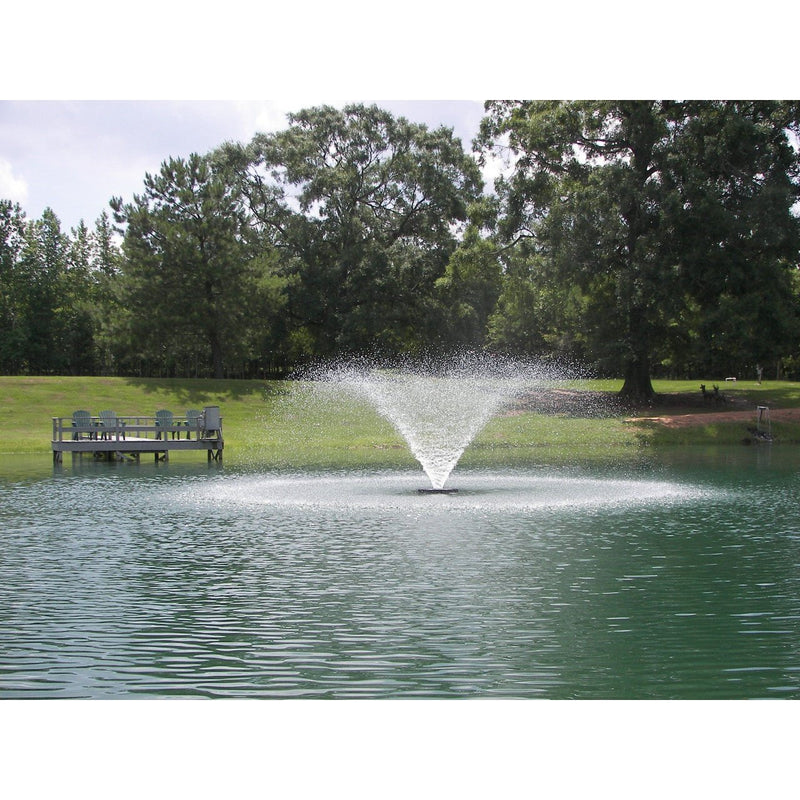
- Aesthetic Fountains: While providing some gas exchange, fountains are generally the least efficient for deep-water oxygenation. Energy is diverted into creating high-pressure sprays rather than optimizing oxygen transfer.
Oxygen Transfer Efficiency Comparison
The following table compares the typical efficiency ranges of common aeration technologies based on Standard Aeration Efficiency (SAE).
| Aeration Technology | SAE (lbs O2 / hp-hr) | Primary Mechanism | Best Application |
|---|---|---|---|
| Fine Bubble Diffused | 2.5 - 5.0 | High surface area/Contact time | Ponds > 8ft deep |
| Surface Agitators | 2.6 - 3.2 | Surface turbulence/Gas stripping | Shallow ponds < 6ft |
| Paddlewheel Aerators | 2.0 - 3.0 | Mechanical splashing | Commercial aquaculture |
| Aesthetic Fountains | 1.5 - 2.5 | Surface impact | Ornamental/Shallow |
Mechanical Components: The Heart of the System
Efficiency in aeration is often limited by the choice of compressor. Mechanical optimization requires matching the compressor's pressure-flow curve with the pond's depth and diffuser requirements.
Linear Diaphragm Compressors
These units utilize an electromagnet to vibrate a flexible diaphragm. They are characterized by extremely low power consumption and quiet operation. However, they are limited to shallow applications, typically under 8 to 10 feet. Exceeding the rated depth causes the diaphragm to overstretch, leading to premature mechanical failure and significant drops in CFM (Cubic Feet per Minute) output.
Rocking Piston Compressors
Rocking piston units are the standard for deep-water aeration. They can handle pressures up to 30-50 PSI, allowing them to push air to diffusers located 20 to 50 feet deep. While louder and more power-intensive than linear diaphragms, their durability in high-head-pressure environments makes them indispensable for large-scale pond restoration.
Rotary Vane and Rotary Claw
Rotary compressors provide a continuous flow of high-volume air. They are used in industrial-scale applications where multiple diffusers must be powered by a single source. Rotary vane compressors require periodic vane replacement but offer a very flat performance curve, maintaining consistent air delivery even as filter resistance increases.
Challenges and Common Implementation Mistakes
Failure to properly engineer an aeration system often leads to "thermal shock" or "sediment plumes" that can exacerbate the very problems the system was intended to solve.
The Danger of Rapid Turnover
Stratified ponds have a warm upper layer (epilimnion) and a cold, anoxic lower layer (hypolimnion). Introducing a high-powered diffuser into a deeply stratified pond can cause "turnover" too quickly. Rapidly mixing the anoxic, H2S-rich bottom water with the oxygenated surface water can result in a total dissolved oxygen crash, leading to catastrophic fish kills.
Undersized Compressors and Backpressure
Selecting a compressor based solely on horsepower without considering the friction loss in the airline is a frequent error. Small-diameter tubing (e.g., 3/8 inch) creates significant backpressure over long distances. High backpressure forces the compressor to operate higher on its curve, increasing heat generation and reducing the lifespan of pistons or diaphragms. Utilizing 1/2 inch or 5/8 inch weighted tubing for runs exceeding 100 feet is a technical best practice to minimize these losses.
Limitations: When Aeration Is Not the Total Solution
Aeration is a powerful tool for biological management, but it cannot overcome extreme environmental constraints without supplementary interventions.
Hyper-Eutrophic Systems
Ponds with massive external nutrient loading—such as runoff from fertilized lawns or agricultural fields—may experience Biological Oxygen Demand (BOD) that exceeds the mechanical capacity of the aerator. In these cases, the "rotten egg" smell might be suppressed, but algae blooms will persist. Aeration must be paired with nutrient sequestration techniques, such as the application of lanthanum-modified clay or alum, to lock up phosphorus.
Extremely Shallow Ponds
In water bodies shallower than 4 feet, the contact time for rising bubbles is insufficient for high-efficiency oxygen transfer. In these environments, diffused aeration acts primarily as a circulator rather than an oxygenator. Surface-based horizontal circulators or "aspirators" are often more effective in shallow basins because they create a high-velocity stream that induces atmospheric oxygen capture across a larger surface area.
Practical Tips for System Optimization
Optimizing a pond's health requires more than just turning on a pump. Strategic placement and timing are critical variables.
- Position diffusers in the deepest sections: Placing the diffuser at the maximum depth maximizes the "lift" of the water column, ensuring that the entire volume of the pond is circulated.
- Implement a "Start-up Map": For established ponds being aerated for the first time, run the system for only 30 minutes on day one, doubling the time each day until 24-hour operation is reached. This prevents rapid turnover and gas shocks.
- Monitor Dissolved Oxygen (DO): Use a digital DO meter to ensure levels remain above 5 mg/L at all depths. If levels drop below 2 mg/L, the system is undersized or requires maintenance.
- Seasonal Adjustments: In winter, move diffusers to shallower water (2-3 feet) if you intend to keep a hole open for gas exchange without super-cooling the deep water where fish congregate.
Advanced Considerations for Large-Scale Management
Serious practitioners often look beyond standard "plug-and-play" kits toward automated and high-efficiency configurations.
Variable Frequency Drives (VFDs)
Integrating a VFD with a three-phase motor allows the user to modulate the compressor's speed based on real-time data. During the heat of the afternoon when photosynthetic oxygen is at its peak, the compressor can be slowed down to save energy. At night, when plants consume oxygen (respiration), the VFD can ramp up the RPM to maintain stable DO levels.
Nanobubble Technology
Recent advancements in nanobubble generators allow for the creation of bubbles 100-200 nanometers in size. Unlike microbubbles, nanobubbles have neutral buoyancy and do not rise to the surface; instead, they remain suspended in the water column for weeks. This provides a massive reservoir of "reserve" oxygen that can handle sudden spikes in BOD from heavy rain or organic die-offs.
Practical Example: Calculating Aeration Requirements
Consider a 1-acre pond with an average depth of 8 feet, containing approximately 2.6 million gallons of water.
A typical biological oxygen demand (BOD) for a healthy pond might be 2 mg/L per day. This equates to approximately 43 lbs of oxygen required daily just to maintain equilibrium.
Using a 1/2 HP rocking piston compressor and two fine-bubble diffusers with an SAE of 3.0, the system provides:
0.5 HP x 3.0 lbs/HP-hr = 1.5 lbs of O2 per hour.
Over 24 hours, this system delivers 36 lbs of O2.
In this scenario, the system is slightly under-powered if the pond has high organic muck (increasing the BOD). To effectively "flip the switch" and reduce the rotten egg smell while also digesting muck, a 3/4 HP or 1 HP system would be required to provide the surplus oxygen necessary for sludge oxidation.
Final Thoughts
The "rotten egg" smell in a pond is a clear diagnostic indicator of anaerobic dominance and high hydrogen sulfide concentrations. Resolving this issue requires a transition from a stagnant, anoxic state to an oxygen-rich environment. Aeration serves as the primary mechanism for this transition, leveraging the physics of gas transfer to neutralize toxic gases and stimulate rapid biological decomposition of organic waste.
Effective pond management demands a technical approach to equipment selection. Matching the compressor type to the pond depth and optimizing the bubble size for maximum surface area ensures the highest return on energy investment. While aeration is a cornerstone of water quality, it must be implemented with care to avoid thermal shocks and should be viewed as part of a broader nutrient management strategy.
Applying these principles transforms the pond from a toxic nuisance into a clear liquid asset. By maintaining consistent dissolved oxygen levels, you create an environment where aerobic bacteria thrive, odors are eliminated, and the biological balance is restored. Consistent monitoring and mechanical maintenance will ensure the system continues to perform at peak efficiency for years to come.