

How To Improve Low Dissolved Oxygen In A Pond
When fish gasp at the surface, they are living on the edge. You need to move oxygen deeper than the top inch. Standard ponds rely on surface contact, but 'Pro' ponds use aeration to ensure oxygen reaches every cubic inch of water. Protect your fish this summer.
Dissolved oxygen (DO) is the primary limiting factor in aquatic biomass capacity. While the atmosphere is roughly 21% oxygen, the concentration of oxygen in water is measured in milligrams per liter (mg/L) or parts per million (ppm). Achieving optimal saturation requires an understanding of fluid dynamics, gas solubility laws, and biological consumption rates. Maintaining high DO levels is not merely about preventing fish kills; it is about optimizing the metabolic efficiency of the entire ecosystem, from nitrifying bacteria to apex predators.
How To Improve Low Dissolved Oxygen In A Pond
Low dissolved oxygen in a pond occurs when the rate of oxygen consumption (respiration and decomposition) exceeds the rate of oxygen replenishment (photosynthesis and atmospheric diffusion). This condition, known as hypoxia, is most prevalent in the summer months when water temperatures rise. Increasing oxygen levels requires mechanical intervention to bypass the slow natural diffusion rates of still water.
Improving DO levels involves two primary mechanical pathways: increasing the surface area for gas exchange and inducing vertical mixing to eliminate thermal stratification. In a typical unmanaged pond, oxygen is often concentrated in the top few inches of water where atmospheric contact and phytoplankton photosynthesis occur. Deep-water saturation requires moving this oxygen-rich surface water downward or, more effectively, pumping air into the bottom of the pond to create a rising column of bubbles that carries oxygen through the entire water column.
Real-world applications of oxygen management are found in intensive aquaculture, wastewater treatment, and high-value recreational fisheries. In these environments, professionals use dissolved oxygen meters to monitor levels in real-time, ensuring that concentrations remain above the critical thresholds for the target species. For most warmwater fish like bass or bluegill, levels should remain above 5.0 mg/L. Coldwater species such as trout require higher concentrations, ideally above 7.0 mg/L, to maintain health and growth rates.
How Mechanical Aeration Works
Mechanical aeration relies on the principles of gas transfer at the air-water interface. The rate of transfer is dictated by the gas transfer equation: dC/dt = KL(A/V)(Cs – Cm). In this formula, the rate of change in oxygen concentration depends on the liquid film coefficient (KL), the surface area to volume ratio (A/V), and the saturation deficit (Cs – Cm).
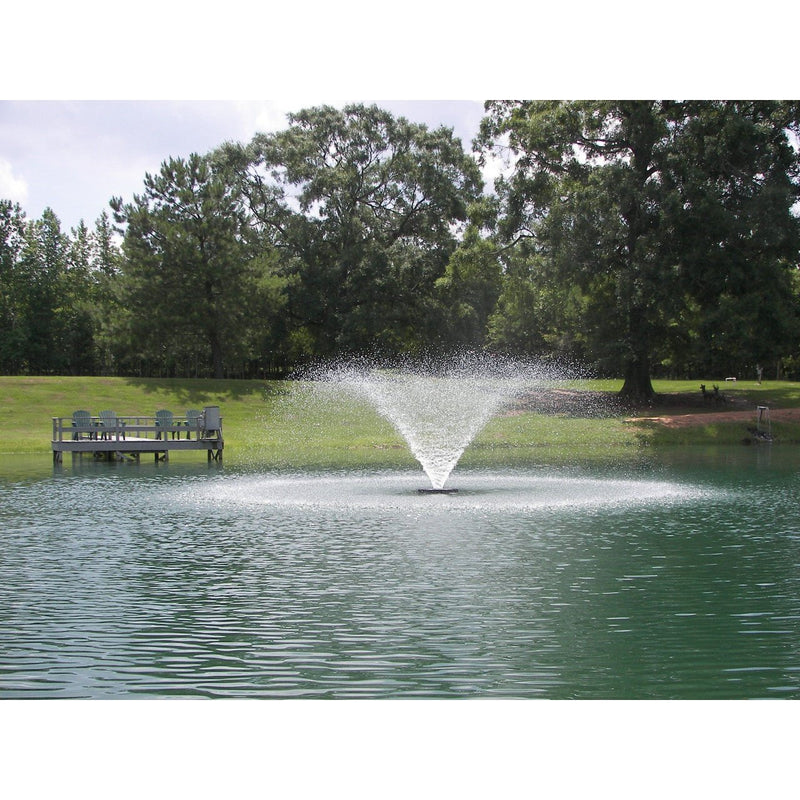
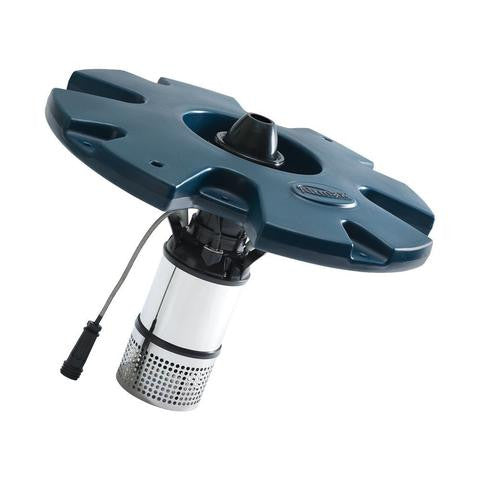
Effective systems maximize the 'A' (surface area) and the 'Cs – Cm' (saturation deficit). Standard Surface Gasps vs Pro Deep-Water Saturation highlights the difference in efficiency. Surface aerators, such as paddlewheels or fountains, increase 'A' by throwing water droplets into the air. While effective in shallow water, they fail to address the hypolimnion (the cold, bottom layer) in deeper ponds.
Diffused air systems operate from the pond floor. These systems use a compressor to push air through a weighted line to a diffuser membrane. The membrane produces millions of fine bubbles. As these bubbles rise, they provide a massive surface area for oxygen transfer. More importantly, they create a "chimney effect" or laminar flow, pulling oxygen-depleted water from the bottom and bringing it to the surface. This process, known as destratification, ensures the entire volume of the pond remains aerobic.
Nitrification is a secondary but critical process supported by high DO. Aerobic bacteria, specifically Nitrosomonas and Nitrobacter, require approximately 4.57 grams of oxygen for every gram of ammonia oxidized into nitrate. Without sufficient DO at the sediment-water interface, these bacteria cannot function, leading to toxic ammonia spikes and the accumulation of organic muck.
Benefits of Optimized Dissolved Oxygen
Maintaining high DO levels yields measurable improvements in pond health and operational efficiency. The most immediate benefit is the prevention of fish kills during "turnover" events or heavy algal die-offs. Beyond survival, high oxygen levels improve the Feed Conversion Ratio (FCR) in fish. When oxygen is abundant, fish spend less energy on respiration and more on growth and immune function.
Aerobic decomposition is another significant advantage. In an oxygen-rich environment, aerobic microbes break down organic matter—such as fallen leaves, fish waste, and dead algae—much faster than anaerobic microbes. This prevents the buildup of "muck" and reduces the production of noxious gases like hydrogen sulfide and methane. A pond with high bottom-water DO will typically have clearer water and lower nutrient concentrations, as phosphorus is more easily bound to sediments under aerobic conditions.
Operational costs can also be optimized through better oxygen management. By using high-efficiency fine bubble diffusers, a pond owner can achieve higher Standard Aeration Efficiency (SAE) compared to surface splashers. Fine bubble diffusers typically offer 3.5 to 4.0 kg of oxygen per kilowatt-hour, whereas surface aerators often fall in the 1.5 to 2.0 kg range. This translates to lower electricity bills for the same biological carrying capacity.
Challenges and Common Mistakes
One of the most frequent errors in pond management is undersizing the aeration system. A common pitfall is relying on a decorative fountain for oxygenation. Fountains are designed for aesthetics and typically only move the top 12 to 24 inches of water. In a pond deeper than 6 feet, a fountain will leave the bottom water anoxic, leading to the accumulation of toxic gases.
Incorrect placement of diffusers is another challenge. Placing diffusers in the deepest part of the pond is generally recommended, but if the pond has multiple deep pockets or "kettles," multiple diffusers are required to prevent dead zones. If a large portion of the pond remains uncirculated, the benefits of aeration are localized, and the risk of a partial fish kill remains high during weather shifts.
Maintenance neglect often leads to system failure. Diffuser membranes can become fouled with mineral deposits or bio-films over time. This increases the "crack pressure" required to push air through the membrane, putting extra strain on the compressor and reducing the volume of air delivered. Regular cleaning or replacement of membranes is essential to maintain the system's Oxygen Transfer Efficiency (OTE).
Limitations and Environmental Constraints
Environmental factors impose physical limits on dissolved oxygen levels that no mechanical system can fully override. The solubility of oxygen is inversely proportional to temperature. At 0°C, freshwater can hold roughly 14.6 mg/L at saturation. At 30°C, that capacity drops to approximately 7.5 mg/L. During heatwaves, even the most robust aeration systems cannot push DO levels above the physical saturation point determined by water temperature and barometric pressure.
Salinity also impacts DO capacity. Saltwater holds approximately 20% less oxygen than freshwater at the same temperature. For brackish ponds or ponds with high mineral content, managers must account for this reduced capacity when calculating the necessary aeration horsepower. High altitude further limits oxygen because the lower barometric pressure reduces the partial pressure of oxygen, making it harder for the gas to "push" into the water.
Thermal turnover is a critical limitation to consider when starting an aeration system in a stratified pond. If a pond has been stagnant for months, the bottom layer may be entirely void of oxygen and full of toxic gases. Starting a high-powered bottom aerator can instantly mix this toxic water with the oxygenated surface layer, causing an immediate fish kill. Professionals use a "startup schedule," running the system for only 15 minutes the first day and gradually increasing the duration over a week to slowly mix the layers.
Comparing Standard vs Pro Aeration Systems
Choosing between a standard surface system and a pro-grade diffused air system depends on pond depth and target biomass. The following table illustrates the performance metrics of these two approaches.
| Feature | Standard Surface Aeration | Pro Deep-Water Diffusion |
|---|---|---|
| Effective Depth | 0 to 4 Feet | 4 to 40+ Feet |
| Oxygen Transfer Efficiency (OTE) | Low (2-3% per meter) | High (6-8% per meter) |
| Standard Aeration Efficiency (SAE) | 1.5 - 2.0 kg O2/kWh | 3.5 - 4.5 kg O2/kWh |
| Circulation Style | Localized Surface Agitation | Full Water Column Destratification |
| Maintenance Needs | Motor/Impeller cleaning | Compressor filters/Diffuser cleaning |
Standard systems are often cheaper upfront but cost more to operate per pound of oxygen delivered. Pro systems require more technical setup, including running air lines and choosing the correct compressor PSI for the depth, but they provide a far more stable environment for high-density fish populations.
Practical Tips and Best Practices
Always size your compressor based on the "turnover rate." A healthy pond should have its entire volume of water moved to the surface at least once every 24 hours. To calculate this, determine the total gallons in your pond and match it to the CFM (cubic feet per minute) rating of the diffuser. A single fine-bubble diffuser can typically move several thousand gallons per minute through the induced updraft.
Operate aeration systems primarily at night and in the early morning. During the day, photosynthesis from algae and aquatic plants naturally adds oxygen to the water. At night, these same plants stop producing oxygen and start consuming it through respiration. This leads to a "diurnal sag" in DO levels, with the lowest point occurring just before sunrise. Running aerators during this window is the most cost-effective way to protect fish.
Use a weighted tubing for air lines. Standard poly-tubing will float when filled with air, creating a navigation hazard and looking unsightly. Weighted tubing stays on the pond floor, protecting it from UV damage and boat propellers. Ensure the compressor is housed in a ventilated, weather-proof cabinet to prevent overheating and premature motor failure.
Advanced Considerations for Serious Practitioners
For high-intensity systems, consider the use of Variable Frequency Drives (VFDs) on compressors. A VFD allows the motor to adjust its speed based on real-time DO readings from a submerged probe. This ensures that the system only consumes the energy necessary to maintain the target DO level, significantly reducing operational costs during periods of high natural oxygen production.
Nanobubble technology represents the current frontier in oxygenation. Unlike standard fine bubbles (1-2 mm) that rise to the surface and pop, nanobubbles (less than 200 nm) have neutral buoyancy and remain suspended in the water for days. This allows for extremely high OTE—often exceeding 90%—and provides a massive reserve of oxygen that is not lost to the atmosphere. While the capital cost is higher, the efficiency in deep or heavily loaded ponds is unmatched.
Dissolved oxygen also influences the oxidation-reduction potential (ORP) of the water. Monitoring ORP provides insight into the "cleansing" capacity of the pond. A high ORP (above 250mV) indicates a healthy, oxidative environment where waste is quickly processed. If DO drops, ORP will plummet, signaling the onset of anaerobic conditions before a DO meter might even show a critical low.
Example Scenario: Sizing Aeration for a 1-Acre Pond
Consider a 1-acre pond with an average depth of 6 feet. This pond contains approximately 1.95 million gallons of water (1 acre-foot = 325,851 gallons). To achieve a turnover rate of 1.0 per day, the aeration system must move roughly 1,350 gallons per minute (GPM).
A professional-grade 1/4 HP rocking piston compressor paired with two fine-bubble diffusers can typically move 1,500 to 2,000 GPM at a 6-foot depth. This setup provides a safety margin for hot summer days when respiration rates increase. If the manager were to use a 1 HP fountain instead, the GPM would be high at the surface, but the total volume turnover would be negligible because the fountain does not pull from the bottom.
In this scenario, the rocking piston compressor would consume approximately 3.5 amps of power. Running this system 24/7 at a rate of $0.12 per kWh would cost roughly $30 per month. The fountain, requiring 1 HP (approx. 10 amps), would cost nearly $90 per month while providing inferior deep-water oxygenation.
Final Thoughts
Mastering dissolved oxygen levels is the cornerstone of professional pond management. Understanding that water temperature and depth dictate the efficiency of oxygen transfer allows for smarter hardware choices. By shifting focus from surface agitation to deep-water saturation, a manager can create a stable, high-performance aquatic environment.
The transition from standard systems to professional-grade diffusion requires a technical approach to sizing and placement. While the physics of gas transfer are immutable, the tools available—from rocking piston compressors to nanobubble generators—provide the means to optimize any pond. Continuous monitoring and a proactive maintenance schedule ensure these systems deliver peak OTE year-round.
Implementing these strategies will result in faster fish growth, reduced muck accumulation, and lower long-term management costs. Experiment with diffuser placement and monitor the diurnal DO cycle to find the most efficient operating schedule for your specific ecosystem. Deep-water oxygenation is not just a luxury; it is a fundamental requirement for a thriving pond.