Why Your Pond Gets Green After Heavy Rain
Rain shouldn't be a curse for your pond. It's only green because of what the rain brings with it. Heavy rain is a nutrient delivery system. If you don't have a buffer, you're just 'feeding' the algae every time it pours.
Managing a pond ecosystem requires a technical understanding of nutrient loading and hydraulic residence time. When precipitation events occur, they do not merely add water to the basin; they transport a concentrated payload of dissolved solids, organic matter, and inorganic chemicals. This influx disrupts the established equilibrium, often favoring opportunistic species like filamentous algae and cyanobacteria.
The shift from a clear, oligotrophic state to a turbid, eutrophic state is a predictable mechanical outcome of uncontrolled runoff. To maintain clarity, one must transition from a reactive posture to a proactive architectural strategy. This involves implementing structural buffers and chemical management protocols that intercept these nutrients before they can be metabolized by algal cells.
Why Your Pond Gets Green After Heavy Rain
Algae blooms following significant precipitation are primarily driven by the introduction of limiting nutrients, specifically phosphorus and nitrogen. In most freshwater systems, phosphorus acts as the primary limiting factor for primary productivity. When stormwater washes over fertilized lawns, agricultural land, or even leaf-heavy gutters, it carries phosphate ions and nitrate compounds directly into the pond.
A phosphorus concentration as low as 0.025 parts per million (ppm) is sufficient to trigger a noticeable algae bloom. During heavy rain, runoff can introduce concentrations far exceeding this threshold. This process is known as external nutrient loading. It essentially provides a "super-fuel" for algae, which can double their biomass in hours under optimal temperature and light conditions.
Furthermore, rain events often introduce suspended sediment. These fine particles provide additional surface area for nutrient attachment and decrease water clarity. This turbidity can also lead to a secondary issue: the absorption of solar radiation in the upper water column, which increases temperatures and further accelerates metabolic rates in algal colonies.
How Runoff Mechanics Impact Pond Chemistry
Runoff is not a uniform fluid; it is a heterogeneous mixture of water and transported materials. The physics of how this water enters your pond determines the severity of the subsequent green-up. High-velocity runoff causes erosion at the pond's edge, adding more soil-bound phosphorus to the water.
Sediment-bound phosphorus is particularly problematic because it can settle on the pond floor and become a long-term internal loading source. Under anaerobic conditions at the bottom of the pond, this phosphorus can be released back into the water column, fueling future blooms even when it is not raining.
The chemical composition of rainwater itself also plays a role. Standard rainwater has a pH between 5.0 and 5.5. In ponds with low carbonate hardness (KH) or alkalinity, a heavy downpour can cause a rapid pH crash. A sudden drop in pH stresses beneficial nitrifying bacteria, reducing their ability to process ammonia and allowing nutrients to accumulate for algal consumption.
Designing the Managed Buffer Order
The most effective way to prevent post-rain greening is to implement a Managed Buffer Order. This is a structural approach to land management that prioritizes infiltration and filtration over direct drainage. Instead of allowing "The Unfiltered Runoff Chaos" where water flows directly into the pond, a managed buffer forces water through biological and mechanical "checkpoints."
Vegetative Buffer Strips
Vegetative buffers are areas of dense, permanent vegetation located between the pond and the surrounding watershed. Technical data suggests that a well-maintained buffer can reduce runoff volume by 35% to 90%. More importantly, these strips can filter out 42% to 94% of sediment and up to 95% of phosphates depending on the width and plant density.
For maximum efficiency, use a combination of tall fescue for density and deep-rooted native plants for infiltration. The fescue traps larger debris and sediment-bound phosphorus, while the deep roots of native plants facilitate the uptake of dissolved nitrates before they reach the water table.
Berms and Swales
Mechanical diversions like berms (small raised ridges) and swales (shallow vegetated channels) are used to redirect runoff away from the pond or into a dedicated rain garden. By increasing the travel distance of the water, you decrease its velocity. Lower velocity allows for sediment to settle out according to Stokes' Law, which states that the settling velocity of a particle is proportional to its size and density.
Benefits of Proactive Nutrient Management
Implementing a robust runoff management system provides measurable advantages for pond health and maintenance efficiency. By reducing the nutrient influx, you stabilize the ecosystem's stoichiometry—the ratio of chemical elements.
* Reduced Algaecide Costs: Proactive management addresses the cause of the bloom rather than the symptoms, significantly reducing the need for expensive copper-based algaecides.
* Improved Dissolved Oxygen Stability: Limiting algae growth prevents the massive oxygen crashes that occur when large algal mats die and decompose.
* Longer Lifespan for Mechanical Filtration: Reducing sediment loading prevents the premature clogging of pond pumps and pressurized filters.
* Stable Water Chemistry: Buffers help neutralize the acidity of rainwater, maintaining a consistent pH and KH for fish and beneficial bacteria.
Challenges and Common Pitfalls
Many pond owners fail because they underestimate the volume of water moving across their property during a "100-year" storm event. A common mistake is building a buffer that is too narrow. A 2-foot strip of grass is insufficient; technical recommendations suggest a minimum of 15 to 25 feet for meaningful nutrient reduction.
Another frequent error is the use of fertilizers near the pond's edge. Even with a buffer, applying high-phosphorus fertilizers within 50 feet of the water creates a high risk of "nutrient bypass," where saturation levels exceed the buffer's capacity. Additionally, failing to clear accumulated sediment from swales can lead to "channelization," where water carves a direct path through the buffer, rendering it useless.
Limitations of Runoff Management
While buffers and diversions are highly effective, they have realistic constraints. In situations with extreme topography—such as a pond located at the base of a steep, rocky hill—vegetative buffers may not be able to slow water enough to prevent erosion. In these cases, hardscaping solutions like retaining walls or underground drainage pipes may be required.
Furthermore, buffers do not address "internal loading." If a pond already has several inches of nutrient-rich muck at the bottom, it will continue to turn green regardless of how much external runoff is blocked. In such scenarios, dredging or chemical inactivation of phosphorus is necessary to reset the baseline.
Comparison: Unfiltered Runoff Chaos vs. Managed Buffer Order
The following table illustrates the performance metrics of a pond system under two different management regimes during a standard 1-inch rain event.
| Metric | The Unfiltered Runoff Chaos | The Managed Buffer Order |
|---|---|---|
| Sediment Influx | High (Erosion-driven) | Low (Filtered through vegetation) |
| Phosphorus Loading | >0.10 ppm (Immediate Bloom) | <0.02 ppm (Stable) |
| pH Stability | Rapid Fluctuations | Highly Stable |
| Mechanical Load | Filters clog within 24 hours | Normal maintenance cycle |
| Maintenance Profile | Reactive (Chemical treatments) | Predictive (Mechanical upkeep) |
Practical Tips for Immediate Application
If your pond is currently green after a rain event, the first step is to test the phosphate levels. If phosphates are above 0.03 ppm, biological filtration alone will likely struggle to clear the water.
* Deploy Phosphorus Binders: Products like Lanthanum-modified clay (Phoslock) or buffered Alum can be used to "lock" reactive phosphorus into an insoluble form. Unlike standard Alum, Lanthanum does not significantly impact pH.
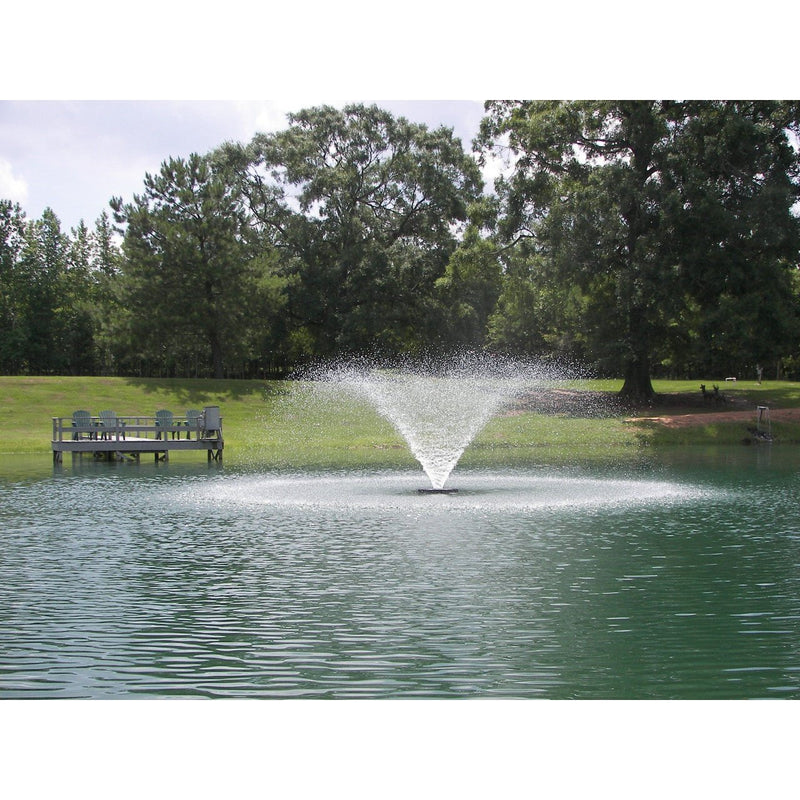
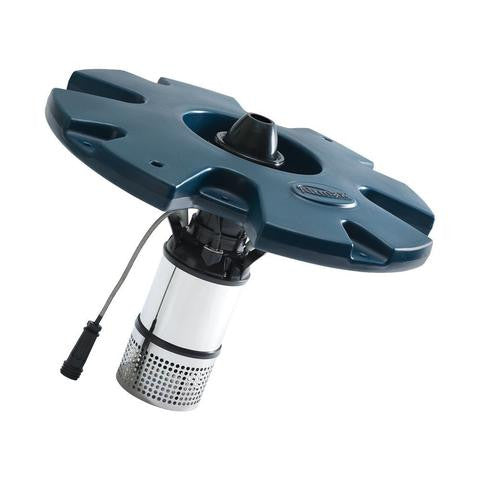
* Increase Aeration: Rainwater often sits on top of the pond (stratification), preventing oxygen from reaching the bottom. Subsurface aeration or high-flow fountains can break this layer and facilitate the oxidation of organic matter.
* Add Beneficial Microbes: Post-rain is the ideal time to dose concentrated bacteria. These microbes compete with algae for the newly introduced nitrogen and phosphorus.
* Check Your KH: Ensure your carbonate hardness is above 100 ppm. This provides the necessary "buffer" to prevent the acidic rain from crashing your pH.
Advanced Considerations for Professionals
Serious practitioners should look at the "Hydraulic Retention Time" (HRT) of their pond. HRT is the average time a water molecule stays in the pond. If your HRT is too low during rain (meaning water flows in and out too fast), your biological filters never have time to process the nutrients.
In such cases, installing an "offline" sediment basin or a "first flush" diverter can be highly effective. These systems capture the most polluted first half-inch of rain and slowly release it over several days, allowing for maximum biological processing. Automated dosing systems that measure turbidity or conductivity can also be programmed to release flocculants only when they are needed most.
Example Scenario: The Suburban Pond
Consider a 5,000-gallon pond located at the bottom of a 1/4-acre lawn. During a 1-inch rain event, that lawn generates approximately 6,700 gallons of runoff. Without a buffer, the pond's entire volume is replaced more than once with nutrient-rich water.
If the lawn was recently fertilized with a 10-10-10 fertilizer, the runoff could carry enough phosphorus to support 500 pounds of wet algae. By installing a 15-foot vegetative buffer and a small berm, the runoff volume entering the pond could be reduced to less than 1,000 gallons, with 90% of the nutrients trapped in the soil. The biological filter can then easily handle the remaining load without a visible bloom.
Final Thoughts
Maintaining a clear pond after heavy rain is a matter of managing the nutrient economy of the water. Rainwater is the vehicle, but nitrogen and phosphorus are the passengers that cause the green-up. By implementing a Managed Buffer Order, you effectively "evict" these passengers before they arrive at the pond.
A technical approach focused on filtration architectures, structural berms, and chemical binders will always outperform reactive chemical dosing. Professionals and advanced beginners alike must view the pond not as an isolated basin, but as the terminus of a larger watershed.
Continuous monitoring of parameters like dissolved oxygen, pH, and phosphorus levels is essential for long-term success. Experiment with different plant species in your buffer zones and consider the mechanical efficiency of your filtration system under high-flow conditions. With the right systems in place, rain becomes a benefit to your pond's volume rather than a threat to its clarity.