

Why Surface Aerators Fail In Deep Ponds
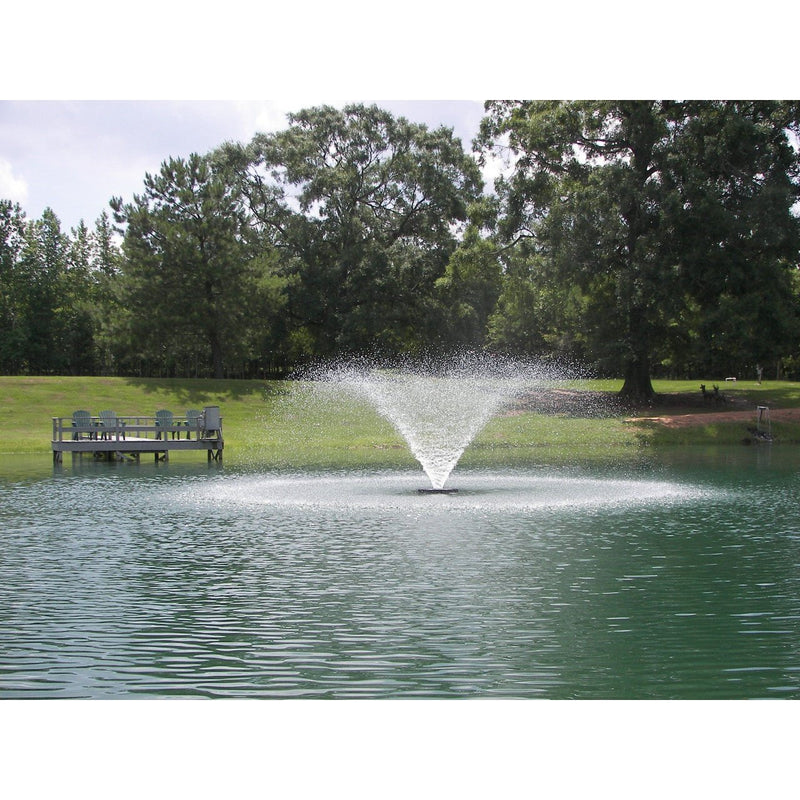
Splashing the surface won't save the fish at the bottom. Fountains look pretty, but in deep ponds, they leave the bottom water 'dead' and oxygen-depleted. You need to move the water from the floor up, not the top down.
Successful pond management depends on understanding the mechanical and biological limitations of surface-level agitation. While a decorative fountain provides aesthetic value and localized surface gas exchange, it fails to address the fundamental issue of thermal stratification in deep water bodies. For any system deeper than six to eight feet, the physics of water density creates a physical barrier that prevents surface-level oxygen from reaching the pond floor.
Effective aeration requires a bottom-up approach using diffused air systems. These systems utilize shore-side compressors to push air through weighted lines to diffusers located at the maximum depth. The resulting column of micro-bubbles creates a powerful vertical current, often referred to as an "air lift." This process ensures that the entire water column is mixed, eliminating stagnant zones and supporting the aerobic bacteria necessary for organic waste decomposition.
Why Surface Aerators Fail In Deep Ponds
Thermal stratification is the primary reason surface-level aerators prove ineffective in deep water. In bodies of water exceeding eight feet in depth, the sun heats the top layer (epilimnion), making it less dense and buoyant. The deeper water (hypolimnion) remains cold and dense. Between these two layers, a thin transition zone called the thermocline forms. This thermocline acts as a physical wall, preventing the mixing of atmospheric oxygen from the surface into the deep zone.
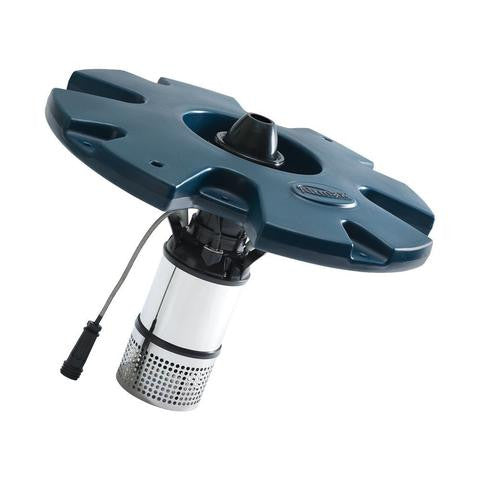
Surface aerators, including fountains and high-speed agitators, typically only influence the top four to six feet of the water column. While they can achieve high Standard Oxygen Transfer Rates (SOTR) at the surface, they lack the vertical thrust required to penetrate the thermocline. Consequently, the hypolimnion becomes anoxic (oxygen-depleted). In this anoxic state, aerobic bacteria die off, and anaerobic decomposition takes over.
Anaerobic processes are significantly slower and produce toxic byproducts such as hydrogen sulfide and methane. These gases remain trapped at the bottom until a sudden weather event, such as a cold rainstorm, causes the pond to "turn over" rapidly. When the cold, oxygen-poor, gas-laden bottom water suddenly mixes with the surface, the overall dissolved oxygen (DO) levels can drop below the three parts per million (ppm) threshold required for fish survival. This mechanical failure of surface-only systems is the leading cause of massive summer fish kills in deep residential and commercial ponds.
Mechanics of Bottom-Diffused Aeration
Sub-surface aeration operates on the principle of the air-lift pump. A compressor located on the shore generates pressurized air, which travels through weighted poly-tubing to a diffuser assembly on the pond floor. The diffuser, typically made of a fine-pore EPDM membrane or ceramic media, breaks the air stream into millions of tiny bubbles.
Micro-bubbles are essential because they maximize the surface area-to-volume ratio. A smaller bubble rises more slowly through the water column, increasing the contact time between the air and the water. This extended "residence time" allows for higher Standard Oxygen Transfer Efficiency (SOTE). However, the primary mechanism of oxygenation in these systems is not the bubbles themselves; it is the mass movement of water.
As the bubbles rise, they create a friction-based "chimney effect" that pulls cold, oxygen-depleted water from the bottom toward the surface. When this bottom water reaches the surface, it spreads out and releases trapped gases while absorbing atmospheric oxygen. This mechanical circulation ensures that the entire volume of the pond, regardless of depth, remains at a uniform temperature and oxygen concentration.
Advantages of Sub-Surface Diffusion
Choosing a bottom-up diffusion system provides measurable mechanical and biological benefits over surface-based alternatives. The most significant advantage is the elimination of the thermocline. By maintaining a uniform temperature throughout the water column, the system prevents the sudden and catastrophic turnover events associated with surface aerators.
Energy efficiency is another critical factor. Moving air down a pipe requires significantly less horsepower than pumping massive volumes of water into the air. Standard Aeration Efficiency (SAE) for fine-bubble diffusers often ranges from 2.0 to 4.0 lbs of oxygen per horsepower-hour, whereas high-speed surface units rarely exceed 2.5. In deep-water applications (over 15 feet), fine-bubble systems can reach efficiencies as high as 15 lbs O2/hp-hr due to the increased residence time of the bubbles.
Ecological restoration is the long-term benefit of this approach. Continuous oxygenation of the pond floor supports aerobic microorganisms that consume "muck"—the accumulation of dead algae, leaves, and fish waste. Over several seasons, a properly sized diffusion system can reduce the depth of organic sediment on the floor, effectively "dredging" the pond through biological means. This reduction in nutrient load also limits the food source for nuisance algae and submerged weeds.
Challenges and Common Mistakes
The most frequent mistake in implementing sub-surface aeration is "initial startup shock." If a system is installed in a pond that has been stagnant and stratified for years, the bottom water is likely filled with toxic gases and zero oxygen. Turning the system on at full capacity immediately can force all that toxic water to the surface at once, causing an instant fish kill.
Gradual startup is the mandatory protocol for existing deep ponds. On the first day, the system should run for only 30 minutes. Each subsequent day, the runtime is doubled (1 hour, 2 hours, 4 hours) until the system is running 24/7. This slow integration allows the pond to de-gas and oxygenate safely without overwhelming the resident fish population.
Improper placement of diffusers also compromises system efficiency. Placing a diffuser in the absolute deepest pocket of a pond with an irregular floor plan can result in "dead zones" in other deep areas. Large or complex ponds require multiple diffuser "stations" to ensure total coverage. Additionally, if the diffuser is placed too close to the shoreline, the rising bubble column does not have enough vertical distance to expand, which significantly reduces the volume of water moved per cubic foot of air.
Limitations of Bottom-Up Systems
Sub-surface diffusion is not a universal solution for every water body. In shallow ponds—those with a maximum depth of less than five or six feet—the bubble column does not have enough "run" to create a significant air-lift effect. In these shallow environments, the "V-shaped" pattern of the rising bubbles remains narrow, meaning each diffuser plate covers a very small surface area.
Shallow ponds often benefit more from surface-level agitators or circulators that move water horizontally. Another limitation involves the composition of the pond floor. If the bottom is composed of extremely fine, loose silt (often called "flocculent muck"), a high-pressure diffuser placed directly on the floor can stir up sediment. This increases turbidity (cloudiness) and can temporarily release buried nutrients into the water column, potentially fueling an algae bloom.
Environmental constraints like the lack of nearby power can also pose a challenge. While solar and wind-powered compressors exist, they often fail to provide the 24/7 operation required to keep a deep pond from re-stratifying during hot, calm summer nights. Reliable aeration in deep water usually requires a grid-connected compressor to ensure consistency.
Comparison: Surface Splashing vs. Bottom-Up Diffusion
The following table compares the mechanical performance of traditional surface splashing units versus modern bottom-up diffusion systems in a standard 10-foot deep pond.
| Metric | Surface Aerator (Fountain/Agitator) | Bottom Diffusion (Membrane) |
|---|---|---|
| Effective Depth | 0 to 6 feet | Total water column (0 to max depth) |
| Oxygen Transfer Efficiency (SAE) | 1.5 – 2.5 lbs O2/hp-hr | 2.0 – 4.0+ lbs O2/hp-hr |
| Power Consumption | High (to move heavy water) | Low (to move light compressed air) |
| Stratification Prevention | Ineffective in deep water | Highly Effective |
| Winter Capability | Risk of motor damage from ice | Excellent (keeps ice open for gas venting) |
| Muck Reduction | Minimal (limited floor oxygen) | Significant (aerobic floor digestion) |
Practical Tips for System Optimization
Proper sizing of the compressor is the first step toward an efficient system. A general rule of thumb for deep ponds is to provide at least one turnover of the entire pond volume every 24 hours. To calculate this, you must determine the acre-feet of your pond. One acre-foot equals 325,851 gallons. If a compressor and diffuser combination can lift 1,000 gallons per minute (GPM), it will move 1.44 million gallons in 24 hours.
Check your pressure gauges regularly. Most rocking piston compressors for pond use operate between 5 and 10 PSI. If the pressure rises significantly above the initial "baseline" reading, it indicates that the diffuser membranes are likely clogged with mineral deposits or bio-film. If the pressure drops, there is likely a leak in the airline or a failure in the compressor’s internal seals.
Balancing the manifold is critical when using multiple diffusers. Air follows the path of least resistance. If one diffuser is in 10 feet of water and another is in 15 feet, the air will naturally favor the shallower diffuser because there is less "back-pressure" (0.433 PSI per foot of depth). Using a manifold with adjustable ball valves allows you to restrict flow to the shallow units, forcing the air down to the deeper ones until all stations produce an equal "boil" on the surface.
Advanced Considerations: The Physics of Gas Transfer
Serious practitioners must understand the relationship between pressure and gas solubility, often governed by Henry's Law. This law states that the amount of dissolved gas in a liquid is proportional to its partial pressure above the liquid. In a pond, this means that as air is pumped deeper, the hydrostatic pressure increases, which actually forces more oxygen into the water.
At a depth of 20 feet, the pressure is approximately double that of the surface. This high-pressure environment at the diffuser face makes oxygen transfer much more efficient than at the surface. This is why a diffuser at 15 feet is nearly twice as effective at dissolving oxygen as the same diffuser placed at 5 feet. Using this knowledge, system designers often prioritize the deepest areas of the pond for diffuser placement to maximize the "Standard Oxygen Transfer Rate" (SOTR).
Another advanced factor is the "alpha factor," which accounts for how the specific water chemistry of your pond affects oxygen transfer compared to clean tap water. Ponds with high organic loads or high salinity have a lower alpha factor, meaning oxygen dissolves less easily. In these "dirty" water scenarios, the system must be oversized by 20% to 30% to compensate for the reduced transfer efficiency.
Example Scenario: The 1-Acre Deep Pond
Consider a one-acre pond with an average depth of 10 feet and a maximum depth of 18 feet. Total volume is 10 acre-feet, or roughly 3.25 million gallons. A surface-level fountain in this pond would provide a nice visual and keep the top 5 feet healthy, but the bottom 13 feet would likely remain anoxic throughout the summer.
To properly aerate this pond, a 1/2 horsepower rocking piston compressor is required. This compressor delivers approximately 4.5 cubic feet per minute (CFM) of air. By splitting this air between two diffuser stations—one in the 12-foot range and one at the 18-foot maximum depth—the system can achieve a turnover rate of approximately 1.5 times per day.
Using weighted 3/8" poly-tubing prevents the lines from floating and becoming a hazard to boats or swimmers. The 18-foot depth provides significant hydrostatic pressure, allowing for high SOTE. Within one season of continuous operation, the owner would notice a reduction in surface algae blooms and a measurable decrease in the "rotten egg" smell (hydrogen sulfide) that previously occurred during heavy rains.
Final Thoughts
Deep pond health is a function of vertical mixing, not surface agitation. While fountains serve a purpose for aesthetics, they cannot overcome the thermal barriers that trap nutrients and toxins at the pond floor. Sub-surface diffusion remains the only mechanically sound method for maintaining total water column oxygenation.
Investing in a bottom-up system reduces long-term maintenance costs by preventing fish kills and naturally digesting organic muck. This proactive approach creates a stable, aerobic environment that supports the entire aquatic food chain.
Practitioners should focus on proper system sizing, gradual startup procedures, and regular compressor maintenance to ensure longevity. By understanding the physics of air-lift and the biological requirements of the pond floor, you can transform a stagnant, stratified pond into a clear, productive ecosystem. Moving the water from the floor up is the only way to ensure the fish at the bottom are as healthy as the view from the top.