The Best Pond Aeration Setup For Fish Ponds
Don't let your fish swim in their own waste. Fish ponds produce massive amounts of waste. Without oxygen, that waste becomes toxic. With aeration, that waste becomes the fuel for a healthy ecosystem.
In a closed aquatic environment, the biological demand for oxygen (BOD) often outpaces natural atmospheric diffusion. When dissolved oxygen (DO) levels drop below critical thresholds, the biological processes responsible for waste conversion shift from efficient aerobic pathways to slow, toxic anaerobic ones. This article provides a technical analysis of how to engineer the optimal aeration setup to maintain peak water quality and fish health.
The Best Pond Aeration Setup For Fish Ponds
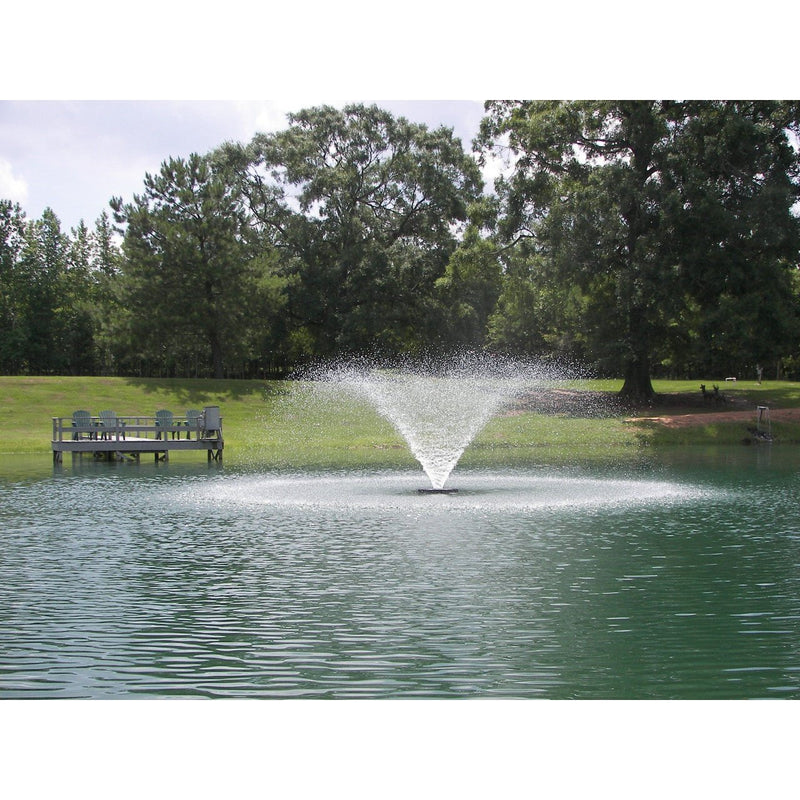
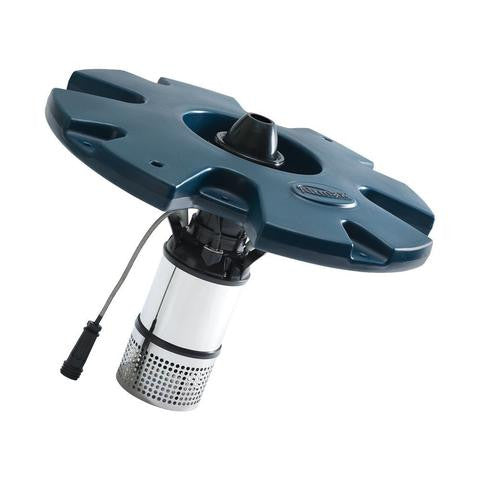
The most efficient and scalable setup for modern fish ponds is the bottom-diffused aeration system. Unlike surface fountains that provide localized gas exchange, diffused aeration utilizes an onshore compressor to pump air through weighted tubing to diffusers located at the pond's lowest point. This configuration is widely utilized in professional aquaculture, large-scale koi keeping, and lake management due to its ability to circulate the entire water column.
The primary objective of a bottom-diffused system is not merely to "add air" but to induce a laminar flow that facilitates a full water turnover. As bubbles rise from the floor, they displace water, dragging oxygen-depleted water from the bottom to the surface where gas exchange occurs. In a properly engineered setup, the entire volume of the pond should ideally be turned over at least once every 24 to 48 hours.
How It Works: The Physics of Gas Transfer
Aeration operates on the principle of increasing the surface area for gas exchange. Oxygen transfer occurs at two interfaces: the surface of the rising bubbles and the surface of the pond as it is agitated.
Henry's Law and Oxygen Solubility
The amount of oxygen that can dissolve in water is governed by Henry's Law, which states that the concentration of a dissolved gas is proportional to its partial pressure in the atmosphere. Technical factors influencing this include:
- Temperature: Cold water holds more oxygen than warm water. At 10°C, water can hold approximately 11.3 mg/L, whereas at 30°C, it drops to ~7.5 mg/L.
- Pressure: As depth increases, the pressure on a bubble increases, which theoretically improves the transfer rate (SOTE).
- Salinity: Higher salinity decreases oxygen solubility.
The Oxygen Engine vs. The Muck Trap
A pond without aeration acts as a "muck trap," where organic debris (fish waste, uneaten food, leaves) settles into the anaerobic zone at the bottom. In this oxygen-free environment, decomposition is slow and produces toxic byproducts like hydrogen sulfide (H2S), methane (CH4), and ammonia (NH3).
By installing a bottom-diffused system, you transform the pond into an "oxygen engine." The constant supply of O2 at the sediment-water interface supports aerobic heterotrophic bacteria, which decompose organic matter up to 20 times faster than anaerobic species, converting waste into harmless carbon dioxide and water.
Benefits of Mechanical Aeration
The mechanical optimization of oxygen levels provides measurable improvements in pond chemistry and biological stability.
Accelerated Nitrification
The conversion of ammonia to nitrite and then nitrate is a strictly aerobic process. Research indicates that for every 1.0 gram of total ammonia nitrogen (TAN) oxidized, nitrifying bacteria consume approximately 4.18 grams of dissolved oxygen. If DO levels fall below 2.0 mg/L, the nitrification rate significantly decelerates, leading to toxic ammonia spikes.
Thermal Destratification
In summer, ponds often stratify into a warm, oxygen-rich upper layer (epilimnion) and a cold, oxygen-poor lower layer (hypolimnion). A bottom-diffused aerator breaks this thermocline, ensuring that oxygen reaches the bottom and preventing a "summer kill" event during sudden weather changes or turnovers.
Challenges and Common Engineering Mistakes
Designing an aeration system requires precise calculations to avoid mechanical failure or biological insufficiency.
Undersizing the Compressor
A common error is selecting a pump based on "volume" alone without accounting for "depth back-pressure." A linear diaphragm pump may produce high CFM (Cubic Feet per Minute) at the surface, but its output drops significantly at depths exceeding 5–6 feet. For deeper ponds, a rocking piston compressor is required to overcome the higher PSI requirements.
Improper Diffuser Placement
If diffusers are placed too shallow, they fail to circulate the bottom water, leaving a toxic dead zone. Conversely, placing them directly in the deepest silt can cause the system to clog or stir up excessive sediment (turbidity), which can irritate fish gills. Ideally, diffusers should be slightly elevated off the bottom using a base or stand.
Limitations and Environmental Constraints
Aeration is not a universal fix for every environmental condition and has specific technical boundaries.
- Pond Depth: In very shallow ponds (under 3 feet), diffused aeration is less efficient because the bubbles have less "hang time" in the water column to transfer oxygen. In these scenarios, surface aerators or spray fountains may be more effective.
- Energy Consumption: Professional-grade rocking piston compressors can consume significant electricity (typically 1/4 HP to 3/4 HP for small to medium ponds). For remote locations, solar or wind-powered systems are alternatives, though they often lack the 24/7 consistency of grid-powered units.
- Thermal Loading: In extreme heat, aerating during the hottest part of the day can actually warm the water further by mixing it with hot air. In such cases, timing aeration for nighttime/early morning is more efficient.
Comparison: Diffused vs. Surface Aeration
The choice between technologies depends on depth, pond geometry, and specific oxygen demands.
| Feature | Bottom-Diffused Aeration | Surface Fountains / Aerators |
|---|---|---|
| Optimal Depth | 4 feet to 40+ feet | 1 foot to 6 feet |
| Oxygen Transfer (SOTE) | High (increases with depth) | Moderate (localized) |
| Circulation Pattern | Full water column turnover | Surface-level only |
| Noise Level | Low (onshore cabinet) | Moderate to High (water splashing) |
| Maintenance | Low (annual filter cleaning) | Moderate (clogging of intake) |
Practical Tips for System Sizing
To ensure the system meets the biological load of a fish pond, use the following technical baselines:
- Airflow Requirement: Aim for 1.0 to 2.0 CFM per 1,000 gallons of water for heavily stocked koi ponds. For large fishing ponds, a baseline of 1.5 CFM per surface acre is often sufficient.
- PSI Calculation: To calculate the pressure required, use the formula: Required PSI = (0.433 × Depth in feet) + Friction Loss. For example, a 10-foot deep pond requires at least 4.33 PSI just to push air to the bottom, plus 0.5–1.0 PSI for airline friction.
- Airline Diameter: For runs under 100 feet, 3/8" ID tubing is standard. For runs exceeding 100 feet, upgrade to 1/2" ID to minimize back-pressure and extend compressor life.
Advanced Considerations: Nanobubbles and Monitoring
For serious practitioners, optimizing an "Oxygen Engine" involves more than just standard diffusers.
Nanobubble Technology: Standard fine-bubble diffusers produce bubbles around 1–3 mm in diameter. Nanobubbles are less than 1 micrometer and do not float to the surface. Instead, they remain suspended in the water column for weeks, providing a massive reservoir of oxygen and directly oxidizing pollutants. While current costs are high, nanobubbles represent the frontier of aquaculture efficiency.
Automated DO Monitoring: Integrating a Dissolved Oxygen sensor with a variable frequency drive (VFD) for the compressor allows the system to ramp up during high-demand periods (like summer nights) and scale back during low-demand periods (winter), significantly reducing energy costs while maintaining safety.
Scenario: Sizing for a 1-Acre Fish Pond
Consider a 1-acre rectangular pond with a maximum depth of 12 feet, used for stocking channel catfish.
- Calculate Volume: 1 acre-foot is approximately 325,851 gallons. At an average depth of 6 feet, the pond holds ~2 million gallons.
- Select Compressor: A 1/2 HP rocking piston compressor is capable of delivering ~4.5 CFM at 12 feet of depth.
- Diffuser Placement: To avoid dead zones, use two dual-disc diffuser stations placed at the deepest points, roughly 100 feet apart along the longitudinal axis.
- Operational Metric: This setup will achieve a full turnover approximately every 36 hours, maintaining DO levels above the 5.0 mg/L threshold required for catfish growth and health.
Final Thoughts
The engineering of a pond aeration system is the most critical factor in determining the carrying capacity and longevity of a fish pond. By shifting the focus from "decorative water movement" to "mechanical oxygen transfer," you transition the pond from a stagnant muck trap into a high-performance biological engine.
The transition to a bottom-diffused setup ensures that every gallon of water is utilized for nutrient processing. This not only prevents catastrophic fish kills but also creates a more resilient ecosystem that can handle higher stocking densities and increased organic loads.
For those managing high-value fish or large-scale water bodies, investing in a properly sized rocking piston compressor and fine-pore diffusers is a technical necessity. Consistent monitoring of dissolved oxygen levels remains the best practice for ensuring your system is meeting the real-time demands of your aquatic environment.