The Real Difference Between Pond Aerators And Fountains
One looks pretty; the other keeps your pond alive. Do you know which is which?
Don't mistake a pretty splash for a healthy pond. If you want a clear, muck-free pond, you need to think from the bottom up. Most pond owners invest in surface displays without understanding the mechanical requirements of a balanced aquatic ecosystem. While a fountain provides a visual centerpiece, it often fails to address the underlying biological demands of deep-water environments.
Dissolved oxygen (DO) is the primary metric for pond stability. Without sufficient DO, the biological processes required to break down organic waste shift from efficient aerobic decomposition to slow, toxic anaerobic digestion. This transition results in the accumulation of muck, the release of hydrogen sulfide, and the eventual risk of catastrophic fish kills due to thermal stratification and seasonal turnover.
The Real Difference Between Pond Aerators And Fountains
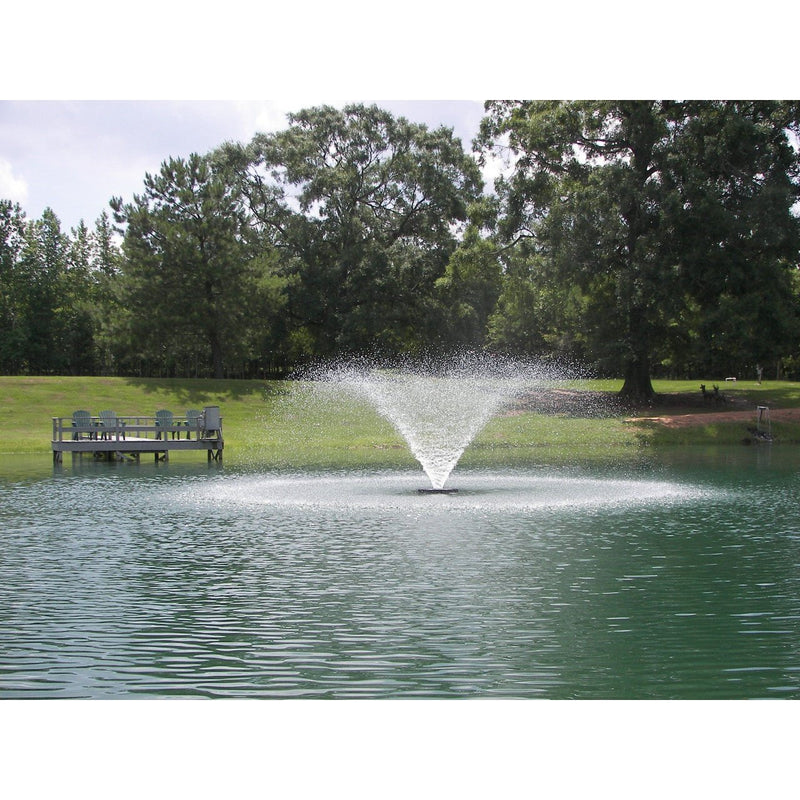
The distinction between a pond aerator and a fountain is defined by their mechanical objective and the region of the water column they influence. A fountain is a surface-oriented device designed to move water vertically for aesthetic effect. In contrast, a bottom-diffused aerator is a subsurface system designed to circulate the entire water column from the floor to the surface.
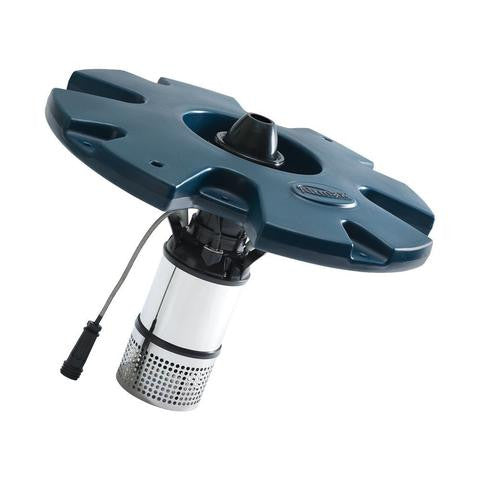
Fountains function by drawing water from the top 2 to 4 feet and propelling it into the atmosphere. This action provides localized aeration through surface splash and air-water contact. However, the energy consumed by a fountain is primarily directed toward overcoming gravity to create a spray pattern, which makes it an inefficient tool for oxygenating deep water.
Bottom-diffused aerators utilize an onshore compressor to pump air through weighted tubing to diffusers located on the pond floor. These diffusers release billions of micro-bubbles that rise through the water column. This process, known as an airlift, creates a vertical current that pulls oxygen-depleted water from the bottom and pushes it to the surface for gas exchange. This ensures that the entire volume of the pond, not just the surface layer, remains oxygenated.
How Diffusion and Surface Splash Systems Function
Mechanically, these two systems operate on different physical principles of gas exchange. Understanding these processes allows for better optimization of pond health and energy expenditure.
Surface Splash and Gas Exchange
Fountains and surface agitators rely on increasing the surface area of water exposed to the atmosphere. When a fountain sprays water, it breaks the liquid into droplets. Each droplet absorbs oxygen from the air and releases trapped gases like carbon dioxide and methane as it falls back to the surface. This method is effective in shallow ponds (under 6 feet) where the water is naturally mixed by wind and temperature changes.
Subsurface Diffusion and Induced Circulation
Bottom-diffused systems do not move the water with an impeller. Instead, they use the displacement caused by rising air. As bubbles travel from the diffuser to the surface, they transfer oxygen through their surface area—a process measured as Standard Oxygen Transfer Efficiency (SOTE).
Fine-bubble diffusers are significantly more efficient than coarse-bubble versions, achieving an SOTE of approximately 6.9% per meter of depth. Because the bubbles remain in contact with the water for the entire duration of their ascent, deeper ponds benefit from higher oxygen transfer rates. This vertical movement also prevents thermal stratification by breaking the thermocline, the barrier between warm surface water and cold, stagnant bottom water.
Benefits of Targeted Aeration Systems
Choosing the correct system provides measurable improvements in water chemistry and biological efficiency.
Optimized Nutrient Cycling
Aerobic bacteria require oxygen to oxidize organic matter. Under aerobic conditions, bacteria decompose waste into carbon dioxide and water, which are odorless and harmless. A well-aerated pond can process organic muck at a rate significantly faster than an anaerobic pond. This reduces the "muck" layer on the pond floor, which is the primary source of nitrogen and phosphorus that fuels algae blooms.
Prevention of Thermal Stratification
In the absence of bottom aeration, deep ponds separate into layers. The bottom layer, or hypolimnion, becomes anoxic (void of oxygen) during summer months. This zone becomes a reservoir for toxic gases and nutrients. When weather changes cause these layers to flip—a phenomenon called "turnover"—the toxic water can mix with the surface, leading to immediate fish mortality. Continuous bottom aeration prevents this layering from forming.
Standard Aeration Efficiency (SAE)
From an engineering perspective, efficiency is measured in pounds of oxygen transferred per horsepower per hour (lb O2/hp-hr). Bottom-diffused aerators often outperform fountains in this metric because they do not waste energy on the "lift" required for a decorative spray. High-efficiency subsurface systems can achieve SAE ratings of 3.0 to 4.0, whereas decorative fountains typically range between 1.5 and 2.5.
Challenges and Common Implementation Mistakes
Failure to account for pond geometry and depth is the most common cause of system failure.
Undersizing the Compressor
Many owners select a compressor based on the surface acreage of the pond without calculating the total water volume or the depth. A compressor must be able to overcome the backpressure (measured in PSI) created by the water depth. For every 2.31 feet of depth, 1 PSI of pressure is required just to push air out of the diffuser. If the compressor is undersized, the airflow (CFM) will be insufficient to move the necessary volume of water for a full turnover.
Improper Diffuser Placement
Placing a diffuser in the shallowest part of a pond defeats the purpose of the system. The "cone" of influence created by rising bubbles expands as it moves upward. Placing the diffuser at the deepest point ensures that the maximum volume of water is moved and that the oxygen reaches the areas where muck accumulation is most severe.
Inconsistent Operation
Running an aeration system only during the day is a common error. Dissolved oxygen levels are lowest just before sunrise because aquatic plants consume oxygen through respiration during the night. Operating a system 24/7 is the only way to maintain stable DO levels and prevent the stress that leads to disease in fish populations.
Limitations of Specific Aeration Methods
Every mechanical system has environmental constraints that limit its effectiveness.
Depth Constraints for Surface Fountains
Fountains are generally ineffective at depths greater than 6 to 8 feet. Because they only draw water from the immediate vicinity of the pump, they cannot influence the stagnant water at the bottom of a deep pond. Using a fountain as the sole source of aeration in a 15-foot deep pond will likely result in a healthy surface layer but a toxic bottom layer.
Maintenance of Fine-Pore Diffusers
While fine-bubble diffusers offer the highest oxygen transfer efficiency, they are susceptible to fouling. Biofilms, calcium carbonate precipitates, and silt can clog the small pores over time. This increases backpressure on the compressor, reducing its lifespan and efficiency. These systems require regular inspection and cleaning every 2 to 4 years depending on water hardness and nutrient load.
Electricity Access
Fountains require high-voltage power near or in the water, which necessitates expensive underwater cabling and GFCI protection. Bottom-diffused systems allow the compressor to be located up to 1,000 feet away from the pond, with only the air tubing entering the water. This makes subsurface systems easier to install in remote areas, though friction loss in long tubing runs must be factored into the compressor's performance curve.
Comparative Analysis of Aeration Technologies
The following table compares the performance metrics of decorative fountains, surface aerators, and bottom-diffused systems for a standard 1-acre pond.
| Feature | Decorative Fountain | Surface Aerator | Bottom-Diffused System |
|---|---|---|---|
| Primary Goal | Aesthetics / Display | High Oxygen Transfer | Total Water Circulation |
| Max Effective Depth | 4–6 Feet | 6–8 Feet | 40+ Feet |
| SAE (lb O2/hp-hr) | 1.5 – 2.5 | 2.6 – 3.2 | 3.0 – 4.0+ |
| Electricity Cost | High | Moderate | Low |
| De-Icing Capability | None (Removable) | Excellent | Excellent |
Practical Tips for System Optimization
Maximizing the efficiency of an aeration system requires precise tuning and a data-driven approach to maintenance.
- Calculate Turnover Rate: Aim for at least one full pond volume turnover every 24 hours. To find this, calculate your total gallons and compare it to the GPH (gallons per hour) moved by your specific diffuser at its operating depth.
- Monitor Dissolved Oxygen: Use a DO meter to check levels at the bottom of the pond during the hottest week of summer. If levels are below 3 ppm, your system is undersized or improperly placed.
- Optimize Tube Diameter: For long runs (over 200 feet), use 5/8-inch or 3/4-inch weighted tubing instead of the standard 3/8-inch to reduce friction loss and compressor wear.
- Winter Operation: If you live in a freezing climate, move diffusers to shallower water (3–4 feet deep) during winter. This maintains an open hole in the ice for gas venting without super-cooling the deep water where fish congregate for warmth.
Advanced Considerations for Water Quality Management
Professional practitioners look beyond simple oxygenation to the relationship between Biochemical Oxygen Demand (BOD) and nutrient loading.
The total amount of oxygen required by a pond is the sum of the oxygen consumed by fish, the respiration of plants, and the breakdown of organic sediment. This is the BOD. In a eutrophic pond with heavy muck, the BOD of the sediment can be five times higher than the oxygen demand of the fish. This is why a pond can look healthy during the day but experience a fish kill at night—the sediment continues to consume oxygen long after the plants stop producing it via photosynthesis.
Furthermore, consider the gas-liquid interface dynamics. Small bubbles have a higher surface-area-to-volume ratio than large bubbles. This increases the SOTE. However, small bubbles also rise more slowly, which increases their "residence time" in the water column. In deep water applications, this residence time is the most critical variable for maximizing oxygen saturation.
Example Scenario: 1-Acre Pond Analysis
Consider a 1-acre pond with an average depth of 8 feet and a maximum depth of 15 feet.
If the owner installs a 1.5 HP decorative fountain, the unit will move approximately 400 gallons per minute (GPM) from the surface layer. While this looks impressive and creates a 15-foot high display, the water at the 15-foot depth remains stagnant. Over the course of a summer, this bottom water becomes anoxic.
If the owner instead installs a 1/2 HP rocking piston compressor with two dual-disk diffusers placed at 12 feet, the system will move approximately 4,000 GPM through the airlift effect. This provides a full pond turnover every few hours while consuming 60% less electricity than the fountain. The oxygen reaching the bottom allows aerobic bacteria to digest the muck, preventing the pond from filling in over time.
Final Thoughts
Maintaining a healthy pond requires a shift in focus from surface aesthetics to subsurface mechanics. While fountains serve a clear purpose in commercial landscaping and shallow residential displays, they are not a substitute for a dedicated aeration system in deeper water bodies.
Properly implemented bottom-diffused aeration targets the root causes of water quality degradation by supporting aerobic life at the pond floor. This leads to reduced nutrient levels, clearer water, and a more resilient ecosystem. Understanding the technical specifications of SOTR, SAE, and turnover rates allows pond owners to make informed decisions that ensure long-term success.
Integrating both systems—a fountain for visual appeal and a subsurface aerator for biological health—is often the most effective strategy for those who want both a clear pond and a beautiful display. By investing in the right technology for the specific depth and volume of your water, you protect your aquatic investment for years to come.