

Why Fish Die After Installing A Pond Aerator (And How To Prevent It)
Don't shock your pond! The right way to turn on your air. Turning on a new aerator at full power can actually kill your fish by disturbing toxic gases. Learn the 'Start-Up Rule' to keep your pond safe.
Why Fish Die After Installing A Pond Aerator (And How To Prevent It)
Thermal stratification is a primary driver of aquatic instability in deep static water bodies. During summer months, water density changes according to temperature, creating distinct layers. The upper layer, or epilimnion, remains warm and oxygen-rich due to atmospheric contact and photosynthesis. Beneath this lies the thermocline, a transitional zone of rapid temperature decrease. The bottom layer, known as the hypolimnion, becomes sequestered from the surface.
Decomposition of organic matter in the hypolimnion proceeds via anaerobic pathways when oxygen is depleted. This process results in the accumulation of reduced chemical species, specifically hydrogen sulfide (H2S), methane (CH4), and carbon dioxide (CO2). These gases are highly toxic to fish and aerobic microorganisms. Sudden mechanical intervention through bottom-diffused aeration forces the rapid ascent of this anoxic, gas-laden water to the surface.
Rapid mixing, or "forced turnover," causes an immediate drop in the total dissolved oxygen (DO) concentration of the water column. The sudden introduction of hydrogen sulfide and ammonia from the bottom sediments can exceed the acute toxicity thresholds for most fish species. Following a standardized incremental startup procedure mitigates these risks by allowing for the slow oxidation of toxic gases and the gradual equalization of temperature and DO levels.
How To Do It: The 7-Day Gradual Start-Up Procedure
Mechanical integration of an aeration system must be handled as a titration of atmospheric gases into a potentially unstable chemical environment. The goal is to introduce oxygen at a rate that allows for the biological and chemical oxidation of accumulated toxins without overwhelming the system's capacity to maintain a life-sustaining DO level in the upper strata.
The "Start-Up Rule" follows a geometric progression of operational duration over a one-week period. This schedule is designed to facilitate a controlled turnover.
Day 1: Operate the system for exactly 30 minutes. Shut down the system for the remainder of the 24-hour cycle. This initial pulse initiates the movement of the bottom water without causing a full-scale destratification.
Day 2: Operate the system for 1 hour. This doubles the volume of water moved from the previous day. Monitor the pond surface for foul odors, which indicate the release of hydrogen sulfide.
Day 3: Increase the run time to 2 hours. At this stage, the thermocline begins to soften as the hypolimnetic water is introduced into the epilimnion in manageable increments.
Day 4: Increase the run time to 4 hours. The mechanical mixing is now actively eroding the thermal barrier.
Day 5: Increase the run time to 8 hours. Most systems will have significantly altered the temperature profile of the water column by this stage.
Day 6: Increase the run time to 16 hours. The pond is approaching a state of complete mixing.
Day 7: Transition to 24-hour continuous operation. Continuous operation is necessary to prevent the re-establishment of thermal layers and to maintain high DO levels required for aerobic decomposition.
Benefits of Gradual Aeration Integration
Controlled aeration startup provides measurable improvements to the pond's chemical and biological health. Maintaining uniform dissolved oxygen levels throughout the water column eliminates "dead zones" where fish cannot survive. This expansion of the habitable volume reduces stress and allows for higher stocking densities.
The oxidation of bottom sediments, often referred to as "muck," is another significant benefit. Aerobic bacteria are approximately 20 times more efficient at breaking down organic matter than anaerobic bacteria. By providing oxygen to the sediment-water interface, the aeration system facilitates the rapid reduction of accumulated organic sludge.
Nutrient cycling is also improved. Under aerobic conditions, phosphorus—a key driver of algal blooms—is more likely to bind to iron and settle into the sediments, becoming unavailable for algae. Ammonia is converted into nitrate through the nitrification process, which requires 4.58 mg of oxygen for every 1 mg of ammonia oxidized. Stable aeration ensures this process proceeds without interruption.
Challenges and Common Mistakes
Skipping the startup procedure is the most frequent cause of post-installation fish mortality. Many pond owners assume that more oxygen is always better and operate the system at 100% capacity from the first hour. This results in the rapid turnover discussed previously.
Incorrect diffuser placement is another common technical error. Placing diffusers in the deepest part of a very large pond without considering the compressor's PSI rating can lead to excessive backpressure and premature pump failure. Diffusers should be positioned to maximize the volume of water moved while staying within the mechanical constraints of the aeration unit.
Failure to monitor the pressure gauge is a significant oversight in system maintenance. A pressure gauge provides a real-time diagnostic of the system's health. Rising pressure usually indicates a clogged diffuser membrane or a kink in the weighted tubing. Falling pressure often points to a leak in the line or a failing compressor diaphragm.
Limitations of Diffused Aeration Systems
Diffused aeration is highly effective in deep water but has diminishing returns in shallow ponds. The physics of bubble dynamics dictate that oxygen transfer efficiency (OTE) is a function of "hang time." In shallow water (less than 4-6 feet), bubbles reach the surface too quickly to transfer significant amounts of oxygen into the water.
Thermal gain is a realistic constraint during extreme summer heat. In cold-water fisheries, such as those containing trout, aggressive aeration can mix the entire water column to a temperature that exceeds the fish's thermal tolerance. In these scenarios, it may be necessary to place diffusers at slightly shallower depths to preserve a "cold-water refuge" at the very bottom.
Electricity requirements can also be a boundary for remote locations. While solar-powered systems exist, they often lack the 24/7 consistency needed to maintain a fully aerobic environment in high-BOD (Biochemical Oxygen Demand) ponds.
Comparing Surface Aeration vs. Bottom-Diffused Aeration
Selection between surface and diffused aeration depends on pond depth and the specific management goals.
| Factor | Surface Aeration | Bottom-Diffused Aeration |
|---|---|---|
| Primary Use | Shallow ponds (<6 ft) | Deep ponds (>6 ft) |
| Oxygen Transfer Efficiency | Low (8-15%) | High (25-35%) |
| Circulation Range | Localized to surface | Full water column (bottom-up) |
| Energy Consumption | High (per lb of O2) | Low (per lb of O2) |
| Fish Kill Prevention | Good for surface gasping | Best for preventing turnover |
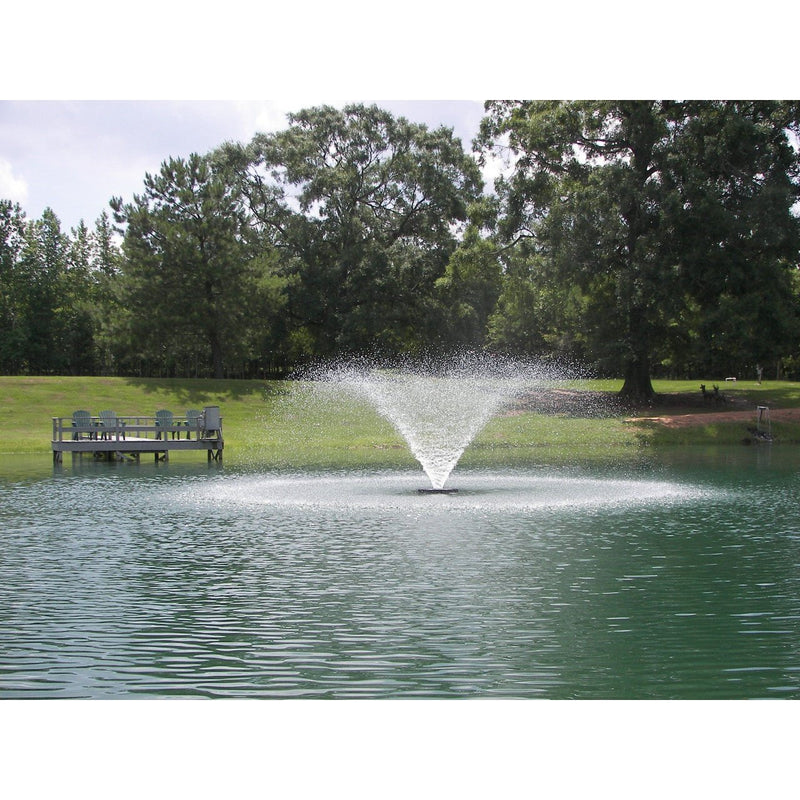
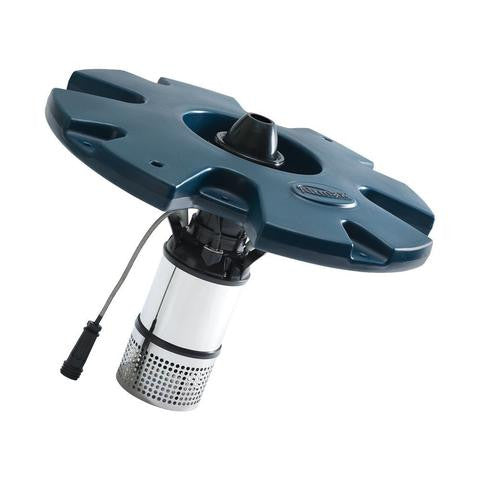
Surface aerators function by splashing water into the air, which increases the surface area for gas exchange. They are excellent for emergency situations where fish are piping at the surface, but they do little to break up deep stratification. Bottom-diffused systems are more efficient for long-term ecosystem management.
Practical Tips and Best Practices
Performance optimization requires attention to mechanical and environmental data. Installing a pressure gauge at the compressor outlet is mandatory. Record the baseline PSI when the system is new and the filters are clean. A 2-3 PSI increase over the baseline is a clear indicator that maintenance is required.
Clean or replace air filters every 3 to 6 months. A clogged filter starves the compressor of air, increasing heat and reducing the lifespan of the internal diaphragms. In dusty environments, monthly inspections are recommended.
Winter operation requires specific safety considerations. Aeration keeps a hole open in the ice, which is beneficial for gas exchange, but it also creates thin ice that can be dangerous for people and pets. If the pond is used for skating or winter recreation, the aerator should be moved to a shallower area or turned off entirely to allow for safe ice thickness.
Advanced Considerations: Calculating Oxygen Demand
Professional pond management involves calculating the Biochemical Oxygen Demand (BOD) to size aeration equipment accurately. BOD represents the amount of oxygen required by microorganisms to break down the organic matter present in the water over a five-day period (BOD5).
Standard Oxygen Transfer Rate (SOTR) is the measurement of how much oxygen an aerator can provide under standard conditions (20°C at sea level). In the field, we calculate the Actual Oxygen Transfer Rate (AOTR), which accounts for temperature, altitude, and current DO levels.
Fine-bubble diffusers typically achieve an OTE of 6.9% per meter of depth. A system installed at a depth of 4 meters (approximately 13 feet) can achieve an OTE of nearly 28%. This highlights the importance of placing diffusers at the maximum allowable depth based on the compressor's performance curve.
Example Scenario: A 1-Acre Pond Case Study
Consider a 1-acre pond with an average depth of 8 feet and a maximum depth of 15 feet. The pond has a high organic load from surrounding leaf litter. The calculated BOD suggests a daily oxygen requirement of 15 lbs.
A 1/2 HP rocking piston compressor capable of delivering 4.5 CFM (cubic feet per minute) of air is selected. Two fine-bubble diffusers are placed at the 12-foot depth.
The startup begins in mid-July when the pond is heavily stratified. Following the 7-day rule, the system runs for 30 minutes on Day 1. By Day 3, a slight sulfur smell is detected at the pond edge, confirming the gradual release of hydrogen sulfide. By Day 7, the temperature at the bottom has risen from 55°F to 72°F, matching the surface temperature. No fish mortality is observed because the toxic gases were oxidized at a controlled rate.
Final Thoughts
Pond aeration is a powerful tool for maintaining aquatic health, but its initial deployment must be managed with technical precision. The "Start-Up Rule" is not a suggestion; it is a critical protocol to prevent catastrophic fish kills caused by rapid thermal and chemical turnover. By understanding the mechanics of stratification and the toxicity of anaerobic gases, pond owners can safely transition their water bodies into healthy, aerobic ecosystems.
Monitoring system pressure, maintaining filters, and correctly sizing equipment based on BOD and depth are the hallmarks of successful pond management. These steps ensure the longevity of the mechanical components and the stability of the biological community.
Consistency is the ultimate goal. Once the gradual startup is complete, running the system 24 hours a day, 365 days a year provides the most stable environment for fish growth and organic waste reduction. Applying these principles will lead to a cleaner, more resilient pond that can withstand the stressors of extreme weather and heavy nutrient loading.