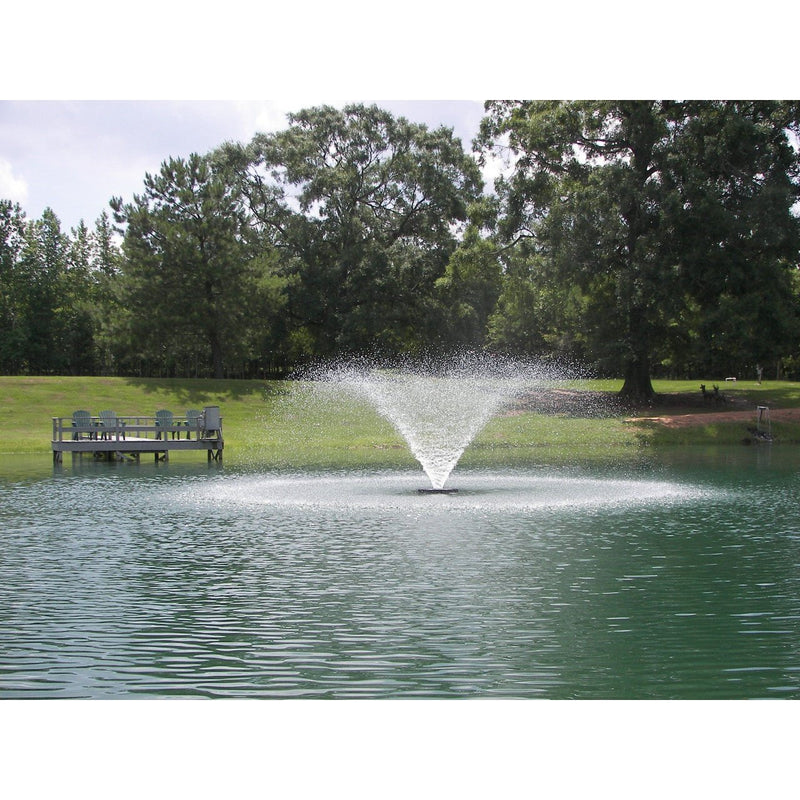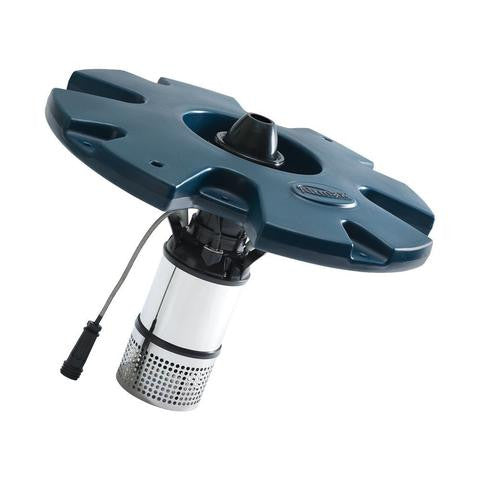


Where Should You Place a Diffuser in a Pond?
Placement is the difference between a clean pond and a science experiment. Location is everything. Placing your diffuser in the wrong spot wastes electricity and leaves oxygen on the table.
Strategic placement determines whether your aeration system functions as a high-efficiency life support unit or a localized bubble ornament. In aquatic management, efficiency is measured by how effectively the system breaks thermal stratification and maintains dissolved oxygen (DO) levels above critical thresholds.
Passive placement—dropping a diffuser without bathymetric data—often results in anaerobic "dead zones" and excessive mechanical wear. Active strategic positioning, however, leverages fluid dynamics to maximize the volume of water moved per watt of energy consumed.
This guide details the technical specifications and mechanical principles required to optimize diffuser placement for maximum ecological and operational performance.
Where Should You Place a Diffuser in a Pond?
The primary objective of a diffuser is to facilitate oxygen transfer through two mechanisms: direct gas-to-liquid exchange at the bubble surface and, more importantly, the vertical movement of water. To achieve this, a diffuser must be placed at the deepest accessible point of the pond, provided that the goal is total water column destratification.
As air is released from the diffuser, it creates a rising plume of bubbles. This plume acts as an airlift, dragging cold, oxygen-depleted water from the bottom (the hypolimnion) to the surface (the epilimnion). When this water reaches the surface, it vents harmful gases like hydrogen sulfide and carbon dioxide while absorbing atmospheric oxygen.
In a standard circular or bowl-shaped pond, the diffuser should be located in the center at the maximum depth. This positioning utilizes the "cone of influence" principle. As bubbles rise, they expand in a V-shaped pattern; the deeper the diffuser is placed, the larger the surface area of the resulting "boil" and the greater the volume of water moved.
However, real-world ponds often feature irregular contours or multi-basin configurations. In these scenarios, placement must be distributed to ensure that the radius of influence from each diffuser overlaps, eliminating stagnant pockets where organic muck can accumulate.
The Physics of Vertical Water Movement
Understanding the mechanical work performed by a diffuser requires an analysis of toroidal flow. A diffuser does not just "blow bubbles"; it creates a vertical conveyor belt. The efficiency of this conveyor belt is tied directly to depth and bubble size.
Fine-bubble diffusers, typically made from EPDM membranes or micro-porous ceramics, produce bubbles 1–3 mm in diameter. These smaller bubbles have a higher surface-area-to-volume ratio, which significantly increases the Oxygen Transfer Efficiency (OTE). Furthermore, small bubbles rise more slowly than coarse bubbles, increasing the "contact time" between the air and the water.
The lifting capacity of a diffuser increases exponentially with depth. For example, a diffuser at 15 feet may move approximately 4.5 million gallons of water per day, whereas the same unit at 30 feet can move upwards of 16 million gallons per day. This is due to the increased hydrostatic pressure and the longer distance the bubble plume has to accelerate the surrounding water mass.
Mechanical Sizing and Pressure Calculations
Placement is inseparable from the mechanical capabilities of the compressor. Every foot of depth adds 0.433 PSI of backpressure to the system. A compressor must be rated to handle the total pressure, which is the sum of hydrostatic pressure and friction loss within the airline.
To calculate the minimum required PSI for a system, use the following formula:
PSI = (Depth in Feet × 0.433) + Friction Loss + Diffuser Resistance
Friction loss is determined by the length and diameter of the airline. For runs over 100 feet, technical practitioners should upsize from 3/8-inch to 5/8-inch weighted tubing to prevent "choking" the compressor. If the compressor is forced to operate at the top of its pressure curve, heat will build up, leading to premature diaphragm or piston failure.
Linear diaphragm pumps are suitable for shallow applications (under 8 feet), as they are energy-efficient but have low pressure ceilings. For deeper placement, rocking piston compressors are required to overcome the higher hydrostatic head without overheating.
Placement for Irregular Pond Geometries
When a pond is not a perfect circle, a single central diffuser will fail to provide adequate turnover. Identifying "dead zones" is critical for maintaining biological stability.
For kidney-shaped or L-shaped ponds, diffusers should be placed in the center of each distinct basin. In long, narrow channels, "linear bubble tubing" may be more effective than disc diffusers, as it creates a continuous wall of aeration that prevents stagnation along the entire length of the channel.
If the pond contains an island or a submerged sandbar, these features act as physical barriers to water circulation. Diffusers must be placed on both sides of the obstruction to ensure the toroidal flow is not interrupted. Practitioners should aim for a "Turnover Rate" (TOR) of at least 1.0, meaning the entire volume of the pond is moved to the surface at least once every 24 hours.
Seasonal Placement Adjustments
The optimal location for a diffuser can shift based on seasonal thermal objectives. This is particularly relevant in climates that experience ice cover.
Summer Placement: During the peak of summer, the goal is maximum destratification. Diffusers should remain at the deepest points to ensure the cool, bottom water is constantly circulated. This prevents the formation of a sharp thermocline, which can otherwise trap nutrients and lead to sudden "turnover" fish kills during heavy rains or wind events.
Winter Placement: In winter, the goal shifts from oxygenation to gas venting and ice management. If a diffuser is left at the deepest point, it may super-chill the water by mixing the warmer 39°F (4°C) bottom water with the freezing surface air. This can stress or kill fish that rely on that stable thermal layer for dormancy. Moving the diffuser to a shallower shelf (approximately 4–6 feet deep) allows for a hole in the ice to remain open for gas exchange without destroying the deep-water thermal refuge.
Benefits of Strategic Placement
Properly placed aeration systems provide measurable improvements in water chemistry and mechanical longevity.
- Increased Dissolved Oxygen (DO): Strategic placement ensures that DO levels remain high throughout the water column, supporting aerobic bacteria that consume organic sludge.
- Nutrient Sequestration: By maintaining an aerobic environment at the sediment-water interface, phosphorus is bound to iron and remains trapped in the muck, rather than fueling algae blooms.
- Reduced Mechanical Strain: Matching placement depth to compressor specifications prevents overheating and extends the service life of diaphragms and seals.
- Elimination of Thermal Stratification: Constant mixing prevents the "dead water" layer from forming, maximizing the habitable volume for fish.
Common Mistakes in Diffuser Location
One of the most frequent errors is placing a diffuser directly into deep muck or silt. If the unit is not elevated on a base or "sled," the air bubbles will stir up sediment, increasing turbidity and potentially releasing trapped nutrients into the water column. This "internal loading" can trigger the very algae blooms the aeration was intended to prevent.
Another error is ignoring the "short-circuiting" effect. This occurs when a diffuser is placed too close to a fountain intake or a waterfall. The aerated water is immediately pulled back into a mechanical system rather than being distributed across the pond, significantly lowering the overall efficiency of the oxygen transfer.
Finally, practitioners often fail to account for wind-driven currents. In very large ponds, the prevailing wind can push surface water in one direction. Placing diffusers on the "upwind" side can leverage this natural movement, using the wind to help distribute the aerated water across the surface.
Limitations and Environmental Constraints
Diffused aeration is not a universal solution. In extremely shallow ponds (less than 3–4 feet), the bubble plume does not have enough vertical travel time to create significant water movement. In these cases, surface aerators or horizontal circulators (aspirators) are technically superior because they rely on mechanical propulsion rather than buoyancy-driven lift.
Environmental limitations also include ponds with heavy chemical loading. If a pond is already in a state of advanced eutrophication, starting a deep-water diffuser at full capacity can be lethal. The sudden mixing of anoxic, hydrogen sulfide-rich water into the upper layers can cause an immediate fish kill. In these scenarios, a "startup procedure" is required, running the system for only 15–30 minutes on the first day and gradually increasing the duration over two weeks.
Comparison of Diffuser Technologies
The following table compares common diffuser types based on mechanical performance metrics.
| Feature | EPDM Membrane Disc | Ceramic Stone | Perforated Bubble Tubing |
|---|---|---|---|
| Bubble Size | Fine (1-3mm) | Micro-fine (<1mm) | Coarse to Medium |
| OTE Efficiency | High | Highest | Moderate |
| Maintenance | Low (Self-cleaning) | High (Acid dipping) | Moderate |
| Backpressure | Moderate | High | Low |
| Best Depth | 8 - 30+ feet | Deep / Industrial | Shallow / Channels |
Practical Tips for Installation
Before deploying equipment, perform a "lead-line" survey to map the pond's bathymetry. Use a weighted string marked at 1-foot intervals to find the actual maximum depth, as original construction blueprints rarely account for years of sediment accumulation.
When installing the airline, always use weighted (sink) tubing. Non-weighted "poly" tubing will float when filled with air, creating a trip hazard for swimmers and a target for boat propellers. Ensure all connections are secured with stainless steel hose clamps; the heat generated by the compressor can soften plastic fittings, leading to underwater leaks that are difficult to diagnose.
Once the system is active, observe the "boil" at the surface. A perfectly vertical plume indicates the diffuser is level on the bottom. If the bubbles are surfacing at a sharp angle, the diffuser may have landed on a slope or is being pushed by a strong bottom current, which reduces its effective lift.
Advanced Considerations: BOD and SOTR
Serious practitioners should evaluate their aeration needs based on Biological Oxygen Demand (BOD). The BOD represents the amount of oxygen required by bacteria to break down the organic matter present in the pond. If the BOD exceeds the Standard Oxygen Transfer Rate (SOTR) of the aeration system, the pond will remain in a state of oxygen deficit despite the presence of bubbles.
Calculating the SOTR involves adjusting the manufacturer's clean-water oxygen transfer data for site-specific variables like elevation, temperature, and salinity. For example, oxygen is less soluble at higher altitudes and higher temperatures. A system that provides 2.0 lbs of O2 per hour in a laboratory setting may only provide 1.2 lbs in a warm, high-elevation pond in mid-August.
Scaling the number of diffusers should be based on these calculations rather than surface acreage alone. A shallow pond with high organic loading (high BOD) may require three times the aeration of a deep, clean pond of the same size.
Example Scenario: 1-Acre Kidney-Shaped Pond
Consider a 1-acre pond with two basins: a deep end at 12 feet and a shallower end at 6 feet, separated by a 4-foot ridge.
A single diffuser in the 12-foot section would fail to circulate the 6-foot basin effectively because the 4-foot ridge acts as a dam for the cold, heavy bottom water. The correct configuration involves two diffusers. One 9-inch disc diffuser should be placed in the 12-foot basin. A second, smaller diffuser or a section of bubble tubing should be placed in the 6-foot basin.
This multi-point setup ensures that the entire 1-acre volume is engaged in the turnover process. Using a 1/2 HP rocking piston compressor would provide sufficient CFM (Cubic Feet per Minute) to power both stations while overcoming the 5.2 PSI of hydrostatic pressure at the deepest point.
Final Thoughts
The efficacy of a pond aeration system is fundamentally tied to the precision of diffuser placement. By prioritizing the deepest points for summer destratification and adjusting to shallower shelves for winter safety, practitioners can maintain a stable aerobic environment that supports the entire aquatic food web.
Efficiency is not achieved by simply increasing horsepower; it is achieved by aligning the system's mechanical output with the pond's physical contours and biological demands. Consistent monitoring of dissolved oxygen levels and periodic inspection of the diffuser membranes will ensure the system continues to operate at peak performance.
Those looking to further optimize their systems should explore the integration of dissolved oxygen sensors and variable-frequency drives. These tools allow the aeration system to respond in real-time to fluctuating oxygen demands, further reducing energy costs while maintaining a pristine aquatic environment.