

What Is Oxygen Transfer Rate in Pond Aeration? (And Why Most Systems Fail)
Bubbles are useless if they don't dissolve. Here is why your system is failing. If you see large bubbles, you're seeing waste. Oxygen transfer happens at the surface area of the bubble. Smaller bubbles = more surface area = more life-giving fuel for your pond.
Effective pond management relies on understanding that air is not the goal; dissolved oxygen is the goal. Most aeration systems move vast quantities of air without achieving significant dissolved oxygen (DO) levels. This creates a state of wasted energy where the compressor works at high RPMs, but the biological fuel—oxygen—never enters the water column effectively.
To optimize a system, one must move past the visual aesthetics of "churning water" and look at the physics of gas-liquid mass transfer. This article provides a technical breakdown of the metrics that define success in aeration and how to apply them to your specific aquatic environment.
What Is Oxygen Transfer Rate in Pond Aeration? (And Why Most Systems Fail)
Oxygen Transfer Rate (OTR) is the mass of oxygen that is dissolved into a liquid per unit of time. In engineering terms, this is usually expressed in pounds of oxygen per hour (lb O2/hr) or kilograms per hour (kg O2/hr). It is the critical metric that determines whether an aeration system can keep up with the biological oxygen demand (BOD) of the pond’s ecosystem.
Standard Oxygen Transfer Rate (SOTR) is the measurement of this transfer under standardized laboratory conditions: 20°C (68°F), 1 atmosphere of pressure, and an initial dissolved oxygen concentration of 0 mg/L in clean water. While SOTR provides a benchmark for comparing equipment, it does not represent real-world performance. Actual Oxygen Transfer Rate (AOTR) is what happens in your pond, where temperature, salinity, and water "thickness" (the alpha factor) significantly reduce efficiency.
Most systems fail because they are sized based on CFM (cubic feet per minute) of air rather than the actual mass transfer of oxygen. A high-CFM blower pushing air through a coarse stone produces large bubbles that rise rapidly. These bubbles have a low surface-area-to-volume ratio and spend very little time in the water. Consequently, the OTR is abysmal, and the pond remains oxygen-starved despite the visible surface agitation.
How Gas Transfer Works: The Physics of Dissolving Oxygen
The process of moving oxygen from a gas bubble into the surrounding water is governed by the Two-Film Theory. This theory suggests that there are stagnant films of gas and liquid at the interface of a bubble. The resistance to oxygen transfer occurs primarily in the liquid film.
To overcome this resistance, the system must maximize the mass transfer coefficient (KLa). This coefficient is a product of the liquid-film coefficient (KL) and the specific interfacial area (a). When you decrease the bubble size from 20mm to 2mm, you exponentially increase the interfacial area (a) for the same volume of air.
Henry’s Law also plays a pivotal role. It states that the amount of dissolved gas in a liquid is proportional to its partial pressure above the liquid. In deeper water, the hydrostatic pressure increases, which raises the partial pressure of the oxygen within the bubble. This is why diffusers placed at 15 feet are significantly more efficient than those placed at 5 feet. The deeper the bubble, the higher the saturation limit and the longer the "residency time" the bubble has to dissolve before hitting the surface.
Correction Factors: Bridging SOTR to Reality
To calculate how much oxygen a system will actually deliver to a pond, engineers use the AOTR formula. This formula incorporates several correction factors that account for the messy reality of pond water compared to laboratory tap water.
The Alpha Factor (α) is the ratio of oxygen transfer in process water (your pond) to clean water. For fine bubble diffusers in typical pond environments, the alpha factor often ranges from 0.5 to 0.8. This means you might only get 50% to 80% of the rated efficiency because surfactants, organic loads, and suspended solids interfere with the bubble's ability to "leak" oxygen into the water.
The Beta Factor (β) corrects for the dissolved salts and minerals in the water, which affect oxygen solubility. In freshwater ponds, the beta factor is usually around 0.95 to 0.98. The Theta Factor (θ) accounts for temperature. As water temperature rises, oxygen becomes less soluble. The standard theta value is 1.024, used to adjust the KLa for temperatures deviating from 20°C.
Benefits of High Oxygen Transfer Efficiency
High OTR systems provide more than just survival for fish; they drive the entire nitrogen cycle. Aerobic bacteria, such as Nitrosomonas and Nitrobacter, require significant oxygen to convert toxic ammonia into nitrite and then into relatively harmless nitrate. Without a high OTR, these bacteria go dormant, leading to "New Pond Syndrome" or seasonal fish kills.
Effective aeration also reduces the accumulation of organic muck at the bottom. In an oxygen-rich environment, aerobic decomposers can break down organic matter up to ten times faster than anaerobic bacteria. This prevents the release of hydrogen sulfide and methane gases, which are byproducts of anaerobic decomposition and are toxic to most aquatic life.
Furthermore, high OTR systems are significantly cheaper to operate. By using fine bubble technology, you can achieve the same dissolved oxygen levels using a 1/2 horsepower compressor that would require a 2 horsepower blower using coarse stones. This is the shift from Wasted Energy to Biological Fuel.
Challenges and Common Engineering Mistakes
A frequent mistake in aeration design is ignoring "Friction Loss" or "Backpressure." Every foot of airline and every bend in the pipe creates resistance. If a compressor is rated for 4 CFM at 0 PSI, it might only deliver 2 CFM at 10 PSI. When you add the hydrostatic pressure of the water (0.433 PSI per foot of depth), the compressor often operates at the edge of its performance curve.
Another challenge is biofouling of the diffusers. Fine bubble membranes, often made of EPDM or silicone, have thousands of tiny perforations. Over time, calcium carbonate scale or biofilms can clog these pores. This increases backpressure and decreases OTR. Using PTFE-coated membranes or scheduled acid-washing can mitigate this, but it must be factored into the maintenance budget.
Heat is the third major challenge. Compressing air generates significant heat. If the air entering the diffusers is too hot, it can reduce the lifespan of the membranes and even lower the oxygen solubility in the immediate vicinity of the diffuser. Proper housing with cooling fans for the compressor is non-negotiable for long-term system stability.
Limitations: When High OTR Is Not the Only Factor
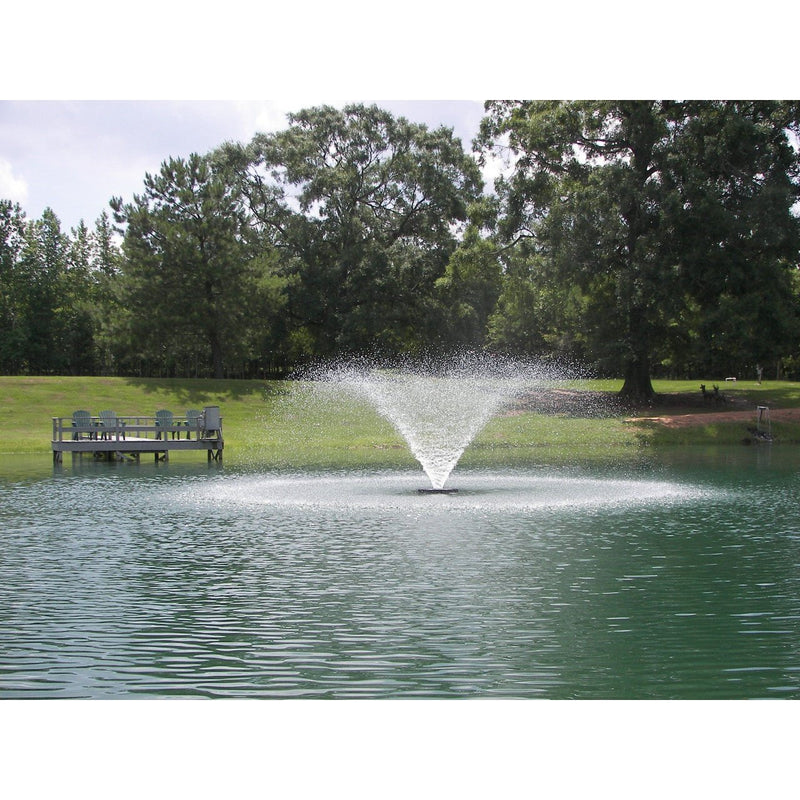
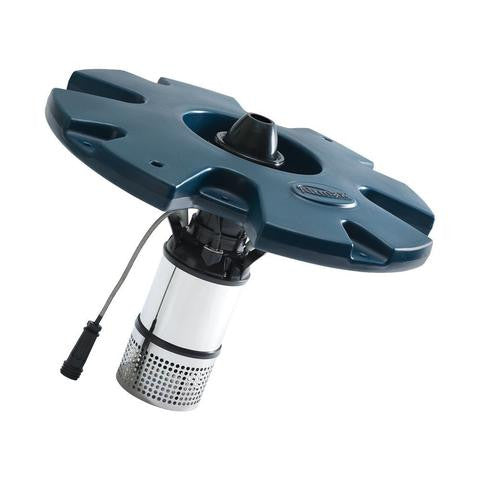
While OTR is king, it is not a silver bullet. In very shallow ponds (less than 4 feet deep), diffused aeration loses its primary advantage. The residency time of the bubble is too short for significant gas transfer to occur. In these scenarios, a vertical pump or a paddlewheel aerator may be more effective because they rely on splashing water into the atmospheric air, which is a different mechanism of transfer.
Environmental limits also exist. You cannot exceed 100% saturation easily without specialized equipment. Once the water is saturated with oxygen, adding more air does nothing but move the water. This is where "Mixing" becomes more important than "Transfer." In large, deep lakes, you may need a system designed for destratification rather than pure oxygenation.
Comparison: Aeration Technology Metrics
The following table compares different aeration methods based on Standard Aeration Efficiency (SAE), which is measured in pounds of oxygen transferred per horsepower-hour (lb O2/hp-hr).
| Aeration Type | Typical SAE (lb O2/hp-hr) | Primary Mechanism | Maintenance Level |
|---|---|---|---|
| Fine Bubble Diffuser | 4.0 - 7.0 | Submerged Gas Transfer | Moderate (Cleaning) |
| Paddlewheel Aerator | 2.5 - 4.0 | Surface Splashing | High (Mechanical) |
| Surface Agitator | 1.5 - 2.5 | Water-to-Air Contact | Low |
| Coarse Bubble Stone | 0.8 - 1.5 | Submerged (Low SA) | Very Low |
Practical Tips for Optimizing Your System
To maximize OTR, focus on the depth-to-pressure ratio. Position your diffusers in the deepest part of the pond to maximize the contact time between the bubble and the water. If you have a choice between two 1/4 HP compressors or one 1/2 HP compressor, the 1/2 HP unit is usually more efficient because it handles the backpressure of deeper water better.
Use weighted tubing (sink-line) rather than standard poly tubing for the submerged portions of the system. This prevents "loops" in the line that can trap moisture and cause air-locks or increased resistance. Always install a pressure gauge at the compressor outlet. A sudden rise in pressure indicates diffuser clogging, while a drop in pressure suggests a leak in the airline.
Manifold design is also critical. Ensure that the airflow is distributed evenly to all diffusers. If one diffuser is at 10 feet and another is at 5 feet, the air will naturally take the path of least resistance and only exit the shallower diffuser. You must use individual valves to balance the flow manually based on the depth of each station.
Advanced Considerations: The Mass Transfer Coefficient
For practitioners looking to scale systems, the calculation of the volumetric mass transfer coefficient (KLa) is essential. KLa is affected by the turbulence of the water. While smaller bubbles increase the "a" (surface area), the movement of the water increases the "KL" (the speed at which oxygen moves through the film).
In industrial aquaculture, we look at the Oxygen Utilization Rate (OUR). If your pond's OUR (how fast the fish and bacteria eat oxygen) is higher than your AOTR, the DO levels will crash regardless of how many bubbles you see. During the summer, the OUR typically spikes because metabolic rates double for every 10°C increase in temperature. This is why a system that works in May might fail in August.
Scaling a system also requires looking at "Blower Surge." If you undersize your piping, the air speed becomes too high, leading to turbulent friction that wastes energy as heat. Keeping air velocity below 30 feet per second (fps) in your main headers will ensure that the majority of your energy goes toward OTR rather than overcoming pipe friction.
Example Scenario: Calculating Oxygen Demand
Imagine a 1-acre pond with a maximum depth of 12 feet. The owner wants to maintain a DO level of 5.0 mg/L during a hot summer week where the water temperature hits 28°C (82°F).
First, we determine the saturation point. At 28°C, freshwater saturates at approximately 7.8 mg/L. Our target is 5.0 mg/L, so our "driving force" (the deficit) is 7.8 - 5.0 = 2.8 mg/L.
If we use a fine-bubble diffuser with an SOTR of 2.0 lb O2/hr, we must apply our correction factors. Assuming an alpha of 0.6, a beta of 0.98, and the temperature correction, the AOTR might drop to roughly 0.8 lb O2/hr. If the pond's biological load requires 1.5 lb of oxygen per hour to stay stable, a single 2.0 lb (SOTR) rated diffuser will fail. You would need at least two units to provide a safety margin for the biological fuel requirements.
Final Thoughts
Understanding the difference between moving air and transferring oxygen is the fundamental shift required for efficient pond management. Large bubbles are a visual indicator of energy that has failed to transform into biological fuel. By focusing on the surface area of the bubbles and the depth of the diffusers, you can maximize the oxygen transfer rate and create a thriving ecosystem.
Data-driven aeration is not about the volume of the "boil" on the surface; it is about the invisible mass of oxygen dissolving into the water column. Precision in equipment selection, accounting for correction factors like Alpha and Theta, and diligent maintenance of diffuser membranes will ensure that your system operates at peak efficiency.
Always monitor your dissolved oxygen levels with a reliable meter. This provides the feedback loop necessary to tune your system, allowing you to scale up or down based on the actual needs of your pond rather than guesswork. Successful aeration is a science of efficiency, and once optimized, it provides the foundation for all other aquatic life.