Diffused Aeration vs Surface Aeration: Real Performance Data Compared
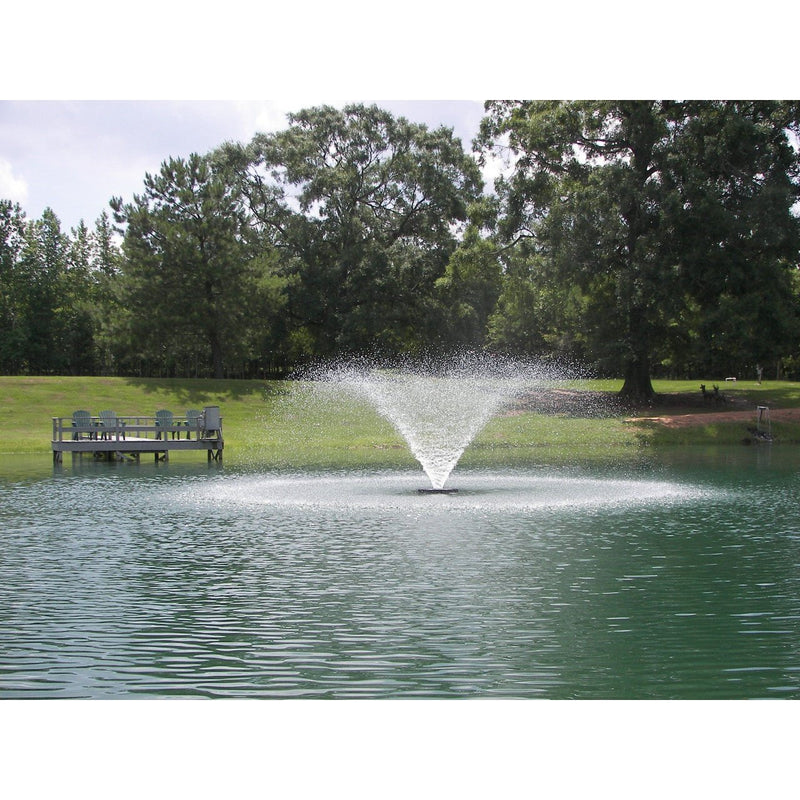
We compared the data. The results for your pond's health are shocking. Fountains are for decoration. Diffusers are for life. See the real-world performance data that proves why deep-water aeration is the only way to treat large-scale water bodies.
Managing large-scale aquatic environments requires a move away from aesthetic preferences and toward rigorous mechanical efficiency. Dissolved oxygen (DO) levels dictate the biological capacity of a water body to process nutrients and support life. While many facilities prioritize visual appeal, the physics of gas transfer favor sub-surface systems for high-volume applications.
This technical analysis examines the thermodynamic and mechanical differences between surface-level splashing and deep-water diffusion. Data-driven decision-making ensures that energy expenditure translates directly into measurable oxygen gains. Understanding these metrics is the only way to optimize a pond's long-term ecological stability.
We will break down the variables of Standard Aeration Efficiency (SAE) and Oxygen Transfer Efficiency (OTE). These figures provide the baseline for comparing different mechanical approaches. By the end of this guide, the choice between decorative surface units and industrial-grade diffusers will be clear through the lens of performance data.
Diffused Aeration vs Surface Aeration: Real Performance Data Compared
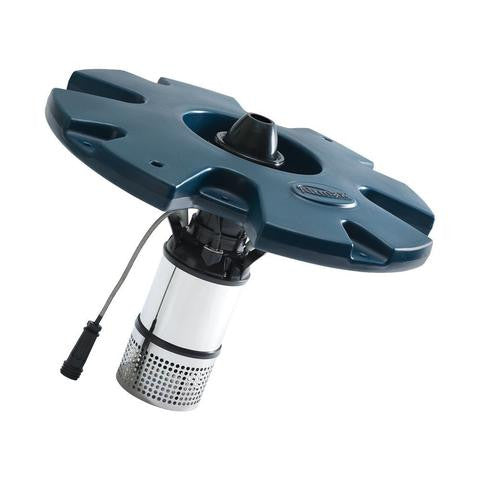
Diffused aeration utilizes shore-mounted compressors to deliver air through weighted tubing to membrane diffusers at the pond floor. Surface aeration relies on floating motors that propel water into the air to facilitate gas exchange at the atmosphere-water interface. These two methods operate on fundamentally different mechanical principles and produce vastly different efficiency metrics.
Standard Aeration Efficiency (SAE) is the primary metric used to compare these systems. SAE measures the pounds of oxygen transferred per horsepower-hour (lb O2/hp-hr). Data indicates that fine-bubble diffused aeration systems typically achieve SAE ratings between 3.5 and 4.0 kg O2/kW-hr, or approximately 6.0 to 12.0 lb O2/hp-hr in deep-water applications. Surface aerators, conversely, usually hover between 1.5 and 3.0 lb O2/hp-hr.
The discrepancy in efficiency stems from the "contact time" variable in the gas transfer equation. In a diffused system, air bubbles travel from the bottom of the water column to the surface. This travel time allows for continuous oxygen transfer as the bubble ascends. In surface systems, the water is only in contact with the air for the duration of the splash, which is often less than a second.
Deep-water diffusion also addresses thermal stratification. During summer months, water bodies separate into three distinct layers: the epilimnion (warm top layer), the thermocline (transition zone), and the hypolimnion (cold, oxygen-depleted bottom layer). Surface aerators rarely impact the hypolimnion, leaving the bottom of the pond anaerobic. Diffused systems break this stratification by inducing a laminar flow that moves the entire water column.
How Deep-Water Diffusion Functions at Scale
The mechanical core of a diffused system is the air compressor. Piston compressors or rotary vane pumps generate the pressure required to overcome the hydrostatic backpressure of the water column. This air is pushed through self-weighted EPDM (Ethylene Propylene Diene Monomer) or sinking PVC tubing to the diffuser assembly located at the maximum depth of the pond.
Oxygen transfer occurs through two primary mechanisms in this setup. First, the surface area of the millions of micro-bubbles allows for direct diffusion of oxygen into the water. Second, and more importantly, the rising bubble column creates an "airlift" effect. This entrains thousands of gallons of water per minute, dragging bottom water to the surface where it can shed toxic gases like methane and hydrogen sulfide while absorbing atmospheric oxygen.
Fine-bubble diffusers are engineered with thousands of microscopic perforations. These perforations produce bubbles usually between 1mm and 3mm in diameter. Smaller bubbles are technically superior because they have a higher surface-area-to-volume ratio than larger bubbles. This maximizes the interface between gas and liquid, increasing the Standard Oxygen Transfer Rate (SOTR).
Installation requires precise bathymetric data. Placing a diffuser in the deepest part of the pond maximizes the contact time of the bubbles and ensures the most efficient turnover of the hypolimnion. For large or irregularly shaped ponds, multiple diffuser stations must be strategically positioned to avoid "dead zones" where water remains stagnant and anaerobic.
Measurable Benefits of Bottom-Up Aeration
The most immediate benefit is the elimination of thermal stratification. By mixing the cold bottom water with the warm surface water, the system creates a uniform temperature throughout the water column. This prevents sudden "turnover" events—common in the fall or after heavy rains—that can lead to catastrophic fish kills when oxygen-depleted bottom water suddenly mixes with the surface.
Aerobic digestion of organic matter is another critical advantage. In an anaerobic pond bottom, organic muck (detritus) decomposes slowly, releasing nutrients that fuel algae blooms. With a diffused aeration system, the bottom becomes oxygen-rich, allowing aerobic bacteria to thrive. These bacteria decompose organic matter up to ten times faster than anaerobic species, effectively "cleaning" the pond floor over time.
Energy costs are significantly lower for the volume of water treated. A 1/2 HP compressor can effectively aerate a 1-acre pond that is 10 to 12 feet deep. To achieve similar turnover with a surface aerator, a motor of 1.5 to 2.0 HP would likely be required. This reduction in power consumption results in substantial savings on monthly utility bills.
Diffused systems also offer superior winter performance. Because the compressor is located on shore and the air is released at the bottom, the rising bubbles keep a portion of the surface ice-free. This allows for continuous gas exchange throughout the winter, preventing the buildup of toxic gases under the ice and protecting fish populations from winterkill.
Technical Challenges and Operational Pitfalls
Hydrostatic pressure represents the primary mechanical challenge. For every foot of depth, the compressor must overcome 0.433 PSI of water pressure. In very deep ponds (over 20 feet), specialized high-pressure compressors are necessary. If the compressor is undersized for the depth, the airflow will be restricted, leading to overheating and premature mechanical failure.
Compressor heat management is a common oversight. Compressing air generates heat, and the air exiting the pump can reach temperatures exceeding 200°F. If the system is not housed in a ventilated cabinet with a cooling fan, the heat will degrade the internal gaskets and valves. Furthermore, excessively hot air can soften the EPDM membranes on the diffusers, causing the perforations to stretch and lose their fine-bubble efficiency.
Membrane fouling is another concern in high-mineral or high-nutrient environments. Over time, calcium carbonate or biological biofilms can clog the pores of the diffuser. While many modern diffusers are designed with "self-cleaning" flexible membranes that expand and contract to shed debris, periodic inspection and cleaning with a mild acid solution are still required to maintain the SOTR.
Sizing errors are the most frequent cause of system failure. Practitioners often size systems based solely on surface acreage without accounting for total water volume or depth. A shallow pond requires more diffusers with lower-volume compressors, while a deep pond needs fewer diffusers with higher-pressure pumps. Failing to calculate the "Turnover Rate" (the time it takes to cycle the entire pond volume once) results in inadequate aeration.
Limitations of Sub-Surface Diffusion
Diffused aeration is significantly less effective in shallow water bodies. In depths of less than 4 to 6 feet, the bubble column does not have enough vertical travel time to create a significant airlift effect. The "cone of influence" for each diffuser is much narrower in shallow water, meaning more diffuser stations are required to cover the same surface area, increasing the initial hardware costs.
Initial installation is more complex than floating units. Surface aerators are often "plug-and-play," requiring only a power source and a mooring line. Diffused systems involve trenching for air lines, setting up shore-based enclosures, and correctly weighting and placing diffusers on the pond floor. This higher complexity may not be justified for small, purely decorative backyard features.
The lack of a visual display is a limitation for those seeking aesthetics. While the boiling action at the surface indicates the system is working, it does not provide the cascading fountain effect that many golf courses or residential developments desire. In these cases, a hybrid approach—using a fountain for looks and a diffuser for health—is the only way to satisfy both requirements.
Efficiency Data Comparison
| Parameter | Surface Aerator (Splasher) | Fine-Bubble Diffuser |
|---|---|---|
| Standard Aeration Efficiency (SAE) | 1.5 – 3.0 lb O2/hp-hr | 6.0 – 12.0 lb O2/hp-hr |
| Maximum Effective Depth | 6 – 10 feet | 40+ feet |
| Maintenance Interval | High (Moving parts in water) | Low (Compressor filters only) |
| Destratification Power | Low (Surface only) | High (Total water column) |
| Energy Cost per Gallon Treated | Moderate to High | Low |
Practical Tips for System Optimization
Conduct a thorough depth survey before purchasing any equipment. Use a weighted line or a portable depth finder to map the pond's floor. Identify the deepest areas, as these are the optimal locations for diffuser placement. If the pond has multiple basins separated by shallow ridges, each basin will require its own diffuser station.
Install a pressure gauge at the compressor outlet. This is a vital diagnostic tool. A sudden increase in pressure indicates a blockage in the line or fouled diffusers, while a drop in pressure suggests a leak in the tubing or a failing compressor. Monitoring pressure daily can prevent total system shutdowns.
Utilize "Soft Start" protocols during the initial installation. If the pond is heavily stratified and has not been aerated before, do not run the system 24/7 immediately. Doing so could rapidly mix toxic gases from the bottom into the surface water, causing a massive fish kill. Start by running the system for 15 minutes on the first day, 30 minutes on the second, and gradually increase the duration over two weeks.
Keep the air compressor as close to the power source as possible. While air can be pushed through tubing for hundreds of feet with minimal friction loss, electricity loses voltage over long distances. Running a long air line is far more efficient and cost-effective than running an expensive, high-gauge electrical cable to the water's edge.
Advanced Considerations: The Physics of Gas Transfer
The Standard Oxygen Transfer Rate (SOTR) is influenced by Henry's Law, which states that the amount of dissolved gas in a liquid is proportional to its partial pressure. As bubbles descend deeper, the hydrostatic pressure increases, which theoretically increases the rate of oxygen transfer. This is why deep-water diffusers are exponentially more efficient than surface units; they utilize the weight of the water itself to force oxygen into solution.
The "Two Film Theory" of mass transfer further explains this. It suggests that oxygen must pass through a gas film and a liquid film at the bubble interface. Small bubbles maximize the total surface area of these films. For example, a single 1-inch bubble has a surface area of about 3.14 square inches. If that same volume of air is broken into 0.1-inch bubbles, the total surface area increases to over 30 square inches, increasing the transfer potential by ten-fold.
Consider the "Alpha Factor" of your water body. The Alpha Factor is the ratio of the oxygen transfer rate in the pond water compared to the transfer rate in clean tap water. Highly polluted or brackish water has a lower Alpha Factor, meaning the aeration system must be oversized to compensate for the difficulty of transferring oxygen into contaminated liquid. Serious practitioners should test their water's specific gravity and organic load to refine these calculations.
Example Scenario: 2-Acre Reclamation Project
Consider a 2-acre pond with an average depth of 12 feet and a maximum depth of 18 feet. The pond is heavily stratified, with a 3-foot layer of organic muck at the bottom and a history of summer fish kills. A traditional 2 HP floating fountain would only circulate the top 4 to 6 feet of water, leaving the bottom 12 feet anaerobic and the muck layer untouched.
By switching to a 3/4 HP rocking piston compressor with four fine-bubble diffuser stations, the operator can move approximately 8,000 gallons of water per minute. At this rate, the entire volume of the pond is cycled through the surface once every 24 hours. The initial hardware cost is roughly 20% higher than the fountain, but the monthly energy savings pay for the difference in under 18 months.
Within the first season, the dissolved oxygen at the 15-foot depth rises from 0.5 mg/L to 6.5 mg/L. The aerobic bacteria begin digesting the muck layer, and the water clarity increases as the suspended solids settle into a more stable, oxygenated bottom. This shift from aesthetic management to mechanical oxygenation represents the difference between a failing pond and a thriving ecosystem.
Final Thoughts
The data remains consistent: surface aerators and fountains are primarily aesthetic tools. For the purpose of biological remediation and large-scale water health, deep-water diffused aeration is the technically superior choice. The metrics of SAE and SOTR provide a roadmap for efficient management that prioritizes oxygen saturation over visual display.
Practitioners must focus on the mechanical fundamentals of turnover rates, hydrostatic pressure, and bubble size. Investing in high-quality compressors and self-cleaning membranes reduces long-term maintenance costs and ensures the system remains operational during critical peak-demand periods in mid-summer and late winter. Efficiency is not an abstract concept; it is a measurable result of correct engineering.
As water bodies face increasing nutrient loads and rising temperatures, the demand for effective aeration will only grow. Transitioning to sub-surface diffusion is the most impactful step a facility can take to ensure the longevity of its aquatic assets. Use the data to guide your installation and let the physics of gas transfer do the heavy lifting.