

What Happens During Pond Turnover And Why It Matters
The 'flip' that can kill your entire pond overnight. Stagnant water layers are a ticking time bomb. When temperatures shift, the toxic bottom layer rises. Here is how to keep your water dynamic and safe during the turnover season.
Pond management often focuses on visible metrics like water clarity or algae growth, yet the most critical risk factor remains invisible and submerged. Thermal stratification creates a physical barrier between oxygenated surface water and the dense, anoxic depths. This separation is not merely a temperature difference; it is a mechanical division that dictates the chemical stability of the entire ecosystem.
The Static Danger vs The Dynamic Flow illustrates the difference between a high-risk stratified system and a stable, homogenized water column. Static systems rely on a precarious balance that collapses during seasonal transitions. Dynamic systems utilize mechanical destratification to maintain consistent parameters from the surface to the benthos.
What Happens During Pond Turnover And Why It Matters
Pond turnover is the vertical mixing of water layers that have been isolated by density gradients. This phenomenon occurs when the temperature of the surface layer (epilimnion) shifts to match the temperature of the bottom layer (hypolimnion). Because water is at its maximum density at approximately 3.98°C (39.2°F), cooling or warming toward this point triggers a massive redistribution of the water mass.
During the summer months, solar radiation warms the upper water column, causing it to expand and become less dense. This lighter water floats on top of the cooler, denser bottom water. A transitional zone known as the thermocline or metalimnion forms, acting as a thermal curtain that prevents atmospheric oxygen from reaching the deeper reaches of the pond.
The isolated hypolimnion becomes a sink for organic matter, including decaying algae, fish waste, and leaf litter. Aerobic bacteria consume the remaining dissolved oxygen (DO) to decompose this matter, quickly leading to anoxic conditions. In the absence of oxygen, anaerobic bacteria take over, producing metabolic byproducts such as hydrogen sulfide (H2S), methane (CH4), and ammonia (NH3).
These gases remain trapped under the pressure of the upper water column until the turnover event. When autumn air temperatures cool the surface water, its density increases until it matches the bottom layer. At this critical point, even a moderate wind provides enough kinetic energy to "flip" the pond. The toxic, oxygen-depleted water from the bottom rushes to the surface, causing an immediate drop in total dissolved oxygen and potentially triggering a total fish kill within hours.
How Mechanical Destratification Works
Preventing a catastrophic turnover requires the active elimination of thermal layers through mechanical destratification. The primary goal is to ensure that the entire volume of water is moved to the surface at least once every 24 hours. This constant circulation facilitates gas exchange, allowing toxic gases to vent into the atmosphere while replenishing oxygen levels throughout the water column.
Subsurface diffused aeration is the most efficient method for this task. This system utilizes a shore-mounted compressor that pumps air through weighted tubing to membrane diffusers placed at the deepest points of the pond. As the compressor forces air through the membranes, it creates a plume of fine bubbles. These bubbles provide a massive surface area for direct oxygen transfer, but their primary mechanical function is "entrainment."
Entrainment occurs as the rising bubble plume creates a vacuum effect, pulling cold, dense water from the bottom toward the surface. Research indicates that for every cubic foot of air released at depth, hundreds of gallons of water are displaced upward. This creates a continuous vertical current that breaks the thermocline and maintains a uniform temperature profile.
Surface aerators or agitators offer an alternative for shallower environments. These units use a motor and propeller to splash water into the air. While effective at increasing local DO levels, they lack the vertical lift required to destratify ponds deeper than 8 to 10 feet. For deep-water applications, the physics of buoyancy and displacement favor diffused air systems.
Benefits of a Dynamic Water Column
Maintaining a dynamic flow provides measurable improvements to the pond's biochemical stability. The most immediate benefit is the reduction of Biochemical Oxygen Demand (BOD). By keeping the bottom layer aerobic, the system supports efficient aerobic bacteria that decompose organic muck up to ten times faster than their anaerobic counterparts.
Thermal stability is another significant advantage. In a stratified pond, fish are often compressed into a narrow "comfort zone" between the hot, oxygen-rich surface and the cold, anoxic bottom. Destratification expands the usable habitat, allowing fish to utilize the full depth of the pond. This reduces stress and improves growth rates by providing access to cooler water that still contains sufficient oxygen.
Chemical buffering is also enhanced through consistent circulation. Photosynthesis by algae at the surface can cause dramatic pH swings as carbon dioxide is consumed. Mixing these surface waters with the deeper volume buffers these fluctuations, maintaining a more stable environment for aquatic life. Furthermore, venting hydrogen sulfide prevents the acidification of the water that often occurs during a natural turnover event.
Challenges and Common Startup Mistakes
The most dangerous mistake a pond manager can make is turning on a bottom-diffused aeration system for the first time in the middle of a hot summer. If a pond has already stratified and the hypolimnion is anoxic, starting the system at full capacity will induce an artificial turnover. This "self-inflicted" fish kill happens because the aerator immediately mixes the toxic gases into the upper reaches where the fish are holding.
To avoid this, a "slow-start" procedure is mandatory for any system installed in an existing stratified pond. The standard protocol involves running the system for only 30 minutes on the first day, then doubling the runtime each subsequent day. This allows the pond to vent gases slowly and prevents the sudden collapse of dissolved oxygen levels.
Sizing errors represent another frequent challenge. Under-sizing an aeration system leads to "dead zones" where stratification persists despite the equipment running. If the compressor cannot provide sufficient CFM (cubic feet per minute) to overcome the hydrostatic pressure at the pond's maximum depth, the bubble plume will lack the energy required to move the entire water mass.
Limitations of turnover Management
Environmental constraints often dictate the effectiveness of destratification efforts. In extremely large or irregularly shaped water bodies, a single aeration point is insufficient. Coves, islands, and narrow channels disrupt the circular flow patterns, requiring multiple diffuser stations to ensure complete coverage.
Water depth is a primary limiting factor. In ponds shallower than 5 or 6 feet, diffused aeration is less efficient because the bubble plume does not have enough vertical travel time to entrain a large volume of water. In these scenarios, the energy required to pump air to the bottom often exceeds the benefit, and surface-based circulation or fountains may be more practical.
Wind fetch also plays a role in natural destratification. Ponds located in open areas with high wind exposure may experience enough natural mixing to prevent severe stratification. Conversely, sheltered ponds surrounded by trees or structures are at higher risk and require more aggressive mechanical intervention.
Comparison of Aeration Technologies
Selecting the correct hardware requires an analysis of Standard Aeration Efficiency (SAE). This metric measures the pounds of oxygen transferred to the water per horsepower-hour (lb O2/hp-hr). The choice between decorative and functional systems often involves a trade-off between aesthetics and mechanical performance.
| System Type | SAE Rating (lb O2/hp-hr) | Effective Depth | Primary Mechanism |
|---|---|---|---|
| Decorative Fountain | 1.5 – 2.5 | 0 – 8 Feet | Surface Splashing |
| Surface Aerator | 2.6 – 3.2 | 0 – 10 Feet | High-Volume Agitation |
| Diffused Air (Membrane) | 3.0 – 4.5+ | 5 – 50+ Feet | Vertical Entrainment |
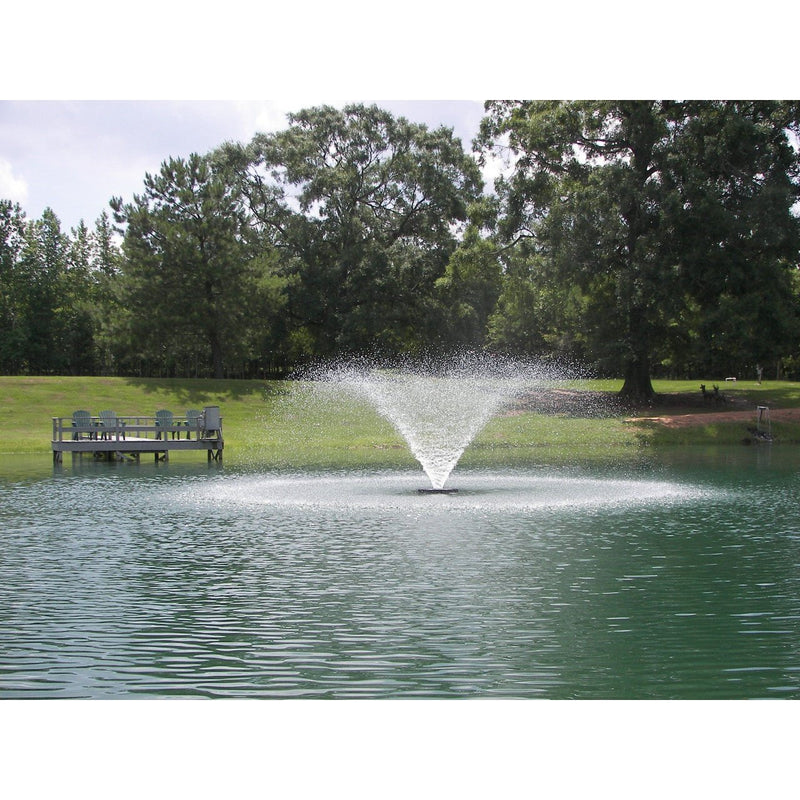
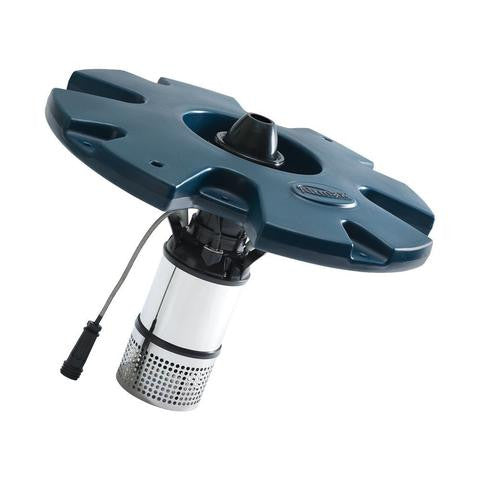
While fountains are aesthetically pleasing, they are the least efficient at destratification. Much of the energy is consumed by lifting water high into the air for display purposes rather than moving the bottom water column. For managers focused on preventing turnover, diffused air systems provide the highest ROI in terms of oxygen transfer and circulation per watt of electricity consumed.
Practical Tips for System Optimization
System efficiency depends on precise placement and maintenance. Diffusers should always be located in the deepest parts of the pond to maximize the entrainment effect. If a pond has multiple deep basins, each basin requires its own diffuser head to prevent isolated anoxic pockets.
Monitoring dissolved oxygen levels at different depths is the only way to verify that a system is working. A DO meter or a chemical test kit should be used to check levels at the surface and at the bottom. If the bottom DO is significantly lower than the surface (e.g., 2 ppm vs 8 ppm), the system is not providing adequate circulation and may need more airflow or better diffuser placement.
Routine maintenance of the compressor is critical. Air filters must be changed every 3 to 6 months to prevent the motor from overheating and losing CFM output. Membrane diffusers should be cleaned periodically to prevent bio-fouling or mineral buildup, which increases backpressure and reduces the volume of air delivered to the water.
Advanced Considerations: Redox and Oxygen Solubility
Serious practitioners monitor the Oxidation-Reduction Potential (ORP), also known as Redox, to gauge the health of the pond's sediment layer. ORP measures the ability of the water to cleanse itself of organic pollutants. An aerobic, healthy pond typically maintains an ORP between +200 mV and +400 mV. When levels drop below -100 mV, the environment becomes highly reductive, leading to the formation of hydrogen sulfide.
Oxygen solubility is inversely proportional to water temperature. Cold water can hold significantly more dissolved oxygen than warm water. This physical reality makes summer the most high-risk period, as the warmer surface water has a lower saturation point for oxygen while the fish have a higher metabolic demand.
| Temperature (°C) | Temperature (°F) | DO Saturation (mg/L) |
|---|---|---|
| 0 | 32 | 14.6 |
| 10 | 50 | 11.3 |
| 20 | 68 | 9.1 |
| 30 | 86 | 7.5 |
Understanding this relationship allows managers to adjust aeration intensity. During peak summer, systems should run 24/7 to compensate for low solubility and high biological demand. In winter, systems can often be scaled back, provided they are kept running to maintain an open hole in the ice for gas venting.
Example: Sizing a 1-Acre Pond System
Consider a 1-acre pond with a maximum depth of 12 feet and a rectangular shape. To ensure adequate destratification, the goal is to move approximately 1.5 million gallons of water (the estimated volume of a 1-acre pond with a 5-foot average depth) to the surface every 24 hours.
A typical 1/2 HP rocking piston compressor produces roughly 4.5 CFM at 5-10 PSI. When paired with two fine-bubble membrane diffusers placed at 12 feet, each diffuser will entrain approximately 1,500 to 2,000 gallons of water per minute.
Total water movement: 2 diffusers × 1,750 GPM = 3,500 GPM.
Daily turnover: 3,500 GPM × 60 minutes × 24 hours = 5,040,000 gallons per day.
In this scenario, the system moves the entire pond volume nearly 3.3 times per day. This provides a substantial safety margin, ensuring that even during extreme weather events or heavy organic loading, the water column remains homogenized and oxygenated. If the pond had coves or an "L" shape, additional diffusers would be required to eliminate dead spots, even if the total GPM remained the same.
Final Thoughts
Pond turnover is a natural process that becomes a liability in managed ecosystems with high organic loads. The transition from a stratified, static state to a homogenized, dynamic flow is the most effective way to safeguard aquatic life. By understanding the physics of water density and the mechanics of gas exchange, managers can move away from reactive crisis management and toward a proactive, data-driven approach.
Successful management requires the integration of mechanical destratification, regular monitoring of oxygen levels, and a commitment to maintaining aerobic conditions at the pond floor. Investing in efficient aeration technology and following established startup protocols mitigates the risk of catastrophic fish kills and promotes long-term ecological stability.
Applying these principles ensures that the "turnover season" becomes a non-event rather than a disaster. Keeping the water in constant motion prevents the accumulation of toxic gases and ensures that the pond remains a healthy, resilient environment for years to come.