

How To Prevent Summer Fish Kills During Heat Waves
When the mercury rises, your pond either becomes a furnace or a refuge. Heat waves don't just warm the water; they strip it of oxygen. Mimic the cooling flow of a wild stream to keep your prize fish thriving while the neighbor's pond reaches boiling point.
High-temperature events represent the most significant metabolic challenge for closed aquatic systems. As thermal energy increases, the physical capacity of water to hold dissolved oxygen (DO) decreases. This inverse relationship creates a physiological "pincer move" where fish metabolic rates accelerate just as the available life-support gas diminishes.
Achieving thermal stability requires a shift from passive observation to active mechanical management. You must optimize gas exchange, manage nutrient-driven oxygen demand, and mitigate solar radiation. This technical guide outlines the precise metrics and interventions required to maintain a stable environment during extreme heat cycles.
How To Prevent Summer Fish Kills During Heat Waves
A summer fish kill is a systemic failure of the pond’s life support capacity. It occurs when the biological oxygen demand (BOD) exceeds the oxygen transfer rate of the system. In most residential and agricultural ponds, this happens during the late night or early morning hours when photosynthesis ceases and respiration continues.
Preventing these events involves three primary mechanical objectives: maximizing surface area for gas exchange, disrupting thermal stratification, and reducing organic load. You are essentially fighting the laws of thermodynamics. Water at 85°F (29.4°C) holds approximately 25% less oxygen than water at 60°F (15.5°C) at sea level. When you factor in the increased respiration of fish and bacteria at higher temperatures, the margin for error disappears.
Real-world application involves deploying high-volume aeration systems and managing the "Concrete Trap" effect. Artificial basins, particularly those with dark liners or concrete bottoms, absorb and retain thermal energy far more efficiently than natural earth-bottom sanctuaries. Without active cooling and circulation, these systems become heat sinks that cook the inhabitants from the bottom up.
Thermal Dynamics and Oxygen Solubility: How It Works
To prevent a collapse, you must understand the Henry’s Law principle, which dictates that the solubility of a gas in a liquid is proportional to the partial pressure of that gas above the liquid. However, temperature is the primary variable you can control. As water temperature increases, the kinetic energy of water molecules increases, allowing dissolved oxygen molecules to escape more easily into the atmosphere.
The process of prevention works through several mechanical levers:
1. Diffused Aeration and Boundary Layer Disruption
Diffused aeration systems use a compressor to push air through a membrane at the pond bottom. As bubbles rise, they displace water, creating a vertical current known as an airlift. This disrupts the thermocline—the layer between warm surface water and cooler deep water. By forcing bottom water to the surface, you facilitate gas exchange across the entire water column.
2. The Photosynthetic Shift
During the day, algae and plants produce oxygen through photosynthesis. However, at night, these same organisms consume oxygen through respiration. Heat waves often trigger algal blooms. The goal is to manage the biomass so that the nighttime oxygen "crash" does not drop below the critical threshold of 3.0 to 4.0 mg/L for most pond fish.
3. Evaporative Cooling
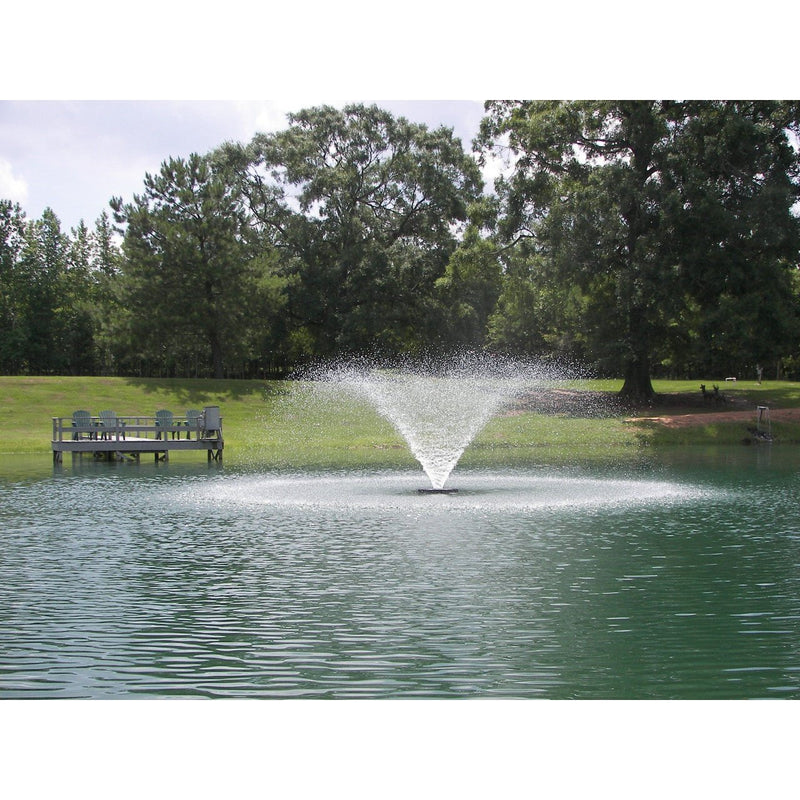
Just as humans sweat, ponds can be cooled through evaporation. Increasing surface turbulence through fountains or waterfalls enhances the evaporation rate. This phase change from liquid to gas consumes thermal energy, which can lower the water temperature by several degrees compared to stagnant water.
Benefits of Proactive Heat Management
Maintaining high DO levels and lower temperatures during a heat wave offers measurable performance benefits for the aquatic ecosystem. These are not merely survival metrics but optimization targets.
Stable Metabolic Rates: When water temperatures remain within the optimal range (typically 65°F to 75°F for cool-water species), fish maintain efficient feed conversion ratios. Excessive heat forces fish into a state of metabolic stress, where energy is diverted from growth to basic physiological maintenance.
Enhanced Pathogen Resistance: Most aquatic pathogens, such as Aeromonas and Columnaris, thrive in warm, low-oxygen environments. High DO levels strengthen the immune response of the fish, specifically the mucosal barrier, making them less susceptible to seasonal outbreaks.
Bio-filtration Efficiency: Nitrifying bacteria (Nitrosomonas and Nitrobacter) are highly aerobic. Their efficiency in converting toxic ammonia into nitrate peaks at specific temperatures but requires high oxygen saturation. Proactive aeration ensures that the "biological filter" does not stall during a heat wave, preventing secondary ammonia spikes.
Challenges and Common Pitfalls
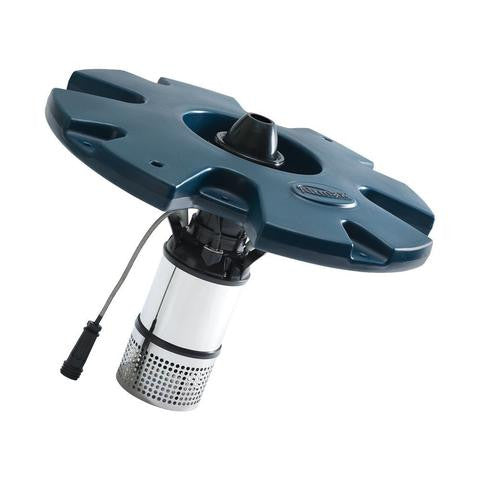
System failures often stem from a misunderstanding of fluid dynamics or equipment limitations. One frequent error is relying solely on decorative fountains. While aesthetically pleasing, many fountains only circulate the top 12 to 24 inches of water. This leaves a stagnant, deoxygenated "dead zone" at the bottom where organic matter decomposes, consuming even more oxygen.
Over-feeding During Heat Spikes: This is a common operational mistake. Fish metabolism increases with temperature, but their ability to process protein efficiently can be hampered by low DO. Excess uneaten food and increased urea excretion significantly raise the BOD, leading to an oxygen crash. If the water temperature exceeds 85°F, feeding should be reduced or suspended entirely.
Improper Aerator Sizing: Many practitioners install systems with insufficient CFM (Cubic Feet per Minute) ratings. A pond requires a specific turnover rate—ideally moving the entire volume of the pond 1 to 2 times every 24 hours. Under-sized compressors fail to break the surface tension effectively, leading to localized oxygenation that does not reach the entire fish population.
Limitations of Cooling Strategies
Environmental constraints dictate the absolute limits of what can be achieved. In high-humidity environments, evaporative cooling is significantly less effective. When the air is already saturated with moisture, the rate of evaporation slows, and the pond cannot shed heat as efficiently. This is known as the "wet-bulb" limit.
Small, shallow ponds are also at a disadvantage. A system with a depth of less than 3 feet lacks the thermal mass to resist rapid temperature swings. In these cases, mechanical aeration may not be enough to prevent a kill if the ambient air temperature stays above 90°F for extended periods. These systems are essentially "Concrete Traps" that lack the vertical buffer found in deeper "Wild Sanctuaries."
Groundwater cooling—adding fresh water from a well—is a powerful tool but has risks. Well water is usually devoid of oxygen and can be high in dissolved CO2 or nitrogen gas. Adding large volumes of untreated well water quickly can lead to "gas bubble disease" or thermal shock if the temperature differential is too great.
Technical Comparison: Aeration Methods
| Feature | Surface Fountains | Bottom Diffusers | Nano-Bubble Tech |
|---|---|---|---|
| Oxygen Transfer Efficiency | Low to Moderate | High | Extreme |
| Thermal Destratification | Poor | Excellent | Moderate |
| Power Efficiency (per mg/L) | Low | High | Very High |
| Operating Cost | High | Low | Moderate |
Practical Tips for Immediate Intervention
When a heat wave is forecast, implement these adjustments to harden your system against the temperature spike:
- Increase Aeration Run-Time: Switch all aeration and circulation systems to 24/7 operation. Do not turn off pumps at night, as this is when the oxygen demand is highest.
- Deploy Temporary Shade: Use 70% shade cloth over the shallowest parts of the pond. This prevents the "Concrete Trap" effect where shallow shelves act as solar heaters for the rest of the pond.
- Perform Small, Frequent Water Changes: If you have access to cooler municipal or well water, perform 5-10% water changes daily. Always use a dechlorinator and spray the water through the air to facilitate gas exchange before it hits the pond.
- Monitor Dissolved Oxygen: Use a digital DO meter or a chemical test kit at 5:00 AM. This is your "nadir" or lowest point. If DO is below 5 mg/L at dawn, your system is at critical risk.
Advanced Considerations: The Role of Nano-Bubbles and Algaecides
For high-value collections or intensive aquaculture, standard aeration may be insufficient. Nano-bubble generators represent the current "gold standard" in gas transfer. Unlike standard bubbles that rise and pop, nano-bubbles (under 200nm in diameter) stay suspended in the water column for days, providing a massive reservoir of dissolved oxygen that is resilient to temperature swings.
Chemical management is another advanced lever. During a heat wave, the temptation to kill off an algal bloom with algaecides is high. However, copper-based algaecides cause a rapid die-off of plant matter. This massive influx of decaying organic material consumes oxygen at an incredible rate. If you must use algaecides during a heat wave, treat only 1/4 of the pond at a time and double your aeration capacity.
Consider the "Trophic State Index" of your pond. A pond with high phosphorus levels will always be more prone to summer kills. Long-term heat resistance involves using lanthanum-modified clay or other phosphorus binders to starve algae of nutrients, thereby reducing the nighttime respiration load.
Scenario: Rescuing a 5,000-Gallon System
Imagine a 5,000-gallon koi pond in a suburban environment. The ambient temperature is 98°F, and the water has reached 86°F. The fish are piping (gulping air at the surface), indicating a DO crisis.
The immediate technical response is to deploy a 40-watt air pump with two large weighted diffusers placed at the deepest point. This moves approximately 2.5 CFM of air. Simultaneously, a submersible pump is used to create a "venturi" effect by pulling air into the water stream. Feeding is halted. Within 4 hours, the vertical mixing breaks the thermocline, bringing the 78°F water from the bottom to the surface, and the oxygen saturation rises from 3.2 mg/L to 6.5 mg/L, stabilizing the population.
Final Thoughts
Summer fish kills are almost entirely preventable through the application of fluid dynamics and thermal management. By treating your pond as a mechanical system rather than a static feature, you can maintain a "Wild Sanctuary" environment even in the harshest climates. The key is to prioritize oxygen transfer efficiency and solar mitigation before the heat wave reaches its peak.
Focus on the data: monitor your temperatures, understand your turnover rates, and never underestimate the oxygen demand of a warm pond at night. Consistent, high-volume aeration is the single most effective insurance policy against a total system collapse. As you refine your setup, you may find that these same interventions lead to faster growth rates and better water clarity year-round.
Experiment with different diffuser placements and shading techniques to see how they impact your specific micro-climate. Every pond has unique thermal characteristics, and mastering yours is the hallmark of a serious practitioner.