

Surface Aerator Clog Prevention
Is one stray piece of pond weed about to burn out your $1,000 motor? In a wild pond environment, an exposed intake is a death sentence for your aerator. Debris, weeds, and trash are always looking for a place to snag. A sheltered intake doesn't just prevent clogs; it's the armor that ensures your pond's heart keeps beating through the muck.
Surface Aerator Clog Prevention
Surface aerator clog prevention refers to the mechanical and structural design features intended to protect the motor and impeller from entanglement with aquatic vegetation, floating debris, and sediment. In professional pond management, a "clog" is rarely just a temporary stoppage; it is a mechanical load that increases torque requirements and elevates motor temperature. Without adequate protection, an aerator becomes a collection point for filamentous algae, duckweed, and submerged weeds.
Mechanical optimization in this context focuses on isolating the rotating components from the surrounding environment while maintaining a high volume of water flow. This is achieved through the use of intake screens, shrouds, and specialized impeller geometries. These systems are used in diverse real-world situations, including commercial aquaculture, stormwater detention basins, and large-scale wastewater treatment lagoons where constant uptime is mandatory.
Visualize the aerator as a high-speed centrifugal pump. If a piece of high-tensile weed wraps around the shaft, it acts as a mechanical brake. The motor attempts to maintain its rated RPM by drawing more current, leading to an amperage spike. This process is analogous to driving a car with the parking brake engaged; the engine works harder, generates more heat, and eventually suffers a catastrophic failure of the internal windings or bearings.
How Surface Aerator Protection Works
The core mechanism of a sheltered intake involves the management of intake velocity and mechanical filtration. To prevent debris from entering the high-velocity zone near the impeller, the intake area must be expanded. This reduces the "approach velocity" of the water, making it less likely to pull in nearby floating mats of algae. Ideally, the approach velocity should be kept below 0.5 feet per second (fps) to comply with standard fish-protection and debris-rejection protocols.
Static intake screens utilize a physical barrier, such as stainless steel mesh or high-density polyethylene (HDPE) cages. These screens are categorized by their mesh size, ranging from coarse 9-mesh (large debris) to fine 30-mesh (small organic particles). The effective open area of the screen determines the friction loss; a screen with a low open-area percentage creates a vacuum effect that can lead to cavitation, a phenomenon where vapor bubbles form and collapse, eroding the impeller blades over time.
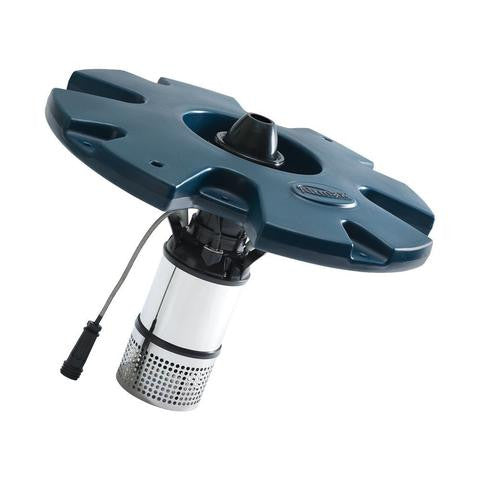
Advanced systems often employ a "Shielded Core" design. This involves placing the submersible motor inside a cooling shroud or sleeve. In open water, a submersible motor relies on the movement of water across its housing to dissipate heat via convection. A sheltered intake design forces the incoming water to pass over the motor housing before it reaches the impeller, providing a constant cooling effect regardless of the surrounding water's stagnation levels.
Intake Screen Dynamics and Selection
Selecting the correct screen involves a trade-off between protection and flow. A screen that is too fine will clog with microscopic biofouling (slime and calcium carbonate), requiring frequent manual cleaning. Conversely, a screen that is too coarse allows thin filaments of algae to pass through, where they can wrap around the shaft. Professional-grade screens often use "wedgewire" technology, which features V-shaped wires that minimize the contact points for debris, making the screen partially self-cleaning through the turbulence of the water.
Advantages of Sheltered Intakes
The primary measurable benefit of a sheltered intake is the significant extension of the Mean Time Between Failures (MTBF). By preventing debris from reaching the shaft, the system avoids the most common cause of motor burnout: the amperage spike. When a motor operates within its 90% Full Load Amperes (FLA) rating, the internal insulation remains stable for its entire 15,000 to 20,000-hour design life.
Efficiency metrics also improve with protected systems. Standard Aeration Efficiency (SAE), measured in pounds of oxygen per horsepower-hour (lb O2/hp-hr), is maximized when the impeller remains clean and balanced. A single kilogram of algae wrapped around a shaft can reduce the SAE of a vertical pump aerator from 3.5 lb O2/hp-hr to less than 1.5 lb O2/hp-hr. Maintaining a debris-free intake ensures that the energy consumed is converted into oxygen transfer rather than heat generation through mechanical friction.
Operational stability is another key advantage. Clogged impellers introduce harmonic vibrations that can destroy mechanical seals and bearings. A sheltered intake acts as a vibration dampener by ensuring a uniform flow of water into the impeller. This reduces the axial and radial loads on the motor shaft, preventing the wobbling effect that leads to water ingress and short circuits in submersible units.
Challenges and Common Mistakes
A frequent error in pond management is the installation of an undersized intake screen. When the intake area is too small, the suction pressure increases, pulling debris tight against the screen and effectively "vacuum sealing" the intake. This forces the pump to work against high head pressure, which paradoxically can cause the same motor burnout that the screen was intended to prevent. Maintenance crews must ensure the total open area of the screen is at least 4 to 6 times the area of the impeller intake.
Neglecting biofouling is another common pitfall. In nutrient-rich ponds, a screen can become coated in a thin layer of biofilm within weeks. This biofilm reduces the effective mesh size and restricts flow. Many users assume that because they don't see large sticks or weeds, the intake is clean. Regular inspection is required to ensure that mineral deposits and slime have not restricted the cooling flow past the motor.
Improper grounding and electrical protection can also undermine mechanical clog prevention. Even the best screen cannot protect a motor if the breaker is not sized correctly to trip during a high-amperage event. Using a 20-amp breaker for a motor that should trip at 7 amps allows the motor to "cook" itself for several minutes before the power is cut, causing permanent damage to the winding insulation.
Limitations of Sheltered Intake Systems
While sheltered intakes are effective against large organic debris, they have realistic constraints in environments with high concentrations of suspended solids, such as silt or fine clay. These particles can pass through most standard screens and act as an abrasive, gradually wearing down the impeller and mechanical seals. In these specific conditions, a mechanical filter or a different aeration method, such as diffused air, may be more appropriate.
Environmental trade-offs also exist regarding gas exchange. A highly shielded intake might slightly restrict the water's surface agitation if the shroud design is not hydrodynamically optimized. This can lead to a minor reduction in the Standard Oxygen Transfer Rate (SOTR) compared to a completely exposed, high-flow propeller. However, this trade-off is usually considered acceptable in exchange for the drastically increased reliability of the system.
Exposed Blade vs. Shielded Core Comparison
The choice between an "Exposed Blade" system (like a paddlewheel or standard propeller) and a "Shielded Core" system (like a shrouded vertical pump) depends on the pond's specific debris profile and maintenance budget.
| Metric | Exposed Blade (Paddlewheel) | Shielded Core (Shrouded Pump) |
|---|---|---|
| SAE (Efficiency) | 4.2 - 4.8 lb O2/hp-hr | 2.0 - 4.0 lb O2/hp-hr |
| Debris Resistance | Low (High risk of wrapping) | High (Screened protection) |
| Motor Cooling | Surface-cooled / Air-cooled | Water-convection / Shrouded |
| Maintenance Frequency | Weekly (Raking/Cleaning) | Monthly (Screen inspection) |
| Mechanical Complexity | High (Gearbox/Bearings) | Low (Direct drive) |
Exposed blades offer superior oxygen transfer in clean water because they maximize the air-water interface. However, in "wild" ponds with heavy algae growth, the maintenance requirements of an exposed blade often negate its efficiency gains. The Shielded Core system provides a "set and forget" level of reliability that is preferable for remote or low-maintenance installations.
Practical Tips for Best Performance
Installing an ammeter on the aerator's control panel is the most effective way to monitor for clogs. By recording the baseline amperage when the intake is clean, you can detect a clog long before the motor burns out. A steady increase in amperage (e.g., from 5.2A to 6.1A) is a definitive indicator of debris accumulation on the shaft or screen. This allows for proactive maintenance rather than reactive replacement.
When deploying an aerator in a pond with heavy filamentous algae, consider a "staged" screen approach. Use a coarse outer cage to catch large floating mats and a finer inner screen to protect the impeller. This prevents the inner screen from becoming overwhelmed too quickly. Additionally, orienting the aerator so the intake is at least 2 to 3 feet below the surface can help avoid the most dense concentrations of floating duckweed and surface debris.
Periodic "reverse flushing" can also extend the life of the screen. If the aerator design allows for it, momentarily reversing the motor's rotation (if using a three-phase motor with a VFD) can blow accumulated debris off the intake screen. For single-phase units, simply turning the unit off for 15 minutes allows the suction to dissipate, often causing larger pieces of debris to float away or sink, temporarily clearing the intake.
Advanced Mechanical Considerations
Serious practitioners should analyze the Net Positive Suction Head Available (NPSHA) versus the Net Positive Suction Head Required (NPSHR) of their aerator. When an intake screen becomes clogged, the pressure at the impeller inlet drops. If the pressure falls below the vapor pressure of the water, cavitation occurs. This not only damages the impeller but also introduces air pockets into the pump chamber, reducing the water's density and decreasing the mass of oxygen transferred per gallon of water moved.
Thermodynamic stability is equally critical. Submersible motors have a maximum liquid temperature rating, usually around 40°C (104°F). In shallow ponds during peak summer, water temperatures can approach this limit. A sheltered intake with a cooling shroud ensures that even in warm water, the velocity past the motor housing is sufficient to prevent the internal windings from exceeding their insulation class temperature (typically Class F, rated for 155°C).
Vibration analysis can be used for advanced diagnostics. Clogged impellers typically show a spike in the 1xRPM frequency range in the axial direction. By using a handheld vibration meter on the float or frame, a technician can identify an unbalanced impeller caused by partial clogging. This data-driven approach prevents the "unseen" wear that eventually leads to seal failure and motor death.
Scenario: The $1,000 Motor Save
Consider a 2-acre pond equipped with a 2-HP vertical pump aerator. During a summer heatwave, a large mat of filamentous algae is drawn into the exposed intake. Within 10 minutes, the algae wraps around the shaft, increasing the motor load. The current draw jumps from its normal 9.0 Amps to 14.5 Amps. Without a sheltered intake or a properly sized breaker, the heat in the windings would melt the insulation within an hour, resulting in a $1,000 replacement cost.
In contrast, a system with a sheltered intake and a coarse mesh screen would have deflected the mat. Even if 20% of the screen became covered, the expanded surface area of the intake would have kept the approach velocity low enough that the water could still reach the motor for cooling. The amperage might rise slightly to 9.5 Amps, but the motor would continue to operate safely within its thermal limits, maintaining critical oxygen levels for the pond's fish population.
Final Thoughts
Protecting a surface aerator is an exercise in risk management and mechanical optimization. While an exposed blade might offer higher theoretical efficiency, the reality of a wild pond environment makes a sheltered intake the only logical choice for long-term reliability. By focusing on low intake velocity and robust physical screening, you transform a vulnerable piece of equipment into a durable industrial system.
Investing in high-quality clog prevention is not just about avoiding maintenance; it's about protecting the biological health of the pond. When an aerator fails during the night, dissolved oxygen levels can plummet to lethal concentrations in hours. A sheltered intake provides the mechanical insurance needed to ensure your aeration system performs its duty when the environmental conditions are at their worst. Applying these technical principles will ensure that your pond's heart continues to beat through the muck, season after season.