

Degassing Ponds With Surface Aeration
Your pond is holding its breath; are you letting the poison out or keeping the life in? Stagnant water turns 'waste' gases like methane and CO2 into a silent killer. A surface aerator isn't just a fountain; it's an exhaust system that clears the way for the 'fuel' of dissolved oxygen. Turn your pond from a toxic trap into a biological powerhouse.
Degassing Ponds With Surface Aeration
Degassing is the mechanical process of removing dissolved gases from a liquid medium. In the context of pond management, this typically involves the extraction of carbon dioxide (CO2), methane (CH4), and hydrogen sulfide (H2S). These gases accumulate in stagnant water due to the biological decomposition of organic matter at the pond bottom. When concentrations exceed certain thresholds, they create a hostile environment for aerobic life and can lead to sudden fish kills.
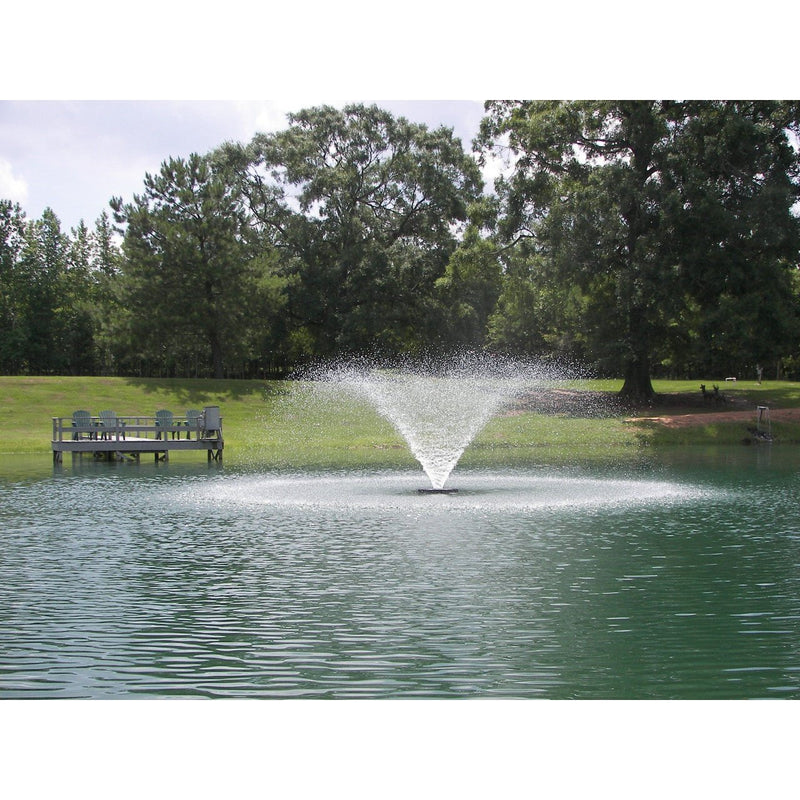
Surface aeration is the most common mechanical method for facilitating this gas exchange. Unlike diffused aeration, which relies on bubbles rising from the bottom, surface aerators physically agitate the water at the air-water interface. This action creates a massive increase in the surface area available for gas transfer. It is used extensively in commercial aquaculture, municipal wastewater lagoons, and industrial cooling ponds where gas accumulation is a constant operational risk.
Real-world scenarios often involve high-density fish farms where respiratory CO2 can lower pH levels rapidly. Without an "exhaust system" to vent these gases, the water becomes acidic and oxygen-depleted. Surface aerators act as a gas stripper, using mechanical energy to break the surface tension and allow internal gas pressure to equalize with the atmosphere.
The Mechanics of Gas Stripping
The physical principle governing pond degassing is Henry's Law. This law states that the amount of dissolved gas in a liquid is directly proportional to the partial pressure of that gas in the atmosphere above it. Under stagnant conditions, the water becomes supersaturated with waste gases because there is no turbulence to facilitate their escape.
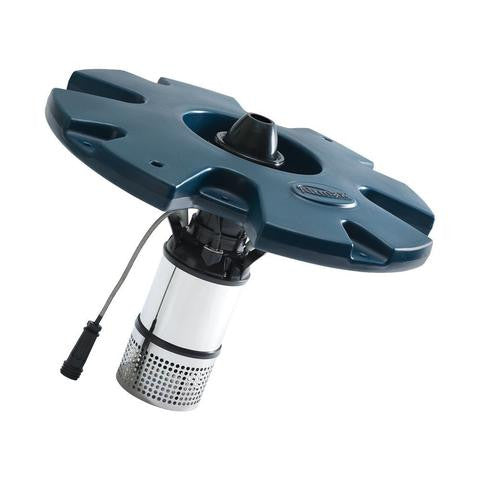
Surface aerators function by accelerating the rate of surface renewal. Mechanical impellers or paddlewheels throw water droplets into the air, creating a turbulent plume. This process achieves three critical objectives for degassing:
- Increased Interfacial Area: Breaking the water into millions of small droplets increases the area where gas can escape. Small droplets have a high surface-area-to-volume ratio, allowing for near-instantaneous gas equilibrium.
- Thin-Film Reduction: Gas must pass through a stagnant "liquid film" at the surface. Turbulence reduces the thickness of this film, lowering the resistance to gas transfer.
- Partial Pressure Gradient: By constantly exposing "new" water to the open air, the aerator maintains a steep concentration gradient. This ensures that gases move from the high-concentration liquid phase to the lower-concentration atmospheric phase.
Specific gases respond differently to this mechanical action. Methane and nitrogen are relatively easy to strip because they have low solubility. Carbon dioxide and hydrogen sulfide are more complex because their presence is tied to the water's pH and alkalinity. Effective degassing of H2S, for instance, is far more efficient at a pH of 5.0 than at a pH of 8.0, where the gas stays trapped in an ionic state.
Primary Benefits of Surface Degassing
The implementation of surface aeration provides measurable improvements to water chemistry. While the addition of dissolved oxygen (DO) is the most cited benefit, the "venting" aspect is equally vital for long-term pond stability.
pH Stabilization and Alkalinity Management
Accumulated CO2 forms carbonic acid, which lowers the pH of the water. High-intensity surface aeration "strips" this CO2, causing the pH to rise naturally. This is a critical metric for aquaculture operators who must maintain a stable environment to prevent stress-induced diseases in livestock.
Reduction of Toxic Methane and H2S
Methane is a byproduct of anaerobic digestion in bottom sludge. While it is not directly toxic to fish in low concentrations, it displaces oxygen and creates a fire hazard in enclosed industrial settings. Hydrogen sulfide, however, is highly toxic even at levels below 0.01 mg/L. Surface aerators physically scrub these gases out of the water column before they can reach lethal concentrations.
Thermal Cooling and Evaporation
Mechanical splashing facilitates evaporative cooling. In peak summer months, surface aerators can reduce water temperatures by 2 to 4 degrees Celsius compared to non-aerated ponds. This temperature drop further improves the water's capacity to hold dissolved oxygen, as colder water has a higher saturation point.
Challenges and Common Engineering Mistakes
Poorly designed aeration systems often fail to achieve degassing goals despite high energy consumption. One frequent error is the "fountain over function" approach. Decorative fountains are often designed for height and spray pattern rather than high-volume water turnover. These units may look impressive but lack the torque and impeller design needed for effective gas stripping.
Another common pitfall is the failure to address bottom-to-top circulation. Surface aerators primarily affect the top 2 to 6 feet of the water column. In deep ponds, waste gases can remain trapped in the "hypolimnion" (the cold, bottom layer). If a surface aerator is too small, it creates a localized "clean" zone while the rest of the pond remains toxic.
Mechanical placement also dictates success. Operators often place aerators in the center of the pond, assuming even distribution. However, placing units to create a circular flow pattern (often called a "race track") is more effective. This ensures that all water in the pond eventually passes through the aerator's high-turbulence zone.
Limitations and Environmental Constraints
Surface aeration is not a universal solution. Its effectiveness is limited by the physical depth of the water body. In ponds deeper than 10 to 12 feet, a surface aerator alone may struggle to pull "dead" water up from the bottom for degassing. Without vertical mixing, the bottom layers can remain anaerobic and continue to produce methane and H2S.
Environmental factors like humidity also play a role. Gas exchange is less efficient in high-humidity environments because the air's capacity to accept evaporated water and gases is reduced. Furthermore, high-speed surface aerators can create significant noise and aerosol drift, which may be problematic near residential areas or sensitive ecosystems.
Energy consumption is the primary trade-off. Surface aerators require substantial horsepower to move water physically into the air. In large-scale operations, the cost of electricity can become the single largest operating expense. Operators must balance the need for degassing with the Standard Aeration Efficiency (SAE) of the equipment.
Technical Comparison: Aeration Methods
Choosing the correct equipment depends on the specific gas-stripping requirements and pond geometry. The following table compares common surface-based technologies.
| Feature | Vertical Pump (Surface Aerator) | Paddlewheel Aerator | Diffused Aeration |
|---|---|---|---|
| Primary Action | High-speed spray/mist | Large-scale splashing/flow | Rising air bubbles |
| Degassing Efficiency | Excellent (High surface renewal) | Very Good (Strong circulation) | Moderate (Deep gas lift only) |
| Typical SAE | 1.2 - 2.0 kg O2/kWh | 2.0 - 3.0 kg O2/kWh | 1.0 - 4.0 kg O2/kWh |
| Ideal Depth | 1 - 8 feet | 2 - 6 feet | 8+ feet |
Paddlewheels are generally the "Growth Engine" of commercial aquaculture because they provide both oxygenation and strong horizontal currents. Vertical pumps (Surface Aerators) are the "Toxic Vents" of the industry, excelling at high-speed gas stripping in smaller footprints.
Practical Tips for Implementation
Successful degassing requires more than just turning on a machine. Optimization of timing and placement can significantly reduce operational costs.
- Sizing the Motor: A standard rule for intensive aquaculture is 1 to 2 horsepower (HP) per acre. For degassing high-load wastewater, this may increase to 5 HP per acre.
- Nocturnal Operation: Photosynthesis adds oxygen during the day but consumes it at night while releasing CO2. Running aerators from dusk until dawn targets the period when degassing and oxygenation are most critical.
- Anchor Selection: Use a three-point mooring system with stainless steel cables or UV-resistant ropes. This prevents the aerator from "walking" across the pond and ensures the intake remains in the desired location.
- Maintenance of Impellers: Check for biofouling or debris every 30 days. Even a small amount of algae on an impeller can reduce water turnover by 15%, drastically lowering degassing efficiency.
Monitoring water parameters is essential. Use a pH meter to track the success of CO2 stripping. If pH does not rise during aeration, the pond may have excessive organic load or the aerator may be undersized for the volume.
Advanced Considerations: SAE and SOTR
For serious practitioners, equipment selection is based on two metrics: Standard Oxygen Transfer Rate (SOTR) and Standard Aeration Efficiency (SAE). SOTR measures the total mass of oxygen added to water per hour under standard conditions (20°C, 0 mg/L DO). SAE is the SOTR divided by the power input (HP or kW).
While SOTR focuses on oxygen, it is a reliable proxy for degassing capability. A unit with a high SOTR typically moves a larger volume of water into the air, meaning it is also stripping more waste gases. When comparing units, prioritize those with high SAE ratings to ensure the maximum amount of gas exchange for every dollar spent on electricity.
Vertical shaft aerators typically offer SAE values between 2.6 and 3.2 lbs O2/hp·hr. In contrast, high-efficiency paddlewheels can reach up to 4.5 lbs O2/hp·hr. However, vertical pumps are often preferred for degassing in irregular or confined spaces where the directional flow of a paddlewheel might cause bank erosion.
Example Scenario: Intensive Shrimp Pond
Consider a 1-acre shrimp pond with a depth of 4 feet and a high organic load. The operator notices a morning pH drop to 6.8, indicating CO2 buildup. Ammonia levels are also creeping up, suggesting anaerobic pockets in the sludge.
The operator installs two 1-HP vertical surface aerators at opposite ends of the pond. By running these units for 10 hours nightly, the mechanical splashing strips the CO2, bringing the morning pH back to a stable 7.5. The increased surface renewal also vents any H2S produced in the sludge, reducing the risk of a "bottom flip" where toxic gases suddenly rise to the surface.
In this scenario, the aerators act as a "Biological Powerhouse." They do not just add oxygen; they facilitate the chemical reactions necessary for beneficial bacteria to process waste. Without the stripping of CO2, the acidic environment would inhibit these bacteria, leading to a collapse of the nitrogen cycle.
Final Thoughts
The health of a pond depends on the constant movement and exchange of gases. Stagnant water is a liability, functioning as a reservoir for metabolic byproducts that eventually choke out higher life forms. Surface aeration provides the mechanical force needed to bridge the gap between the water column and the atmosphere.
By focusing on the "exhaust" function of an aerator—the stripping of CO2, methane, and hydrogen sulfide—operators can maintain a more stable and resilient ecosystem. This technical approach moves beyond simple survival and into the realm of biological optimization. Whether managing a backyard pond or a commercial fish farm, the principles of gas exchange remain the same.
Effective degassing is a continuous process of mechanical renewal. Applying the correct horsepower, optimizing placement, and understanding the chemistry of the water ensures that the pond remains a productive environment. High-efficiency surface aeration is the most reliable tool for turning a toxic trap into a thriving biological system.