

Natural Algae Control For Bass Ponds
A 'clean' pond isn't always a healthy one; a sterile system is a dead system for your bass. Using copper sulfate and dyes creates a sterile environment that breaks the food chain. A living pond uses beneficial bacteria and diverse plant life to cycle nutrients naturally. Choose life over a chemical quick-fix.
Natural algae management is not about achieving a swimming-pool aesthetic; it is about managing the thermodynamic and chemical inputs of an aquatic ecosystem to favor higher-order predators like largemouth bass. In a standard pond environment, algae is the primary producer. However, when nutrient levels—specifically phosphorus and nitrogen—exceed the carrying capacity of the system, the resulting "bloom" shifts from a beneficial food source into a biological hazard.
Successful bass pond management requires a shift in perspective. Instead of viewing algae as an enemy to be poisoned, think of it as a symptom of a nutrient imbalance. This article provides a technical framework for transitioning from a chemical-dependent "kill cycle" to a self-sustaining biological system.
Natural Algae Control For Bass Ponds
Natural algae control is the process of limiting the available resources that algae require for photosynthesis and reproduction. This is achieved through nutrient sequestration, biological competition, and mechanical oxidation. In a bass pond, the goal is to maintain a "green water" bloom—microscopic phytoplankton that feed zooplankton—while preventing the growth of filamentous "scum" or toxic cyanobacteria.
Phosphorus is almost always the limiting nutrient in freshwater ponds. In most North American water bodies, a ratio of nitrogen to phosphorus (N:P) below 15:1 triggers a shift toward cyanobacteria, often called blue-green algae. Natural control methods focus on keeping phosphorus locked in the sediment or consumed by beneficial bacteria so that it cannot fuel a massive algal crash.
Unlike chemical algaecides that provide a temporary "kill," natural methods address the "internal loading" of the pond. Internal loading refers to the decades of organic muck—dead leaves, fish waste, and old algae—that sit at the bottom. This muck acts as a battery, constantly recharging the water with phosphorus. Natural control focuses on "discharging" that battery through biological digestion.
The Mechanics of Biological Nutrient Cycling
Natural control works through three primary mechanisms: competitive exclusion, phosphorus binding, and atmospheric gas exchange. Understanding these processes allows a pond owner to manipulate the environment without the use of toxic salts.
Competitive Exclusion and Bacterial Augmentation
Beneficial bacteria, primarily strains of Bacillus subtilis and Bacillus licheniformis, are the workhorses of a healthy pond. These microbes are heterotrophic, meaning they consume organic carbon and nutrients from the water. When introduced in high concentrations through "biological augmentation," these bacteria outcompete algae for dissolved nitrogen and phosphorus.
Data indicates that aggressive bacterial treatments can reduce organic sediment (muck) by 16% to 50% over a single growing season. As these bacteria digest the muck, they convert it into carbon dioxide and water, effectively "evaporating" the food source that algae would otherwise use. This process is most efficient when the water temperature is between 60°F and 80°F.
Phosphorus Sequestration: The "Lock and Key" Method
For ponds with extreme phosphorus levels, biological competition may be too slow. In these cases, natural mineral binders are used to "lock" phosphorus into an insoluble form. There are two primary compounds used in professional lake management for this purpose:
- Lanthanum-Modified Clay: This mineral binds specifically to phosphate molecules, creating a stable mineral called Rhabdophane. This bond is permanent and remains stable even in low-oxygen (anoxic) conditions.
- Aluminum Sulfate (Alum): Alum creates a "floc" or blanket that settles to the bottom, trapping phosphorus beneath it. While highly effective, it requires precise dosage to avoid dropping the water's pH to levels toxic to fish.
Aeration and the Oxidation Gradient
Oxygen is the fuel for biological life. In a stagnant pond, the bottom layer (hypolimnion) often becomes depleted of oxygen. When this happens, the chemistry of the pond flips. Phosphorus that was bound to iron in the soil is suddenly released back into the water, fueling a massive algae bloom.
Diffused aeration systems use a compressor on the shore to pump air to "diffusers" at the bottom. These diffusers create a column of bubbles that lift cold, nutrient-rich water to the surface. This process, known as "induced pond destratification," ensures that oxygen reaches the sediment-water interface, keeping phosphorus locked in the mud and allowing aerobic bacteria to digest muck 10 times faster than anaerobic bacteria.
Benefits of the Biological Approach
The primary advantage of natural control is the preservation of the aquatic food chain. Every pound of largemouth bass requires approximately 10 pounds of forage fish, and those forage fish require thousands of pounds of zooplankton.
Food Chain Integrity
Standard algaecides like copper sulfate are non-selective toxins. Research shows that even "safe" doses of copper can kill up to 90% of Daphnia (water fleas), which are the primary food source for fry and fingerling bass. Without these invertebrates, your bass growth will stagnate regardless of how many pellets you throw in the water.
Dissolved Oxygen Stability
Chemical kills cause a sudden "oxygen crash." When you spray 2 acres of algae, all that plant matter dies at once. As it rots, bacteria consume every bit of available oxygen to break it down. This often leads to a "summer fish kill" where the largest bass die first. Natural methods reduce the algae population slowly, preventing these lethal oxygen swings.
Metabolic Optimization
Bass are cold-blooded animals whose metabolism is dictated by water quality. Optimal growth occurs when dissolved oxygen (DO) levels are above 5.5 mg/L. Aeration-driven natural control systems maintain these levels 24/7, even during the "danger hours" of 2:00 AM to 6:00 AM. This results in faster weight gain and higher survival rates for your trophy fish.
Challenges and Common Pitfalls
Natural pond management is an exercise in patience and precision. It is not a "set it and forget it" solution. Failure usually stems from a misunderstanding of the time scales involved or the physical limits of the system.
The "Lag Time" Problem
Biological treatments do not work overnight. While a chemical spray might clear the water in 48 hours, a bacterial regimen may take 4 to 8 weeks to show visible clarity. Many pond owners become frustrated and revert to chemicals during this "lag period," which kills off the very bacteria they just paid to install.
Undersized Aeration
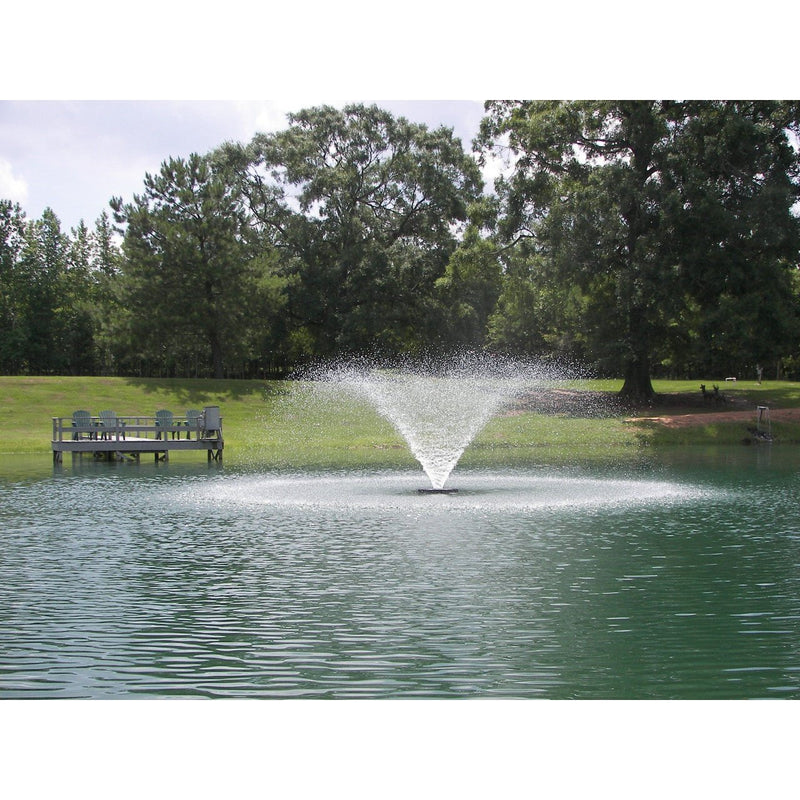
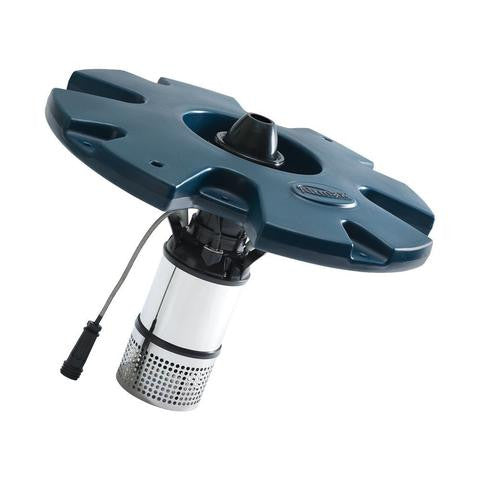
A common mistake is installing a "fountain" and assuming it provides aeration. Fountains are largely aesthetic; they only move the top few inches of water. For natural algae control, you need a diffused air system that can turn over the entire volume of the pond at least 1.5 times per day. If the system is undersized, the bottom of the pond remains anoxic, and phosphorus will continue to leak into the water column.
Biochemical Oxygen Demand (BOD)
In very muck-heavy ponds, starting a biological treatment can actually temporarily lower oxygen levels. This is because the bacteria are working so hard to digest the waste that they consume high volumes of DO. Professional managers often "stair-step" treatments, starting with 25% of the recommended dose and increasing it over a month to allow the ecosystem to adapt.
Limitations: When Natural Control Faces Hurdles
There are specific environmental conditions where natural methods may struggle to keep up with the rate of nutrient input. Understanding these boundaries is critical for setting realistic expectations.
External Nutrient Loading
If your pond receives runoff from a fertilized hay field, a cattle pasture, or a septic drain field, no amount of bacteria will keep the water clear. The "input" of nutrients is simply higher than the "output" of the biological system. In these cases, you must first address the watershed by planting "buffer strips" of tall grass or constructing a small "settling pond" upstream.
Extreme Shallow Depth
Ponds with an average depth of less than 4 feet are essentially "sunlight traps." Sunlight can reach the bottom across the entire pond, meaning any amount of phosphorus will trigger growth. Natural control is significantly harder in shallow basins because there is no "cool water" refuge for bass, and the thermal mass of the water changes too rapidly for stable bacterial colonies.
Chemical Kill vs. Biological Life: A Comparative Analysis
Choosing a management strategy requires weighing immediate results against long-term ecological health. The following table highlights the technical differences between the two philosophies.
| Factor | Chemical Control (Copper/Dye) | Biological Control (Bacteria/Aeration) |
|---|---|---|
| Speed of Action | Rapid (24–72 hours) | Slow (4–12 weeks) |
| Impact on Invertebrates | Highly toxic to Zooplankton | Promotes Invertebrate growth |
| Long-term Cost | Increases as muck builds up | Decreases as pond stabilizes |
| Fish Growth Rate | Variable (due to oxygen stress) | Optimized (stable DO levels) |
| Sustainability | Low (requires repeated inputs) | High (reaches equilibrium) |
Practical Tips for Implementation
If you are ready to transition your bass pond to a natural system, follow these technical best practices to ensure success.
- Measure Your Secchi Depth: Use a Secchi disk—a black and white weighted plate—to measure water clarity. For a bass pond, you want the disk to disappear between 18 and 24 inches. If it disappears at 10 inches, you have too much algae. If it's visible at 4 feet, your pond is "sterile" and lacks the productivity to grow big fish.
- Test Your Alkalinity: Beneficial bacteria and phosphorus binders work best when alkalinity is between 50 mg/L and 200 mg/L. If your water is "soft" (low alkalinity), you may need to add agricultural lime to stabilize the pH before beginning treatments.
- Dose by Volume, Not Surface Area: Most retail products give dosages for "one acre." However, a 1-acre pond that is 12 feet deep has twice the water volume of a 1-acre pond that is 6 feet deep. Calculate your acre-feet (Surface Area x Average Depth) to get the correct dosage.
- Utilize Native Plants: Plant Pickerelweed (Pontederia cordata) or Soft-stem Bulrush (Schoenoplectus tabernaemontani) along the shoreline. These plants act as "nutrient sponges," pulling nitrogen and phosphorus out of the water before algae can reach it.
Advanced Considerations: Redox Potential and the Benthic Zone
For serious practitioners, the ultimate goal of natural algae control is managing the "Redox Potential" of the sediment. Reduction-Oxidation (Redox) is a measure of the electronic state of the water. When oxygen is present (high Redox), iron stays in a "ferric" state and binds tightly to phosphorus.
When oxygen disappears (low Redox), iron shifts to a "ferrous" state and releases the phosphorus. This is why a pond can look great all spring and then "turn green" overnight in July. The "thermocline"—the barrier between warm surface water and cold bottom water—prevents oxygen from reaching the mud. An advanced management strategy uses high-efficiency diffused aeration to break this barrier, maintaining a high Redox potential year-round. This effectively "welds" the phosphorus to the pond floor.
Example: Remediating a Eutrophic 1-Acre Pond
Consider a 1-acre bass pond with a 6-inch layer of organic muck and chronic "pea soup" water. A chemical approach would involve spraying 10 lbs of copper sulfate, killing the algae, and adding more dead matter to the muck layer.
A biological approach would follow this protocol:
1. Install Aeration: A 1/4 HP compressor with two weighted diffusers placed in the deepest area.
2. Initial Muck Digestion: Application of 10 lbs of "muck-eating" bacterial pellets (Bacillus strains) to the bottom.
3. Phosphorus Lock: Application of 150 lbs of Aluminum Sulfate (or 40 lbs of Lanthanum-modified clay) to strip the water column of reactive phosphorus.
4. Maintenance: Monthly "booster" doses of liquid bacteria (1 gallon per month) throughout the summer.
Within 90 days, the Secchi depth typically increases from 6 inches to 20 inches. The bass, no longer stressed by nighttime oxygen dips, exhibit increased "relative weight" (Wr) and higher activity levels.
Final Thoughts
Transitioning to natural algae control is an investment in the long-term biological equity of your pond. By focusing on nutrient cycling and oxygen saturation, you create an environment where the food chain thrives from the bottom up. The result is not just "clearer" water, but a more resilient ecosystem that can withstand the heat of summer and the inputs of the surrounding landscape.
A healthy bass pond should feel alive. It should have a vibrant green tint, a thriving population of frogs and dragonflies, and water that smells like fresh earth rather than rotting vegetation. Moving away from the "chemical quick-fix" allows you to work with the laws of biology rather than against them.
As you implement these strategies, remember that every pond is unique. Start with the basics—aeration and bacteria—and adjust your strategy based on the data you collect. The reward is a trophy bass fishery that gets better with every passing season.