

Year Round Pond Aeration Calendar
You can either spend your money on emergency chemicals or spend your time building a system that doesn't need them. The consumer waits for the algae to bloom, then buys a 'cure.' The producer understands the seasonal oxygen cycle and adjusts their aeration *before* the crisis hits. One is a customer of the chemical industry; the other is the manager of a thriving ecosystem. Which one are you?
Managing a pond effectively requires a shift from reactive treatments to mechanical optimization. This guide provides the technical framework needed to transition from a panic-based buyer to a systematic creator of aquatic health.
Year Round Pond Aeration Calendar
Maintaining a stable aquatic environment requires adjusting mechanical inputs based on the physical properties of water across different seasons. Temperature fluctuations directly impact oxygen solubility and the metabolic rates of aerobic bacteria.
Winter (December – February)
Winter management focuses on gas exchange and preventing winterkill. When ice covers a pond, it seals the water from atmospheric oxygen. Submerged plants often die off due to low light, and their decomposition consumes existing oxygen reserves.
Aeration during this period must be handled with caution to avoid "supercooling." Water is most dense at 39°F (4°C). During winter, this relatively warm, dense water sits at the bottom. Full-depth aeration can bring this 39°F water to the surface, where it is chilled by sub-zero air and returned to the bottom, potentially dropping the entire water column below the survival threshold for fish.
Spring (March – May)
As temperatures rise, the water column undergoes a natural "turnover." This is the process where the pond transitions from its winter stratification to a more uniform state. Increasing aeration during this period accelerates the decomposition of organic matter that accumulated over the winter.
Spring is the ideal time to inspect compressors and clean diffuser membranes. Biological activity begins to spike as water passes the 50°F (10°C) mark. Ensuring the system is running at peak CFM (Cubic Feet per Minute) allows aerobic bacteria to process nutrients before they can fuel early-season algae blooms.
Summer (June – August)
Summer represents the period of highest risk and lowest oxygen efficiency. Warm water holds significantly less dissolved oxygen (DO) than cold water. For example, freshwater at 40°F can hold approximately 12.5 mg/L of oxygen, while at 80°F, it can only hold about 8.0 mg/L.
During these months, biochemical oxygen demand (BOD) is at its peak. High temperatures accelerate the respiration of fish and the decomposition of muck. Systems must run 24/7 during this phase to prevent thermal stratification, where a warm, oxygen-rich layer (epilimnion) sits on top of a cold, anoxic layer (hypolimnion).
Fall (September – November)
Falling air temperatures lead to the cooling of the surface layer. When the surface becomes denser than the water below, it sinks, causing a second annual turnover. If the bottom layer is anoxic, this sudden mixing can deplete oxygen in the entire pond, causing a fish kill.
Maintaining aeration throughout the fall ensures that the bottom water remains oxygenated. This preparation prevents the "turnover shock" that often catches managers off guard. It also provides the oxygen necessary to process the influx of autumn leaves and dying aquatic vegetation.
How Diffused Aeration Works
Diffused aeration systems operate on the principle of air-to-water mass transfer. A shore-mounted compressor pumps air through weighted tubing to a diffuser located on the pond floor. The diffuser breaks the air into billions of tiny "fine bubbles."
Henry's Law and Gas Solubility
The physics of this process is governed by Henry's Law. This law states that the amount of a gas that dissolves in a liquid is proportional to the partial pressure of that gas. As bubbles rise from the bottom, they are under greater hydrostatic pressure, which increases the rate of oxygen transfer.
Deepwater aeration is inherently more efficient than shallow-water systems. At a depth of 15 feet, the pressure is approximately 1.5 times atmospheric pressure. This increases the "saturation deficit," forcing more oxygen into the water before the bubble reaches the surface.
The Upwelling Effect
The primary benefit of a diffuser is not just the oxygen transferred from the bubbles themselves, but the water movement they create. As bubbles rise, they act as a "gas lift," dragging large volumes of cold, oxygen-depleted water from the bottom to the surface.
Once at the surface, this water spreads out and interacts with the atmosphere. This mechanical "turnover" ensures that the entire water column is exposed to the air. A properly sized system should be capable of turning over the entire pond volume at least once every 24 hours.
Benefits of Mechanical Aeration
Implementing a year-round aeration system provides measurable improvements to water chemistry and biological processing. These benefits extend beyond simple fish survival to the fundamental structural health of the pond.
Reduction of Organic Muck
Pond "muck" is the accumulation of undigested organic matter. In anoxic (low oxygen) conditions, decomposition is slow and produces toxic byproducts like hydrogen sulfide. Aerobic decomposition is up to 20 times faster than anaerobic decomposition.
Continuous oxygenation at the sediment layer allows aerobic bacteria to thrive. In documented cases, such as the Saint-Pie reservoir study, sustained aeration led to the disappearance of several feet of organic muck over a multi-year period, effectively "dredging" the pond without heavy machinery.
Nitrification and Ammonia Control
Ammonia is a byproduct of fish waste and organic decay. It is highly toxic to aquatic life. The conversion of ammonia to nitrate (nitrification) is an oxygen-intensive process performed by specialized bacteria.
Without sufficient dissolved oxygen, ammonia levels can spike, especially during the summer. Aeration provides the constant supply of O2 required for these bacteria to maintain a safe nitrogen cycle. This reduces the risk of chemical toxicity and suppresses the nutrients that fuel invasive weed growth.
Challenges and Common Mistakes
Even the best hardware can fail if the underlying principles of pond physics are ignored. Most failures in aeration management stem from improper sizing or seasonal misuse.
Inadequate Sizing and Placement
Using a compressor that is too small for the pond's volume is a frequent error. An undersized system fails to break the thermocline, leaving the bottom layer anoxic. This creates a "false sense of security" where the surface looks healthy while the bottom remains a toxic dead zone.
Placement of diffusers is equally critical. In irregular or kidney-shaped ponds, "dead zones" can form where water is not circulated. Multiple diffusers are often necessary to ensure that every cove and deep pocket receives adequate flow.
The Danger of "Turning On" a System in Summer
Starting an aeration system for the first time in the middle of a hot summer is dangerous. If the pond is already stratified, the sudden mixing of anoxic bottom water with the thin oxygenated surface layer can cause an immediate fish kill.
Managers must follow a "start-up map." This involves running the system for only 30 minutes the first day, 1 hour the second, and doubling the time daily until 24-hour operation is reached. This slow transition allows the pond's chemistry to stabilize without shocking the ecosystem.
Limitations of Aeration Systems
Aeration is a powerful tool, but it cannot overcome every environmental constraint. Understanding these boundaries is essential for realistic expectations.
The Shallow Water Efficiency Cap
Diffused aeration loses its efficiency in shallow water (less than 4-5 feet). In these environments, the bubbles do not have enough "hang time" in the water column to transfer oxygen or create significant upwelling.
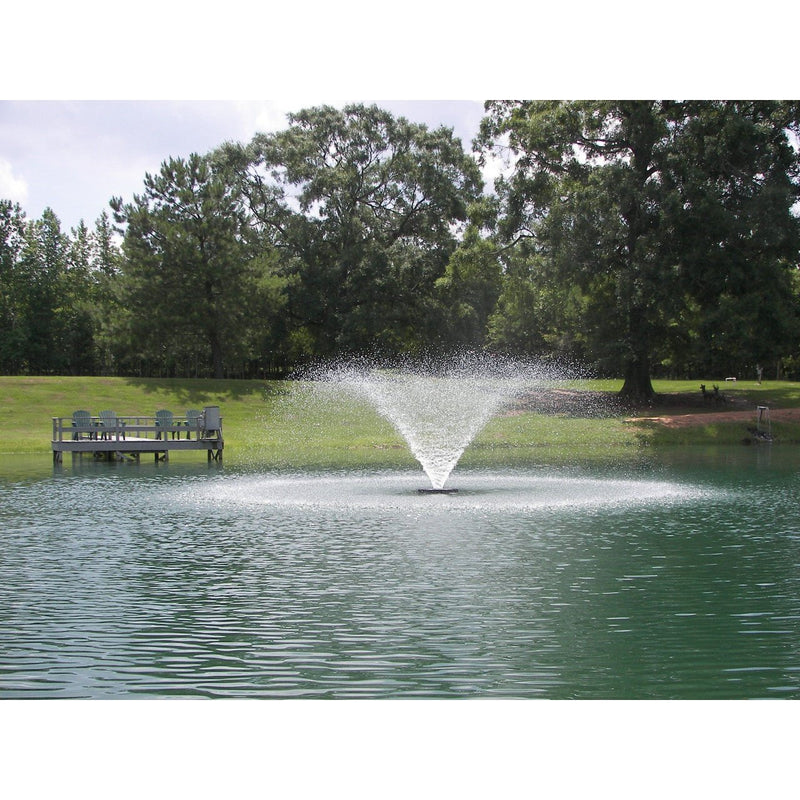
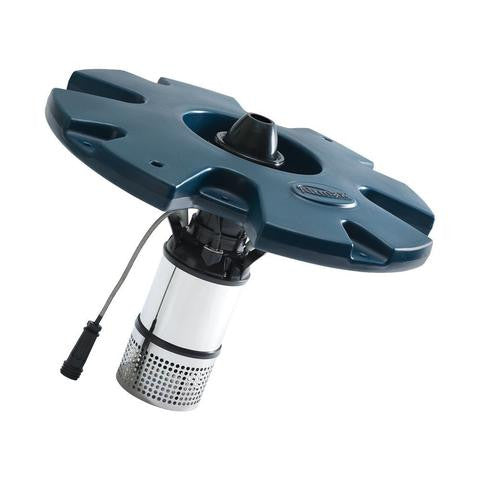
Surface aerators or fountains are often more appropriate for very shallow ponds. While they are less energy-efficient per gallon moved, they provide the necessary surface agitation that diffusers lack in shallow settings.
Extreme Temperature Buffering
Aeration cannot significantly change the temperature of a large body of water. While it can prevent localized freezing, it will not cool a pond during a 100°F heatwave. High water temperatures will always limit the maximum DO levels due to the physical laws of solubility.
In such scenarios, aeration is a "support" system, not a climate controller. It ensures the water stays at its maximum possible saturation point, but that saturation point is dictated by the ambient temperature.
Technical Comparison: Diffused vs. Surface Aerators
Choosing between bottom-diffused and surface-based systems depends on pond depth and management goals. The following table highlights the mechanical differences.
| Feature | Diffused Aeration | Surface Aerator (Fountain) |
|---|---|---|
| Operating Depth | 6 to 50+ feet | 2 to 6 feet |
| Energy Efficiency | High (Pumps Air) | Low (Pumps Water) |
| Maintenance | Low (Shore-based) | Medium (In-water motor) |
| O2 Transfer Rate | 5-10x more effective at depth | High at surface only |
| De-icing Capability | Excellent | Poor (Potential freeze-up) |
Practical Best Practices
System optimization requires attention to the mechanical details of the compressor and the air delivery lines. Small adjustments can significantly extend the life of the hardware.
- Calculate Total Dynamic Head: When sizing a compressor, factor in the friction loss of the tubing and the depth of the diffuser. 1 PSI is required for every 2.31 feet of depth.
- Use Weighted Tubing: Avoid standard PVC or vinyl tubing for submerged lines. Weighted "sink" tubing stays on the bottom without the need for bricks or ties, preventing it from becoming a hazard for boats or swimmers.
- Venting the Cabinet: Compressors generate significant heat. Ensure the shore-based cabinet has adequate ventilation to prevent the motor from overheating during peak summer temperatures.
- Winter Diffuser Elevation: To prevent supercooling, move your diffusers from the deepest point to approximately half the maximum depth during winter months. This maintains an open hole for gas exchange while leaving the warmest water at the bottom for fish.
Advanced Considerations for Serious Managers
For those looking to push the efficiency of their pond ecosystem, advanced monitoring and control strategies can be implemented. These systems move beyond "always on" to "precision delivery."
Dissolved Oxygen (DO) Monitoring
The use of continuous DO sensors allows for automated aeration. By linking a sensor to a Variable Frequency Drive (VFD), the system can increase compressor speed during the early morning hours when DO is naturally lowest and throttle back during the afternoon when photosynthesis provides "free" oxygen.
This approach reduces electricity consumption and wear on the compressor. It also provides real-time data that can alert a manager to a brewing crisis before it becomes visible to the naked eye.
Solar Integration
Remote ponds often lack access to the power grid. Solar-powered aeration systems utilize DC compressors and battery banks to provide oxygenation. While the initial capital expenditure is higher, the operational cost is zero.
Managers using solar must prioritize "fine bubble" diffusers. Because energy is at a premium, maximizing the oxygen transfer efficiency (OTE) of every cubic foot of air is the only way to ensure the pond remains healthy through cloudy periods.
Example Scenario: Sizing a 1-Acre Pond
Consider a 1-acre pond with a maximum depth of 12 feet. A manager needs to determine the appropriate system to ensure year-round health.
First, calculate the volume of water. For a typical 1-acre pond with an average depth of 6 feet, the volume is approximately 1.95 million gallons. To achieve one turnover per day, the system must move 1,354 gallons per minute (GPM).
A 1/4 HP rocking piston compressor typically produces about 2.0 CFM. At a 12-foot depth, this air volume is capable of moving roughly 2,000 GPM through a high-efficiency diffuser. This system provides a 47% safety margin, ensuring that even during extreme summer heat, the water column will remain mixed and oxygenated.
If this same pond were only 5 feet deep, the 1/4 HP compressor would only move about 800 GPM. In this case, the manager would need to upgrade to a 1/2 HP compressor or add a second diffuser to meet the turnover requirement.
Final Thoughts
Pond aeration is the cornerstone of sustainable aquatic management. By installing a diffused system, you address the root causes of pond degradation rather than simply treating the symptoms with expensive, short-lived chemicals.
Success in this field requires a technical understanding of seasonal cycles and the physics of gas transfer. When you move from being a "consumer" of solutions to a "manager" of systems, you gain control over the longevity and clarity of your water.
Begin by evaluating your pond's depth and organic load. Apply the principles of turnover and oxygen solubility to your seasonal calendar. The investment in mechanical aeration pays dividends in the form of a self-sustaining, healthy ecosystem that survives the challenges of every season.