

How To Tell If Your Pond Is Overloaded With Nutrients
Is your pond out of control? Too much nitrogen and phosphorus leads to biological chaos. If your pond looks like thick soup, it's overloaded. Here is how to restore order using aeration and bacteria.
Managing a pond ecosystem requires a shift from viewing the water as a static feature to seeing it as a complex biochemical reactor. When external inputs exceed the system's natural assimilation capacity, the result is a rapid decline in water quality characterized by algae blooms and muck accumulation. Restoring balance involves a two-pronged mechanical and biological approach. Aeration provides the necessary oxygen to drive aerobic processes, while the introduction of specialized bacteria accelerates the decomposition of organic solids.
This technical guide examines the mechanics of nutrient cycles, the physics of oxygen transfer, and the microbial pathways necessary for ecosystem recovery. Understanding these variables allows for the design of a restoration strategy rooted in data and efficiency rather than guesswork.
How To Tell If Your Pond Is Overloaded With Nutrients
Nutrient overloading, or eutrophication, occurs when the concentrations of nitrogen (N) and phosphorus (P) reach levels that trigger explosive primary production. Phosphorus is typically the limiting nutrient in freshwater systems. Scientific data suggests that a single gram of phosphorus can support the growth of up to 100 grams of algal biomass. When total phosphorus (TP) levels exceed 0.03 mg/L, the pond is classified as eutrophic.
Visual indicators provide the first sign of imbalance. Water that resembles pea soup or exhibits a deep green hue indicates a high density of phytoplankton. Thick mats of filamentous algae or surface-dwelling duckweed further signal that the water column is saturated with bioavailable nutrients. In many cases, a "rotten egg" smell—caused by the release of hydrogen sulfide gas—points to anaerobic conditions in the bottom sediments.
Quantitative measurement offers more precision. A Secchi disk can be used to measure water clarity; readings of less than 24 inches generally indicate high nutrient density. Chemical testing often reveals total nitrogen (TN) levels above 1.0 mg/L and dissolved oxygen (DO) levels that fluctuate wildly. In an overloaded pond, DO may reach 120% saturation during the day due to photosynthesis but drop to lethal levels (below 3.0 mg/L) at night as plants and algae respire.
The accumulation of "muck" or organic sludge at the pond bottom is another critical metric. This layer consists of decaying plant matter, fish waste, and wind-blown debris. As this organic matter decomposes in the absence of oxygen, it releases phosphorus back into the water column, creating a feedback loop of internal nutrient loading. This internal cycle can sustain algae blooms even if external runoff is curtailed.
The Mechanics of Aeration and Oxygen Transfer
Aeration is the process of increasing the dissolved oxygen (DO) concentration in the water. This is not merely for the survival of fish; oxygen is the primary fuel for the aerobic bacteria that consume organic waste. The efficiency of an aeration system is measured by the Standard Oxygen Transfer Rate (SOTR) and the Standard Aeration Efficiency (SAE). SOTR represents the pounds of oxygen transferred per hour under standard conditions (20°C, 1 atm pressure, and 0 mg/L initial DO).
Sub-surface diffused aeration is the most efficient method for deep ponds. This system uses an on-shore compressor to push air through weighted tubing to diffusers located at the bottom. As the bubbles rise, they transfer oxygen to the water and create a vertical current that pulls cold, oxygen-poor water from the bottom to the surface. This process, known as thermal destratification, ensures the entire water column remains aerobic.
Fine bubble diffusers offer superior Standard Aeration Efficiency compared to coarse bubble or surface-style aerators. Fine bubbles (less than 3mm in diameter) have a larger total surface area relative to their volume and rise more slowly through the water column. This increased contact time results in a higher Standard Oxygen Transfer Efficiency (SOTE). Technical data shows that fine bubble systems can achieve an SAE of 3.5 to 4.0 lbs of oxygen per horsepower-hour, while surface splashers typically range between 1.5 and 2.5 lbs.
Oxygen transfer is also highly dependent on depth. The hydrostatic pressure at the bottom of a pond increases the solubility of oxygen in the water. For every meter of depth, the efficiency of a diffused aeration system can increase by approximately 6.5%. Therefore, placing diffusers at the deepest points of the pond maximizes the mechanical advantage of the system.
Implementing Biological Augmentation
Biological augmentation involves the periodic addition of concentrated beneficial bacteria to the pond. These microbes are typically strains of Bacillus, such as B. subtilis and B. licheniformis, which are known for their high production of extracellular enzymes. These enzymes—proteases, lipases, and cellulases—break down complex organic molecules like proteins, fats, and cellulose into simpler compounds that the bacteria can then metabolize.
The effectiveness of bacterial treatments is measured in Colony Forming Units (CFU). High-quality commercial preparations often contain between 2 billion and 5 billion CFU per gram. When these bacteria are introduced, they compete with algae for available nutrients, specifically nitrogen and phosphorus. By sequestering these nutrients into microbial biomass, the bacteria effectively "starve" the algae, leading to clearer water.
Nitrogen management follows a specific microbial pathway. In an aerobic environment, nitrifying bacteria convert toxic ammonia (NH3) into nitrite (NO2) and then into nitrate (NO3). In the anaerobic zones often found within the muck layer, denitrifying bacteria can then convert nitrate into nitrogen gas (N2), which safely escapes into the atmosphere. This process of nitrification and denitrification is the only permanent way to remove nitrogen from the pond ecosystem.
Phosphorus management is more complex. Bacteria can uptake phosphorus for cellular processes, but much of the phosphorus in a pond is bound to organic matter in the muck. By digesting this organic matter, bacteria release the phosphorus, which can then be utilized by beneficial aquatic plants or potentially bound by chemical flocculants if necessary. Consistent bacterial dosing prevents the "pulse" of phosphorus release that typically follows a massive algae die-off.
Benefits of the Integrated Approach
The primary benefit of combining aeration with bacterial augmentation is the rapid reduction of organic sludge. Aerobic digestion is up to 20 times faster than anaerobic digestion. In a well-aerated system, specialized "muck-busting" bacteria can reduce the sludge layer by several inches per year. This process restores the pond's original depth and removes the source of internal nutrient loading.
Water clarity improves as the microbial community stabilizes. When bacteria outcompete phytoplankton for nutrients, the water transitions from a turbid green to a clearer, more transparent state. This allows sunlight to penetrate deeper, encouraging the growth of beneficial submerged macrophytes (aquatic plants) that further stabilize the ecosystem.
Fish health is significantly enhanced through stabilized dissolved oxygen levels. Large fluctuations in DO are a primary cause of stress and mortality in pond fish. Continuous aeration prevents the "crash" in oxygen that occurs during cloudy weather or following an algae bloom. Furthermore, the reduction in ammonia and nitrite levels reduces the physiological burden on the fish, leading to better growth rates and disease resistance.
Odors are eliminated as the pond moves from an anaerobic to an aerobic state. Hydrogen sulfide and methane gases are products of anaerobic decomposition. By maintaining oxygen at the sediment-water interface, these gases are not produced. Instead, the decomposition process yields odorless carbon dioxide and water.
Challenges and Common Mistakes
One of the most frequent errors in pond restoration is undersizing the aeration system. A system that cannot provide enough oxygen to meet the total Sediment Oxygen Demand (SOD) will fail to maintain aerobic conditions at the bottom. SOD is the rate at which oxygen is consumed by the biological and chemical processes in the sediment. In highly overloaded ponds, the SOD can be three to five times higher than the oxygen demand of the water column alone.
Poor diffuser placement can lead to "dead zones" where water remains stagnant. If a diffuser is placed too shallow or in a corner of an oddly shaped pond, it may fail to circulate the entire volume of water. Effective restoration requires the total volume of the pond to be "turned over" at least once every 24 hours. Failure to achieve this turnover rate allows nutrient-rich water to accumulate in untreated areas.
Starting an aeration system too quickly in a highly stratified pond can be catastrophic. During the summer, the bottom water (hypolimnion) is often devoid of oxygen and high in toxic gases. If this water is rapidly mixed with the surface water, it can cause a "turnover" fish kill. The correct procedure is to start the system for only 30 minutes on the first day, doubling the run time each subsequent day until the system is running 24/7.
Relying on low-CFU bacterial products or those containing "filler" like yeast is another common pitfall. Microbial restoration requires a high concentration of specific, active strains. Inexpensive products often lack the sheer numbers needed to establish a dominant colony in a competitive environment. Consistency is also vital; a single dose of bacteria is rarely enough to fix a multi-year nutrient problem.
Limitations of Biological and Mechanical Remediation
While aeration and bacteria are powerful tools, they cannot overcome massive, ongoing external nutrient loading. If a pond receives constant runoff from a heavily fertilized agricultural field or a failing septic system, the rate of nutrient input may exceed the rate of microbial assimilation. In these cases, the "source" must be addressed through buffers, swales, or diversions before the pond can reach a state of balance.
Environmental factors like temperature and pH also impose limits. Most beneficial pond bacteria are most active when water temperatures are between 60°F and 80°F. In cold water (below 40°F), microbial metabolism slows significantly, and muck reduction may cease entirely. Similarly, extreme pH levels (below 6.0 or above 9.0) can inhibit bacterial growth and reduce the efficiency of nutrient uptake.
Depth is a physical constraint for certain types of aeration. In very shallow ponds (less than 4 feet deep), diffused air has very little time to transfer oxygen before the bubbles reach the surface. In these environments, surface aerators or high-volume circulators may be more efficient than bottom-mounted diffusers. Conversely, in extremely deep lakes, the energy required to push air to the bottom can be prohibitive, requiring specialized hypolimnetic aerators.
Comparing Remediation Methods
Selecting the right equipment requires a comparison of efficiency and cost. The following table highlights the differences between common aeration technologies based on technical performance metrics.
| Technology | SAE (lbs O2/hp-hr) | Mixing Capacity | Optimal Depth | Maintenance Level |
|---|---|---|---|---|
| Fine Bubble Diffused | 3.5 - 4.5 | High (Vertical) | > 8 Feet | Low |
| Surface Aerator | 2.0 - 3.0 | Medium (Surface) | < 6 Feet | Moderate |
| Coarse Bubble Diffused | 1.5 - 2.5 | Very High | 4 - 10 Feet | Low |
| Decorative Fountain | 1.0 - 1.5 | Low | Any | High |
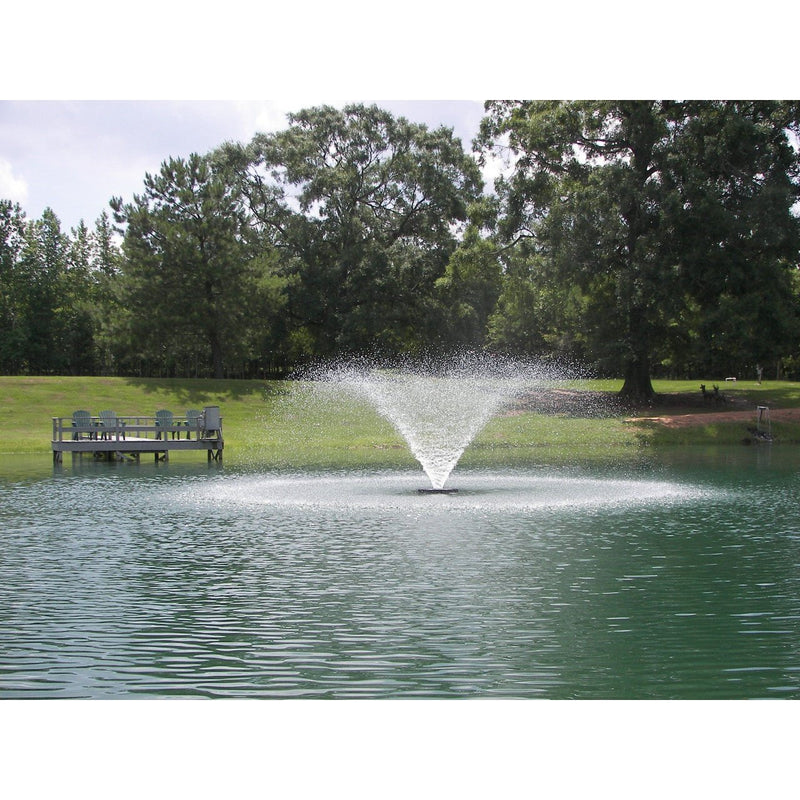
This data demonstrates that fine bubble diffused aeration provides the highest oxygen transfer per kilowatt of electricity used. While decorative fountains provide aesthetic value, their efficiency as a restoration tool is significantly lower because energy is expended to create a vertical spray rather than to maximize oxygen transfer.
Practical Tips for Pond Restoration
To maximize the efficiency of a restoration project, always perform a baseline water test. Knowing the current levels of ammonia, nitrate, and phosphorus allows for more precise dosing of bacterial treatments. Test for alkalinity as well; a well-buffered pond (alkalinity above 50 ppm) provides a more stable environment for both fish and microbes.
Position diffusers to maximize the "fetch" or the distance the water travels. In long, narrow ponds, placing a diffuser at one end can create a circular flow that moves water throughout the entire basin. In round ponds, a central placement is usually most effective. Use weighted tubing to ensure that air lines stay at the bottom and do not interfere with surface activity or become a hazard to boat motors.
Apply bacterial treatments near the aeration diffusers. The rising column of bubbles creates a "boil" at the surface that will distribute the bacteria throughout the pond. For muck reduction, use pelletized bacteria that sink directly into the sludge layer. This places the concentrated microbes exactly where the organic load is highest, preventing the bacteria from being washed away by surface currents.
Monitor dissolved oxygen levels regularly, especially during the first month of treatment. A portable DO meter is an invaluable tool for any serious practitioner. Aim to maintain DO levels above 5.0 mg/L at the bottom of the pond. If levels drop despite aeration, it may be necessary to increase the airflow or add more diffuser stations.
Advanced Considerations for Microbial Management
For large-scale or highly technical projects, consider the role of "facultative" bacteria. These microbes can switch between aerobic and anaerobic respiration. While they are most efficient in the presence of oxygen (up to 5 times faster), their ability to function in low-oxygen micro-climates within the muck layer makes them highly effective for sludge reduction. Formulations that include a diverse blend of facultative strains offer better resilience against temporary oxygen fluctuations.
The stoichiometry of the pond—specifically the N:P ratio—can dictate which types of algae or bacteria will dominate. The Redfield Ratio (106C:16N:1P) is the optimal balance for most aquatic life. If the ratio of nitrogen to phosphorus falls below 10:1, the pond becomes susceptible to nitrogen-fixing cyanobacteria (blue-green algae), which can pull nitrogen from the air. In these cases, reducing phosphorus is the only way to break the cycle.
In ponds with extremely high phosphorus levels, biological treatments may be supplemented with lanthanum-modified bentonite or aluminum sulfate (alum). These chemicals bind phosphorus into an insoluble form that the bacteria cannot access. This "locks" the phosphorus in the sediment, allowing the bacteria to focus on digesting the organic carbon in the muck without fueling further algae growth.
Scenario: Restoring a One-Acre Eutrophic Pond
Consider a one-acre pond with an average depth of 6 feet and a maximum depth of 12 feet. The pond has 18 inches of muck and persistent summer algae blooms. A technical restoration plan would involve the following steps:
The first step is the installation of a 1/2 HP rocking piston compressor connected to two fine-bubble diffusers placed at the 12-foot depth. This setup provides an SOTR capable of meeting the SOD of the accumulated muck. The system is started using a "slow-start" schedule over seven days to prevent a turnover fish kill.
Once the system is running 24/7, an initial "purge" dose of beneficial bacteria is applied at a rate of 6 lbs per acre. This high-concentration dose jump-starts the colonization of the water column and the muck surface. Following this, a maintenance dose of 2 lbs is applied every two weeks throughout the growing season.
After three months, the water clarity is measured using a Secchi disk. If clarity has improved from 12 inches to 36 inches, the treatment is successful. Muck measurements are taken annually to track the rate of digestion. Over two seasons, such a system can realistically reduce the muck layer by 6 to 10 inches, significantly increasing the pond's volume and stability.
Final Thoughts
Restoring an overloaded pond is a process of transitioning the ecosystem from a state of nutrient-driven chaos to one of biological order. Aeration serves as the mechanical engine, providing the oxygen necessary to support life and accelerate decomposition. Beneficial bacteria act as the workforce, actively consuming the excess nitrogen and phosphorus that fuel algae growth and muck accumulation.
Success in pond management is not achieved through "quick-fix" chemical applications but through a sustained commitment to these core principles of aeration and biological augmentation. By monitoring key metrics like dissolved oxygen, nutrient ratios, and sludge depth, a practitioner can fine-tune the system for maximum efficiency.
As the pond moves toward balance, the maintenance requirements naturally decrease. A healthy, aerobic pond is a self-regulating system capable of assimilating moderate nutrient inputs without collapsing. Experimenting with different bacterial strains and aeration configurations will deepen your understanding of these complex aquatic environments and ensure the long-term health of your water.