What Is The Ideal Dissolved Oxygen Level For A Pond?
Oxygen does more than just keep fish breathing. Fish need oxygen to breathe, but your pond's bacteria need it to 'eat' the sludge. Don't settle for 'enough to survive'—aim for 'enough to thrive'. This technical guide examines the mechanical, biological, and chemical frameworks of Dissolved Oxygen (DO) in aquatic ecosystems, focusing on data-driven optimization for pond health.
Dissolved oxygen is the primary limiting factor in any closed-loop aquatic system. While atmospheric air contains approximately 21% oxygen, the concentration of oxygen that can actually dissolve into water is measured in milligrams per liter (mg/L) or parts per million (ppm). These concentrations are infinitesimal compared to the atmosphere, yet they dictate every biological process within the pond. Total ecosystem health is contingent upon maintaining DO levels that support not just the fauna, but the aerobic microbial communities responsible for nutrient cycling and waste degradation.
What Is The Ideal Dissolved Oxygen Level For A Pond?
The ideal dissolved oxygen level for a pond ecosystem typically ranges between 7 mg/L and 9 mg/L. This range ensures that the most sensitive fish species remain active and that the biological filtration system operates at maximum efficiency. Most warmwater fish species, such as bass, bluegill, and catfish, require a minimum of 5 mg/L for long-term health, while coldwater species like trout require upwards of 6.5 mg/L to maintain metabolic functions.
When DO levels drop below 4 mg/L, fish enter a state of physiological stress. In this state, metabolic rates slow, immune responses are suppressed, and growth ceases. Concentrations below 2 mg/L are considered hypoxic and are lethal for most ornamental and game fish if the exposure lasts for more than a few hours.
Beyond the survival of fish, the 'ideal' level must account for the Oxygen Uptake Rate (OUR) of the pond's microbiome. Aerobic bacteria, which are responsible for the nitrogen cycle and the decomposition of organic muck, require high saturation levels to function. If DO levels fall, these bacteria cannot process ammonia or nitrites effectively, leading to a secondary crash in water quality. Therefore, a pond with 5 mg/L of oxygen may keep fish alive, but it is often failing at the microbial level, allowing sludge to accumulate.
The Biological and Chemical Mechanics of Dissolved Oxygen
The relationship between oxygen and pond biology is governed by specific chemical requirements. One of the most critical processes is nitrification, the two-step oxidation of ammonia into nitrate. This process is performed by autotrophic bacteria, specifically Nitrosomonas and Nitrobacter, which are highly sensitive to oxygen availability.
Quantitative analysis shows that for every 1 milligram of ammonia-nitrogen (NH3-N) oxidized into nitrate (NO3), approximately 4.5 milligrams of dissolved oxygen are consumed. This is a massive oxygen demand that many pond owners fail to calculate. If a pond experiences an ammonia spike, the bacterial population will consume the available DO at an accelerated rate to neutralize the toxin, potentially leaving the fish in a hypoxic state.
Furthermore, the decomposition of organic matter—known as Biochemical Oxygen Demand (BOD)—is a major sink for DO. Organic sludge at the bottom of the pond consists of dead algae, fish waste, and leaf litter. Aerobic bacteria can decompose this material quickly, but only if they have access to oxygen. In many un-aerated ponds, the bottom layer becomes anoxic (zero oxygen), forcing anaerobic bacteria to take over. Anaerobic decomposition is 20 to 30 times slower than aerobic decomposition and produces toxic byproducts like hydrogen sulfide (H2S) and methane (CH4).
How Temperature and Physics Influence Oxygen Saturation
Oxygen solubility is governed by Henry’s Law, which states that the amount of dissolved gas in a liquid is proportional to its partial pressure above the liquid. However, in practical pond management, temperature is the most significant variable. There is an inverse relationship between water temperature and its ability to hold dissolved oxygen.
Cold water is denser and can hold significantly more oxygen than warm water. For example, fresh water at 52°F (11°C) can hold approximately 11.0 mg/L of oxygen at sea level saturation. When that same water warms to 80°F (27°C), its saturation point drops to roughly 8.0 mg/L. This 30% loss in capacity occurs exactly when the metabolic demand of the fish and bacteria is at its highest.
Altitude also plays a critical role. As elevation increases, atmospheric pressure decreases, which in turn reduces the partial pressure of oxygen. A pond located at 5,000 feet above sea level will hold roughly 20% less oxygen at the same temperature as a pond at sea level. Practitioners must adjust their aeration strategies to compensate for these physical constraints.
Technical Efficiency Metrics: SOTE and SAE
Selecting the right aeration system requires an understanding of efficiency metrics used in industrial wastewater treatment. These metrics allow for an objective comparison of different technologies based on their oxygen transfer capabilities and energy consumption.
The first metric is Standard Oxygen Transfer Efficiency (SOTE). This represents the percentage of oxygen that is actually transferred into the water from a given volume of air. SOTE is primarily influenced by bubble size and contact time. Fine bubble diffusers typically offer the highest SOTE because small bubbles have a larger surface-area-to-volume ratio and rise more slowly through the water column, increasing the duration of the gas-liquid interface.
The second and more practical metric is Standard Aeration Efficiency (SAE). SAE measures the mass of oxygen transferred per unit of energy consumed, usually expressed as pounds of oxygen per horsepower-hour (lb O2/hp-hr) or kilograms of oxygen per kilowatt-hour (kg O2/kWh).
| Aeration Technology | Typical SAE (lb O2/hp-hr) | Primary Mechanism |
|---|---|---|
| Fine Bubble Diffused Air | 4.0 - 7.0+ | Gas-liquid interface at depth |
| Surface Aerators / Agitators | 2.6 - 3.2 | Atmospheric splashing and surface tension break |
| Paddlewheels | 2.5 - 4.0 | Directional flow and surface agitation |
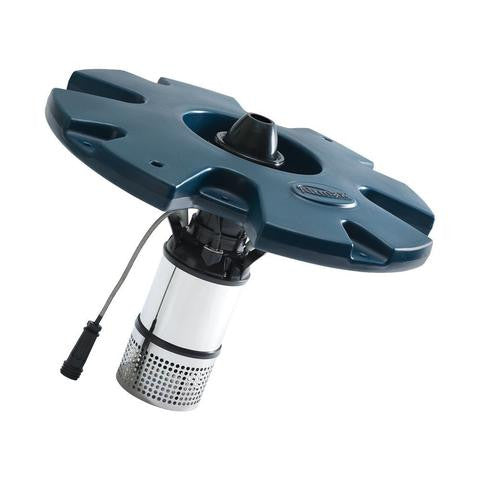
| Fountain-Style Aerators | 1.5 - 2.5 | Aesthetic display with secondary gas exchange |
Fine bubble diffusers are the most efficient for deep-water applications because they leverage the hydrostatic pressure at the bottom of the pond to force oxygen into solution. Surface aerators are highly effective at venting gases like carbon dioxide and ammonia but are less efficient at oxygenating the deeper thermal layers of a stratified pond.
The Diurnal Dissolved Oxygen Cycle
Oxygen levels in a pond are never static; they follow a predictable 24-hour pattern known as the diurnal cycle. This cycle is driven by the interplay between photosynthesis and respiration. During daylight hours, algae and aquatic plants perform photosynthesis, consuming carbon dioxide and releasing pure oxygen into the water. In high-density algae blooms, this can lead to "supersaturation," where DO levels exceed 100% of the theoretical limit, sometimes reaching 15-20 mg/L.
Photosynthesis stops when the sun sets. At this point, every living organism in the pond—fish, plants, algae, and bacteria—switches to respiration, consuming oxygen and releasing carbon dioxide. In ponds with heavy algae loads or high organic waste, the rate of nighttime consumption can be staggering.
Oxygen levels typically reach their peak in the late afternoon and hit their lowest point just before dawn. This is why fish kills almost always occur in the early morning hours. A pond that looks healthy at 4:00 PM may be a death trap at 4:00 AM if the nighttime respiration demand exceeds the pond's oxygen reserves.
Benefits of High Dissolved Oxygen Levels
Maintaining DO levels near the saturation point provides measurable advantages for the pond's mechanical and biological systems. High oxygen concentrations accelerate the rate of mineralization, where organic solids are converted into inorganic nutrients.
- Sludge Reduction: Aerobic bacteria digest muck 20 times faster than anaerobic species. Continuous aeration can reduce the depth of the organic "soft" bottom over time without the need for physical dredging.
- Suppression of Toxic Gases: High DO levels prevent the formation of hydrogen sulfide and reduce the solubility of phosphorus. When the bottom of a pond is oxygenated, phosphorus binds to iron in the sediment, making it unavailable for algae growth.
- Enhanced Fish Growth: Fish in high-oxygen environments have better Feed Conversion Ratios (FCR). They require less food to gain weight because their metabolic processes are not hindered by respiratory stress.
- Pathogen Resistance: Most common fish pathogens, such as Aeromonas and Pseudomonas, thrive in low-oxygen, high-organic environments. High DO levels bolster the fish’s immune system while creating a less hospitable environment for these bacteria.
Common Mistakes in Oxygen Management
One of the most frequent errors is relying on "visual cues" rather than data. By the time fish are seen "piping" or gasping at the surface, the ecosystem has already undergone significant damage. Piping is a survival reflex that occurs only when DO levels have already crashed below critical thresholds.
Another mistake is turning off aeration systems during the night to save electricity. As established by the diurnal cycle, night is exactly when the pond needs supplemental oxygen the most. Cutting power during the dark hours is a high-risk gamble that often leads to total crop or collection loss during the first warm, cloudy night.
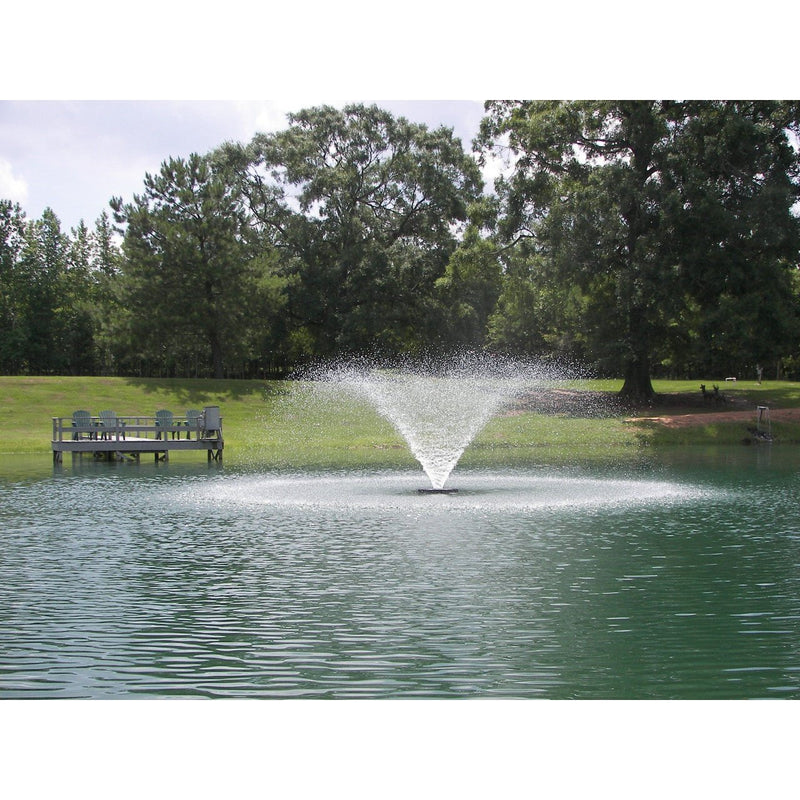
Over-reliance on fountains for aeration is a common pitfall in decorative pond management. While fountains provide some surface exchange, they often pull water from the top 12 to 24 inches of the pond. This leaves the bottom layers stagnant and anoxic. True aeration requires moving the entire volume of the pond and breaking the thermocline (the barrier between warm surface water and cold bottom water).
Limitations of Aeration Systems
Aeration is not a panacea for poor pond design or overstocking. Every pond has a carrying capacity, which is the maximum biomass it can support. Mechanical aeration can increase this capacity, but it cannot override the laws of physics.
Saturation limits represent a hard ceiling. No matter how much air you pump into a pond, the water cannot hold more than its temperature and pressure allow. If a pond is so heavily stocked with fish that their instantaneous oxygen demand exceeds the saturation limit, the system will remain in a state of chronic stress regardless of the aerator's size.
Environmental factors like heavy cloud cover can also limit the effectiveness of natural oxygen production. On overcast days, photosynthesis is severely reduced, but respiration remains constant. This creates an "oxygen debt" that mechanical systems must be sized to handle. If the system is sized for "average" conditions, it will fail during these peak-demand events.
Practical Tips for Optimizing Oxygen Levels
Optimization requires a proactive approach to monitoring and mechanical maintenance. Serious practitioners should invest in a digital DO meter, as chemical titration kits (like the Winkler method) are often too slow for emergency response.
- Monitor at Dawn: To understand the worst-case scenario for your pond, take DO readings at sunrise. This gives you the baseline of the pond's respiratory load.
- Position Diffusers Correctly: Place diffusers in the deepest part of the pond to maximize the bubble-to-water contact time. However, in very deep ponds (over 15 feet), be cautious of "turning over" the pond too quickly in the summer, which can mix anoxic bottom water with the surface and cause a localized fish kill.
- Clean Membranes Regularly: Fine bubble diffusers can become fouled with bio-film or calcium deposits. Fouled diffusers increase backpressure on the compressor, reducing both air output and SAE.
- Manage the Algae Bloom: While algae produce oxygen during the day, excessive blooms are a liability. Keep water clarity (Secchi disk depth) between 18 and 24 inches to ensure a balanced oxygen cycle.
Advanced Considerations: Calculating Oxygen Demand
For those managing high-value stock or intensive aquaculture, calculating the total Biochemical Oxygen Demand (BOD) is essential. The total demand is the sum of fish respiration, bacterial respiration, and the chemical oxidation of sediment.
Fish respiration can be estimated based on weight and temperature. At 80°F, a typical koi or catfish will consume approximately 250 mg of oxygen per kilogram of body weight per hour. A pond containing 100 kg (220 lbs) of fish would therefore require 25,000 mg (25 grams) of oxygen per hour just for the fish to breathe.
When you add the 4.5:1 oxygen-to-ammonia ratio and the 1-3 grams of O2 per square meter consumed by the bottom muck, the total hourly demand can be quantified. This data allows for the selection of an air compressor that delivers a Specific Oxygen Transfer Rate (SOTR) that exceeds the maximum calculated demand with a safety factor of at least 2.0.
Example Scenario: The Summer Oxygen Crash
Consider a 1/4 acre pond in mid-July with a water temperature of 82°F. The pond is at sea level, and the maximum saturation is 7.9 mg/L. The pond has a moderate algae bloom and several years of muck accumulation on the bottom.
During a string of hot, sunny days, the pond stays at 110% saturation (8.7 mg/L) during the afternoon due to photosynthesis. However, a sudden storm brings heavy clouds for two days. Photosynthesis drops by 80%. The bacteria, still working at high speed due to the heat, continue to consume oxygen at a rate of 1.5 mg/L per hour to process the organic load and ammonia.
Without supplemental aeration, the pond’s oxygen level will drop from 7.9 mg/L to 2.0 mg/L in less than four hours. Since the storm occurred in the evening, the crash happens at midnight. By 4:00 AM, the DO is at 0.5 mg/L, and by sunrise, the entire fish population has perished. This scenario demonstrates that "average" oxygen levels are irrelevant; it is the "minimum" level during a peak demand event that determines success or failure.
Final Thoughts
Maintaining dissolved oxygen is the most critical technical challenge in pond management. It is a dynamic variable influenced by temperature, pressure, biological load, and mechanical efficiency. Understanding that oxygen is a consumable resource—one that is used by bacteria and sludge as much as by fish—is the first step toward moving from a survival-based system to a thriving ecosystem.
Data-driven decisions, such as monitoring diurnal cycles and calculating SAE, provide the precision needed to prevent catastrophic failures. By treating aeration as a core biological requirement rather than an optional add-on, practitioners can ensure stable water chemistry and long-term ecosystem health.
Continuous improvement of the gas-liquid interface and the reduction of organic BOD will always result in a more resilient pond. Focus on the numbers, maintain the hardware, and prioritize the needs of the aerobic microbiome to achieve professional-grade results.