How To Tell If Your Pond Has Low Oxygen Before Fish Start Dying
Don't wait for the first floater to realize your pond is suffocating. Oxygen levels can drop dangerously low overnight. Learn the subtle warning signs before it's too late for your fish. Managing a pond ecosystem requires a granular understanding of Dissolved Oxygen (DO) dynamics, which represent the primary limiting factor for aquatic life density and health.
Dissolved oxygen is the volume of non-compound oxygen gas (O2) dissolved in water. It is measured in milligrams per liter (mg/L) or parts per million (ppm). Understanding how to detect a decline in these levels is essential for preventing catastrophic "pond crashes" where fish populations suffer total mortality within hours. This article provides a technical framework for identifying low oxygen conditions through physiological observation of fish, analysis of water chemistry, and environmental monitoring.
How To Tell If Your Pond Has Low Oxygen Before Fish Start Dying
Detecting hypoxia—low oxygen levels—requires monitoring both biological and physical indicators. Traditional visual cues often manifest only after significant physiological stress has already occurred. To identify a decline before it reachers a lethal threshold, observers must evaluate the following technical parameters:
1. Physiological Indicators in Fish
Fish exhibit specific behavioral changes as oxygen levels drop below 4.0 mg/L. The most immediate sign is "piping," where fish congregate at the water surface and appear to gulp air. They are actually utilizing the thin layer of water at the immediate air-water interface, which has a higher partial pressure of oxygen due to atmospheric diffusion.
Other physiological signs include:
- Increased Opercular Rate: Fish will pump their gills (opercula) more rapidly to pass a higher volume of water over the lamellae, attempting to maximize oxygen extraction.
- Lethargy and Reduced Feed Intake: Digestion is an oxygen-intensive process. When DO levels drop, fish metabolic rates slow down, and they will cease feeding to prioritize respiratory survival.
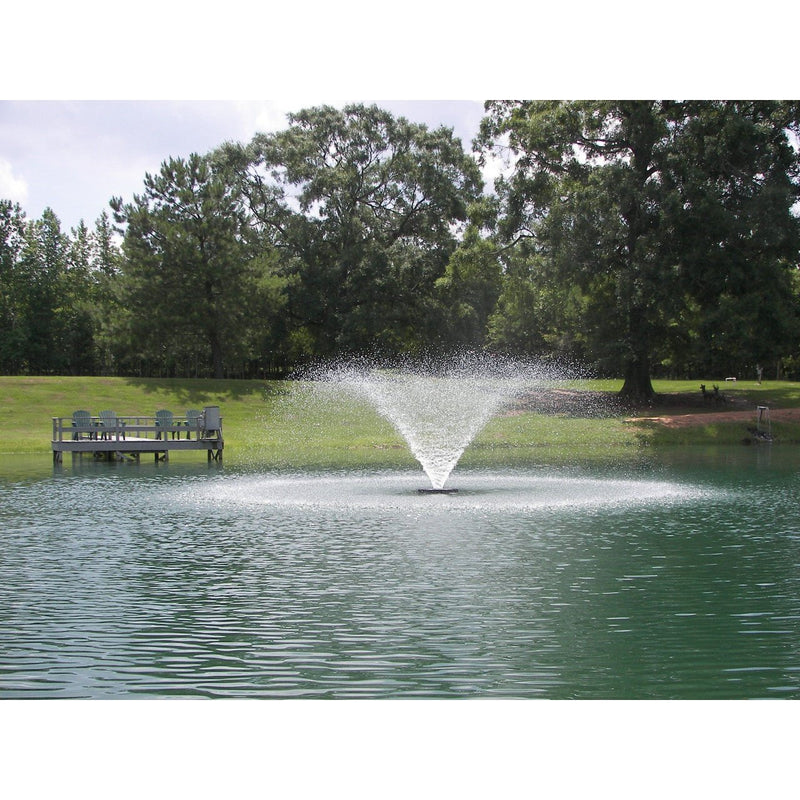
- Congregation at Inflow Points: Fish will swarm near waterfalls, fountain sprays, or aerator heads where the water is most saturated with oxygen.
2. Physical and Chemical Indicators
The water column itself provides data on its oxygen-carrying capacity. Sudden changes in appearance often correlate with a "bloom crash" or a rapid increase in Biological Oxygen Demand (BOD).
- Color Shifts: A shift from a healthy green (vibrant phytoplankton) to a muddy brown, black, or gray often indicates a massive algae die-off. As this biomass decomposes, aerobic bacteria consume vast amounts of DO, leading to a crash.
- Olfactory Detection: A "rotten egg" smell indicates the presence of Hydrogen Sulfide (H2S). This occurs when the pond becomes anaerobic (oxygen-free) at the bottom, allowing anaerobic bacteria to dominate decomposition.
- Water Surface Tension: Excessive foam or a "slick" on the surface can indicate high concentrations of dissolved organic compounds, which impede gas exchange and increase oxygen demand.
The Thermodynamics of Dissolved Oxygen
The capacity of water to hold oxygen is governed by Henry’s Law, which states that the amount of dissolved gas is proportional to its partial pressure in the gas phase. However, temperature and pressure are the primary variables in a pond environment.
Temperature-DO Inverse Relationship
Warmer water has less capacity to hold dissolved gases. As water temperature increases, the kinetic energy of the water molecules rises, making it easier for O2 molecules to escape back into the atmosphere. For example, fresh water at 0°C (32°F) can hold approximately 14.6 mg/L at saturation, while at 30°C (86°F), the saturation point drops to roughly 7.5 mg/L.
Partial Pressure and Altitude
Oxygen solubility decreases as altitude increases. At higher elevations, the lower atmospheric pressure reduces the partial pressure of oxygen, resulting in lower saturation levels. A pond at 5,000 feet above sea level will naturally have about 15-20% less dissolved oxygen than a pond at sea level under identical thermal conditions.
The Photosynthetic Cycle
In most ponds, the primary source of oxygen is phytoplankton photosynthesis. This creates a diurnal cycle. During daylight hours, photosynthesis produces an excess of oxygen, often leading to "supersaturation" (levels above 100%). At night, photosynthesis stops, but both fish and plants continue to respire, consuming oxygen. The lowest DO levels in any 24-hour period typically occur just before dawn.
Benefits of Maintaining Optimal Oxygen Levels
Maintaining a stable, high DO environment (above 5.0 mg/L for warm-water species and 6.5 mg/L for cold-water species) provides measurable operational advantages:
- Enhanced Metabolic Efficiency: Fish grow faster and convert feed more efficiently when they are not struggling to breathe. High DO supports the ATP production required for growth and immune function.
- Aerobic Decomposition: Sufficient oxygen allows aerobic bacteria to break down fish waste and organic muck. This process is significantly faster and cleaner than anaerobic decomposition, which produces toxic byproducts like ammonia and methane.
- Nitrification Stability: Nitrifying bacteria (Nitrosomonas and Nitrobacter) require oxygen to convert toxic ammonia into nitrite and then into nitrate. Hypoxic conditions can stall the nitrogen cycle, leading to secondary spikes in ammonia toxicity.
Challenges and Common Mistakes in Oxygen Management
Several management errors can lead to a rapid depletion of oxygen, often catching pond owners off-guard.
Overstocking and Overfeeding
Every pound of fish represents a specific oxygen demand. Overstocking creates a "biological load" that the pond’s natural surface diffusion cannot support. Similarly, overfeeding leads to uneaten food settling on the bottom, which skyrockets the BOD as it decomposes.
Improper Algaecide Application
Treating a massive algal bloom with algaecides is a frequent cause of oxygen crashes. Killing a large volume of algae simultaneously creates a massive surge in decomposition. This decomposition uses up the remaining oxygen, killing the fish hours after the treatment. Professionals should never treat more than 25-30% of a pond’s surface area at one time.
Thermal Stratification and Turnover
In deep ponds, water forms layers. The top layer (epilimnion) is warm and oxygen-rich, while the bottom layer (hypolimnion) is cold and often anoxic. A "turnover" occurs when a heavy cold rain or strong wind causes these layers to mix suddenly. The oxygen-depleted bottom water mixes with the surface, diluting the total oxygen to lethal levels.
Limitations of Natural Aeration
Relying solely on wind and photosynthesis for oxygenation is a high-risk strategy. Environmental variables often mitigate these natural processes:
- Stagnant Weather: Still, humid air prevents surface agitation, which is necessary for atmospheric diffusion.
- Cloud Cover: Consecutive days of overcast weather drastically reduce photosynthetic oxygen production while respiration remains constant.
- Excessive Aquatic Vegetation: While plants produce oxygen, an overabundance can impede water movement and lead to massive oxygen consumption at night.
Comparison: Surface Aeration vs. Diffused Aeration
Choosing the correct mechanical intervention depends on the pond’s depth and geometry. The metric used to compare these systems is Standard Aeration Efficiency (SAE), measured in kgO2/hr per kW of energy.
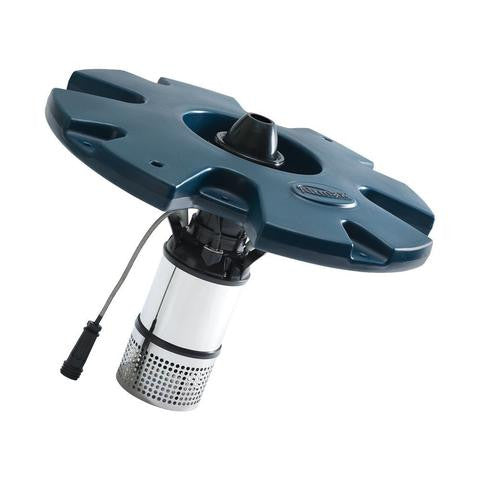
| Feature | Surface Aerators (Fountains/Splashers) | Diffused Aeration (Bottom Discs) |
|---|---|---|
| SAE Rating | 1.5 – 3.2 kgO2/hr kW | 1.0 – 4.0 kgO2/hr kW |
| Primary Mechanism | Splashing water into air to increase surface area. | Rising bubbles create vertical circulation. |
| Best Use Case | Shallow ponds (less than 6-8 feet deep). | Deep ponds (8+ feet) and large lakes. |
| De-stratification | Limited; primarily oxygenates the surface. | Excellent; mixes the entire water column. |
| Maintenance | Moderate (motor is in the water). | Low (compressor is on shore). |
Practical Tips for Oxygen Optimization
Systematic adjustments can significantly improve the resilience of a pond against oxygen depletion.
- Position Diffusers for Maximum Lift: In diffused systems, place the diffuser heads in the deepest parts of the pond. This maximizes the "chimney effect," where the rising bubbles pull a larger volume of water from the bottom to the surface.
- Run Aerators 24/7 During Summer: Since oxygen is at its lowest at night, turning off aerators to save electricity during the dark hours is a critical error. Maintenance of DO levels should be continuous.
- Monitor Algal Density: Maintain visibility of 18-24 inches (measured via Secchi disk). If visibility drops below 12 inches, the bloom is too dense and an oxygen crash is likely.
- Mechanical Redundancy: For high-value fish populations, install a backup aeration system or an automated alarm that triggers when DO levels drop below a pre-set threshold.
Advanced Considerations: Redox Potential and Probes
For serious practitioners, monitoring "Oxidation-Reduction Potential" (ORP) or "Redox" provides deeper insight. ORP measures the cleanliness of the water and its ability to break down waste. High ORP (250mV to 400mV) indicates a healthy, aerobic environment.
Investing in a digital Dissolved Oxygen Probe (using Luminescent Dissolved Oxygen or LDO technology) is the only way to get real-time, accurate data. Unlike chemical titration kits (Winkler method), LDO probes are not affected by water color or turbidity and provide instantaneous readings. This allows for the implementation of automated "smart" aeration systems that only activate when DO levels fall, optimizing energy consumption while ensuring safety.
Example Scenario: The Late August Crash
Consider a 1-acre pond with a maximum depth of 10 feet and a heavy load of channel catfish. In late August, the water temperature reaches 88°F. For three days, the sky is overcast, and there is no wind.
Because of the cloud cover, photosynthesis is negligible. The high water temperature means the pond can only hold about 7.0 mg/L at 100% saturation. However, the high metabolic rate of the fish in the warm water, combined with the respiration of the plants and the decay of organic matter on the bottom, creates a demand of 0.5 mg/L per hour.
Without mechanical aeration, the DO levels will drop from 6.0 mg/L to 2.0 mg/L in just 8 hours. By 4:00 AM, the fish will be at the surface gasping. By 7:00 AM, the larger, more oxygen-dependent fish will begin to die. This scenario illustrates why understanding the **Fragile: Oxygen Crash** vs. **Resilient: Aerated Balance** is vital for long-term pond stability.
Final Thoughts
Maintaining adequate dissolved oxygen is the most critical technical requirement for any pond management strategy. By understanding the physical laws governing gas solubility and the biological indicators of hypoxia, managers can intervene before mortality occurs.
Proactive monitoring—observing fish behavior at dawn, tracking water temperature, and maintaining mechanical aeration—is significantly more cost-effective than the "reactive" alternative of restocking a dead pond. Focus on maximizing gas exchange efficiency and minimizing the organic load to create a resilient aquatic environment that can withstand the environmental stressors of the summer months.
Experimenting with different diffuser placements and monitoring the resulting DO saturation levels will provide the data needed to tune your specific system for peak performance. Deepening your understanding of these mechanical and biological interactions ensures the health and longevity of your pond ecosystem.