Why Pond Depth Matters When Choosing An Aeration System
Surface splashing won't save a deep pond's floor. Depth changes the physics of oxygen. If your aerator isn't matched to your pond's bottom, you're just moving surface water. Effective pond management requires a rigorous understanding of hydrostatic pressure and gas transfer dynamics. In a deep-water environment, the volume of water above an aeration point creates a physical barrier that must be overcome by mechanical force. Relying on visual surface movement as a metric for oxygenation is a fundamental error in aquatic engineering.
The relationship between water depth and oxygenation is not linear. As depth increases, the atmospheric pressure exerted on the air pump increases, which alters the compressor's output curve. Simultaneously, the efficiency of oxygen transfer from a bubble into the surrounding fluid increases. This creates a complex optimization problem: a system must be powerful enough to overcome the head pressure of the water column while being efficient enough to capitalize on the extended contact time between bubbles and water.
Choosing an aeration system without calculating total dynamic head and required cubic feet per minute (CFM) at specific depth intervals leads to equipment failure and anoxic dead zones. This guide focuses on the technical specifications and mechanical requirements of depth-matched aeration to ensure biological stability in varied aquatic profiles.
Why Pond Depth Matters When Choosing An Aeration System
Pond depth is the primary determinant of the physical resistance an aeration system must overcome. This resistance is known as hydrostatic pressure. Every foot of water column depth exerts approximately 0.433 pounds per square inch (PSI) of backpressure on the aeration system. A diffuser placed at 10 feet of depth encounters 4.33 PSI, while one at 20 feet encounters 8.66 PSI. If the compressor is not rated to operate continuously at these specific pressures, the motor will overheat, the diaphragms will rupture, or the airflow will cease entirely.
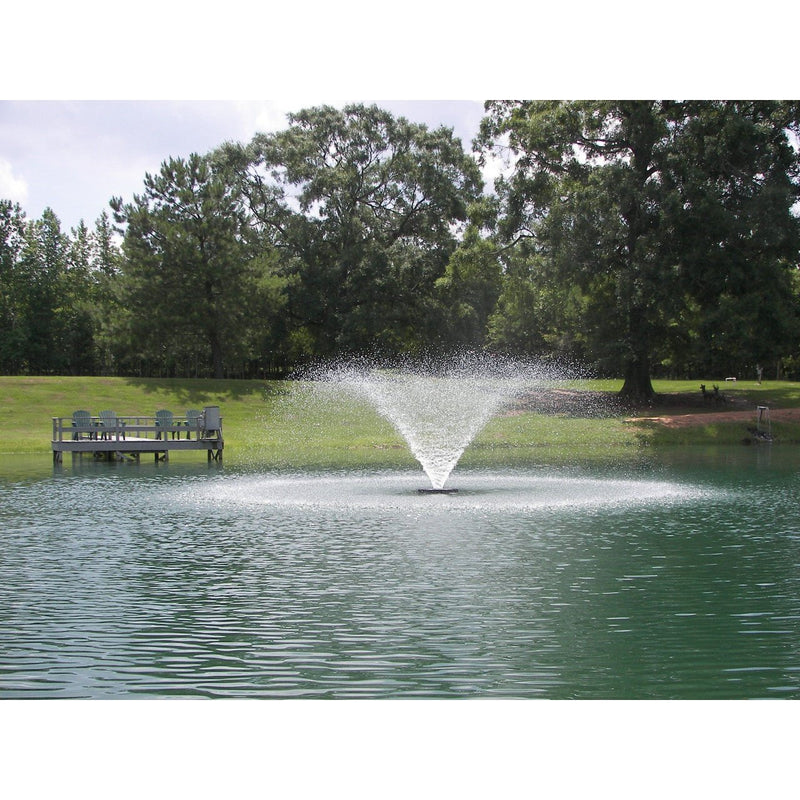
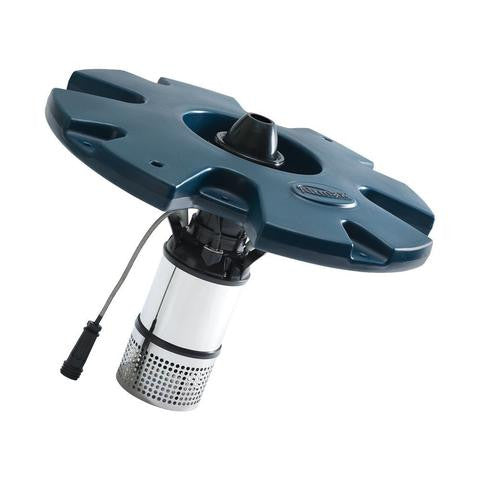
The thermocline also dictates the necessity of depth-matched aeration. In deep ponds, water often stratifies into layers: the epilimnion (warm, oxygenated top layer) and the hypolimnion (cold, oxygen-depleted bottom layer). Surface aerators, such as fountains or paddlewheels, are typically only effective for the top 4 to 6 feet of the water column. In a pond that is 15 feet deep, a surface aerator leaves the bottom 9 feet in a state of permanent anoxia. This lack of oxygen at the sediment-water interface prevents the aerobic decomposition of organic matter, leading to the accumulation of hydrogen sulfide, methane, and ammonia.
Real-world application of depth-matched aeration is seen in large-scale aquaculture and lake restoration. In these scenarios, bottom-diffused systems are mandatory. By placing diffusers at the deepest points, the system utilizes the "airlift" effect. As bubbles rise, they physically entrain cold, dense water from the bottom and carry it to the surface. This mechanical mixing breaks the thermocline and ensures that the entire water column reaches a state of thermal and chemical equilibrium.
The Mechanics of Depth and Gas Transfer
Subsurface diffused aeration operates on the principle of buoyancy and gas diffusion. A compressor on shore pumps air through weighted tubing to a diffuser on the pond floor. The diffuser shears the air into thousands of micro-bubbles. These bubbles perform two functions: direct oxygen transfer and mechanical destratification.
The Oxygen Transfer Efficiency (OTE) of a bubble is a function of its size and its contact time with the water. Smaller bubbles have a higher surface-area-to-volume ratio, which allows for more efficient gas exchange. Furthermore, as a bubble rises from a depth of 20 feet, it has twice the contact time compared to a bubble rising from 10 feet. Data indicates that OTE improves by approximately 1.5% to 2.0% for every foot of depth. Consequently, deeper diffusers are theoretically more efficient at dissolving oxygen, provided the compressor can maintain the required CFM against the higher PSI.
Compressor selection must be based on the intersection of the pressure (PSI) and flow (CFM) on the manufacturer's performance curve. There are four primary types of compressors used in pond aeration:
- Linear Diaphragm Compressors: These are highly efficient at low pressures (0–4 PSI) and are ideal for shallow ponds under 8 feet deep. They lose significant flow as pressure exceeds 5 PSI.
- Rocking Piston Compressors: These are the industry standard for deep ponds. They can operate continuously at 20–30 PSI, making them suitable for depths up to 40 or 50 feet.
- Rotary Claw Compressors: Used for very large volumes of air in medium depths (up to 15 feet). They provide high CFM but have lower maximum pressure ratings than rocking pistons.
- Regenerative Blowers: These move massive volumes of air at very low pressures. They are inefficient for any depth greater than 6 feet.
Benefits of Depth-Matched Aeration Systems
The primary advantage of a depth-matched system is the elimination of the hypolimnetic oxygen deficit. By delivering air to the floor of the pond, you ensure that the sediment layer remains aerobic. This facilitates the growth of aerobic bacteria, which are up to 20 times more efficient at decomposing organic muck than anaerobic bacteria.
Energy efficiency is another significant metric. Moving air is mechanically easier than moving water. A 1/2 horsepower rocking piston compressor can effectively destratify a 2-acre pond at 15 feet of depth, whereas a surface fountain would require 3 to 5 horsepower to achieve similar circulation, yet would still fail to oxygenate the bottom water. The use of fine-bubble diffusers at depth can achieve Standard Aeration Efficiency (SAE) ratings of over 15 pounds of oxygen per horsepower-hour.
Long-term pond health is stabilized through the reduction of nutrient cycling. In an anoxic environment, phosphorus is released from the sediments into the water column, fueling harmful algal blooms. An oxygenated pond floor keeps phosphorus "locked" in the sediment through the formation of ferric phosphate. This chemical stabilization reduces the frequency of algae outbreaks and improves water clarity.
Challenges and Common Mechanical Mistakes
A frequent error in pond management is undersizing the compressor's PSI capacity. If a pond owner uses a linear diaphragm pump (rated for 4 PSI max) in a 12-foot deep pond (requiring 5.2 PSI just to clear the water), the pump will operate at its dead-head limit. This creates extreme heat within the pump housing, leading to the rapid degradation of rubber components and eventual motor burnout.
Neglecting friction loss in the airline is another technical oversight. As air travels through a pipe, it encounters resistance from the pipe walls. This resistance adds to the total system backpressure. Using a 3/8-inch interior diameter (ID) hose for a 500-foot run will add significant PSI compared to a 5/8-inch or 1-inch ID pipe. If the total system pressure (Depth Pressure + Diffuser Resistance + Friction Loss) exceeds the compressor's rated range, the volume of air delivered (CFM) will drop below the threshold required for effective mixing.
Diffuser maintenance is often overlooked. Over time, calcium carbonate scale or biofilm can clog the micro-perforations in membrane diffusers. This increases the "bubble point" pressure required to push air through the membrane. An increase of just 2 PSI due to clogging can reduce a rocking piston's air output by 15-20%, further straining the mechanical components and reducing the aeration efficiency.
Limitations and Environmental Constraints
Depth-matched aeration is not a universal solution for every aquatic environment. In very shallow ponds (less than 4 feet deep), the "airlift" column is too short to generate significant water movement. In these cases, the bubbles reach the surface too quickly to transfer much oxygen or move much water. For ultra-shallow environments, surface aerators or horizontal aspirators are technically superior because they create high-velocity lateral currents that provide better horizontal mixing.
Extreme depths (greater than 50 feet) present challenges for standard pond compressors. At 50 feet, the hydrostatic pressure is 21.65 PSI. When combined with friction loss and diffuser resistance, the total system pressure may approach 25–30 PSI. While high-end rocking pistons can handle this, the energy required to compress air to these levels increases exponentially. In such cases, specialized industrial compressors or multiple smaller systems may be required to maintain the necessary turnover rate.
Environmental factors like altitude also impact performance. At higher elevations, the air is less dense, meaning a compressor must move a larger volume of air to deliver the same mass of oxygen. This requires "de-rating" the compressor's effective output when calculating aeration requirements for mountain ponds.
Precision: Depth-Matched vs. Standard: Wrong Depth
In a "Standard: Wrong Depth" scenario, a generic aeration kit is installed without regard for the specific bathymetry of the pond. For example, a system designed for a 1/2-acre pond at 6 feet of depth is installed in a 1/2-acre pond that is 18 feet deep. While the surface area is the same, the depth-driven variables are entirely different.
| Metric | Standard: Wrong Depth | Precision: Depth-Matched |
|---|---|---|
| Backpressure (PSI) | ~2.6 PSI (for 6ft) | ~7.8 PSI (for 18ft) |
| Compressor Type | Linear Diaphragm | Rocking Piston |
| Mechanical Longevity | Low (overheats at 18ft) | High (operates in power band) |
| Bottom Oxygenation | None (air flow stalls) | Full Destratification |
| Maintenance Interval | Frequent (repairing failures) | Scheduled (routine cleaning) |
The "Precision: Depth-Matched" approach accounts for the specific PSI and CFM requirements of the deeper water column. It utilizes a compressor capable of handling the higher pressure without a significant drop in air volume. This ensures that the air actually reaches the diffusers and provides enough energy to lift the dense bottom water to the surface.
Practical Tips and Best Practices
Optimization of a depth-matched system begins with the choice of airline. For any run over 100 feet, upgrade from 3/8-inch to 1/2-inch or 5/8-inch weighted tubing to minimize friction loss. This small change in diameter can reduce the backpressure on your compressor by 1–2 PSI, which translates directly to cooler operating temperatures and longer component life.
Install a pressure gauge at the compressor outlet. This is the single most important diagnostic tool for an aeration system. A gauge allows you to monitor the "health" of the system. If the pressure rises over time, your diffusers are likely clogging and need cleaning. If the pressure drops suddenly, you may have a leak in the airline or a ruptured diaphragm in the compressor.
Positioning the diffusers is critical. They should be placed in the deepest areas of the pond to maximize the airlift effect. However, if the pond floor is covered in deep, loose silt, place the diffuser on a pedestal or a flat base to prevent it from burying itself. A buried diffuser cannot release bubbles effectively and will quickly clog.
Advanced Considerations: SOTR and AOTR
For serious practitioners, understanding the difference between Standard Oxygen Transfer Rate (SOTR) and Actual Oxygen Transfer Rate (AOTR) is essential. SOTR is measured in clean water at 20 degrees Celsius with zero dissolved oxygen. This is the "benchmark" provided by manufacturers. However, real-world conditions (AOTR) are always less efficient.
Factors that influence AOTR include:
- Alpha Factor (α): The ratio of oxygen transfer in pond water vs. clean water. Dissolved solids, oils, and surfactants in pond water decrease this factor, often to 0.6 or 0.8.
- Beta Factor (β): The ratio of oxygen solubility in pond water vs. clean water. Usually close to 0.95–0.98.
- Temperature Coefficient (θ): Oxygen transfer is more efficient in warmer water because the viscosity is lower, but oxygen solubility is lower in warm water.
When calculating the mass of oxygen required for a pond, one must adjust the SOTR by these factors to find the AOTR. In deep ponds, the increased hydrostatic pressure at the bottom increases the saturation concentration of oxygen (Cs), which actually improves the AOTR. This is a technical advantage of deep-water aeration that is often overlooked in basic pond management.
Examples of Depth-Matched Scaling
Consider a 1-acre pond with a maximum depth of 20 feet. To achieve full turnover twice per day, we must calculate the required air volume. At 20 feet, each CFM of air can move approximately 2,500 to 3,000 gallons of water per minute via the airlift effect.
If the pond contains roughly 3 million gallons of water, a turnover of 6 million gallons per day is required. This equates to approximately 4,166 gallons per minute (GPM). Dividing 4,166 GPM by the 20-foot airlift capacity (2,500 GPM/CFM) suggests we need approximately 1.66 CFM of air delivered at the bottom.
To deliver 1.66 CFM at 20 feet (8.66 PSI + friction loss), we would select a 1/4 HP rocking piston compressor. A linear diaphragm pump, even one rated for 3 CFM at open flow, would likely produce less than 0.5 CFM at 9 PSI, failing to meet the requirement. This example illustrates how the "Standard" approach based on acreage alone fails in deep-water scenarios.
Final Thoughts
Surface splashing won't save a deep pond's floor because it ignores the fundamental physics of hydrostatic pressure and thermal layering. Achieving a healthy, oxygenated pond requires moving beyond aesthetics and focusing on the mechanical requirements of the water column. Depth-matched aeration is the only method that ensures the hypolimnion remains aerobic, preventing the accumulation of toxic gases and the collapse of the pond's ecosystem.
By calculating the total system backpressure and selecting a compressor that operates efficiently within that specific power band, you ensure both biological success and mechanical longevity. The data is clear: diffused aeration at depth is more efficient, more effective, and more sustainable than surface-level alternatives in any pond deeper than 6 feet.
Serious pond managers should prioritize the installation of pressure gauges, the use of larger diameter airlines, and the selection of high-pressure compressors like rocking piston units. Implementing these technical standards transforms a pond from a potential liability into a stable, self-purifying aquatic system. Apply these principles to your next setup to ensure your aeration system is actually doing the work it was designed for.