

Calculating the ROI of Upgrading from Surface Fountains to Diffused Aeration
Surface fountains look nice, but diffused aeration actually works. Invest in results, not just decor. Stop fixing the surface while the bottom rots. Discover why the ROI of diffused aeration beats surface fountains every time.
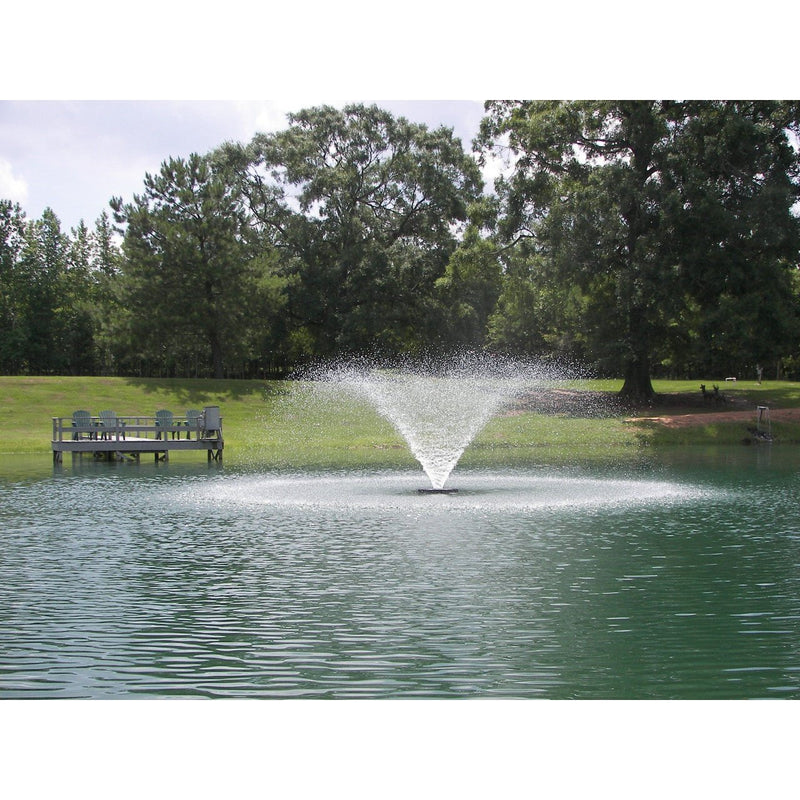
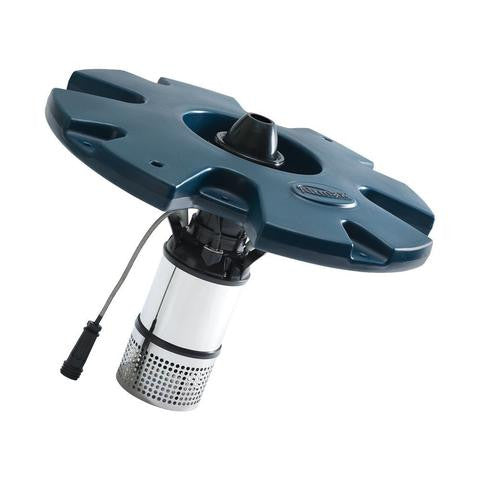
Property owners often prioritize visual appeal when managing a pond or lake. A floating fountain provides a dramatic spray pattern and an audible splash that suggests a healthy, active ecosystem. However, mechanical surface agitation is an inefficient method for deep-water oxygenation. Most decorative fountains only circulate the top few feet of the water column, leaving the bottom layers to become stagnant and anoxic.
Diffused aeration shifts the focus from aesthetics to mechanical efficiency. Using a shore-mounted compressor to pump air through weighted tubing to diffusers on the pond floor, these systems utilize the physical properties of rising air to move massive volumes of water. This technical deep dive explores the financial and biological return on investment (ROI) found when moving from surface-level decor to sub-surface health.
Calculating the ROI of Upgrading from Surface Fountains to Diffused Aeration
The return on investment for aeration systems is calculated through three primary vectors: energy consumption, maintenance expenditures, and biological remediation costs. Surface fountains are high-wattage devices. A standard 1 HP decorative fountain typically draws 7 to 10 amps at 115 volts. Operating this unit 24/7 at a national average rate of $0.14 per kWh results in a monthly expenditure of approximately $85 to $120.
Diffused aeration systems operate with significantly lower power requirements. A 1/2 HP rocking piston compressor, capable of aerating a 1-to-2-acre pond up to 20 feet deep, draws approximately 3.5 to 4.5 amps. The monthly electrical cost for this system typically ranges from $35 to $50. This represents a 50% to 60% reduction in operational energy costs immediately upon installation.
Biological ROI is measured in the reduction of "muck" or organic sediment. Anoxic pond bottoms accumulate organic matter that cannot decompose efficiently without oxygen. Diffused aeration provides the Dissolved Oxygen (DO) required for aerobic bacteria to digest this sludge. Reports indicate that active bottom aeration can reduce muck layers by 1 to 2 inches per year. Eliminating the need for mechanical dredging—which can cost upwards of $10,000 to $50,000 per acre—represents the single largest long-term financial benefit of a diffused system.
Mechanical Process: The Physics of Sub-Surface Aeration
Understanding why diffused systems outperform fountains requires a look at the "Air Lift" effect. As air is pushed through a diffuser membrane, it breaks into thousands of micro-bubbles. These bubbles rise through the water column, creating a column of rising water known as an induced current. This process utilizes the water's own density and gravity to facilitate a full-pond turnover.
Oxygen transfer occurs at two points: the surface of the bubble as it rises and the atmospheric interface once the bubble reaches the surface. Because a bubble rising from 15 feet deep has more contact time with the water than a fountain droplet in the air, the Standard Aeration Efficiency (SAE) is much higher. Fine-bubble diffusers can achieve SAE ratings of 3.5 to 4.0 lbs of oxygen per horsepower-hour, compared to 1.5 to 2.5 lbs for decorative fountains.
Mechanical components in a diffused system are situated on land. The compressor is housed in a ventilated cabinet, protected from the corrosive environment of the pond. This accessibility allows for easier monitoring and servicing compared to a fountain pump submerged in several feet of water and muck.
Benefits of Diffused Aeration Over Surface Agitation
Total water column destratification is the primary advantage of diffused systems. During summer months, ponds experience thermal stratification where a warm upper layer (epilimnion) sits atop a cold, oxygen-depleted lower layer (hypolimnion). Fountains only agitate the epilimnion. Diffused aeration pulls the cold, stagnant water from the bottom to the surface, breaking the thermocline and creating a uniform temperature and oxygen profile.
- Energy Efficiency: Diffused systems move more water per watt of electricity by utilizing the buoyancy of air rather than the mechanical force of a pump.
- Reduced Chemical Dependency: High dissolved oxygen levels at the bottom prevent phosphorus from being released from the sediment. This limits the nutrient load available for algae blooms, reducing algaecide costs by 30% to 50%.
- Winterization: Many fountains must be removed in winter to prevent ice damage to the float and motor. Diffused systems can run year-round, keeping an "opening" in the ice to allow toxic gases like hydrogen sulfide to escape, preventing winter fish kills.
- Longevity: Rocking piston compressors often last 5 to 7 years between major service intervals, whereas submersible fountain pumps face seal failures and clogs more frequently due to direct contact with pond debris.
Challenges and Common Pitfalls
Initial "Cold Starts" or "Turnover Stress" represent the most common risk during an upgrade. If a diffused system is turned on for 24 hours immediately in a highly stratified pond, the sudden rise of oxygen-depleted, hydrogen-sulfide-rich water can shock and kill fish. New systems must be started on a "stair-step" schedule: 30 minutes the first day, 1 hour the second, and doubling daily until full operation is reached.
Undersizing the compressor is another frequent error. Pressure increases by approximately 0.43 PSI for every foot of water depth. A compressor must have the "back-pressure" capability to push air through the diffusers at the specific depth of the pond. Using a linear diaphragm pump (designed for shallow tanks) in a 15-foot deep pond will cause the diaphragms to rupture within weeks due to excessive back-pressure.
Limitations of Diffused Aeration
Shallow ponds—those under 5 or 6 feet deep—do not provide enough "rise time" for bubbles to create a significant air-lift current. In these environments, the ROI of a diffused system diminishes. The horizontal movement of water is limited in shallow basins, and a high-volume surface aerator (a non-decorative version of a fountain) may actually be more effective for oxygen transfer.
Visual expectations can also be a limitation. If the primary goal is a 20-foot vertical spray for a wedding venue or a corporate park entrance, a diffused system will be disappointing. It produces a "boil" on the surface that looks like a pot of simmering water, not a decorative display. Property owners must choose between the aesthetic of the fountain and the efficiency of the diffuser.
Comparison: Surface Aesthetics vs. Deep-Cycle Health
| Feature | Surface Fountain (Decorative) | Diffused Aeration System |
|---|---|---|
| Operating Depth | Top 3–6 feet only | Entire water column (up to 40+ ft) |
| SAE (Lbs O2/HP-hr) | 1.5 – 2.5 | 3.0 – 4.0 |
| Typical Power Use | 1.0 HP (High) | 0.25 – 0.5 HP (Low) |
| Maintenance Location | In-water (Requires boat/waders) | On-shore (Cabinet access) |
| Muck Reduction | Negligible | Active (Aerobic digestion) |
| Visual Impact | High / Decorative | Low / Functional "Boil" |
Practical Tips and Best Practices
Sizing your system based on "Turnover Rate" is critical for technical success. Aim for one full turnover of the pond's volume every 24 hours. To calculate this, determine the total gallons of the pond (Acre-feet x 325,851) and match it to the GPM (gallons per minute) flow rate of the diffuser at your specific depth.
Placement of diffusers should target the deepest areas of the pond. However, if the pond has an irregular shape with coves or "dead zones," multiple smaller diffusers are more effective than one large central unit. Using weighted, sinkable airline is mandatory. Non-weighted airline will float to the surface, creating a navigation hazard and an eyesore that is difficult to fix once the system is pressurized.
- Inspect the air filter on the compressor monthly. A clogged filter increases heat and reduces the lifespan of the piston seals.
- Use a pressure gauge at the compressor. A sudden rise in pressure indicates a clogged diffuser; a sudden drop indicates a leak in the airline.
- Integrate beneficial bacteria treatments with the aeration schedule to accelerate the digestion of organic muck.
Advanced Considerations: The Role of Henry’s Law
Serious practitioners understand the relationship between depth and gas solubility, governed by Henry’s Law. This law states that the amount of dissolved gas in a liquid is proportional to its partial pressure above the liquid. In deeper water, the pressure is higher, allowing the water to hold more oxygen. Diffused aeration exploits this by introducing air at the highest pressure point (the bottom).
Nitrogen gas stripping is another advanced benefit. In stagnant ponds, nitrogen and methane can build up to toxic levels near the bottom. The rising bubbles from a diffuser system act as a transport mechanism, "stripping" these harmful gases from the water and venting them into the atmosphere. This mechanical gas exchange is far more thorough than what can be achieved by simple surface splashing.
Example Scenario: 1-Acre Pond Transformation
Consider a 1-acre pond with an average depth of 10 feet and a maximum depth of 15 feet. The owner currently runs a 1 HP decorative fountain 24/7. The water is murky, and algaecide treatments cost $400 per season. Electricity costs $100 per month ($1,200 annually). Total annual OPEX: $1,600.
Upgrading to a 1/2 HP rocking piston diffused system involves a $1,500 capital expenditure (CAPEX). The new monthly electricity bill is $45 ($540 annually). Because the water is now fully oxygenated, algaecide use drops by 50% ($200 annually). Total annual OPEX: $740. The system pays for itself in less than 24 months through energy and chemical savings alone, while simultaneously removing inches of muck that would otherwise lead to a $20,000 dredging bill in a decade.
Final Thoughts
Surface fountains serve a distinct purpose in landscape design, but they are not a viable solution for comprehensive lake management. The mechanical inefficiency of pushing water into the air is high when compared to the efficiency of allowing air to pull water from the bottom. Transitioning to diffused aeration represents a shift from reactive management—treating symptoms like algae and smell—to proactive health.
Technical ROI is clear when looking at the reduction in amperage draw and the increase in oxygen transfer rates. By investing in the bottom of the pond rather than the surface, property owners secure the longevity of their water resource. The results are measurable: clearer water, less muck, and a more stable ecosystem that requires fewer expensive chemical interventions.
Applying these principles requires a baseline understanding of your pond's bathymetry. Measure your depths and calculate your volume before selecting a compressor. A well-engineered diffused system is a "set and forget" solution that provides the highest biological and financial return in the industry.