

How To Eliminate Pond Dead Zones
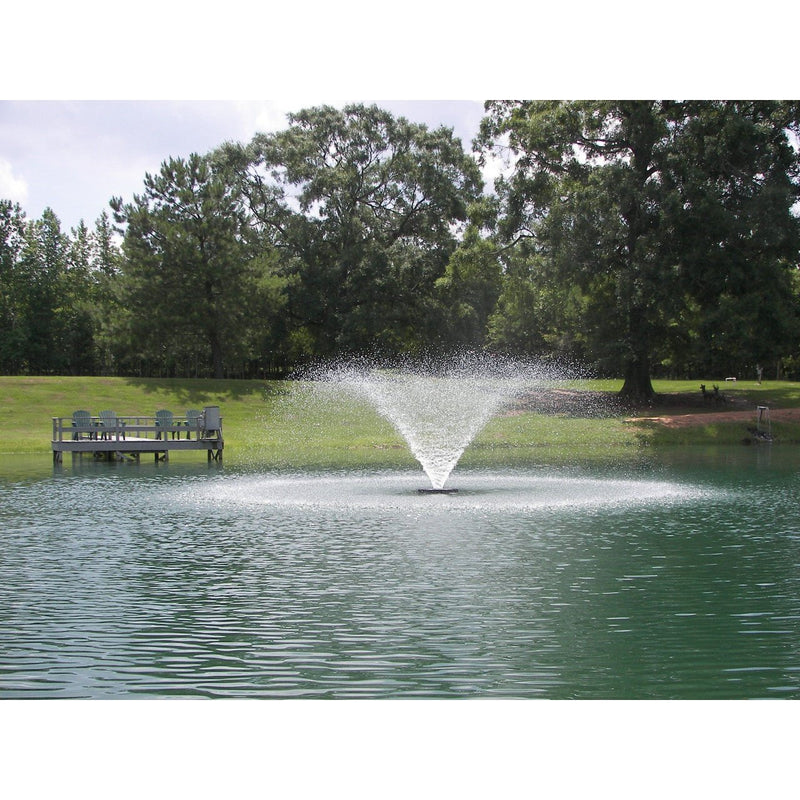
Most people drop their aerator and hope; the pros use flow geometry to eliminate dead zones. Random placement leaves 40% of your pond stagnant. Using a Kasco surface aerator with precision positioning allows you to create a continuous current that eliminates dead spots and keeps the entire water body breathing.
Aeration is not merely about splashing water; it is a mechanical process of gas exchange and thermal destratification. Successful pond management requires an understanding of how water moves under tension and how oxygen molecules transition from the atmosphere into the liquid phase. Precision flow ensures that every cubic meter of the water column maintains a dissolved oxygen (DO) level sufficient to support aerobic bacteria and aquatic life.
How To Eliminate Pond Dead Zones
A dead zone, or hypoxic region, occurs when the rate of oxygen consumption exceeds the rate of oxygen replenishment. In most ponds, this happens at the bottom or in stagnant corners where water circulation is non-existent. These zones are characterized by anaerobic conditions, where "muck" or organic sludge accumulates and releases toxic gases like hydrogen sulfide and methane.
Eliminating these zones requires breaking the thermocline—the physical barrier between warm surface water and cold, oxygen-poor bottom water. Kasco surface aerators achieve this by pulling high volumes of water from below the unit and thrusting it into the atmosphere. This action creates a "zone of influence" where the oxygen-rich water returns to the surface and begins a downward and outward circulation pattern. To effectively clear a dead zone, the aerator must be positioned so that its flow pattern intersects with the stagnant areas, forcing them into the active circulation loop.
How It Works: The Mechanics of Precision Flow
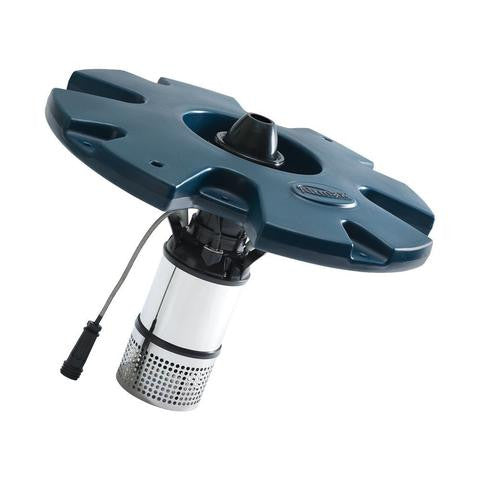
Kasco surface aerators, particularly the AF Series, operate on the principle of high-volume surface agitation. Unlike decorative fountains that prioritize spray height, these units focus on Gallons Per Minute (GPM) and Oxygen Transfer Rate (OTR).
The Oxygen Transfer Process
The mechanical transfer of oxygen occurs at the air-water interface. When the aerator's propeller breaks the water into millions of small droplets, it exponentially increases the surface area exposed to the atmosphere. This process allows for rapid gas exchange:
- Oxygen Absorption: Atmospheric oxygen (at 21% concentration) diffuses into the oxygen-depleted water droplets.
- Gas Venting: Trapped gases such as carbon dioxide and ammonia are released from the water into the air.
Calculating Flow Geometry
Precision positioning involves more than just centering the unit. Professionals use a diagonal arrangement for multiple units to ensure wider distribution. In a rectangular pond, placing aerators at opposite corners creates a circular current that moves water through the center and along the perimeter. This prevents the "short-circuiting" of flow that occurs when aerators are placed too close to one another or in parallel.
For a single unit, the effective throw is determined by the motor's horsepower and the propeller design. A 1 HP Kasco unit can move approximately 30,000 gallons per hour (GPH). If the pond is irregular in shape, the unit should be positioned slightly off-center toward the largest stagnant area to maximize the length of the water's travel path, or "fetch."
Benefits of Precision Positioning
The primary advantage of precision flow is the dramatic reduction in Biochemical Oxygen Demand (BOD). When oxygen is distributed evenly, aerobic bacteria can efficiently break down organic matter at the pond floor.
Optimized Oxygen Transfer Rates (OTR)
Kasco units are engineered for high SAE (Standard Aeration Efficiency) ratings. Independent studies, including those conducted by Auburn University, show that Kasco surface aerators can deliver up to 3.0 lbs of oxygen per horsepower per hour. This efficiency ensures that the electrical cost per unit of oxygen added is minimized compared to decorative fountains or smaller, non-industrial units.
Thermal Destratification
A well-positioned aerator eliminates the thermocline. By pulling cooler, denser water from the depths (as shallow as 15 inches for smaller units), the aerator mixes the entire water column. This creates a uniform temperature and oxygen profile, which prevents sudden "turnovers" that can lead to massive fish kills during heavy rains or sudden temperature drops.
Challenges and Technical Pitfalls
Mechanical optimization is often hindered by improper installation. One common mistake is ignoring motor torque. If an aerator is not moored correctly, the motor's torque will cause the float to spin, which twists the power cord and reduces flow efficiency.
Electrical Constraints
Voltage drop is a significant technical challenge for large-scale pond aeration. As the distance from the power source increases, the resistance in the wire causes the voltage to drop. If the voltage at the motor falls below 10% of its rating, the motor will run hot, leading to thermal overload and a shorter lifespan. It is critical to use the correct wire gauge for the distance:
- 50 to 100 feet: Standard 12/3 or 14/3 cable may suffice.
- 200 to 400 feet: Heavier 10/3 or 8/3 cable is often required to maintain operational voltage.
Debris and Cavitation
In ponds with heavy vegetation, the intake screen can become clogged. This restricts flow and can lead to cavitation—a phenomenon where vacuum bubbles form and collapse on the propeller blades, causing pitting and mechanical vibration. Kasco units utilize a weedless propeller design to mitigate this, but regular maintenance is still required to ensure the intake remains clear.
Limitations of Surface Aeration
While surface aerators are highly efficient at gas exchange, they have depth limitations. A surface aerator typically influences the water column down to about 10 feet. In extremely deep lakes (20+ feet), a surface aerator may not be able to pull water from the very bottom.
In these scenarios, a hybrid approach is often better. Combining a Kasco surface aerator for immediate surface oxygenation and gas venting with a bottom-diffused aeration system for deep-water mixing ensures the entire water body is addressed. Environmental factors like high salinity also affect performance; salt water is denser and holds less dissolved oxygen, requiring more horsepower to achieve the same results as fresh water.
Comparing Aeration Technologies
Understanding the performance metrics between different Kasco series is essential for selecting the right equipment.
| Feature | AF Series (Surface Aerator) | VFX Series (Aerating Fountain) | J Series (Decorative Fountain) |
|---|---|---|---|
| Primary Goal | Maximum Oxygen Transfer | Aesthetics + Aeration | Visual Display |
| SAE Rating | 2.6 - 3.2 lbs O2/hp-hr | 1.5 - 2.5 lbs O2/hp-hr | < 1.5 lbs O2/hp-hr |
| GPH Flow | Very High (30,000+ per HP) | Moderate | Low (Restricted by nozzle) |
| Maintenance | Low (Clog-resistant) | Moderate | High (Nozzle cleaning) |
Practical Tips for Precision Setup
Achieving a professional-grade setup requires attention to mooring and anchoring. Proper mooring prevents the unit from drifting and ensures it stays in the "sweet spot" of the flow geometry.
- Mooring Ratio: Use a 3:1 ratio for mooring lines. For every 1 foot of water depth, the anchor should be placed 3 feet horizontally from the float. This angle provides the best stability against wind and motor torque.
- Anchor Weight: Use at least 25-30 lbs of weight per mooring line. In ponds with significant water level fluctuations, use a secondary weight or a spring-loaded mooring system to maintain tension.
- Cord Protection: Use a flex sleeve cord protector in areas with muskrats or heavy turtle populations. These animals can chew through standard power cords, leading to GFCI trips and expensive repairs.
Advanced Considerations: Sizing and Bio-Load
For serious practitioners, sizing an aerator is based on more than just surface area. You must calculate the volume in acre-feet and account for the pond's biological oxygen demand (BOD).
The 1.5 HP Rule
For normal pond conditions, the baseline recommendation is 1.5 HP of aeration per surface acre. However, this must be adjusted based on:
- Climate: Warmer water holds less oxygen. If the pond is in a southern climate where water temperatures exceed 80°F (27°C), increase the requirement to 2 HP per acre.
- Fish Load: High densities of fish, particularly in aquaculture settings, significantly increase BOD. If you are feeding fish daily, you must increase aeration capacity to handle the resulting nitrogenous waste.
- Nutrient Loading: Ponds surrounded by lawns or agricultural runoff will have higher algae growth, which consumes oxygen at night. Supplemental aeration during the 12:00 AM to 6:00 AM window is critical for these ponds.
Technical Scenario: Rectangular 1-Acre Pond
Consider a 1-acre rectangular pond (roughly 200' x 220') with an average depth of 6 feet. Using a "drop and hope" method, a single 1 HP unit might be placed in the center.
The Result: The corners remain stagnant. Approximately 0.2 acres of the pond remains in a "dead zone" where muck accumulates.
The Professional Solution: Use two 1/2 HP Kasco AF Series units. Place one unit 40 feet from the North-West corner and the second unit 40 feet from the South-East corner. Angle the mooring lines to create a slight diagonal push. This configuration creates a clockwise current that moves the entire 325,851 gallons of an acre-foot of water every 24 to 48 hours. By doubling the circulation points, you ensure that the current reaches the stagnant corners, effectively eliminating 100% of the dead zones.
Final Thoughts
Precision positioning of a Kasco surface aerator transforms a pond from a stagnant basin into a dynamic, living ecosystem. By prioritizing flow geometry over random placement, you maximize the 3.0 lbs/hp-hr oxygen transfer potential of the equipment. This data-driven approach ensures that the energy consumed by the motor translates directly into water quality improvements.
Successful aeration requires a balance of mechanical specifications and environmental understanding. Monitor your dissolved oxygen levels and adjust unit placement as seasonal temperatures shift. The goal is a uniform water column where aerobic processes can thrive, preventing muck buildup and protecting aquatic life from hypoxic stress.
Experiment with your unit's position and observe the surface ripples. If you see foam or debris gathering in a specific corner, your current is not reaching that zone. Adjust your mooring points until the entire surface shows movement. This level of technical attention is what separates a healthy, managed pond from one that is merely surviving.