

Benefits Of Surface Pond Aerators For Shallow Water
Nature uses gravity to breathe; we use engineering to mimic it. In nature, 'Ancestral' oxygenation happens through the violent splashing of mountain streams. Modern surface aerators use this exact same physical principle to save stagnant ponds. While subsurface systems are popular, there are specific scenarios where the old-school surface splash is still king. Do you know which one your pond needs?
Aeration is the mechanical process of increasing the dissolved oxygen (DO) levels in a body of water. This is a critical variable for any pond manager or engineer. Without sufficient oxygen, aerobic bacteria cannot decompose organic matter, leading to the accumulation of muck and the release of toxic gases like hydrogen sulfide.
Surface pond aerators represent a high-energy approach to this problem. They focus on the air-water interface to drive gas exchange. This guide examines the technical specifications and mechanical advantages of using these systems in shallow environments.
Benefits Of Surface Pond Aerators For Shallow Water
Surface pond aerators are specifically engineered to provide maximum oxygen transfer in water depths where other systems fail. In shallow water, typically defined as less than 6 to 8 feet, the physics of gas exchange changes significantly. Subsurface systems, which rely on bubble rise time, lose their efficiency because the bubbles reach the surface too quickly to transfer their oxygen.
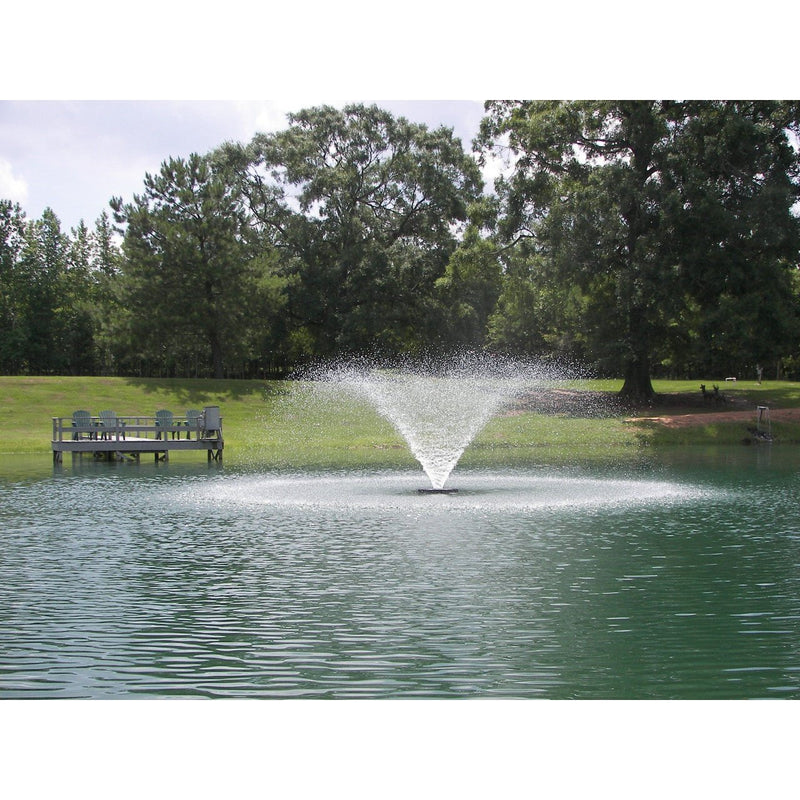
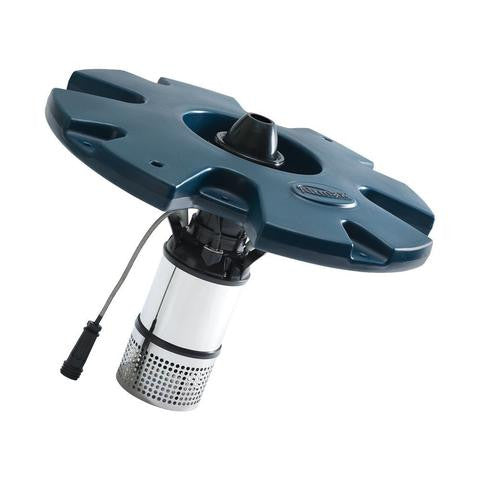
Surface aerators bypass this limitation by bringing the water to the air rather than the air to the water. These units use a motor-driven propeller or impeller to draw water from the top few feet and throw it into the atmosphere. This action creates thousands of small droplets, massively increasing the total surface area available for gas exchange.
In real-world applications, such as golf course ponds, detention basins, or decorative park lagoons, these units are often the only viable solution. They provide immediate, localized oxygenation that can stabilize an ecosystem during a sudden heatwave or a biological oxygen demand (BOD) spike.
Shallow ponds also struggle with thermal stratification differently than deep lakes. A surface aerator provides intense horizontal mixing. This movement helps to disrupt stagnant surface layers and prevents the formation of "dead zones" where algae would otherwise thrive.
The Mechanics of Surface Oxygenation
Understanding how a surface aerator functions requires a look at the Standard Aeration Efficiency (SAE) and the Standard Oxygen Transfer Rate (SOTR). These metrics define how many pounds of oxygen are transferred per horsepower-hour. Surface aerators generally offer an SAE of 1.5 to 2.5 lbs of oxygen per horsepower.
The primary mechanism is the creation of a "splash zone." As the motor spins at high RPMs, the propeller creates a low-pressure zone that draws water upward. This water is then sheared into droplets and propelled outward. According to Henry's Law, the amount of dissolved gas in a liquid is proportional to the partial pressure of that gas above the liquid.
By breaking the water into droplets, the aerator exposes a massive volume of water to the 21% oxygen concentration of the atmosphere. As the droplets fall back into the pond, they carry this atmospheric oxygen into the water column. This process also allows for the venting of unwanted gases like carbon dioxide and methane.
Mechanical design varies between high-speed and low-speed units. High-speed units usually operate at 3,000 to 3,600 RPM and are directly coupled to the motor. Low-speed units use gearboxes to reduce RPM but increase torque, allowing for larger impellers and deeper mixing.
Advantages of Surface Aeration in Shallow Ecosystems
The most significant advantage in shallow water is the independence from depth-related efficiency loss. Subsurface diffusers lose approximately 2% of their Standard Oxygen Transfer Efficiency (SOTE) for every foot of depth they lose. In a 3-foot pond, a diffuser is almost entirely ineffective.
Surface units maintain their full SAE regardless of the pond's floor level. This makes them the primary choice for industrial lagoons and shallow aquaculture tanks. If the water is deep enough to float the unit—usually 12 to 18 inches—the aerator can operate at peak performance.
Another advantage is the rapid response time. During a "turnover" event or a fish-kill emergency, you need oxygen immediately. Surface aerators can increase DO levels in the upper layers of a pond within minutes. This rapid infusion of oxygen can provide a life-saving refuge for fish during the early morning hours when oxygen levels are naturally at their lowest.
Maintenance access is also simplified. Because the mechanical components are floating on the surface, there is no need to dive or drain the pond to inspect the motor. Most units can be pulled to the shore using their mooring lines for routine service or debris removal.
Challenges and Common Operational Pitfalls
Mechanical complexity is the primary challenge for surface aerators. Unlike subsurface systems that house the motor/compressor on shore in a protected cabinet, surface aerators place the motor directly in the environment. This exposes seals and bearings to water, minerals, and organic acids.
A common mistake is neglecting the power cord's integrity. In a floating system, the power cable is subjected to constant movement and UV exposure. If the cable is not properly weighted or protected, it can become entangled in the propeller or suffer from insulation breakdown, leading to a ground fault.
Noise is another factor that is often overlooked. High-speed surface aerators produce a significant splashing sound. While some find this aesthetic, it can be a nuisance in quiet residential areas. Strategic placement and the use of low-speed units can mitigate this, but it must be factored into the initial design.
Debris accumulation is a frequent cause of motor failure. Floating weeds, plastic bags, and fishing lines can wrap around the propeller shaft. This creates a drag that increases the motor's amperage draw, leading to overheating and eventually burning out the windings.
Limitations of Surface-Based Systems
While excellent for shallow water, surface aerators have a limited "zone of influence." A single unit can effectively mix a circular area, but it may leave the corners of a rectangular pond stagnant. This requires multiple units for large or irregularly shaped bodies of water.
In ponds deeper than 10 to 12 feet, surface aerators may fail to oxygenate the bottom layer. Because they focus on the surface, they do not provide the vertical "lift" required to move cold, dense water from the floor to the top. In these cases, the pond remains thermally stratified, with an oxygen-rich top and an anoxic bottom.
Winter operation presents another boundary. In freezing climates, the splashing action of the aerator can lead to massive ice buildup on the float and the motor housing. This can eventually sink the unit or cause the propeller to strike ice, destroying the drive shaft.
There is also the consideration of aerosols. In wastewater or industrial applications, the splashing action can release fine droplets containing bacteria or chemicals into the air. This necessitates a careful assessment of wind patterns and proximity to pedestrian areas.
Technical Comparison: Surface vs. Subsurface Aeration
Choosing between these two systems requires an analysis of depth, energy cost, and maintenance goals. The following table provides a technical breakdown based on standard engineering metrics for shallow water (less than 6 feet).
| Metric | Surface Aerator | Subsurface (Diffused) |
|---|---|---|
| Efficiency in 3ft Depth | High (Standard SAE) | Very Low (Minimal Rise Time) |
| Oxygen Transfer Method | Atmospheric Splashing | Bubble Diffusion |
| Installation Complexity | Low (Plug and Play) | Moderate (Weighted Tubing) |
| Maintenance Access | Easy (Surface Access) | Difficult (Underwater) |
| Typical Power Usage | 0.5 - 5.0 HP | 0.25 - 1.0 HP |
This comparison highlights that while subsurface systems are more energy-efficient in deep water, the surface aerator is technically superior for shallow environments where gas transfer efficiency is the priority.
Practical Tips and Best Practices
Optimizing a surface aeration system involves more than just tossing a unit into the water. Placement is the most critical factor. In most ponds, the aerator should be located in the center or in areas with the least natural wind movement. This ensures that the oxygenated water is circulated throughout the entire basin.
Mooring and anchoring should be done with stainless steel cables or high-density polyethylene (HDPE) ropes. Use weighted anchors or shore-side stakes to keep the unit in place. If the water level fluctuates, a spring-loaded mooring system or a sliding pole mount is necessary to prevent the unit from grounding.
Timing the operation can save on electricity. Most oxygen depletion happens at night when plants stop photosynthesizing and start consuming oxygen. Running the aerator on a timer from dusk till dawn is often more effective than running it during the day when natural oxygen levels are higher.
Regular inspection of the intake screen is mandatory. A clogged screen reduces the water flow, which decreases the cooling effect on the motor. Most modern motors are water-cooled or oil-cooled; without proper flow, they will hit their thermal limit and trip the breaker.
Advanced Considerations: Engineering Metrics
For serious practitioners, analyzing the Alpha and Beta factors of the water is essential. The Alpha factor represents the ratio of the oxygen transfer rate in the pond water to that in clean water. Surfactants, such as oils or detergents, can significantly lower the Alpha factor by creating a barrier at the air-water interface.
Surface aerators are generally less affected by surfactants than diffusers because the high-energy splashing physically breaks the surface tension. However, in highly contaminated industrial ponds, you may need to increase the horsepower to compensate for a low Alpha factor.
The Beta factor accounts for the salinity and temperature of the water. Warm water holds less oxygen than cold water. In a shallow pond during a 90°F summer day, the saturation point for DO is significantly lower. This is when the aerator must work its hardest. Calculating the Actual Oxygen Transfer Rate (AOTR) based on these site-specific conditions is the mark of an advanced manager.
Motor engineering also plays a role. Look for units with a high "Service Factor" (SF). A motor with a 1.15 SF can handle a 15% overload for short periods without damage. This is vital in ponds with high organic loading where the water density may vary.
Practical Scenarios: Theory into Application
Consider a 1-acre irrigation pond that is consistently 4 feet deep. The owner notices an algae bloom and a foul odor. A subsurface system would fail here because the 4-foot column doesn't allow for enough bubble contact time.
By installing a 2-HP surface aerator, the manager introduces 4 to 5 lbs of oxygen per hour. The splashing action also creates ripples that prevent algae from forming a thick mat on the surface. Within 48 hours, the DO levels stabilize, aerobic bacteria begin consuming the muck, and the odor dissipates.
In another scenario, an aquaculture facility uses shallow tanks for fingerlings. Because of the high density of fish, the BOD is extreme. A surface aerator provides the necessary "shattering" of the water to drive oxygen in at a rate that keeps pace with the fish's respiration. The high-velocity mixing also ensures that waste products are kept in suspension so they can be filtered out efficiently.
Final Thoughts
Surface pond aerators are a specialized tool designed for a specific set of challenges. Their ability to deliver high-rate oxygenation in shallow, stagnant environments makes them an essential component of modern pond management. While they require more maintenance and power than some alternatives, their performance in water under 6 feet is unmatched.
Success with these systems depends on technical precision. From selecting the correct SAE rating to ensuring proper mooring and motor protection, every detail influences the longevity and efficiency of the unit. By understanding the underlying physics of gas exchange, you can transform a stagnant basin into a thriving, oxygen-rich ecosystem.
If you are managing a shallow pond, do not ignore the power of the splash. Engineering has allowed us to take the best of the mountain stream and put it into a compact, floating package. It is a robust, reliable, and scientifically proven way to ensure your water continues to breathe.