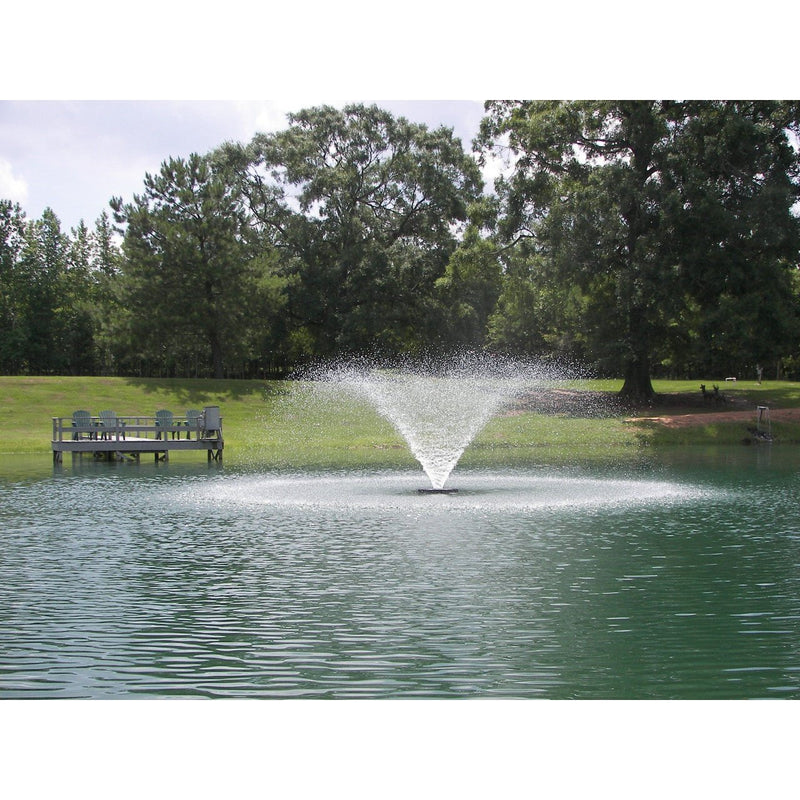


How Deep Does a Pond Need to Be for a Fountain?
Too shallow? You're just a glorified mud pump. Before you buy that fountain, check your depth. Suck in too much muck and you'll burn out your motor in a week.
Installing a floating fountain involves more than securing a power cord and tossing a float into the water. Successful operation depends on maintaining a specific vertical clearance between the equipment intake and the pond floor. This clearance ensures the motor remains cooled by clear water rather than abrasive sediment.
Standard floating fountains typically require a minimum depth of 18 to 24 inches to function without risk of mechanical failure. When the water level drops below these thresholds, the fluid dynamics around the pump intake change, leading to increased turbulence and the potential for catastrophic motor damage.
Understanding the relationship between water depth and fountain performance is essential for any property manager or pond owner. Proper depth management directly impacts the lifespan of the equipment, the health of the aquatic ecosystem, and the total cost of ownership over the unit's lifecycle.
How Deep Does a Pond Need to Be for a Fountain?
Water depth requirements for a fountain are dictated by the physical dimensions of the motor housing and the suction velocity of the pump. Most commercial-grade floating fountains are designed to operate in water that is at least 24 inches deep. This measurement is not arbitrary; it represents the minimum volume of water necessary to submerge the pump fully while leaving enough space at the bottom to avoid disturbing settled organic matter.
Fractional horsepower units, often used in smaller backyard ponds, can sometimes operate in as little as 16 to 18 inches of water. These smaller systems move less volume per minute, which creates a smaller "suction cone" around the intake. This reduced velocity allows the unit to sit closer to the pond floor without pulling in debris.
Large-scale display fountains with motors exceeding 2 HP frequently require depths of 3 to 4 feet. These high-output systems generate significant suction force. If placed in shallow water, they create a vortex that can pull sand, silt, and decaying vegetation directly into the internal components. This process, known as sediment ingestion, acts like sandpaper on the impeller and mechanical seals.
In real-world applications, depth is a dynamic variable. Retention ponds often experience significant water level fluctuations during dry seasons or heavy rainfall events. A fountain installed in 24 inches of water may find itself sitting in 12 inches of water after a two-week drought, effectively turning the unit into a mud pump.
Technical Dynamics of Fountain Operation
The operation of a fountain relies on a consistent intake of water to create the display and cool the internal motor. Submersible motors are designed to dissipate heat through the surrounding water. If the water is too shallow, the motor housing may not be fully submerged, or the surrounding water may become too warm from repeated cycling in a confined space.
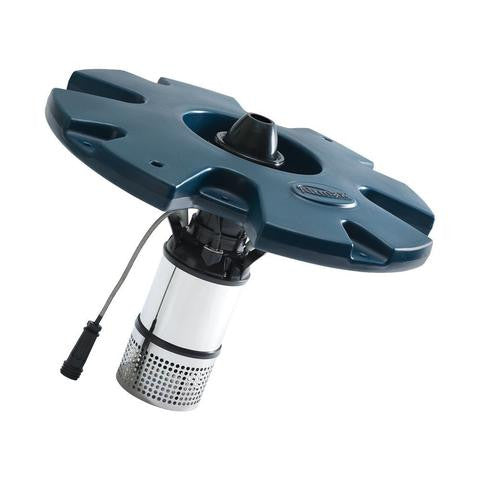
Fluid intake occurs through a screen or grate located beneath the float. As the pump draws water, it creates a zone of low pressure. In deep water, this pressure drop is equalized by water flowing in from all directions. In shallow water, the restriction of the pond floor forces the pump to draw more heavily from the area directly beneath it, increasing the velocity of the water at the bottom.
High-velocity intake in shallow zones leads to cavitation. Cavitation occurs when the pressure at the pump intake drops below the vapor pressure of the water, causing tiny bubbles to form and then implode with immense force. These implosions generate a distinct "slurping" or "rattling" sound and can pit the surface of stainless steel impellers over time.
Strategic placement involves identifying the deepest part of the pond or utilizing a depth-adjusting mooring system. Fixed-depth fountains, which sit on the bottom rather than floating, require even more precise measurements to ensure the spray head remains at the correct height above the water surface while the motor remains safely submerged.
Practical Benefits of Precise Depth Management
Maintaining the correct operating depth yields measurable improvements in equipment efficiency. When a pump operates at its design depth, it encounters less resistance and maintains a steady flow rate. This stability ensures that the spray pattern remains consistent and visually appealing.
Motor longevity is the primary benefit of adequate depth. Submersible motors often represent the most expensive component of a fountain system. By keeping the motor clear of abrasive bottom sediment, the mechanical seals remain intact, preventing water from entering the electrical housing. A motor running in clean, deep water can last 10 to 15 years, whereas a unit operating in shallow, mucky water may fail in under three.
Circulation efficiency also improves with depth. Fountains are often used as surface aerators to increase dissolved oxygen levels. In deeper water, the pump can draw from a larger volume, helping to break up thermal stratification more effectively. This mixing action prevents the formation of "dead zones" where oxygen levels are too low to support aquatic life.
Energy consumption is another factor influenced by depth. Pumps struggling with sediment or experiencing cavitation work harder to move the same amount of water, which can lead to higher amperage draws. Operating in the ideal depth range ensures the motor runs within its specified electrical parameters, keeping utility costs predictable.
Common Failure Modes in Shallow Environments
Mechanical failure in shallow ponds is rarely a result of manufacturer defects. Most issues stem from environmental stressors that exceed the pump's design limits. Sediment ingestion is the leading cause of premature pump wear. Once silt enters the pump chamber, it erodes the tolerances between the impeller and the housing, reducing the unit's ability to create pressure.
Thermal shutdown is a frequent occurrence in shallow installations. As water levels drop, the volume of water available to absorb the motor's heat decreases. If the motor temperature exceeds its safe operating limit, internal thermal sensors will trip the breaker to prevent a fire or permanent coil damage. Frequent thermal cycling weakens the motor's insulation and eventually leads to a complete burnout.
Vortexing is a physical phenomenon that occurs when a pump is too close to the surface or the floor. It creates a whirlpool that allows air to enter the pump intake. Air is significantly less dense than water, and when the pump hits an air pocket, the load on the motor drops and then spikes as water returns. These rapid fluctuations in torque can snap drive shafts or strip the threads on the impeller assembly.
Blockage of the intake screen is more common in shallow water because organic debris, such as leaf litter and algae mats, tends to accumulate on the pond floor. A pump sitting too low will pull these materials upward, clogging the screen and starving the pump of water. This leads to dry-running conditions, which can destroy water-lubricated bearings in minutes.
Environmental and Structural Limitations
Water depth is not only about protecting the pump; it also determines the ecological effectiveness of the fountain. While fountains are excellent for surface aesthetics, they have a limited impact on deeper water columns. In ponds deeper than 8 feet, a surface fountain will generally not provide enough circulation to oxygenate the bottom layers.
Stratification occurs when a layer of warm, oxygen-rich water sits on top of a layer of cold, oxygen-depleted water. Because a fountain only pulls from the top 18 to 36 inches of the pond, the bottom remains stagnant. In these scenarios, a supplemental bottom-diffused aeration system is required to move water from the benthic zone to the surface.
Winter operation presents another set of limitations. In climates where the pond surface freezes, the fountain must be removed or operated continuously to prevent ice from crushing the float or the motor housing. Operating a fountain in shallow water during the winter is particularly risky, as ice can form more quickly in shallow areas, potentially trapping the unit or blocking the intake with anchor ice.
Mooring and anchoring also become more complex as depth increases. In shallow water, a simple weighted anchor may suffice. However, in deep or large lakes, wind and wave action can move the fountain, requiring a more robust mooring system with stainless steel cables and heavy-duty anchors. If the fountain drifts into a shallower zone, all the risks of shallow-water operation immediately apply.
Equipment Comparison: Shallow vs. Deep Water Systems
Choosing the right equipment requires a comparison of how different systems handle depth constraints. Property managers must decide between standard floating fountains, fractional units, and specialized shallow-water aerators.
| Feature | Fractional Fountain | Standard Floating Fountain | Industrial Display Fountain |
|---|---|---|---|
| Minimum Depth | 16–18 Inches | 24–30 Inches | 36–48 Inches |
| Typical Horsepower | 1/4 HP to 1/2 HP | 1 HP to 3 HP | 5 HP and Above |
| Primary Application | Garden Ponds / Small Retention | Golf Courses / HOAs | Large Lakes / Commercial Frontages |
| Sediment Risk | Moderate | High | Very High |
| Aeration Capacity | Low | Medium | High (Surface Only) |
Fractional fountains are designed for efficiency and ease of use in residential settings. They are lightweight and often feature specialized intake screens that allow for operation in shallower environments. However, they lack the vertical lift and spray diameter of larger units.
Industrial fountains are built for visual impact. They utilize high-pressure pumps that require significant submergence to operate safely. These units are often equipped with low-water sensors that automatically shut the system down if the depth drops below a critical level.
Best Practices for Installation and Maintenance
Successful installation starts with an accurate depth survey of the pond. Use a weighted line to measure the depth in several locations, especially in the area where the fountain will be moored. This ensures that the chosen spot provides the necessary clearance throughout the year, even during periods of high evaporation.
Mooring lines should be installed with enough slack to account for water level changes but enough tension to prevent the unit from drifting into shallow shelves. In ponds with significant fluctuations, a "spring-loaded" mooring or a floating dock attachment may be more appropriate than fixed weights.
Regular maintenance is the most effective way to prevent depth-related failures. Inspect the intake screen once a month for signs of clogging or sediment buildup. If the screen is consistently covered in mud, the fountain is likely situated too close to the pond floor and should be moved to a deeper location or raised using a shallower float assembly if available.
Inspect the impeller and mechanical seals during the off-season. If the impeller shows signs of pitting or thinning at the edges, cavitation or sediment ingestion is occurring. Replacing these parts early is significantly cheaper than replacing a burned-out motor.
Advanced Thermal and Fluid Considerations
Serious practitioners should understand the Reynolds number and laminar flow principles as they relate to pump intake. In a deep-water environment, the water entering the pump is typically in a state of laminar flow, meaning it moves in smooth, parallel layers. This provides the most efficient intake for the pump.
In shallow water, the presence of the pond floor creates turbulence. This turbulent flow introduces air and sediment into the stream, disrupting the pump's efficiency. Furthermore, the heat dissipation of the motor depends on the "boundary layer" of water moving across the housing. In stagnant, shallow water, this boundary layer can become saturated with heat, leading to a localized rise in temperature that the motor cannot escape.
Calculating the "Net Positive Suction Head" (NPSH) is an advanced technique used to determine if a pump will cavitate at a specific depth. If the NPSH available from the water column is less than the NPSH required by the pump, cavitation is guaranteed. While most fountain manufacturers provide these specifications, they are often overlooked by casual installers.
Real-World Depth Scenarios
Consider a typical HOA retention pond that is 5 feet deep in the center but has a wide, shallow shelf around the perimeter that is only 18 inches deep. If the fountain is anchored near the shore for aesthetic reasons, it is at high risk. During a summer heatwave, the water level may drop by 6 inches, leaving the pump with only 12 inches of clearance. The unit will begin to suck in bottom silt, clogging the screen and eventually causing the motor to trip on its thermal overload.
In contrast, a garden pond that is consistently 3 feet deep provides an ideal environment for a 1/2 HP fractional fountain. The 36 inches of water allow the pump to sit 18 inches above the floor, well away from any debris. The motor remains cool, and the spray pattern stays consistent because the intake is drawing from a stable, clean water source.
For large lakes with depths exceeding 15 feet, the challenge is not minimum depth but maximum efficiency. While the fountain will operate safely, it will do nothing to assist with the health of the deep water. In this scenario, the practitioner should install the fountain in the center of the lake for visual effect but rely on a diffused air system for actual water quality management.
Final Thoughts
Depth is the most critical environmental factor in the long-term success of a pond fountain. Ignoring the minimum clearance requirements is a guaranteed path to equipment failure and unnecessary repair costs. Whether you are managing a small backyard feature or a large commercial lake, the physics of water intake and motor cooling remain the same.
By ensuring your pond has the necessary depth before installation, you protect your investment and improve the ecological health of the water. High-quality fountains are designed to run for years, but they require a clean, deep environment to do so effectively.
Always consult the manufacturer’s technical data for your specific model and perform a thorough site survey. Practical preparation today prevents the "glorified mud pump" scenario and keeps your water feature running efficiently for seasons to come.