

Reducing Mosquitos - Is Aeration An Option?
Mosquitoes hate moving water. Turn your pond into a 'no-fly zone' naturally. Mosquitoes need stagnant water to survive. Moving the surface disrupts their life cycle without a single drop of poison.
Pond Aeration And It's Effect On Mosquitoes
Aquatic aeration systems serve as a primary mechanical control mechanism for Culicidae (mosquito) populations. Mosquitoes are biological opportunists that require lentic, or still-water, environments for oviposition and larval development. Mechanical aeration introduces kinetic energy into the water column, fundamentally altering the physical properties required for mosquito survival.
Standard aeration systems function by increasing the surface area of the water-air interface. Surface tension, measured in dynes per centimeter, is the primary physical force allowing mosquito larvae to remain suspended at the surface. Mosquito larvae utilize a posterior respiratory siphon to pierce the water's surface film and access atmospheric oxygen. Constant agitation from an aerator creates turbulence that prevents larvae from maintaining this connection. Mechanical disruption often leads to larval drowning or increased energy expenditure, which effectively stunts the development cycle.
Mechanical movement also interferes with the adult mosquito's ability to deposit eggs. Gravid females detect stagnant water through visual and chemical cues. Moving water masks these signals and creates a physically unstable platform for landing. Engineering a pond for high-volume turnover creates a hostile environment that forces adult mosquitoes to seek alternate, non-agitated sites.
How to Implement Mechanical Aeration for Mosquito Control
Establishing a functional 'no-fly zone' requires precise equipment selection and placement to eliminate stagnant pockets. The primary objective is to maximize surface renewal rates throughout the entire water body.
System Selection: Diffused vs. Surface Aeration
Sub-surface diffused aeration utilizes a shore-mounted compressor to pump air through weighted tubing to membrane diffusers at the pond floor. These diffusers release billions of micro-bubbles that rise through the water column. As these bubbles ascend, they create a vertical current known as an induced laminar flow. The rising air entrains water from the bottom, bringing it to the surface in a continuous "boil." This method is highly efficient for deep ponds, as it addresses the entire volume of the water.
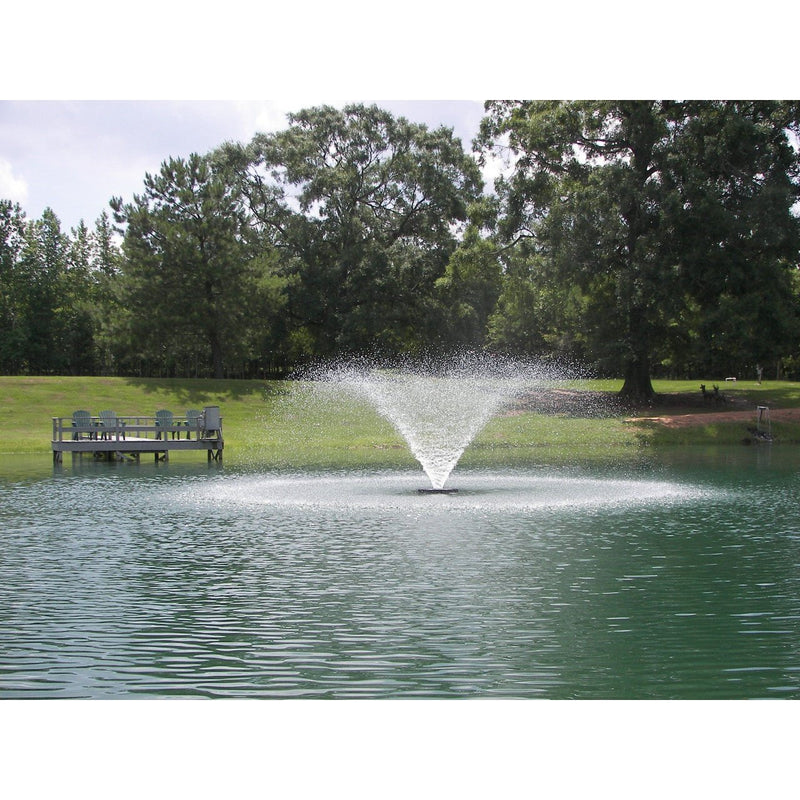
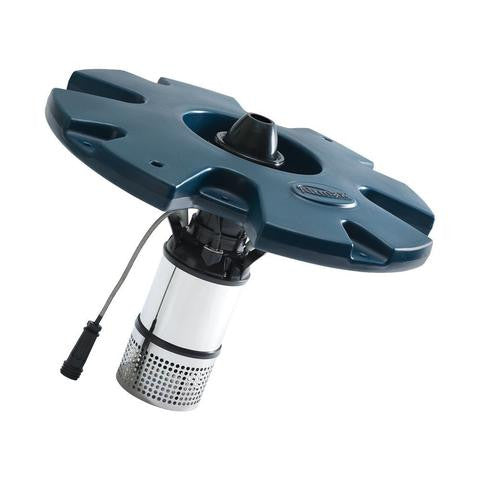
Surface aerators, including fountains and agitators, use a motor and propeller to splash water into the air. These units are effective for shallow ponds where deep-water turnover is not possible. To achieve maximum mosquito suppression, an agitator should be positioned to create a wide radius of surface ripples.
Sizing and CFM Requirements
Calculation of the Cubic Feet per Minute (CFM) requirement depends on the pond’s surface area and average depth. A standard rule of thumb for mosquito mitigation is to achieve a full volume turnover at least once every 24 hours. A 1-acre pond with an average depth of 6 feet contains approximately 1.95 million gallons of water. Using a 1/2 HP rocking piston compressor capable of delivering 4.5 CFM at 10 PSI can typically drive two or three diffusers, providing sufficient agitation for this volume.
Eliminating Dead Zones
Strategic placement is critical to prevent "dead zones"—areas where water remains stagnant despite the aeration system. Shoreline indentations, dense lily pads, and fallen timber often create micro-environments where mosquitoes can thrive. Installing a circulator or "water thruster" in these specific areas can provide the necessary horizontal flow to disrupt these refugia.
Quantifiable Benefits of Aeration Systems
Utilizing mechanical aeration offers measurable improvements to the pond's ecological and physical state. These benefits extend beyond simple mosquito suppression to long-term water quality management.
Elevation of Dissolved Oxygen (DO)
Aeration significantly increases Dissolved Oxygen (DO) levels, which are critical for aquatic life. High DO levels support robust populations of natural mosquito predators. Species such as Odonata (dragonflies) and various minnow varieties require oxygen-rich environments to thrive. Increasing DO levels to 5 mg/L or higher ensures these predators remain active and capable of consuming any larvae that survive the mechanical agitation.
Standard Aeration Efficiency (SAE)
The efficiency of an aerator is measured by its Standard Aeration Efficiency (SAE), which calculates the pounds of oxygen transferred per horsepower-hour (lb O2/hp-hr). High-efficiency diffused systems can achieve SAE ratings of 2.5 to 4.0, while decorative fountains may only reach 1.5 to 2.0. Selecting a high-SAE unit ensures that the energy cost of running the system translates directly into maximum water movement and mosquito disruption.
Algae and Biofilm Suppression
Stagnant water often develops a "pond scum" or biofilm that provides both food and protection for mosquito larvae. Aeration prevents the formation of these surface mats by keeping nutrients suspended and facilitating the growth of aerobic bacteria. These bacteria compete with algae for phosphorus and nitrogen, leading to clearer water and fewer larval resources.
Common Engineering Pitfalls in Pond Aeration
Technical failures or poor design can render an aeration system ineffective for mosquito control. Understanding these common errors is essential for maintaining a high-performance system.
Undersized Compressors
Installing a compressor with insufficient PSI (Pounds per Square Inch) or CFM output is a frequent mistake. If the compressor cannot overcome the "backpressure" created by the depth of the diffusers, the air flow will be negligible. Insufficient flow fails to create the necessary surface turbulence to drown larvae or deter egg-laying.
Neglecting Thermal Stratification
Thermal stratification occurs when a pond separates into a warm upper layer (epilimnion) and a cold, oxygen-depleted bottom layer (hypolimnion). If an aeration system only agitates the surface, the bottom remains anaerobic. Sudden mixing of these layers—due to a storm or improper aerator startup—can cause a "turnover" that depletes all surface oxygen, resulting in fish kills. This ecological collapse removes the natural predators that keep mosquito populations in check.
Inconsistent Operation
Operating an aerator only during daylight hours can be counterproductive. Mosquitoes are most active during the crepuscular hours (dawn and dusk). Shutting down the system at night allows the water surface to calm exactly when many species are seeking oviposition sites. Continuous 24/7 operation is the most effective protocol for total population suppression.
Limitations and Environmental Constraints
Mechanical aeration is a powerful tool, but it is not a universal solution. Certain environments present challenges that aeration alone cannot fully address.
Densely Vegetated Shorelines
Emergent vegetation such as cattails or reeds can act as a windbreak and mechanical barrier. In these dense stands, water remains still even if the center of the pond is highly agitated. Aeration systems cannot reach these protected pockets without the addition of manual vegetation management or specialized littoral zone circulators.
High Nutrient Loading (Eutrophication)
Ponds receiving significant runoff from fertilized lawns or agricultural fields may suffer from extreme nutrient loading. Even with high-efficiency aeration, the sheer volume of organic matter can overwhelm the system’s ability to maintain oxygen levels. In these scenarios, aeration must be paired with nutrient binders or bio-augmentation to be effective.
Power Access and Infrastructure
Remote ponds often lack the electrical infrastructure required for high-volume mechanical aerators. While solar-powered systems exist, they often struggle to provide the 24/7 operation necessary for complete mosquito lifecycle disruption. The cost of running electrical lines can be a significant barrier to implementation in large-scale rural settings.
Technical Comparison: Aeration Methods
The following table compares the primary mechanical methods used for surface agitation and mosquito control.
| Feature | Diffused Aeration | Surface Agitators | Decorative Fountains |
|---|---|---|---|
| Primary Action | Vertical flow/Bottom-up | Surface splashing | High-arc spray |
| SAE Efficiency | High (2.5–4.0) | Medium (2.0–3.0) | Low (1.2–2.0) |
| Mosquito Impact | Whole-pond disruption | Intense localized ripples | Minimal surface ripple |
| Maintenance | Low (Filter changes) | Medium (Motor seals) | High (Nozzle cleaning) |
Practical Tips for System Optimization
Maximizing the effectiveness of an aeration system involves more than just plugging it in. Regular tuning and strategic adjustments can improve performance.
- Monitor Pressure Gauges: A rise in PSI usually indicates a clogged diffuser or a kinked airline. Maintaining the correct operating pressure ensures the maximum CFM reaches the water.
- Use Weighted Tubing: Standard poly-tubing can float, creating a surface hazard and reducing the efficiency of the air delivery. Lead-free weighted tubing stays at the bottom, ensuring the air is released exactly where the diffusers are placed.
- Check for Membrane Fouling: Over time, calcium or biological growth can block the micro-pores in a diffuser. Cleaning the diffusers every 1-2 years maintains the fine-bubble output required for high oxygen transfer.
- Strategic Timing: If 24/7 operation is not feasible, prioritize running the system from 4:00 PM to 8:00 AM. This covers the peak periods for mosquito activity and oviposition.
Advanced Hydro-Ecological Considerations
Serious practitioners should consider the broader nitrogen and phosphorus cycles when designing an aeration system. Aeration does not just move water; it facilitates a transition from anaerobic to aerobic decomposition.
In an anaerobic pond, organic matter breaks down slowly, releasing ammonia (NH3) and hydrogen sulfide (H2S). These conditions are toxic to fish but often tolerated by hardy mosquito larvae. By introducing oxygen, you enable nitrifying bacteria (Nitrosomonas and Nitrobacter) to convert ammonia into nitrates. This shift not only supports a healthier fish population but also reduces the organic "muck" that provides a food source for larvae.
Scaling an aeration system for a large-scale project requires calculating the "Oxygen Transfer Efficiency" (OTE). OTE is the percentage of oxygen from the air bubbles that actually dissolves into the water. This metric improves with depth; for every foot of water depth, OTE typically increases by about 1-2%. Consequently, placing diffusers in the deepest part of the pond provides the best return on investment for both ecological health and mosquito control.
Example Scenario: 1-Acre Pond Mitigation
Consider a 1-acre rectangular pond with a maximum depth of 12 feet. A technical assessment identifies several stagnant areas near the north-east corner due to prevailing winds pushing debris into the shoreline.
To mitigate mosquitoes, the following system is designed:
- Compressor: A 1/2 HP rocking piston compressor rated for 4.5 CFM.
- Diffusers: Two dual-disk membrane diffusers placed at the 12-foot depth.
- Placement: One diffuser is centered, while the second is offset toward the north-east corner to counteract wind-induced stagnation.
- Metrics: At 12 feet, the system achieves an OTE of approximately 18%. This setup provides roughly 3,500 gallons per minute of water movement at the surface, effectively eliminating any stagnant areas where mosquitoes could breed.
Final Thoughts
Mechanical pond aeration provides a robust, non-chemical solution for managing mosquito populations. By fundamentally altering the surface tension and oxygen levels of a water body, these systems disrupt the larval development cycle and deter adult oviposition. This approach relies on physics and fluid dynamics rather than toxins, making it a sustainable choice for long-term pond management.
Successful implementation requires a technical understanding of pond volume, equipment sizing, and strategic placement. Practitioners who focus on maximizing dissolved oxygen and eliminating stagnant zones will see the most significant results. Whether managing a small backyard pond or a large-scale industrial lagoon, the principles of aeration remain the most effective way to turn an aquatic environment into a naturally controlled 'no-fly zone.'
Experimenting with different diffuser depths and compressor settings allows pond owners to fine-tune their systems for peak efficiency. Continuous monitoring of water quality metrics, such as DO and clarity, will provide the data needed to maintain a healthy, mosquito-free ecosystem for years to come.