

Can Pond Aeration Reduce Mosquito Problems?
Mosquitoes need still water to survive. Don't give them a home. Still water is a breeding ground for pests. Introducing oxygen and movement through aeration disrupts the life cycle of mosquitoes without harsh chemicals. Transition from a swampy mess to a healthy, moving ecosystem.
Stagnant water acts as a structural requirement for the reproductive cycle of most Culicidae species. Without the stability of a calm surface, the delicate mechanics of egg-laying and larval respiration fail. Modern circulation systems replace ancient stagnation with controlled fluid dynamics, ensuring that your water feature remains a biological asset rather than a public health liability.
Understanding the intersection of mechanical engineering and aquatic biology is the first step toward effective pest management. This guide explores the technical parameters of pond aeration, focusing on efficiency metrics, hardware selection, and the physical principles that render water inhospitable to mosquito larvae.
Can Pond Aeration Reduce Mosquito Problems?
Pond aeration serves as a primary mechanical control method for mosquito populations. Female mosquitoes seek out "stagnant" water because it provides the necessary surface tension to support their weight during oviposition. Movement in the water column creates a physical barrier that prevents these insects from successfully depositing their egg rafts.
Aeration systems function by increasing the dissolved oxygen (DO) levels and inducing constant surface agitation. Most mosquito larvae are "metapneustic," meaning they must pierce the water's surface film with a specialized breathing tube called a siphon to access atmospheric oxygen. Constant ripples or "boils" created by aerators make it mechanically impossible for larvae to maintain a stable connection with the air.
In real-world applications, aeration transforms a pond from a low-energy, anaerobic environment into a high-energy, aerobic one. This shift not only targets the larvae directly but also supports the presence of natural predators like Odonata (dragonflies) and various fish species that consume any larvae that manage to survive the initial turbulence.
The Mechanics of Surface Tension and Siphonal Interference
Liquid surfaces behave like a stretched elastic membrane due to the cohesive forces between water molecules. Mosquito larvae rely on this "surface film" to hang suspended while they breathe. Aeration creates kinetic energy that breaks this cohesion.
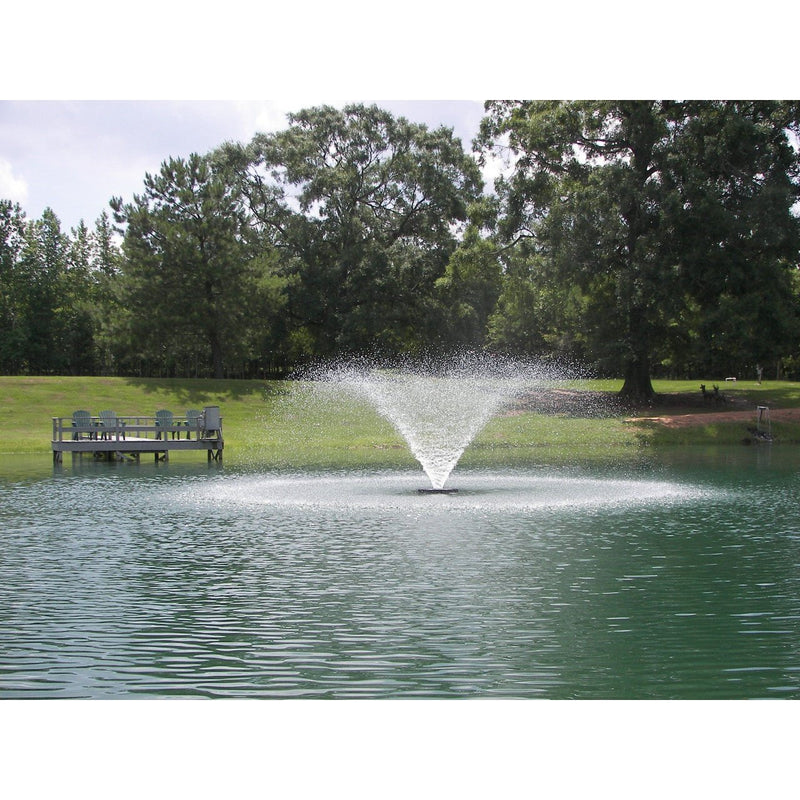
Surface aerators and fountains produce a localized area of high turbulence known as the "impact zone." Within this zone, the air-water interface is constantly being renewed. Larvae entering this area cannot secure their siphons and are forced to exert excessive metabolic energy to reach the surface. Failure to maintain this connection results in drowning or exhaustion.
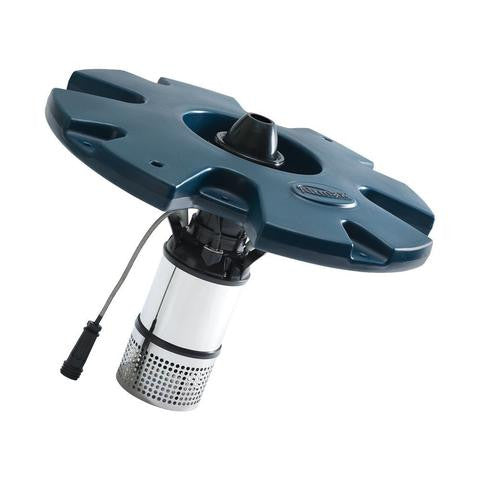
Vertical pump aerators are particularly effective for this purpose. These units move thousands of gallons per minute, ensuring that the surface is in a state of constant flux. Kinetic interference is the most direct way to stop the development of the "wriggler" and "tumbler" stages of the mosquito life cycle.
How Dissolved Oxygen Inhibits Pest Development
Dissolved oxygen (DO) is a critical metric in aquatic health. While mosquito larvae can technically survive in low-oxygen environments by breathing atmospheric air, their developmental rate is heavily influenced by the chemical composition of the water. High DO levels, often exceeding 5 or 6 mg/L, promote the rapid decomposition of organic matter.
Bacteria that thrive in oxygen-rich environments consume the organic "muck" that serves as the primary food source for mosquito larvae. Removing this nutrient base creates a competitive disadvantage for the pests. Furthermore, research indicates that while some species can tolerate low oxygen, the transition from larva to pupa and finally to adult is most successful in stagnant, anaerobic conditions where predators are absent.
Standard Aeration Efficiency (SAE) is the metric used to measure how much oxygen a system can transfer per unit of energy. High SAE values correlate with better water quality and more effective pest suppression. For a serious practitioner, targeting an SAE of 2.0 to 3.0 lbs of oxygen per horsepower-hour is a baseline requirement for maintaining a hostile environment for mosquitoes.
Benefits of Mechanical Aeration
The advantages of mechanical aeration extend beyond simple pest control. Implementing a robust system improves the overall hydraulic efficiency and biological stability of the pond.
1. Thermal Destratification: Aeration breaks the "thermocline," the boundary layer between warm surface water and cold, oxygen-depleted bottom water. Mixing these layers ensures that the entire water column is habitable for beneficial organisms.
2. Muck Reduction: Aerobic bacteria are significantly more efficient at breaking down organic waste than anaerobic bacteria. Constant aeration prevents the buildup of the sludge at the bottom where certain mosquito species like to overwinter.
3. Algae Suppression: By moving the water and increasing oxygen, aeration limits the availability of phosphorus and nitrogen for algae. Reduced algae mats mean fewer hiding spots for mosquito larvae to escape the notice of predators.
4. Predator Support: Natural predators like mosquitofish (Gambusia affinis) require oxygenated water to thrive. A well-aerated pond acts as a sanctuary for these beneficial species, creating a self-sustaining biological control system.
Challenges and Common Mistakes
Incorrectly sized or poorly placed aeration systems are a frequent cause of failure in mosquito management programs. Many property owners install decorative fountains thinking they provide sufficient aeration, but these units often only move the top few inches of water.
Dead Zones: If the aerator is not powerful enough to reach the edges of the pond, "dead zones" of stagnant water will persist. Mosquitoes will naturally gravitate to these calm pockets, often found behind vegetation or in shallow coves.
Intermittent Operation: Turning off the aerator at night to save on electricity is a major tactical error. Mosquitoes are most active during dawn and dusk, and oxygen levels naturally dip during the night when plants stop photosynthesizing. Continuous 24/7 operation is mandatory for effective control.
Depth Mismatch: Using a surface aerator in a pond deeper than 10 feet is inefficient. The bottom water will remain anaerobic, allowing for "muck" buildup and nutrient spikes that eventually lead to surface-level problems.
Limitations: When Aeration May Not Be Ideal
Aeration is a powerful tool, but it has practical boundaries. In environments with extremely high organic loading—such as farm ponds receiving significant livestock runoff—aeration alone may struggle to keep up with the oxygen demand.
Environmental constraints like heavy wind protection can also limit the effectiveness of surface-based units. If a pond is surrounded by dense forest, the lack of natural wind-driven circulation means the mechanical system must do 100% of the work, requiring a higher horsepower rating.
Solar-powered aerators provide a sustainable option but are limited by battery capacity. In regions with frequent cloud cover, these systems may fail to provide the 24-hour movement required to disrupt the mosquito life cycle effectively.
Comparison: Surface Fountains vs. Diffused Aeration
Choosing the right hardware requires a comparison of mechanical efficiency and the specific geometry of the pond.
| Feature | Surface Fountains | Diffused Aeration |
|---|---|---|
| Primary Goal | Aesthetics and surface agitation | Deep-water oxygenation and mixing |
| Effective Depth | 0–6 feet | Up to 40+ feet |
| SAE Efficiency | 1.5–2.5 lb O2/hp-hr | 2.0–4.0+ lb O2/hp-hr |
| Mosquito Impact | Excellent surface disruption | Supports predators and muck removal |
| Maintenance | Moderate (nozzles and intake) | Low (compressor on shore) |
For ponds deeper than 8 feet, a diffused system is technically superior. It uses a shore-mounted compressor to pump air to diffusers on the pond floor. As the bubbles rise, they create a "chimney effect" that pulls cold, bottom water to the surface, ensuring a total volume turnover.
Practical Tips for System Optimization
Optimizing an aeration system for pest management involves more than just plugging it in. Positioning and timing are the keys to a successful deployment.
- Position diffusers in the deepest areas: This maximizes the volume of water moved per cubic foot of air.
- Target 1.5 to 2.0 horsepower per acre: For surface aerators in high-risk mosquito areas, this power density ensures sufficient agitation.
- Monitor Cubic Feet per Minute (CFM): Ensure your compressor provides enough volume to overcome the pressure at depth (measured in PSI).
- Focus on the perimeter: Since mosquitoes prefer shallow edges, ensure that circulation reaches the shoreline. Use circulators or "water wigglers" for tight corners.
- Keep the intake clear: Debris on the intake screen reduces the flow rate and lowers the effective SAE of the motor.
Advanced Considerations: SOTE and Pressure Drop
Professional practitioners often look at Standard Oxygen Transfer Efficiency (SOTE). This metric defines the percentage of oxygen transferred from the air bubbles to the water. Fine-bubble diffusers have a higher SOTE because they create more surface area per volume of air compared to coarse-bubble systems.
Pressure drop across the diffuser membrane is another technical detail that impacts longevity. Over time, calcium and biological growth can clog the pores of a diffuser, increasing the "backpressure" on the compressor. Monitoring the PSI gauge on your system can alert you to a drop in efficiency before the mosquito population begins to rebound.
If you are scaling a system for a large lake, consider the "Standard Oxygen Transfer Rate" (SOTR). This allows for a precise calculation of how many pounds of oxygen are being added per hour, which can then be matched against the biological oxygen demand (BOD) of the water body.
Example Scenario: A 1-Acre Suburban Pond
Imagine a 1-acre pond with an average depth of 6 feet. Without aeration, the surface is glassy, and a thick layer of organic muck has accumulated on the bottom. Mosquito counts are high.
A technical solution would involve a 1/2 HP diffused aeration system with two diffuser stations. The compressor, located in a ventilated cabinet on shore, delivers approximately 2.5 CFM of air. Placing one diffuser in the center and one near the inflow area ensures that the thermocline is broken and the entire surface is subtly agitated.
Within 30 days of 24/7 operation, the dissolved oxygen levels rise from 2 mg/L to 7 mg/L. Aerobic bacteria begin to reduce the muck layer at a rate of 1–2 inches per month. The lack of surface stability and the increase in dragonfly activity results in a 90% reduction in observed mosquito larvae.
Final Thoughts
Mechanical aeration is a non-toxic, highly efficient method for reclaiming your water feature from pests. By focusing on the physics of surface tension and the chemistry of dissolved oxygen, you can create an environment where mosquitoes simply cannot survive. Selecting the right hardware—whether it be a high-flow surface aerator or a deep-water diffused system—is essential for long-term success.
The most effective systems are those designed with a technical understanding of the specific water body's needs. Maintaining high SAE ratings, avoiding dead zones, and ensuring 24-hour operation will turn a stagnant pond into a thriving, moving ecosystem. Application of these principles ensures that your investment in aeration provides both aesthetic value and practical protection.
Experiment with different diffuser placements and monitor your water's clarity and oxygen levels. As the "muck" disappears and the predators return, you will find that the need for chemical interventions vanishes along with the mosquitoes. Deepen your understanding by exploring the relationship between nutrient loading and aeration to further optimize your pond's health.