

Why Your Pond Still Has Algae Even With Aeration Installed
Aeration is the lungs of the pond, but it's not the stomach. If you still have algae, you're missing a piece of the puzzle. Adding oxygen is vital, but if your nutrient levels are through the roof, algae will still thrive. Here is how to create a multi-layer defense.
Managing an aquatic ecosystem requires more than just moving water. While mechanical aeration is a critical baseline for maintaining dissolved oxygen (DO) levels, it often fails as a standalone solution for algae control in high-load environments. To achieve long-term clarity, one must integrate mechanical systems with biological processes.
This article examines the technical intersection of dissolved oxygen, nutrient sequestration, and microbial metabolism. We will analyze why oxygen alone cannot "kill" algae and how to optimize your system to move past the mechanical limit into true biological synergy.
Why Your Pond Still Has Algae Even With Aeration Installed
Aeration functions primarily as a delivery system for atmospheric oxygen and a physical mechanism for destratification. It does not directly remove the nitrogen or phosphorus that fuels algae growth. In many cases, a pond with active aeration continues to exhibit blooms because the internal and external nutrient loads exceed the system's current capacity for biological processing.
The core issue is often "internal loading." In an unaerated pond, the bottom layer (hypolimnion) becomes anoxic (void of oxygen). In these conditions, the redox potential of the sediment changes, causing phosphorus that was previously bound to iron to dissolve back into the water column. This process provides a constant "buffet" for algae, regardless of how much air you pump into the surface layers.
Furthermore, aeration alone does not remove the physical mass of organic muck. If the microbial population is not robust enough to digest this organic matter, the muck remains a massive reservoir of potential fuel. When sunlight hits these nutrient-rich waters, the result is a bloom, even in highly oxygenated conditions.
The Role of Nutrient Saturation
Every body of water has a carrying capacity for nutrients. When a pond reaches a state of eutrophication, the nutrient levels are so high that the biological community cannot process them fast enough. Aeration improves the environment for aerobic bacteria, but if those bacteria are not present in sufficient numbers, the "biological stomach" remains empty while the "mechanical lungs" work at full capacity.
How Biological Synergy Works with Mechanical Systems
Mechanical aeration and biological treatments operate on two different planes of the same ecosystem. The mechanical system provides the environment, while the biological system performs the labor. Understanding the stoichiometry of this relationship is essential for professional pond management.
Aerobic decomposition is significantly more efficient than anaerobic decomposition. Research indicates that aerobic bacteria can break down organic matter 20 to 30 times faster than their anaerobic counterparts. When a diffused aeration system is installed, it eliminates the thermocline—the barrier between warm surface water and cold, oxygen-depleted bottom water. This allows oxygen to reach the water-sediment interface.
Once oxygen is present at the bottom, aerobic microbes can begin the process of mineralization. This is the conversion of organic forms of nitrogen and phosphorus into inorganic forms. Crucially, in the presence of high dissolved oxygen, phosphorus can bind with iron and aluminum in the soil, effectively "locking" it away where algae cannot access it. This transition from a nutrient source to a nutrient sink is the definition of biological synergy.
The Mineralization Process
Mineralization involves several stages. First, complex organic molecules are broken down into simpler compounds by extracellular enzymes. Then, specialized bacteria like Nitrosomonas and Nitrobacter convert toxic ammonia into nitrite and then nitrate. While nitrate is still a nutrient, it is far less toxic to fish and can be utilized by beneficial aquatic plants or removed via denitrification in specialized zones.
Benefits of a Multi-Layered Defense
Implementing a strategy that combines high-efficiency aeration with targeted biological augmentation provides several measurable advantages over mechanical-only approaches.
- Accelerated Muck Reduction: By maintaining DO levels above 5 mg/L at the sediment layer, aerobic bacteria can digest up to several inches of organic muck per season.
- Phosphorus Sequestration: Proper aeration maintains the oxidative state of the sediment, preventing the release of dissolved reactive phosphorus (DRP) into the water column.
- Odor Elimination: Aerobic processes prevent the formation of hydrogen sulfide (H2S) and methane (CH4), which are the primary causes of the "rotten egg" smell associated with stagnant ponds.
- Higher Carrying Capacity: Increased DO levels allow for higher fish stocking densities and better feed conversion ratios (FCR) in aquaculture settings.
- Reduced Chemical Dependency: A biologically balanced pond requires fewer applications of algaecides and herbicides, reducing long-term operational costs and environmental impact.
Challenges and Common Mistakes in Aeration Setup
The most frequent error in pond management is undersizing the aeration system. Many operators select a pump based on surface acreage alone, failing to account for depth, biological oxygen demand (BOD), and the specific oxygen transfer rate (OTR) of the equipment.
Another common mistake is "point source" aeration. If a diffuser is placed in only one area of a large, irregularly shaped pond, "dead zones" will persist where anoxia continues to release nutrients. Complete horizontal and vertical mixing is required to ensure the entire pond volume is engaged in the biological cycle.
Timing also presents a challenge. Turning off an aeration system at night or during the winter can lead to rapid oxygen depletion. During the night, plants and algae switch from producing oxygen via photosynthesis to consuming it via respiration. This "nocturnal dip" can stress fish and kill off the aerobic bacteria you have worked to cultivate.
The "Turnover" Fallacy
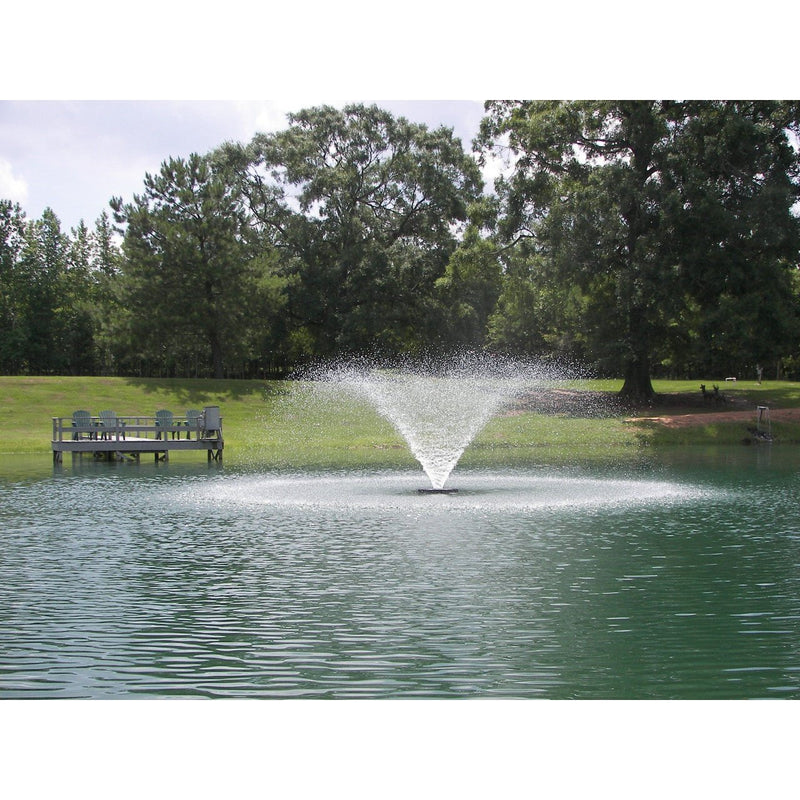
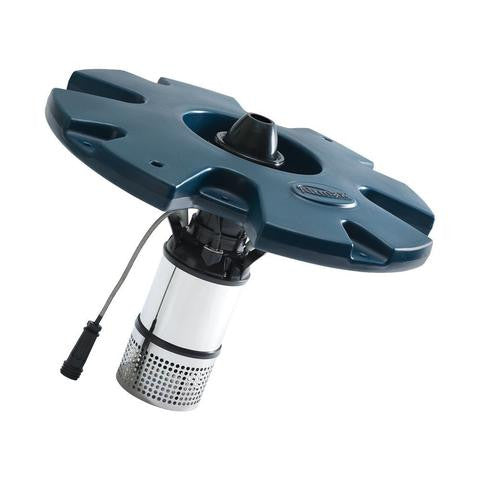
Many practitioners believe that any movement of water constitutes aeration. However, surface fountains have a much lower Standard Aeration Efficiency (SAE) than bottom-diffused systems. While a fountain provides aesthetic value and some surface oxygenation, it often fails to reach the bottom muck layer where the most critical biological work occurs.
Limitations of Aeration in Algae Control
Aeration is not a magic bullet. There are specific environmental and physical constraints that limit its effectiveness in controlling algae blooms.
External loading is a primary constraint. If a pond receives constant runoff from fertilized lawns, agricultural fields, or livestock areas, the influx of nutrients may exceed even the most robust biological system's capacity. In these scenarios, aeration is merely a mitigation tool, not a cure.
Depth also plays a role. In very shallow ponds (less than 4 feet deep), bottom-diffused aeration is less efficient because the bubbles have a shorter "hang time" in the water column, resulting in lower oxygen transfer. In these cases, high-volume circulators or surface aspirators may be more effective at moving the water-air interface.
Temperature is another physical limit. Warmer water holds less dissolved oxygen than colder water. During peak summer months, even a perfectly sized system may struggle to maintain saturation levels if the pond's thermal mass is too high and its shade cover is too low.
Mechanical Limit vs. Biological Synergy
The "Mechanical Limit" refers to the point where additional hardware no longer yields a proportional improvement in water quality. This occurs when the physical transfer of oxygen is optimized, but the biological community is the bottleneck.
| Factor | Mechanical Limit Focus | Biological Synergy Focus |
|---|---|---|
| Primary Goal | Increase Dissolved Oxygen (DO) | Nutrient Sequestration and Digestion |
| Key Metric | CFM (Cubic Feet per Minute) | BOD (Biological Oxygen Demand) Reduction |
| Equipment | Compressors, Diffusers, Fountains | Probiotic Bacteria, Enzymes, Bio-reactors |
| Maintenance | Motor service, Membrane cleaning | Regular bacterial dosing, Nutrient monitoring |
| Outcome | Prevented fish kills, Destratification | Clear water, Muck reduction, Low Algae |
Practical Tips for Optimizing Your System
To move past the mechanical limit, you must treat your pond as a bio-reactor. Start by calculating your turnover rate. For optimal biological function, you should aim for a minimum of 1 to 2 complete turnovers of the pond's volume every 24 hours.
Use bottom-diffused aeration whenever possible. Place diffusers in the deepest parts of the pond to maximize the oxygen transfer and ensure that the entire water column is mixed. If your pond has a complex shape, use multiple smaller diffusers rather than one large one.
Supplement with high-grade beneficial bacteria. Adding concentrated strains of Bacillus and other muck-digesting microbes ensures that the "workforce" is present to utilize the oxygen provided by your aerator. This is especially important in the spring when natural bacterial populations are low after winter dormancy.
Monitor your Phosphorus levels. Use a simple test kit to measure orthophosphates. If levels remain high despite aeration, consider using a phosphorus binder (like lanthanum-modified clay or alum) to assist the mechanical and biological systems in sequestering the excess nutrients.
Advanced Considerations: Stoichiometry and SAE
For the serious practitioner, understanding Standard Aeration Efficiency (SAE) is vital. SAE is measured in pounds of oxygen transferred per horsepower per hour (lbs O2/hp-hr). Bottom-diffused systems typically range from 2.0 to 4.0 SAE, while surface fountains often struggle to reach 1.5 SAE.
The oxygen demand of a pond is calculated based on the respiration of fish, the decay of organic matter, and the chemical oxidation of minerals. This is often expressed as the Total Oxygen Demand (TOD). If your aeration system provides 10 lbs of oxygen per day, but your TOD is 15 lbs, you will experience a net deficit, leading to anoxia and algae growth.
Consider the ascent rate of your bubbles. Micro-bubbles (less than 1mm in diameter) provide significantly more surface area for oxygen transfer than large bubbles. High-quality EPDM membranes are designed to produce a fine mist of bubbles that maximizes the contact time between the air and the water.
Example Scenario: The 1-Acre Eutrophic Pond
Imagine a 1-acre pond with an average depth of 6 feet and 12 inches of accumulated muck. The owner has a 1/2 HP surface fountain running 12 hours a day, yet the pond remains covered in filamentous algae.
The technical analysis reveals the problem: The surface fountain is only oxygenating the top 2 feet of water. The bottom 4 feet remain anoxic. The 12 inches of muck are releasing phosphorus at a rate that exceeds the fountain's ability to circulate and oxygenate the water. Furthermore, the 12-hour run time allows for a massive nocturnal oxygen dip.
The solution involves replacing the fountain with a 1/4 HP diffused aeration system with two diffuser plates placed at the deepest points. This system runs 24/7, providing 2 complete turnovers per day. Additionally, the owner doses the pond with a high-concentration bacterial blend. Within 60 days, the redox potential at the bottom shifts, phosphorus levels drop by 60%, and the algae begins to die off as it is outcompeted for nutrients by the aerobic bacteria.
Final Thoughts
Effective pond management is a balance of physics and biology. Aeration provides the mechanical infrastructure necessary for a healthy ecosystem, but it is the biological activity that ultimately dictates water clarity and nutrient stability. Simply adding more air is rarely the complete answer to a persistent algae problem.
By focusing on the synergy between dissolved oxygen and microbial metabolism, you can transform a pond from a nutrient-saturated mess into a clear, self-sustaining system. Transitioning from a purely mechanical mindset to a biological one is the key to mastering aquatic environments.
Continue to monitor your metrics, adjust your turnover rates as the seasons change, and never underestimate the power of the "biological stomach" to clean up what the "mechanical lungs" have enabled.