

How To Prevent Summer Fish Kills During Extreme Heat
Heat waves steal oxygen. Is your pond prepared? When temperatures soar, oxygen levels plummet. The 'Standard' approach is reacting too late; the 'Pro' approach uses subsurface aeration to keep water moving and oxygenated. Protect your investment this summer.
The stability of a pond ecosystem depends on the delicate balance between oxygen production and consumption. During extreme heat waves, this balance is frequently disrupted by physical and biological factors. High water temperatures decrease the solubility of gases while simultaneously accelerating the metabolic rates of aquatic organisms. This creates a dangerous "oxygen squeeze" where demand exceeds supply.
Professional pond management requires an understanding of the thermodynamics and biological kinetics at play. Reacting to a fish kill after it begins is an expensive and often futile effort. Prevention involves the mechanical optimization of the water column to ensure that dissolved oxygen (DO) remains above critical thresholds. This guide provides a technical overview of how to maintain these levels during the most challenging months of the year.
How To Prevent Summer Fish Kills During Extreme Heat
A summer fish kill is primarily a failure of dissolved oxygen maintenance. Oxygen enters pond water through two main pathways: atmospheric diffusion and photosynthesis by aquatic plants and algae. In a balanced system, these sources provide enough DO to support fish, invertebrates, and the aerobic bacteria responsible for decomposing organic matter.
Heat waves compromise this system in several ways. First, Henry’s Law dictates that the solubility of a gas in a liquid is inversely proportional to the temperature of the liquid. As water warms from 60°F to 80°F, its maximum oxygen-carrying capacity drops by approximately 20%. In extreme heat, the water simply cannot hold enough oxygen to provide a safety margin for the inhabitants.
Second, fish are ectothermic, meaning their body temperature and metabolic rate are governed by the surrounding water. For most temperate species, the metabolic rate doubles with every 10°C (18°F) increase in temperature—a relationship known as the Q10 coefficient. Consequently, at the exact moment the water holds the least oxygen, the fish require the most.
Thermal stratification further complicates the issue. Sunlight warms the surface layer (epilimnion), making it less dense than the cooler, deeper water (hypolimnion). This density difference prevents mixing. The bottom layer becomes anoxic as bacteria consume the available oxygen during decomposition. If a summer storm or sudden cold front causes these layers to mix rapidly—an event called a "turnover"—the entire pond can become oxygen-depleted in minutes, leading to a catastrophic fish kill.
Mechanics of Subsurface Aeration Systems
Subsurface aeration, also known as diffused aeration, operates by pumping compressed air from a shore-mounted compressor through weighted tubing to diffusers located at the pond's bottom. These diffusers break the air into millions of tiny bubbles. While many believe the bubbles themselves provide the oxygen, the primary mechanism is actually the vertical movement of water.
As the bubbles rise, they create a "displacement plume" that pulls oxygen-deficient water from the bottom toward the surface. This process, known as "laminar flow," breaks the thermocline and ensures the entire water column remains mixed. When the bottom water reaches the surface, it vents harmful gases like hydrogen sulfide and carbon dioxide while absorbing fresh oxygen from the atmosphere.
The efficiency of this system is measured by its Standard Aeration Efficiency (SAE). Professional-grade fine-bubble diffusers are significantly more efficient than surface fountains or coarse-bubble systems. Fine bubbles have a higher surface-area-to-volume ratio and rise more slowly, allowing for more contact time with the water. This maximizes the Standard Oxygen Transfer Rate (SOTR) per kilowatt of energy consumed.
Benefits of Proactive Aeration
The most measurable benefit of subsurface aeration is the elimination of thermal stratification. By maintaining a uniform temperature and oxygen profile from top to bottom, you expand the "habitable zone" for your fish. Without aeration, fish are often trapped in the narrow surface layer where oxygen is present but temperatures are dangerously high.
Aeration also optimizes the performance of aerobic bacteria. These microbes are responsible for breaking down "muck"—the organic sludge composed of fish waste, dead leaves, and decaying algae. Aerobic decomposition is significantly faster and cleaner than anaerobic decomposition. By keeping the pond bottom oxygenated, you reduce the accumulation of nutrients that fuel algae blooms.
From an efficiency standpoint, subsurface systems outperform surface aerators in ponds deeper than six feet. Surface aerators typically only affect the top two to three feet of the water column. In contrast, a properly sized diffused system uses the entire depth of the pond to move water, resulting in much higher oxygen transfer for the same electrical cost.
Challenges and Common Mistakes
One of the most dangerous mistakes is starting a subsurface aeration system for the first time in the middle of a heat wave. If the pond is already stratified and the bottom is anoxic, a sudden startup can "flip" the pond. This brings toxic gases and oxygen-depleted water to the surface instantly, causing the very fish kill you intended to prevent.
Professional practitioners use a "startup procedure" to avoid this. This involves running the system for only 30 minutes the first day, 1 hour the second, and doubling the time daily until the system runs 24/7. This slow mixing allows the pond to adjust without a sudden chemical shock.
Overstocking is another common pitfall. Many pond owners stock fish based on the pond's "carrying capacity" during the spring or fall. However, the true carrying capacity is determined by the lowest oxygen levels of the year. If a pond is overstocked, the combined respiration of the fish can deplete oxygen levels during the night when photosynthesis stops, leading to a "morning-after" fish kill.
Limitations of Aeration Technology
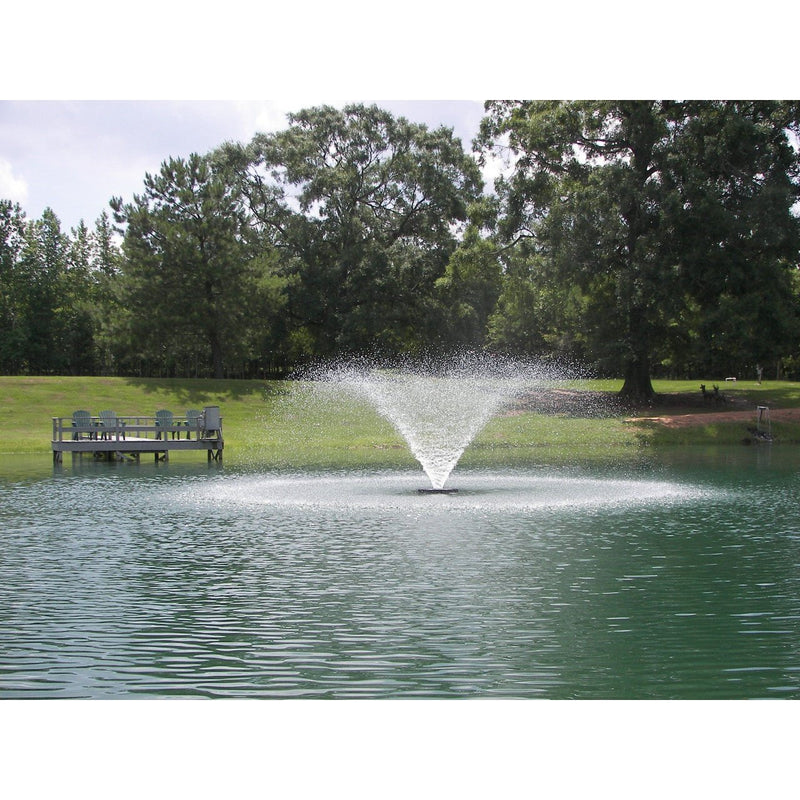
While aeration is a powerful tool, it has physical and environmental limits. In very shallow ponds (less than four feet deep), subsurface aeration loses much of its efficiency. There is not enough vertical distance for the bubble plume to develop sufficient velocity or contact time. In these scenarios, surface agitators or circulators may be more effective.
Extreme organic loading can also overwhelm an aeration system. If a pond has decades of accumulated muck or receives heavy nutrient runoff from nearby farms, the Biochemical Oxygen Demand (BOD) may exceed the system's ability to supply oxygen. In these cases, aeration must be paired with nutrient mitigation strategies, such as the use of beneficial bacteria or physical dredging.
Finally, aeration does not cool the water significantly. While it prevents the surface from becoming "super-heated" by mixing it with deeper water, the overall pond temperature will still track with the ambient air temperature. If the species of fish in the pond (like trout) cannot survive the baseline water temperature of the region, aeration alone will not save them.
Comparison: Subsurface Aeration vs. Surface Fountains
| Factor | Subsurface (Diffused) | Surface (Fountains/Agitators) |
|---|---|---|
| Effective Depth | Optimal for ponds > 6 feet. | Best for ponds < 6 feet. |
| Oxygen Transfer (SAE) | High (3.0 - 5.0 lbs O2/hp-hr). | Low to Moderate (1.5 - 2.5 lbs O2/hp-hr). |
| Primary Mechanism | Total water column circulation. | Surface tension breakage/splashing. |
| Operating Cost | Generally lower per volume aerated. | Higher due to motor resistance in water. |
| Winter Utility | Keeps ice open for gas exchange. | Risk of motor freezing/damage. |
Practical Tips for Summer Oxygen Management
Monitoring dissolved oxygen levels at dawn is the most critical practice for serious pond managers. This is when DO levels are at their lowest, as plants have been consuming oxygen through respiration all night without any photosynthetic production. If levels are consistently below 5 mg/L, the system is at risk and requires immediate mechanical adjustment.
Suspension of supplemental feeding during heat waves is another effective tactic. Digestion is a high-oxygen process. When fish eat, their metabolic demand spikes. Additionally, uneaten food adds to the organic load and BOD of the pond. During a heat wave, "less is more" regarding nutrient input.
Utilizing pond dyes can provide a slight but meaningful reduction in water temperature. These non-toxic dyes block a portion of the solar spectrum, preventing sunlight from penetrating as deeply into the water column. This reduces the heat absorption of the pond and can help slow the growth of algae blooms that eventually contribute to oxygen crashes.
Advanced Considerations: Henry's Law and SOTR
For those managing high-value fisheries or commercial aquaculture, understanding the Standard Oxygen Transfer Rate (SOTR) is essential for system sizing. SOTR is calculated in a laboratory under "standard" conditions: zero dissolved oxygen, 20°C, and sea-level pressure. Real-world conditions, known as Actual Oxygen Transfer Rate (AOTR), are always lower.
Temperature plays a dual role in these calculations. While higher temperatures reduce the maximum amount of oxygen the water can hold (saturation), they actually increase the rate at which oxygen transfers from the air bubble to the water. This is because the viscosity of water decreases as it warms, allowing for faster molecular diffusion. However, the biological demand usually outpaces this slight increase in transfer efficiency.
Practitioners must also account for altitude. Atmospheric pressure decreases at higher elevations, which in turn reduces the partial pressure of oxygen. A compressor that is adequate for a one-acre pond at sea level may be undersized for the same pond at 5,000 feet. Always check the manufacturer's performance curves for your specific elevation to ensure adequate cubic feet per minute (CFM) delivery to the diffusers.
Scenario: Managing a 1-Acre Sport Fish Pond
Consider a one-acre pond with a maximum depth of 12 feet, stocked with largemouth bass and bluegill. During a typical July heat wave, the surface temperature reaches 88°F. Without aeration, the thermocline would likely establish at the five-foot mark. This leaves only 40% of the pond's volume habitable, as the bottom seven feet would become anoxic.
In this scenario, a 1/4 HP rocking piston compressor paired with two dual-disc diffusers would be the "Pro" solution. This setup provides approximately 2.5 CFM of air. By running this system 24/7, the manager ensures the bottom water is constantly cycled to the surface. This maintains a DO level of at least 6 mg/L throughout the entire 12-foot depth.
If a severe thunderstorm occurs—common in summer—the pond is already mixed. The "Standard" pond nearby might experience a turnover where the anoxic bottom water suddenly mixes with the surface, resulting in a total fish kill. The aerated pond remains stable because there is no "dead water" at the bottom to begin with.
Final Thoughts
Maintaining oxygen levels during a summer heat wave is a matter of mechanical physics and biological management. The goal is to maximize the Standard Aeration Efficiency while minimizing the organic load on the system. Subsurface aeration is the most effective tool for this task in most pond environments, providing a continuous defense against thermal stratification and oxygen depletion.
Success requires a proactive mindset. Waiting until fish are gasping at the surface is a sign of a failed management strategy. By installing a properly sized diffused aeration system and following best practices for nutrient management and monitoring, you create a resilient ecosystem capable of withstanding extreme weather events.
Invest in high-quality components, monitor your dawn DO levels, and adjust your management practices to suit the seasonal demands of your pond. The technical approach to pond management ensures that your aquatic investment remains healthy and productive for years to come. Consider exploring internal linking to articles on pond microbiology or compressor maintenance to further your technical knowledge.