

Do Fountains Aerate Ponds? The Truth About Water Health
A splash on the surface doesn't mean life at the bottom—see why your fountain might be leaving your pond gasping for air. Most pond owners choose a fountain for the looks, but is it actually keeping your ecosystem alive? While surface fountains look great, they often fail to move the water at the bottom, leading to muck buildup and fish stress. If you want professional-level water clarity and health, you need to look beneath the surface. Here is the difference between decoration and true aeration.
Do Fountains Aerate Ponds? The Truth About Water Health
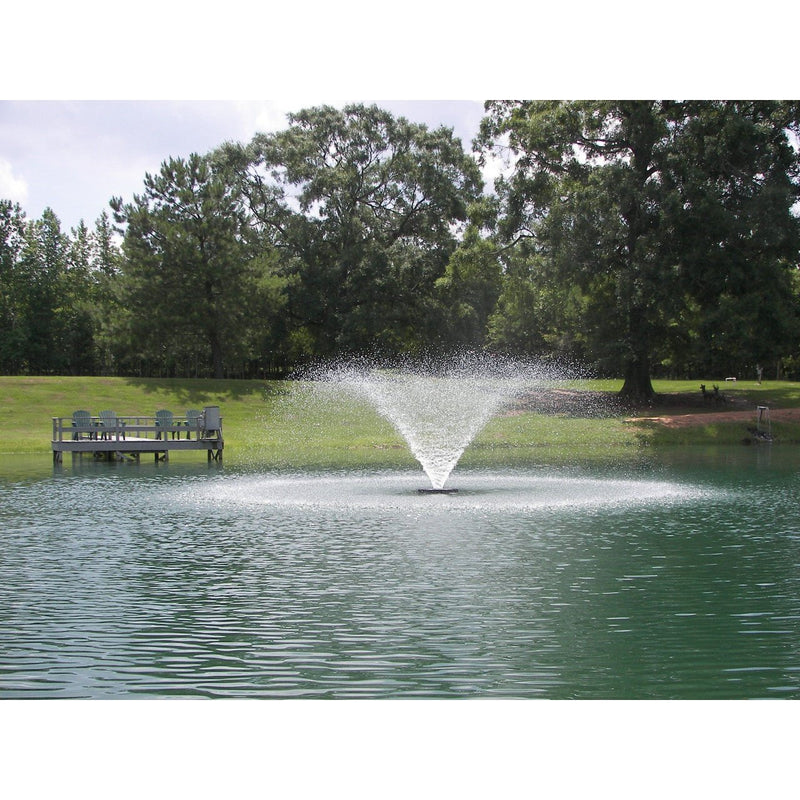
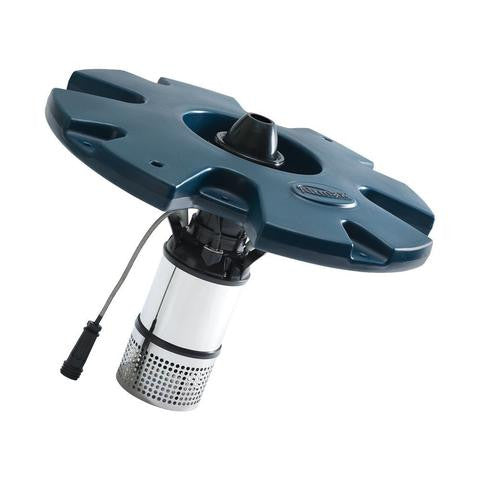
The efficacy of a pond fountain as an aeration device depends entirely on the ratio of water displacement to depth. In technical terms, a standard surface fountain is a mechanical device that utilizes an impeller to propel water into the atmosphere. This process increases the surface area of the water droplets, allowing for atmospheric gas exchange before they return to the surface.
While this mechanism succeeds in elevating Dissolved Oxygen (DO) levels in the upper 2 to 4 feet of the water column, it remains vertically limited. Most decorative fountains lack the intake velocity required to draw water from the hypolimnion—the cold, dense bottom layer of a pond. Consequently, the deeper strata remain anoxic, characterized by zero or near-zero oxygen levels.
In real-world applications, fountains serve primarily as aesthetic features with secondary surface-level benefits. They are frequently deployed in golf course ponds or residential developments where visual appeal is prioritized over deep-water ecological stability. Without a mechanism to break the thermocline, these ponds remain thermally stratified, trapping toxic gases like hydrogen sulfide at the floor.
Mechanism of Action: Kinetic Energy and Dissolved Oxygen
Aeration is governed by the principles of gas solubility and fluid dynamics. To understand why subsurface systems outperform surface fountains, one must examine the Standard Oxygen Transfer Rate (SOTR). This metric quantifies how many pounds of oxygen a system can introduce into the water per hour under standard conditions.
Subsurface aeration, also known as diffused aeration, operates by compressing atmospheric air and forcing it through a porous membrane located at the pond floor. As the air exits the diffuser, it forms thousands of micro-bubbles. These bubbles rise through the water column, creating a "chimney effect" or an air-lift current.
This rising column of air performs two critical functions:
- Direct Transfer: Oxygen molecules diffuse from the bubble into the surrounding water as it rises. Smaller bubbles provide a higher surface-area-to-volume ratio, increasing transfer efficiency.
- Induced Circulation: The rising bubbles pull cold, oxygen-depleted water from the bottom to the surface. This mechanical turnover exposes the entire pond volume to the atmosphere, facilitating a total system gas exchange.
The Engineering of Subsurface Aeration
A professional subsurface aeration system is composed of three primary mechanical sub-assemblies: the compressor, the delivery line, and the diffuser manifold. Each component must be engineered to withstand specific environmental stressors and backpressure requirements.
The compressor is the heart of the system. In most professional installations, a rocking piston compressor is utilized for its ability to generate high pressure (up to 30-40 PSI) at a relatively low CFM (Cubic Feet per Minute). For shallower applications, rotary vane compressors may be used to move larger volumes of air at lower pressures. These units are typically housed in a ventilated, weather-protected cabinet on shore.
The delivery line must be constructed from weighted, self-sinking lead-free PVC or similar high-density material. This ensures the line remains on the pond floor without the need for external weights or anchors, which can snag on maintenance equipment. The internal diameter of the tubing must be sized according to the distance from the compressor to prevent excessive frictional head loss.
The diffuser manifold contains the membrane responsible for bubble formation. Modern diffusers use EPDM or silicone membranes with thousands of microscopic laser-cut slits. These slits open under pressure to release air and close when the system is deactivated, preventing water and silt from entering the delivery lines.
Quantitative Benefits of Professional Aeration
The primary advantage of subsurface aeration is its Standard Aeration Efficiency (SAE). SAE measures the pounds of oxygen transferred per horsepower-hour of electricity consumed. While a high-end surface aerator might achieve an SAE of 1.5 to 2.5, a fine-bubble diffused system can achieve SAE ratings of 3.0 to 4.5, depending on the depth of the water.
Increased oxygen levels at the pond floor stimulate the activity of aerobic bacteria. These microbes are significantly more efficient than anaerobic bacteria at decomposing organic matter, such as dead algae, leaf litter, and fish waste. This process, known as bio-remediation, reduces the "muck" layer and sequesters nutrients like phosphorus and nitrogen that would otherwise fuel algae blooms.
Furthermore, subsurface aeration eliminates thermal stratification. By maintaining a consistent temperature throughout the water column, the system prevents the sudden "turnover" events that occur during heavy rains or cold snaps. These turnovers often cause catastrophic fish kills by rapidly mixing anoxic bottom water with oxygenated surface water.
Challenges and Mechanical Failures
Mechanical systems operating 24/7 are subject to specific failure modes. In subsurface systems, the most common challenge is backpressure. As the diffusers age, mineral deposits or biofilm can accumulate on the membrane pores. This increases the resistance against the compressor, leading to elevated operating temperatures and premature wear of the piston cups and seals.
Compressor overheating is a frequent result of poor cabinet ventilation. If the cooling fan fails or the air filters become clogged with dust and pollen, the internal temperature of the compressor can exceed its thermal limit. This causes the lubricating grease to break down and the seals to harden, eventually leading to a complete seizure of the motor.
In surface fountains, the primary failure mode is impeller clogging. Plastic bags, fishing lines, and filamentous algae can wrap around the motor shaft, causing mechanical resistance. This leads to increased amperage draw and can eventually burn out the motor windings if the internal thermal protection fails to trip.
Limitations of Subsurface Aeration
While highly effective in deep water, subsurface aeration follows a law of diminishing returns in shallow environments. The "chimney effect" requires a minimum depth—typically 5 to 6 feet—to develop sufficient lift and contact time for efficient oxygen transfer. In ponds shallower than 4 feet, the bubbles reach the surface too quickly, resulting in poor OTE (Oxygen Transfer Efficiency).
In extremely shallow water bodies, a surface aerator or a high-flow circulator is often the more technically sound choice. These devices can move large volumes of water horizontally, preventing stagnation in a way that a bottom diffuser cannot.
Environmental constraints also play a role. In very large lakes, the cost of the weighted tubing and the power required to push air over long distances can become prohibitive. In these scenarios, lake managers often deploy localized "target" aeration in sensitive areas, such as fish spawning grounds or near water intakes, rather than attempting to aerate the entire basin.
Standard Surface Fountain vs. Professional Subsurface Aeration
Choosing between these two technologies requires an analysis of pond bathymetry and management objectives. The following table highlights the divergence in technical specifications.
| Metric | Standard Surface Fountain | Professional Subsurface Aeration |
|---|---|---|
| Primary Function | Aesthetic Display | Ecological Remediation |
| Effective Depth | 0 – 6 Feet | 6 – 40+ Feet |
| Oxygen Transfer (SAE) | 1.5 - 2.5 lb O2/hp-hr | 3.0 - 4.5 lb O2/hp-hr |
| Circulation Pattern | Localized / Surface only | Total Column Turnover |
| Winter Operation | Risk of ice damage; usually removed | Maintains open water for gas venting |
| Energy Consumption | High (pumps heavy water) | Low (pumps light air) |
Technical Best Practices for Installation
Correct placement of diffusers is vital for maximizing turnover rates. The deepest point of the pond is the priority location, as this allows the rising air column to interact with the maximum volume of water. For irregular-shaped ponds with coves or "fingers," multiple diffusers must be strategically placed to ensure no stagnant zones remain.
Sizing the compressor requires calculating the total acre-feet of the pond. A general industry standard for healthy ponds is one total turnover per 24-hour period. For ponds with high organic loads or heavy fish populations, this may need to be increased to two turnovers per day.
Pressure management is the final critical step. Install a pressure gauge at the compressor outlet. You should expect approximately 0.43 PSI of backpressure for every foot of water depth, plus 1–2 PSI for friction loss in the lines. If the gauge shows 10 PSI for a 10-foot deep pond, the system is operating within optimal parameters. A reading significantly higher indicates a blockage or fouled diffuser.
Advanced Considerations: Nutrient Sequestration
Sophisticated pond managers use aeration as a tool for chemical manipulation. In an anoxic environment, phosphorus is released from bottom sediments into the water column, where it becomes bio-available for cyanobacteria (blue-green algae). By maintaining high DO levels at the sediment-water interface, the iron in the soil remains oxidized. Oxidized iron binds with phosphorus, "locking" it into the sediment and preventing it from fueling algae growth.
This synergy between mechanical aeration and chemical stability is the cornerstone of professional lake management. When combined with aerobic bacterial inoculants, subsurface aeration can reduce the muck layer by up to 1 to 2 inches per season without the need for expensive mechanical dredging.
Operational Scenario: 1-Acre Pond Remediation
Consider a 1-acre pond with an average depth of 8 feet and a maximum depth of 12 feet. This pond contains approximately 2.6 million gallons of water. Using a 1/2 HP rocking piston compressor and two dual-disc diffusers, the system can move roughly 3,500 gallons of water per minute via air-lift.
In this scenario:
- Daily Turnover: 3,500 GPM * 60 minutes * 24 hours = 5.04 million gallons.
- Turnover Ratio: 5.04M / 2.6M = ~1.9 turnovers per day.
This configuration provides nearly double the required daily turnover, ensuring that even during the peak of summer, the hypolimnion remains oxygenated and the thermocline is successfully disrupted.
Final Thoughts
Maintaining a healthy pond requires moving beyond the visual appeal of surface displays. While fountains provide a pleasant atmosphere and localized surface aeration, they are mechanically incapable of addressing the deep-water stressors that lead to ecosystem collapse. Professional subsurface aeration represents a more efficient, data-driven approach to water management.
By prioritizing total water column circulation and oxygen transfer efficiency, pond owners can effectively manage muck levels, protect fish populations, and reduce the need for chemical interventions. The transition from decorative to functional aeration is the most significant step toward long-term aquatic stability.
Those interested in optimizing their systems should conduct a baseline bathymetric map and monitor DO levels at various depths throughout the season. Applying these technical principles ensures that the life at the bottom of the pond is just as healthy as the splash on the surface.