

Are Pond Fountains Worth It? Aeration, Appearance, and Operating Cost Compared
Is your pond an expense or an asset? Beyond the electric bill lies property value and mosquito control. Here's why a fountain is more than just a luxury.
Managing a private or community water body requires a shift from an expense-focused mindset to one centered on value generation and mechanical optimization. While a stagnant pond often represents a liability—characterized by algae blooms, foul odors, and mosquito breeding—a properly engineered fountain transforms the ecosystem into a high-functioning asset. This transition is not merely aesthetic; it is rooted in the physics of gas exchange and the biological requirements of the aquatic environment.
## Are Pond Fountains Worth It? Aeration, Appearance, and Operating Cost Compared
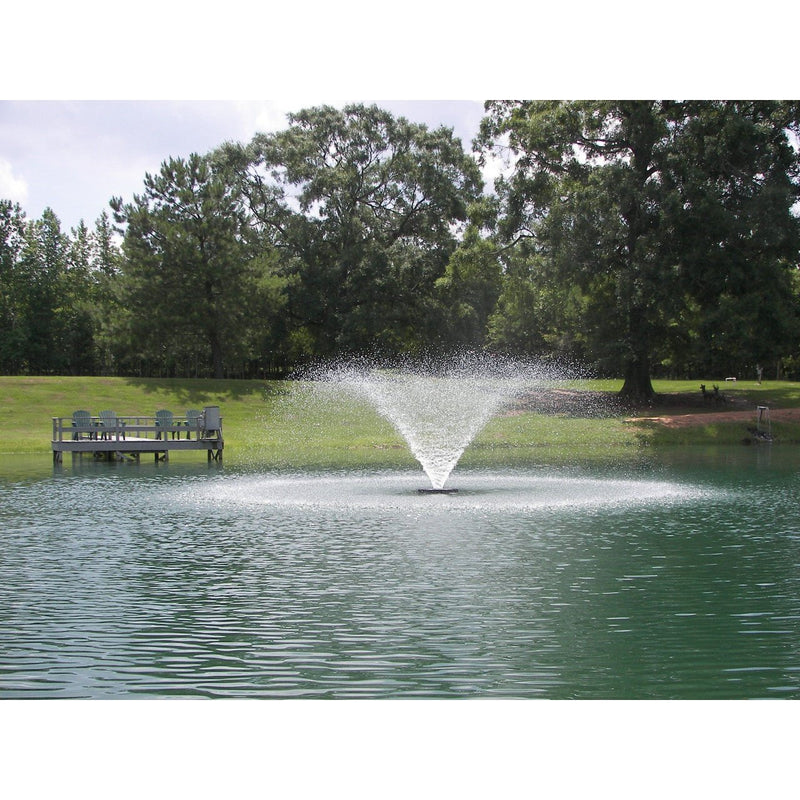
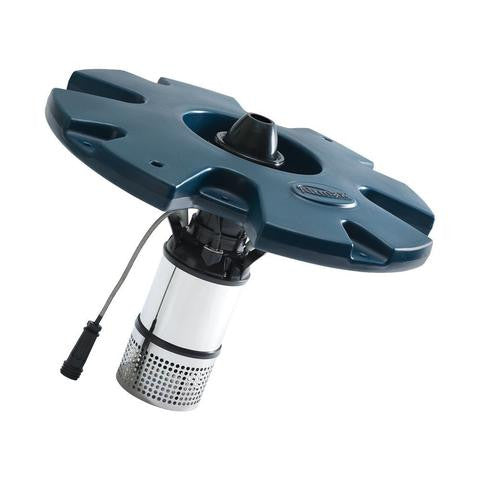
Determining the value of a pond fountain requires a multi-variable analysis of mechanical efficiency, ecological impact, and financial return. A fountain is a floating or fixed mechanical device that uses a motor-driven pump to propel water into the atmosphere. This process facilitates gas exchange by increasing the surface area of the water exposed to the air.
Mechanical surface aeration serves two primary functions: the physical displacement of water to prevent stagnation and the infusion of dissolved oxygen (DO) into the upper layers of the water column. In real-world applications, such as HOA stormwater basins or private recreational ponds, fountains serve as the primary defense against thermal stratification. This phenomenon occurs when sunlight heats the surface layer (epilimnion), creating a density barrier that prevents it from mixing with the cooler, oxygen-depleted bottom layer (hypolimnion).
Operating costs are often the primary concern for stakeholders. However, modern engineering has optimized the wattage-to-flow ratio. A standard 1/2 HP fountain motor typically draws between 5 and 7 amps on a 115V circuit, equating to approximately 600–800 watts. At a national average electricity rate of $0.16 per kWh, running a 1/2 HP unit 24 hours a day costs approximately $2.30 to $3.00 daily. When compared to the potential $2,000 to $5,000 annual cost for professional algae treatment and muck removal, the mechanical solution often provides a superior return on investment through reduced chemical dependency.
## How Mechanical Gas Exchange and Pump Physics Work
The operation of a pond fountain relies on the principles of fluid dynamics and atmospheric gas transfer. The motor rotates an impeller or propeller at high speeds—typically 3,450 RPM—to create a pressure differential that draws water through an intake screen. This water is then forced through a discharge nozzle or decorative head.
Oxygenation occurs at two distinct stages. The first stage is the "splash down," where the falling water droplets strike the pond surface, breaking the surface tension and forcing atmospheric air into the water. The second stage is the atmospheric interface, where the water is atomized into thousands of tiny droplets, exponentially increasing the total surface area available for oxygen absorption.
Standard Oxygen Transfer Rate (SOTR) is the metric used to measure this efficiency. It quantifies the pounds of oxygen transferred into the water per hour under standard conditions. While decorative fountains prioritize spray height and pattern complexity, aerating fountains utilize high-volume propellers that move more water at lower pressures. This distinction is critical for practitioners; a decorative nozzle restricts flow, increasing head pressure but reducing the total volume of water oxygenated.
Mechanical components are typically constructed from stainless steel and high-density thermoplastics to resist corrosion and mineral buildup. Internal motor cooling is achieved through oil-filled chambers or water-cooled jackets. Professional-grade units often incorporate thermal overload protection to prevent motor failure during "clog" events where debris restricts intake flow.
## Benefits: Value Generation and Biological Stabilization
The practical advantages of installing a fountain extend beyond visual appeal into measurable property appreciation and pest management. Data from real estate studies, including those by American Forest Management, indicate that homes with well-maintained ponds can sell for 1.9% to 7.7% more than comparable properties without water features. Furthermore, a Virginia Tech study suggested that high-quality landscaping, which includes functional water features, can increase perceived property value by 5.5% to 12.7%.
Mosquito control is a primary biological benefit. Mosquitoes, specifically the *Culex* genus, require stagnant water for their larval development. The physical agitation created by a fountain disrupts the water-air interface, preventing larvae from using their abdominal siphons to breathe. Continuous surface movement also discourages female mosquitoes from depositing eggs.
Biological stabilization is achieved through the promotion of aerobic bacteria. These microbes are significantly more efficient than anaerobic bacteria at breaking down organic matter, such as leaf litter and fish waste. By maintaining high DO levels in the upper water column, fountains help prevent the accumulation of "muck"—the nutrient-rich sludge that fuels algae blooms. Reducing the nutrient load through aerobic digestion lowers the overall biochemical oxygen demand (BOD) of the pond.
## Challenges: Mechanical Pitfalls and Environmental Hazards
Failure to account for electrical variables is a common mistake in fountain deployment. Voltage drop is a significant technical hurdle for units placed far from the power source. If the wire gauge is insufficient for the distance, the motor will receive lower voltage than required, leading to increased amperage draw, excessive heat, and premature stator failure. For a 115V 1/2 HP motor, the maximum recommended cable run on a 12-gauge wire is approximately 160 feet; exceeding this requires a jump to a 10-gauge wire or a transition to a 230V system.
Debris ingestion is another frequent cause of mechanical downtime. In ponds with high levels of filamentous algae or submerged aquatic vegetation, intake screens can become blinded. This restriction causes cavitation—the formation of vapor bubbles in the water due to low pressure—which can pit the impeller and damage the mechanical seals.
Winterization represents a mandatory maintenance challenge in northern climates. Ice expansion can crush floats and damage internal motor components if the unit is left in freezing water. Practitioners must remove the unit, inspect the power cable for abrasions, and store it in a climate-controlled environment to preserve the integrity of the seals and capacitors.
## Limitations: Depth Constraints and Ecological Boundaries
A fountain is not a universal solution for every water body. The most significant limitation is depth. Most surface fountains only circulate water to a depth of 4 to 6 feet. In ponds deeper than 8 feet, the fountain fails to address the "dead zone" in the hypolimnion. This lack of deep-water circulation allows toxic gases, such as hydrogen sulfide and methane, to accumulate at the bottom.
Environmental trade-offs must also be considered. While surface agitation aids oxygenation, it can also increase evaporation rates through the atomization of water. In drought-prone regions or ponds without a dedicated well-fill system, this can lead to significant water level drops during peak summer months.
Fountains are also less efficient than diffused aeration systems when measured by Standard Aeration Efficiency (SAE). SAE measures the pounds of oxygen transferred per horsepower-hour. Because fountains expend a large portion of their energy lifting the weight of the water against gravity for aesthetic effect, they cannot compete with the efficiency of bottom-diffused systems that use air bubbles to move the entire water column.
## Comparison: Surface Fountains vs. Diffused Aeration
Selecting the correct system requires a comparison of measurable performance factors. The following table outlines the technical differences between decorative surface units and sub-surface diffusers.
| Factor | Surface Fountain | Diffused Aeration |
|---|---|---|
| Primary Function | Aesthetics + Surface Aeration | Deep Water Gas Exchange |
| Effective Depth | 0 – 6 Feet | 6 – 40+ Feet |
| Oxygen Transfer (SAE) | 1.5 – 2.5 lb O2/hp-hr | 3.0 – 5.0 lb O2/hp-hr |
| Maintenance Level | Moderate (Screen Cleaning) | Low (Compressor Service) |
| Visual Impact | High (Display Patterns) | Low (Surface Bubbles) |
| Installation Cost | High (Underwater Cable) | Moderate (Weighted Tubing) |
## Practical Tips for Efficiency Optimization
Optimizing the performance of a pond fountain involves more than just a "plug and play" approach. Stakeholders should implement these technical adjustments to maximize the lifespan of the equipment:
- Install a Dedicated GFCI Circuit: All pond equipment must be protected by a Ground Fault Circuit Interrupter. This device disconnects power in milliseconds if a current leak is detected, preventing lethal electrical shocks in the water.
- Use a Digital Timer: Running a fountain 24/7 is not always necessary for biological health. Setting a timer to run during the late night and early morning hours (when natural oxygen levels are at their lowest due to plant respiration) can reduce electricity costs by 30-50% while still preventing fish kills.
- Verify Voltage at the Motor: Use a voltmeter to ensure the motor is receiving the specified voltage under load. If the voltage at the pond edge is significantly lower than the breaker box, the cable gauge must be increased to prevent motor burnout.
- Monitor Zinc Anodes: In ponds with high mineral content or brackish water, sacrificial zinc anodes should be attached to the motor housing to prevent galvanic corrosion of the stainless steel components.
## Advanced Considerations: SOTR and Dissolved Oxygen Saturation
Serious practitioners must understand the relationship between water temperature and dissolved oxygen saturation. Cold water has a higher physical capacity to hold oxygen than warm water. As pond temperatures rise in the summer, the "saturation point" drops, making mechanical aeration even more critical.
Henry’s Law states that the amount of dissolved gas in a liquid is proportional to its partial pressure above the liquid. Fountains exploit this by creating turbulence that maximizes the "partial pressure" interface between the air and the water. However, if the pond is already at 100% saturation, adding more aeration will not increase DO levels further; the energy is essentially wasted.
Biological Oxygen Demand (BOD) calculations allow for precise system sizing. By measuring the amount of oxygen required by the pond's biomass (fish, plants, and bacteria), an engineer can determine the exact horsepower required to maintain a DO level above 5.0 mg/L—the threshold for most healthy aquatic life.
## Example: Calculating the ROI of a 1 HP Fountain
Consider a 1-acre community pond that currently requires four chemical treatments per year to manage algae and odors. At $450 per treatment, the annual chemical cost is $1,800. Additionally, the pond requires dredging every 15 years at a cost of $15,000 to remove accumulated muck ($1,000 amortized annually). Total annual expense: $2,800.
An industrial 1 HP fountain costs approximately $2,500 to purchase and install. Electrical consumption for a 1 HP unit (approx. 1,000 watts) running 12 hours a day at $0.16/kWh is $1.92 per day, or roughly $700 per year.
By increasing DO levels and promoting aerobic digestion, the fountain reduces the need for chemical treatments by 75% ($450 remaining) and extends the dredging interval to 30 years ($500 amortized).
**Annual Fountain Cost:** $700 (electric) + $100 (maintenance) + $250 (equipment amortization) = $1,050.
**Annual Savings:** $2,800 (without fountain) - $1,050 (with fountain) = $1,750 net gain per year.
## Final Thoughts
Transitioning a pond from a stagnant liability to a high-value asset requires a technical understanding of aeration, electrical requirements, and biological demand. While the initial investment in a fountain includes both capital expenditure and ongoing electrical costs, the long-term benefits of property appreciation and reduced maintenance often outweigh the expenses.
The integration of mechanical gas exchange systems provides a sustainable method for managing water quality without heavy reliance on chemical additives. By disrupting the life cycle of mosquitoes and accelerating the aerobic breakdown of organic nutrients, fountains create a stable ecosystem that can be measured through increased dissolved oxygen levels and reduced muck accumulation.
Stakeholders should continue to evaluate their specific pond depth and volume to ensure the chosen hardware matches the ecological requirements of the site. Experimenting with timer schedules and monitoring SOTR metrics can further refine the efficiency of the system, turning the pond into a long-term financial and environmental asset.