

Why Your Pond Water Looks Cloudy
If you are only filtering for 'clarity,' you are missing the point. You can use chemicals to clear clouds, or you can use nature. One is a band-aid; the other is a life-support system.
Effective pond management requires a transition from aesthetic-focused maintenance to systems-level biological engineering. In closed aquatic systems, water clarity is merely a byproduct of efficient nutrient cycling and mechanical optimization. When these systems fail, the visual result is turbidity, yet the underlying cause is almost always a breakdown in biochemical kinetics.
The following analysis explores the mechanisms of pond ecology, focusing on the mechanical and biological parameters required to maintain an autotrophic balance. We will examine the specific surface area (SSA) of filtration media, the stoichiometry of nutrient uptake, and the role of dissolved oxygen (DO) in aerobic decomposition.
Why Your Pond Water Looks Cloudy
Turbidity in a pond is a physical manifestation of high particulate matter or microbial overgrowth. This condition is categorized by the presence of suspended solids (TSS) or planktonic algae blooms. In a real-world setting, cloudy water indicates that the system's "waste intake" exceeds its "metabolic capacity."
Common causes include excessive organic load from fish waste, unconsumed protein-rich feed, and environmental debris such as leaf litter. When these organic compounds enter the water, they begin the process of ammonification. Bacteria and fungi decompose these materials, releasing ammonia (NH3) into the water column. If the biological filter is undersized, this ammonia accumulates, leading to a "bacterial bloom" where opportunistic microbes reproduce rapidly in the water, causing a milky-white haze.
Green water is a different phenomenon caused by planktonic algae. These single-celled organisms thrive on dissolved nitrates and phosphates. High sunlight exposure combined with elevated nutrient levels creates an environment where algae reproduction outpaces the consumption rates of higher-order organisms. This results in a liquid-suspension "pea soup" effect that blocks UV penetration and disrupts the photosynthetic cycles of deeper aquatic plants.
How the Ecosystem Filtration Process Works
Biological filtration is the process of providing a controlled environment for nitrifying bacteria to perform the nitrogen cycle. This cycle is a two-step aerobic process. First, Nitrosomonas bacteria oxidize ammonia into nitrites (NO2-). Second, Nitrobacter bacteria oxidize those nitrites into nitrates (NO3-).
To achieve high-efficiency nitrification, the system must optimize for Specific Surface Area (SSA). SSA is the measurement of the total available surface area of a media per unit of volume, usually expressed in square feet per cubic foot (ft²/ft³). For example, standard pea gravel has an SSA of approximately 85 ft²/ft³, while high-performance synthetic media can exceed 290 ft²/ft³. The more surface area available, the larger the bacterial colony the system can support.
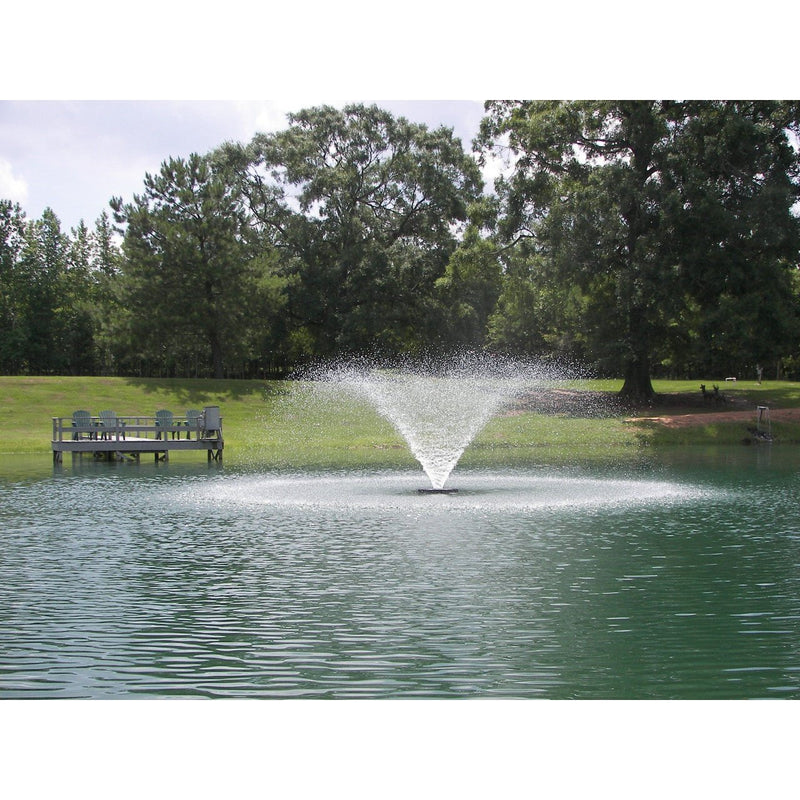
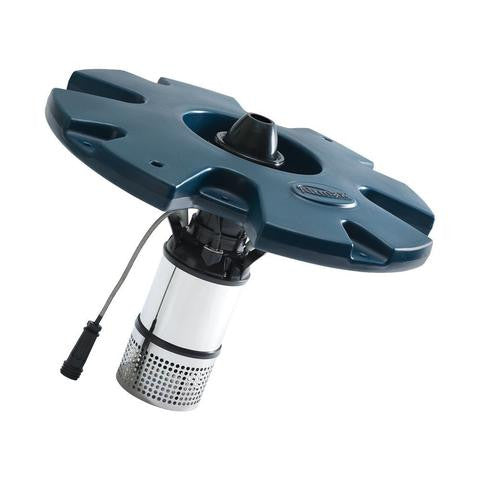
Oxygen availability is the limiting reagent in this process. Nitrifying bacteria are aerobic, meaning they require a constant supply of dissolved oxygen to function. In a pond with low DO—specifically levels below 3 mg/L—the efficiency of the biofilter drops precipitously. Optimal nitrification typically occurs at DO levels above 6 mg/L. Aeration systems, such as bottom-diffused aerators or surface fountains, are mechanical tools used to ensure the gas exchange at the surface is sufficient to meet the biological demand.
Benefits of an Ecosystem Approach
Transitioning to a multi-use ecosystem approach provides long-term stability that chemical treatments cannot replicate. Biological systems are self-regulating; the bacterial population adjusts its growth rate to match the nutrient load. This process, known as bioaugmentation, ensures that as waste increases, the "metabolic workforce" also increases.
The primary advantage is the reduction of "nutrient rebounding." Chemical algaecides kill algae instantly, but the dead organic matter remains in the pond. As this material decomposes, it releases a massive spike of nitrogen and phosphorus back into the water, fueling an even larger algae bloom weeks later. In contrast, an ecosystem approach uses aquatic plants to sequester these nutrients permanently. Plants like Eichhornia crassipes (Water Hyacinth) can absorb significant amounts of nitrogen and phosphorus during their growth phase. When these plants are harvested at the end of the season, those nutrients are physically removed from the system.
Furthermore, a balanced ecosystem maintains more stable pH and dissolved oxygen levels. Large chemical fluctuations can stress fish, leading to "Aeromonas Alley" conditions—a temperature-dependent window (typically 42°F to 62°F) where pathogenic bacteria thrive and fish immune systems are suppressed. A stable biological system mitigates these risks by preventing the extreme environmental swings associated with chemical "crash-and-clear" cycles.
Challenges and Common Mistakes
The most frequent error in pond engineering is the undersizing of the biological buffer. Many practitioners select filters based on pond volume alone without accounting for the "metabolic poundage" of the fish. A standard rule of thumb is that 1 pound of fish fed at 2% body weight per day requires at least 5 square feet of effective media surface for ammonia oxidation. In high-performance koi ponds, this requirement may increase to 100 square feet per pound of fish to achieve "water polishing" and pathogen reduction.
Another challenge is the "New Pond Syndrome," where a system is stocked with fish before the nitrifying bacteria have colonized the media. This process, known as cycling, typically takes 4 to 8 weeks. During this period, ammonia and nitrite levels can reach lethal concentrations. Attempting to bypass this stage with chemicals often stalls the biological colonization, leading to a perpetual state of instability.
Mechanical bypass is a technical failure where water takes the path of least resistance through a filter, avoiding the media entirely. If the filter is not designed with proper baffles or if the media becomes clogged with solids, the "dwell time" (the duration the water is in contact with the bacteria) decreases. This results in a high flow rate with low purification efficiency, effectively rendering the biofilter useless despite the pump being operational.
Limitations of Ecosystem Filtration
While robust, ecosystem-based filtration has finite constraints. Environmental factors such as temperature significantly impact bacterial activity. Nitrifying bacteria are most active between 75°F and 85°F. As water temperatures drop below 50°F, metabolic rates slow down, and below 40°F, they may go dormant. This means that a system that is clear in the summer may struggle with organic accumulation in the early spring before the bio-colony has reactivated.
System footprint is another limitation. To treat high nutrient loads naturally, a "bog filter" or "constructed wetland" must typically occupy 10% to 30% of the total pond surface area. In urban environments or small residential lots, the space required for a sufficiently sized natural filter may be unavailable. In these scenarios, mechanical optimization—such as pressurized bead filters or UV-C sterilizers—must compensate for the lack of natural surface area.
Single-Fix Filters vs. Multi-Use Ecosystems
Comparing a dedicated mechanical filter to a biological ecosystem reveals a clear trade-off between speed and sustainability.
| Metric | Mechanical Filter (Single-Fix) | Ecosystem Approach (Multi-Use) |
|---|---|---|
| Primary Goal | Solid Waste Removal | Nutrient Cycling & Sequestration |
| Nutrient Handling | Traps solids; no effect on dissolved N/P | Converts ammonia; plants absorb nitrates |
| Maintenance Frequency | High (weekly cleaning) | Low (seasonal pruning/thinning) |
| Resilience | Low; fails if pump stops | High; biological buffer persists |
| Long-term Cost | Higher (electricity, parts) | Lower (solar-powered, biological) |
Practical Tips for Mechanical Optimization
Optimizing a pond for clarity requires balancing the turnover rate with the biological dwell time. The entire volume of the pond should pass through the filtration system at least once every two hours. For koi ponds, a turnover rate of once per hour is the technical standard.
To improve mechanical efficiency, install a surface skimmer and a bottom drain. The skimmer removes organic debris—such as pollen and leaves—before they sink and begin anaerobic decomposition. The bottom drain facilitates the removal of "muck" or "sludge," which is a primary source of phosphate loading.
Ensure that your biological media is not "over-cleaned." Washing filter mats with chlorinated tap water kills the nitrifying bacteria, causing the system to reset its cycle. Always rinse media in a bucket of pond water to remove physical solids while preserving the biofilm. If you must use a UV clarifier, ensure it is sized correctly: 10 watts per 1,000 gallons for basic clarity (killing algae) or 30 watts per 1,000 gallons for sterilization (killing pathogens).
Advanced Considerations: Stoichiometry and UV-C Dosing
Serious practitioners should understand the Redfield Ratio (106C:16N:1P), which describes the stoichiometry of organic matter in aquatic environments. If a pond has a high nitrogen-to-phosphorus ratio, it will favor certain types of algae. By manipulating these ratios—often through the use of phosphate binders like lanthanum chloride or the addition of specific aquatic plants—you can out-compete nuisance algae at the molecular level.
Regarding UV-C radiation, the "kill rate" is a function of irradiance (wattage) and exposure time (flow rate). Planktonic algae require a relatively low dose of UV-C energy (approx. 15,000–30,000 µW-sec/cm²) to be neutralized. However, targeting parasites like Ichthyophthirius multifiliis (Ich) requires doses exceeding 180,000 µW-sec/cm². To achieve this, the water flow through the UV chamber must be significantly reduced to increase "contact time." Calculating the exact flow rate (GPH) versus the chamber volume and bulb wattage is essential for practitioners seeking true sterilization rather than just clarity.
Scenario: Engineering a 2,500-Gallon Koi Pond
Consider a 2,500-gallon pond stocked with 25 pounds of koi. To maintain a healthy nitrogen cycle, the system requires a minimum of 125 square feet of effective biological surface area (based on the 5 sq ft per pound rule). If using a medium with an SSA of 100 ft²/ft³, you would need 1.25 cubic feet of media. However, to account for feeding spikes and biological buffers, a design factor of 2x is recommended, bringing the requirement to 2.5 cubic feet of media.
The pump should be rated for a minimum of 1,250 GPH at the head pressure of the filter to ensure a 2-hour turnover. For green water prevention, a 25-watt UV clarifier is sufficient. If the pond is in direct sunlight for more than 6 hours a day, the UV wattage should be increased to 40 watts. Aeration must provide at least 0.5 to 1.0 cfm (cubic feet per minute) of air to maintain DO levels above 6 mg/L, supporting the aerobic metabolism of the 2.5 cubic feet of bio-media.
Final Thoughts
Pond water clarity is a metric of biological efficiency, not a product of chemical intervention. By focusing on the nitrogen cycle, optimizing specific surface area, and maintaining high dissolved oxygen levels, a pond owner can create a self-sustaining ecosystem that requires minimal external inputs.
Successful management hinges on the understanding that every component—from the mechanical skimmer to the microscopic bacteria on a gravel bed—serves a specific function in the processing of organic waste. When these components are balanced according to measurable data and biological principles, the result is clear water and a resilient aquatic environment. Experimentation with different media types and plant species will help fine-tune the system to its specific environmental variables.