Why Ponds Crash During Hot Weather
Hot weather is a silent killer for stagnant ponds. When temperatures soar, oxygen levels plummet. If your pond is just a hole in the ground, it's at risk. Here's how to build resilience.
Maintaining a functional pond during a heatwave requires more than basic observation. It demands an understanding of the relationship between temperature, gas solubility, and biological demand. A stagnant pond lacks the mechanical and biological structures necessary to offset the physical stressors of high-intensity solar radiation.
Transitioning from a high-risk system to a resilient one involves technical optimization. This guide examines the mechanical and biochemical variables that determine whether a pond thrives or collapses when ambient temperatures exceed 30°C.
Why Ponds Crash During Hot Weather
Pond crashes during hot weather are governed by the physical laws of gas solubility and the biological principles of metabolic acceleration. Henry’s Law states that the solubility of a gas in a liquid is inversely proportional to the temperature of the liquid. As water temperature increases, its physical capacity to hold dissolved oxygen (DO) decreases.
For example, fresh water at 10°C can hold approximately 11.3 mg/L of oxygen at saturation. When that same water reaches 30°C, its saturation point drops to roughly 7.5 mg/L [1.15, 1.25]. This 33% reduction in oxygen capacity occurs exactly when the pond's inhabitants require the most resources.
Simultaneously, the Q10 temperature coefficient dictates that the metabolic rate of ectothermic organisms, such as fish and nitrifying bacteria, doubles or even triples for every 10°C increase in temperature [1.2, 1.4]. A fish at 30°C requires twice the oxygen for basic survival as it does at 20°C. This creates a "metabolic scissors" effect: the supply of oxygen is falling while the demand is skyrocketing.
Thermal stratification further complicates this. In stagnant water, sunlight warms the surface layer (the epilimnion), making it less dense. This warm water floats on top of the cooler, denser bottom water (the hypolimnion). A transition zone known as the thermocline forms, acting as a physical barrier that prevents atmospheric oxygen from reaching the lower depths [1.3, 1.10]. Without circulation, the bottom layer becomes anoxic, accumulating toxic gases like hydrogen sulfide.
The Mechanics of Oxygen Depletion and Stratification
The collapse of a pond ecosystem is rarely a single event; it is a mechanical failure of several intersecting systems. Understanding these processes allows for the implementation of targeted interventions.
Biochemical Oxygen Demand (BOD) and Chemical Oxygen Demand (COD)
Hot weather accelerates the decomposition of organic matter by heterotrophic bacteria. This process is measured as Biochemical Oxygen Demand (BOD). As temperatures rise, these bacteria consume oxygen at an accelerated rate to break down fish waste, fallen leaves, and dead algae [1.6, 1.9].
If the BOD exceeds the rate of oxygen re-aeration, DO levels fall below the critical threshold for fish survival (typically 3–5 mg/L). In severe cases, the pond enters a state of Chemical Oxygen Demand (COD), where inorganic compounds also begin to oxidize, further stripping the water of available oxygen [1.15].
Diurnal Oxygen Swings
Algae and aquatic plants contribute to a phenomenon known as the diurnal oxygen swing. During daylight hours, photosynthesis produces a surplus of oxygen, sometimes leading to supersaturation (levels above 100%). However, at night, photosynthesis stops, and both plants and animals switch to respiration, consuming oxygen [1.12, 1.15].
In a stagnant, algae-heavy pond, the "nightly dip" can be fatal. Oxygen levels often reach their lowest point just before dawn. Without mechanical aeration to bridge this gap, the system can crash in the early morning hours, even if it appeared healthy the previous afternoon.
Mechanical Aeration Systems: Efficiency and Metrics
To prevent a crash, oxygen must be mechanically introduced into the system. The effectiveness of an aeration system is measured by two primary metrics: Standard Oxygen Transfer Rate (SOTR) and Standard Aeration Efficiency (SAE).
Standard Oxygen Transfer Rate (SOTR)
SOTR represents the mass of oxygen transferred to the water per hour under standard conditions (20°C, 1 atm, 0 mg/L initial DO). This metric allows for the objective comparison of different equipment types [1.11, 1.23].
Standard Aeration Efficiency (SAE)
SAE measures the energy efficiency of the process, calculated as the SOTR divided by the power consumed (kg O2/kWh). For serious practitioners, optimizing SAE is critical for long-term operational sustainability [1.11, 1.24].
Aeration Technology Comparisons
Different technologies offer varying levels of efficiency based on pond depth and surface area:
| Technology Type | SAE Range (lb O2/hp-hr) | Best Use Case | Limitations |
|---|---|---|---|
| Fine-Bubble Diffusers | 2.5 – 4.0 | Deep ponds (>8 ft), destratification | Susceptible to membrane fouling [1.1] |
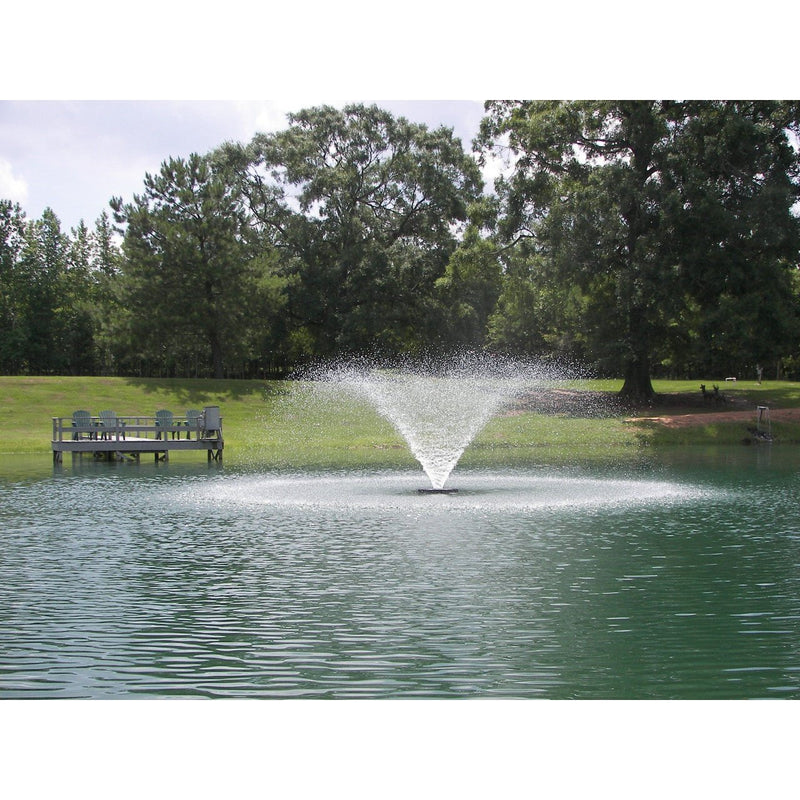
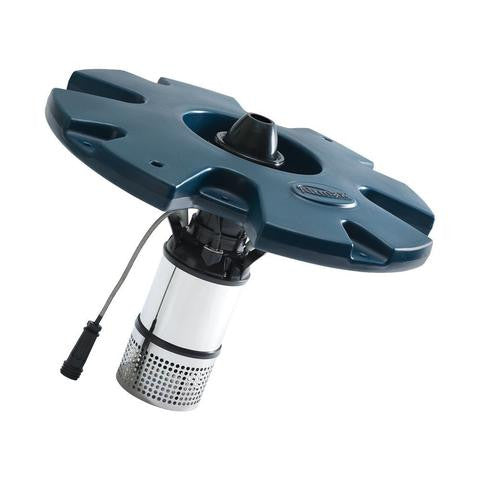
| Surface Aerators | 2.6 – 3.2 | Shallow ponds, high BOD loads | Limited influence on bottom layers [1.11] |
| Paddlewheels | 2.5 – 4.0 | Large aquaculture, surface mixing | High mechanical maintenance |
| Fountains (Decorative) | 1.5 – 2.5 | Small, ornamental systems | Low efficiency; mostly aesthetic [1.11] |
Benefits of Active Thermal Management
Implementing a mechanical and biological strategy for heat resilience provides measurable advantages over passive "hole-in-the-ground" systems.
- Maintenance of DO Saturation: Active systems keep dissolved oxygen levels above the 5.0 mg/L stress threshold for most freshwater species, even during 35°C ambient heat.
- Elimination of Thermal Barriers: Diffused aeration prevents the formation of a thermocline, ensuring the entire water column is available for biological activity and fish movement [1.3, 1.10].
- Accelerated Nutrient Cycling: Aerobic bacteria in the pond floor (the "benthic zone") are roughly 20 times more efficient at processing waste than anaerobic bacteria. Keeping the bottom oxygenated prevents the buildup of muck and hydrogen sulfide.
- Reduction in Algal Dominance: Circulation helps prevent the stagnation that favors cyanobacteria (blue-green algae), which thrive in still, warm, nutrient-rich water.
Common Challenges and Operational Risks
Mistakes in hot weather management often stem from a lack of technical understanding regarding how aeration interacts with thermal mass.
The "Mid-Day Mixing" Error
A frequent error is running a bottom-diffuser system for the first time in the middle of a hot afternoon. This can cause a sudden "turnover" of the pond. The warm, oxygenated surface water is mixed with the cold, anoxic, and potentially toxic bottom water. This rapid destratification can cause a massive fish kill in minutes as the average oxygen level drops below survival thresholds [1.7, 1.10].
Over-Aeration and Thermal Gain
While aeration is vital, it can also accelerate the warming of the pond. By constantly bringing cooler bottom water to the surface, the entire water column eventually reaches ambient air temperature. To mitigate this, practitioners should prioritize aeration during the coolest part of the night and early morning [1.20].
Biological Overload
Increasing fish populations beyond the system's "carrying capacity" is a primary cause of summer crashes. A pond that functions perfectly at 20°C may not have the mechanical support to handle the waste load and oxygen demand of the same fish at 30°C.
Limitations of Standard Methods
Even the most efficient aeration systems have physical limits. Understanding these boundaries is necessary for realistic system design.
- Depth Constraints: Diffused aeration is less efficient in shallow water (under 4 feet) because the bubbles have less "hang time" in the water column to transfer gas [1.1, 1.24].
- Atmospheric Saturation Limits: Mechanical aeration can only bring DO levels up to atmospheric saturation. It cannot easily "force" oxygen beyond the limit dictated by Henry's Law without specialized high-pressure systems.
- Inorganic Loading: High levels of salinity or suspended solids can interfere with oxygen transfer efficiency. Fresh water always holds more oxygen than saline water at the same temperature [1.17].
Practical Tips for Heatwave Resilience
Immediate actions can be taken to stabilize a system under thermal stress.
- Optimize Aeration Timing: Run high-flow aeration systems from 9:00 PM to 9:00 AM. This maximizes oxygen intake when the water is coolest and most receptive to gas transfer [1.20].
- Increase Shading: Reducing solar irradiance through floating plants or structural shading can significantly decrease the peak temperature of the epilimnion.
- Suspend Feeding: In temperatures exceeding 28°C, stop feeding fish. Digestion is a high-oxygen process. Reducing the fish's metabolic workload and the resulting ammonia production can save the system during a heat spike [1.13, 1.14].
- Monitor ORP: Use an Oxidation-Reduction Potential (ORP) meter to track the pond's "cleansing" ability. A falling ORP is an early warning sign of organic overload and impending oxygen depletion.
Advanced Considerations: The Bio-Active Oasis
Serious practitioners should consider moving beyond simple aeration toward a "Bio-Active Oasis" model. This approach focuses on the efficiency of the entire ecosystem rather than just mechanical inputs.
Micro-Nano Bubble Technology
Recent developments in aeration involve the use of micro-nano bubbles (MNBs). These bubbles have a diameter of less than 2 microns and do not immediately rise to the surface. Instead, they remain suspended in the water column for days, providing a massive surface area for oxygen transfer and significantly higher SOTR than conventional diffusers [1.21].
Trophic Level Management
Managing the pond's nutrient load through "bio-harvesting" is a critical advanced strategy. This involves the intentional growth and removal of aquatic plants to strip nitrogen and phosphorus from the water, preventing the algal blooms that cause severe oxygen swings.
Scenario: The 48-Hour Heatwave Transition
Consider a 1/4-acre stagnant pond during a 35°C heatwave. Without intervention, the surface temperature reaches 31°C, and DO levels at 4:00 AM drop to 1.8 mg/L. Fish gasping at the surface indicates imminent failure.
The optimized intervention involves:
1. **Emergency Aeration:** Deployment of a surface splash aerator to provide immediate, localized oxygenation without disturbing the toxic bottom layers.
2. **Gradual Destratification:** Starting a bottom diffuser on a timer for only 1 hour during the first night, gradually increasing the duration to mix the layers without causing a shock turnover.
3. **Metabolic Reduction:** Immediate cessation of all nutrient inputs (feeding) to lower the BOD.
These steps transition the pond from a "Sterile Heat-Trap" to a stable, managed environment capable of weathering the thermal peak.
Final Thoughts
The stability of a pond during hot weather is a function of its mechanical and biological preparation. A stagnant pond is a liability, but one equipped with efficient aeration and managed biological demand can maintain high levels of dissolved oxygen even in extreme conditions.
Prioritizing metrics like SAE and understanding the physical constraints of gas solubility allows for the design of systems that do not rely on luck. Practitioners should focus on preventing thermal stratification and managing the "metabolic scissors" of rising demand and falling supply.
Success in pond management is found in the data. By monitoring temperature trends and oxygen saturation, you can proactively adjust aeration cycles and nutrient loads to ensure your ecosystem remains resilient throughout the summer months.