

Why Pond Depth Matters When Choosing An Aeration System
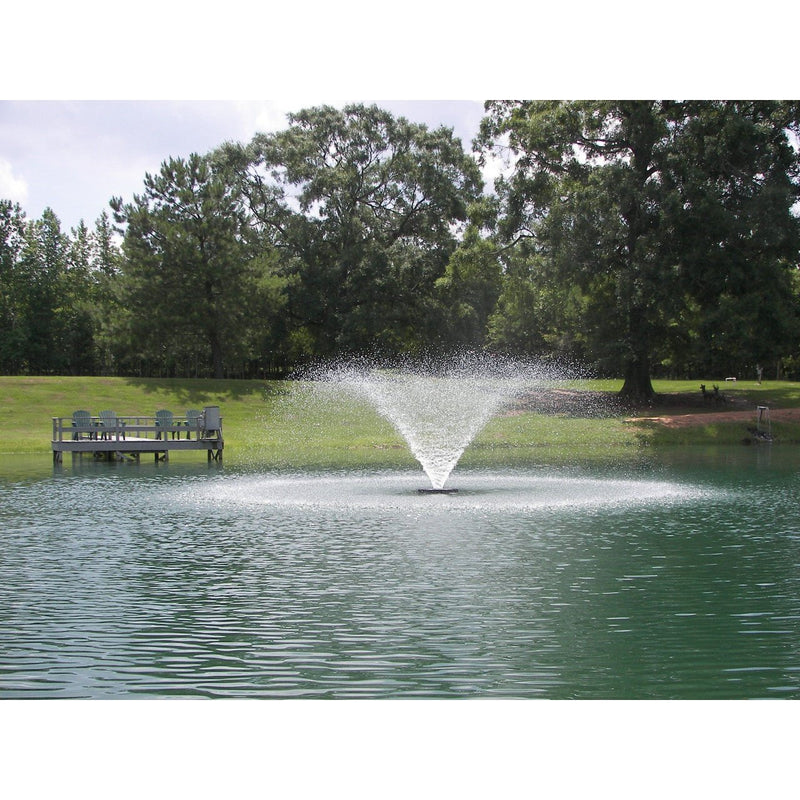
A 5-foot pond and a 15-foot pond are not the same. Using the wrong system is just throwing electricity away. Surface fountains look great, but in deep water, they leave the bottom stagnant. We break down why depth is the #1 factor in your aeration ROI.
Understanding the vertical profile of your water column is the first step in mechanical optimization. Many pond owners prioritize the visual aesthetics of a fountain without calculating the oxygen transfer efficiency at the sediment layer. This technical guide explores the relationship between hydrostatic pressure, gas solubility, and compressor selection.
Selecting an aeration system without verifying your maximum depth often leads to premature equipment failure and poor water quality. We will guide you through the physics of pond management to ensure your investment delivers measurable biological results.
Why Pond Depth Matters When Choosing An Aeration System
Pond depth determines the physical constraints of oxygen transfer and the mechanical requirements of the air compressor. In aquatic environments, water exerts pressure on every submerged object. This hydrostatic pressure increases linearly at a rate of 1 PSI for every 2.31 feet of depth.
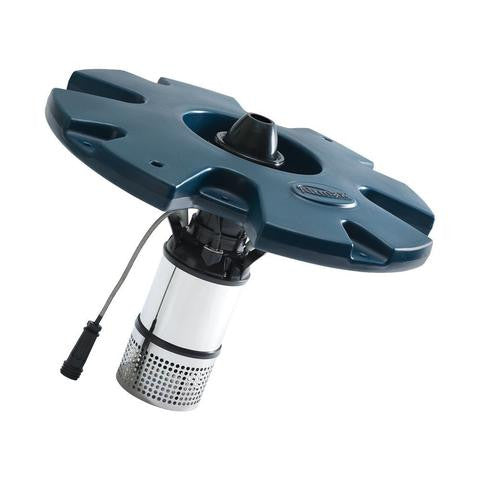
Standard surface systems rely on atmospheric contact to exchange gases. While effective for shallow basins, these units lack the torque to move dense, cold water from the bottom of a deep pond. Consequently, a deep pond with only surface aeration develops a thermocline, which is a sharp temperature gradient that separates the oxygenated top layer from the stagnant bottom.
Deep-water environments require systems that can overcome significant backpressure. Precision depth aeration uses the weight of the water column to its advantage, using rising bubbles to create a vertical current. Understanding the "pivot point" of depth—typically around 8 feet—is essential for choosing between surface and bottom-diffused systems.
How Bottom-Diffused Aeration Works
Bottom-diffused aeration operates on the principle of the "airlift" effect. An on-shore compressor pumps air through weighted tubing to a diffuser located at the deepest point of the pond. The diffuser breaks the air into millions of micro-bubbles, which rise toward the surface.
As these bubbles rise, they follow Boyle's Law, which states that the volume of a gas increases as the surrounding pressure decreases. This means the bubbles expand as they travel upward, increasing their surface area and their ability to "entrain" or pull water along with them. This process effectively moves thousands of gallons of water per minute from the bottom to the surface without moving parts in the water.
Fine bubble diffusers are the professional standard for this application. They produce bubbles smaller than 3mm, which have a slower rise velocity. A slower rise increases the "retention time" of the bubble in the water, allowing for a higher Oxygen Transfer Efficiency (OTE).
Benefits of Choosing a Depth-Optimized System
Matching your system to your pond's depth ensures the entire water column is oxygenated, not just the surface. This leads to the total elimination of the "dead zone" or hypolimnion. When oxygen reaches the bottom, aerobic bacteria can flourish and begin the process of muck decomposition.
Efficient gas exchange is another major advantage. Bottom-diffused systems allow toxic gases like hydrogen sulfide and methane to vent into the atmosphere as the bottom water reaches the surface. This prevents the "rotten egg" smell often associated with stagnant deep ponds.
Electricity consumption is significantly lower when using depth-appropriate systems. A 1/2 HP rocking piston compressor can often aerate a deep 1-acre pond more effectively than a 2 HP surface fountain. This is because the diffused system uses the natural buoyancy of air to do the heavy lifting of water circulation.
Challenges and Common Mistakes
Undersizing the compressor is the most frequent error in pond management. If a compressor is rated for a maximum of 10 PSI but is placed in 15 feet of water, it will operate at the edge of its mechanical limit. This causes excessive heat, reduces CFM (cubic feet per minute) output, and leads to the rapid failure of diaphragms or piston seals.
Choosing the wrong airline diameter is another pitfall. Friction loss within the tubing adds to the total system backpressure. Using a 3/8-inch airline for a run of 500 feet creates significant resistance. Upgrading to a 1/2-inch or 3/4-inch line reduces the workload on the compressor and increases the volume of air reaching the diffusers.
Seasonal turnover risks are often overlooked when starting an aeration system in an established pond. If you suddenly turn on a deep-water system in a pond that has been stagnant for years, the rapid mixing of toxic bottom water can deplete the surface oxygen. This can lead to a fish kill. Professional best practices dictate a "slow-start" procedure, running the system for only 30 minutes the first day and gradually increasing the duration over two weeks.
Limitations: When Subsurface Aeration May Not Be Ideal
Subsurface aeration is less efficient in very shallow water, typically less than 4 to 5 feet. In shallow environments, the bubbles do not have enough "runway" to expand and create a strong vertical current. The oxygen transfer rate is lower because the bubbles reach the surface too quickly.
Surface aerators or paddlewheels are often superior in shallow commercial aquaculture ponds. These units provide high-volume surface agitation which is more effective for rapid oxygenation when the water column is already relatively uniform in temperature.
Environmental debris can also limit the effectiveness of fine-bubble diffusers. In ponds with heavy leaf fall or high mineral content, the tiny pores in the diffuser membrane can become clogged. This requires regular maintenance, such as pulling the diffusers to clean them with a stiff brush or a weak acid solution.
Comparing Surface Guesswork vs. Precision Depth Aeration
The following table compares the performance metrics of a standard surface fountain versus a precision bottom-diffused system in a 12-foot deep pond.
| Feature | Surface Fountain (Standard) | Diffused Aeration (Precision) |
|---|---|---|
| Oxygenated Depth | Top 2–4 feet | Full water column (12 feet) |
| Energy Consumption | High (1.5 HP+) | Low (1/4 to 1/2 HP) |
| Muck Reduction | Minimal | Significant (Aerobic Digestion) |
| Mechanical Location | Motor in water | Compressor on shore |
| Primary Goal | Aesthetics / Surface O2 | Circulation / Ecosystem Health |
Precision depth aeration focuses on the Cubic Feet per Minute (CFM) delivered at a specific depth, whereas standard guesswork often focuses on Horsepower (HP) alone. In deep water, HP is a poor indicator of aeration performance if the air cannot reach the bottom.
Practical Tips for System Selection
Determine your maximum depth before browsing equipment. You can do this with a weighted string or a handheld depth finder. Knowing the exact depth allows you to calculate the required PSI for your compressor. Rule of thumb: Every 2.31 feet of depth requires 1 PSI just to push the air out of the diffuser.
Select the right compressor technology for your depth. Linear diaphragm compressors are whisper-quiet and highly efficient but are generally limited to depths under 7 or 8 feet. For ponds deeper than 8 feet, rocking piston compressors are necessary because they can handle the higher backpressure without losing significant airflow.
Use weighted airline for the portion of the tubing that will be in the water. Non-weighted "poly" tubing will float to the surface, creating a navigation hazard and an eyesore. Weighted tubing stays on the bottom and resists kinks, ensuring a steady flow of air to your diffusers.
Advanced Considerations: Calculating Turnover Rates
Serious practitioners calculate the turnover rate to ensure the system is sized correctly. A "turnover" is defined as moving the entire volume of the pond to the surface once every 24 hours. For ponds with high nutrient loads or heavy fish populations, you may aim for two turnovers per 24-hour period.
The formula for turnover involves the GPM (gallons per minute) moved by the bubble column. A single diffuser at a depth of 10 feet moving 1 CFM of air can move approximately 300 to 500 gallons of water per minute. If your pond contains 500,000 gallons, you need a system that can move roughly 350 GPM to achieve one full turnover per day.
Total Dynamic Head (TDH) is another advanced metric. This is the sum of the hydrostatic pressure at depth plus the friction loss in the airline and the resistance of the diffuser itself. Always check the compressor's performance curve to see how many CFM it delivers at your calculated TDH, not just its "open flow" rating.
Example Scenarios: 5-Foot Pond vs. 15-Foot Pond
Consider two ponds, both 1 acre in size. Pond A is a consistent 5 feet deep, and Pond B is 15 feet deep.
In Pond A, a surface aerator or a large linear diaphragm system with multiple diffusers would work well. The low pressure (approx. 2.16 PSI) allows the linear pump to operate efficiently and move a high volume of air. The shallow water ensures that even a surface unit can provide decent mixing of the entire column.
In Pond B, the hydrostatic pressure at the bottom is approximately 6.5 PSI. A linear diaphragm pump would likely fail within months due to the backpressure. A rocking piston compressor is required here. Furthermore, because Pond B has three times the depth, the "airlift" effect is much stronger. A single diffuser at 15 feet in Pond B will move significantly more water than a single diffuser at 5 feet in Pond A.
Final Thoughts
Pond depth is the single most important variable in designing an effective aeration system. Ignoring the vertical reality of your water column leads to "Standard Surface Guesswork," which often results in high energy bills and unresolved water quality issues. Precision depth aeration ensures that every watt of electricity spent translates into moving and oxygenating the water where it matters most.
By matching your compressor technology and diffuser placement to the actual contours of your pond, you create a sustainable ecosystem. This technical approach reduces muck, prevents fish kills, and keeps the water clear throughout the hottest summer months.
Invest the time to measure your depth and calculate your backpressure before making a purchase. The difference between a thriving pond and a stagnant one is often found in the physics of the system you choose. Applying these mechanical principles will ensure your aeration project provides a high return on investment for years to come.