

The Truth About Pond Fountains: Do They Really Aerate Water?
Fountains are for the eyes. Aerators are for the ecosystem. Do you know which one your pond needs? Most fountains are 'surface-only' solutions. If you have fish or muck issues, you need to look beneath the spray. Here is the truth about pond fountains.
Managing a body of water requires a focus on dissolved oxygen (DO) levels and thermal stratification. While a decorative display provides aesthetic value, it rarely addresses the mechanical requirements of a deep-water ecosystem. Understanding the distinction between surface agitation and subsurface circulation is the first step in effective pond management.
This article examines the technical specifications, efficiency metrics, and biological impacts of various aeration methods. Data-driven decisions regarding equipment selection can prevent catastrophic fish kills and reduce long-term maintenance costs. We will analyze how these systems function from a mechanical and chemical perspective.
The Truth About Pond Fountains: Do They Really Aerate Water?
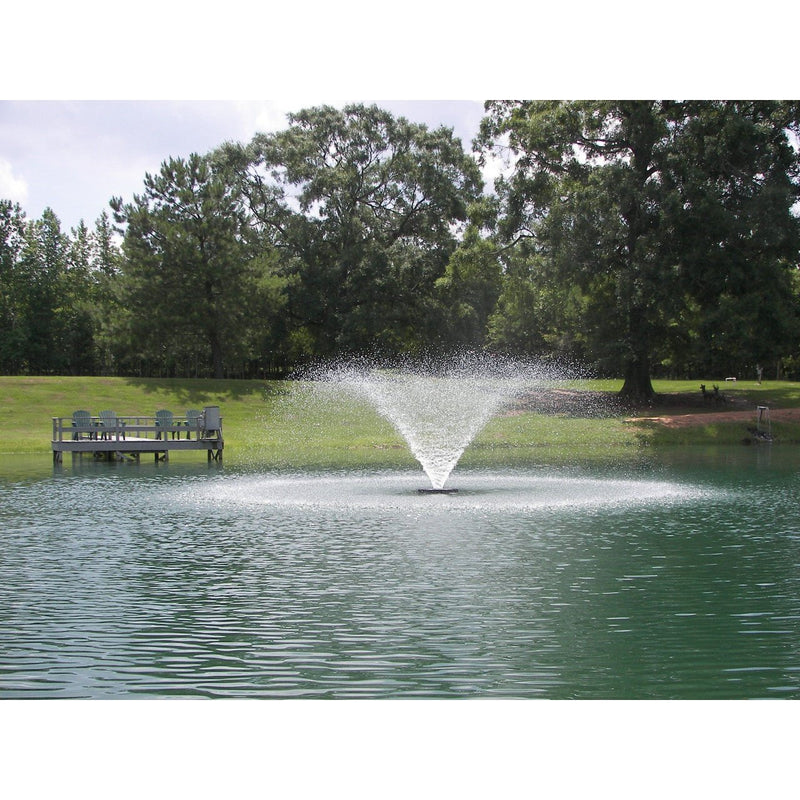
Pond fountains are primarily designed for visual impact rather than high-efficiency gas exchange. They function by drawing water from the upper layers of the pond and propelling it into the atmosphere. This process facilitates some oxygen transfer through surface contact and droplet-to-air exposure, but its reach is physically limited.
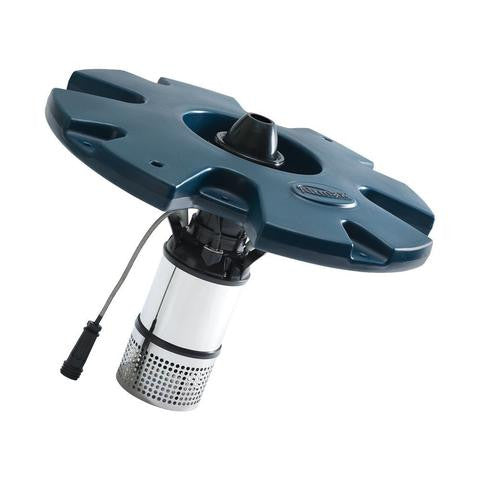
Most decorative fountains utilize a high-pressure impeller to achieve dramatic spray heights. This mechanical configuration restricts the volume of water being moved in favor of velocity. Consequently, the Standard Aeration Efficiency (SAE) of decorative fountains typically ranges between 1.5 and 2.5 lbs of oxygen per horsepower per hour (O2/hp·hr).
In real-world applications, these systems only impact the top 6 to 8 feet of the water column. In ponds deeper than 10 feet, a fountain leaves the bottom layer—the hypolimnion—completely stagnant. This lack of circulation allows for the accumulation of toxic gases and organic muck, regardless of how impressive the surface spray appears.
Mechanical Processes of Oxygen Transfer
Oxygen enters water through two primary mechanical pathways: atmospheric diffusion at the surface and pressurized injection via subsurface systems. The efficiency of these processes is measured by the Standard Oxygen Transfer Rate (SOTR), which quantifies the amount of oxygen added under controlled conditions.
Surface aerators and fountains rely on splashing to increase the air-water interfacial area. As droplets fall back into the pond, they carry atmospheric oxygen into the surface layer. However, the energy required to lift water into the air is significantly higher than the energy required to move air into the water.
Subsurface diffused aeration works on the principle of "airlift." A shore-based compressor pumps air through weighted tubing to diffusers on the pond floor. These diffusers release micro-bubbles that rise through the water column. As they rise, they create a vertical current that pulls cold, oxygen-depleted water from the bottom to the surface.
Fine-bubble diffusers are the industry standard for professional-grade circulation. These units produce bubbles between 1mm and 3mm in diameter. The smaller the bubble, the higher the surface-area-to-volume ratio, resulting in a Standard Oxygen Transfer Efficiency (SOTE) of approximately 2% per foot of depth.
Practical Benefits of High-Volume Circulation
The most measurable benefit of proper aeration is the disruption of thermal stratification. By eliminating the thermocline, a system ensures that dissolved oxygen is distributed uniformly from the surface to the basin floor. This creates a larger habitable zone for fish and prevents "turnover" events caused by sudden weather changes.
Biological decomposition rates are directly tied to oxygen availability. Aerobic bacteria, which require oxygen, decompose organic matter (muck) 20 to 30 times faster than anaerobic bacteria. In some high-efficiency systems, this rate of decomposition can be up to 1,000 times faster, preventing the "rotten egg" smell caused by hydrogen sulfide gas.
Nutrient management is another critical advantage. In an oxygen-rich environment, phosphorus—the primary fuel for algae—binds to iron and settles into the sediment. This process, known as phosphorus sequestration, effectively "locks" nutrients away, making them unavailable for nuisance algal blooms.
Challenges and Common Implementation Mistakes
Undersizing is the most frequent error in pond management. Many operators select a system based on surface acreage without accounting for depth or biological oxygen demand (BOD). A pond with a high "muck" load requires more intensive circulation to overcome the oxygen consumed by decaying organic matter.
Incorrect placement of diffusers can lead to "dead zones." If diffusers are grouped too closely or placed only in the deepest section of an irregular pond, the shallower bays may remain stagnant. Strategic mapping of the pond floor is necessary to ensure the entire volume of water is "turned over" at least once every 24 hours.
Ignoring the "startup" protocol in existing ponds can lead to immediate fish kills. If a powerful aeration system is turned on for the first time in a stagnant, mucky pond, it will rapidly mix toxic gases (methane and hydrogen sulfide) into the upper layers. This "shock" can deplete all available oxygen in minutes. A staggered startup—running the system for only 30-60 minutes on the first day and gradually increasing runtime—is mandatory.
Limitations of Aeration Technology
Aeration is not a "magic bullet" for every water quality issue. While it manages nutrients and oxygen, it does not physically remove inorganic silt or sand. If a pond is filling in with road runoff or clay, mechanical dredging is the only viable solution.
Depth constraints also dictate equipment effectiveness. In very shallow ponds (less than 4-6 feet), diffused aeration is inefficient because the bubbles reach the surface too quickly to create significant lift. In these scenarios, high-volume surface aerators (distinct from decorative fountains) are the superior choice.
Electrical constraints can limit system scalability. High-horsepower fountains require significant amperage and specialized underwater cabling, which increases installation complexity. Subsurface systems, conversely, keep the electrical components on shore, but the distance between the compressor and the diffusers is limited by friction loss in the air tubing.
Technical Comparison: Aesthetic vs. Pro-Grade Systems
The following table compares the performance metrics of standard decorative fountains versus professional-grade subsurface diffused aeration systems.
| Feature | Decorative Fountain | Subsurface Diffused Aeration |
|---|---|---|
| Primary Goal | Visual Aesthetics | Total Water Health |
| SAE Rating | 1.5 – 2.5 O2/hp·hr | 4.0 – 7.0+ O2/hp·hr |
| Depth Effectiveness | Surface only (< 8ft) | Unlimited (Effective to 50ft+) |
| Operational Cost | High (High Wattage) | Low (Efficiency per CFM) |
| Muck Reduction | Negligible | High (Accelerates Aerobic Decay) |
| Electricity in Water | Yes (Motor/Lights) | No (Air only) |
Practical Best Practices for Operation
Run systems 24 hours a day during the growing season. Photosynthesis provides oxygen during daylight, but at night, plants and algae consume oxygen, leading to "nocturnal oxygen sags." Constant aeration stabilizes these fluctuations.
Monitor the "boil" at the surface. For diffused systems, the surface agitation created by the rising bubbles should be visible and vigorous. If the boil weakens over time, it likely indicates a clogged diffuser membrane or a leak in the air line. Regular cleaning of intake filters on shore-based compressors is also required to maintain CFM (Cubic Feet per Minute) output.
Integrate biological additives with aeration. Adding concentrated aerobic bacteria treatments (muck pellets) is significantly more effective when the water is highly oxygenated. The aeration provides the oxygen necessary for these microbes to thrive and consume organic waste at peak efficiency.
Advanced Considerations for Large-Scale Management
Calculating the "turnover rate" is essential for professional practitioners. A turnover rate of 1.0 means the entire volume of the pond is moved through the aeration process once every 24 hours. For ponds with heavy nutrient loads or high fish densities, a turnover rate of 2.0 or higher may be required.
Standardized sizing involves determining the total acre-feet of the water body. One acre-foot is approximately 325,851 gallons. For diffused systems, a baseline of 1 to 1.5 CFM per surface acre is generally recommended, but this must be adjusted based on the total volume and depth-to-surface-area ratio.
Friction loss in air tubing (pressure drop) can significantly impact system performance. Using 1/2-inch or 3/4-inch weighted tubing for long runs (over 500 feet) minimizes backpressure on the compressor. Excessive backpressure increases heat and wear on the motor, leading to premature mechanical failure.
Scenario: Restoring a 2-Acre Legacy Pond
Consider a 2-acre pond with a maximum depth of 12 feet and a 12-inch layer of organic muck. A 1-HP decorative fountain is currently installed. The owner reports frequent algae blooms and a "swampy" odor in mid-August.
The diagnostic reveals that the fountain is only circulating the top 5 feet of water. Below the 5-foot mark, the water is anoxic (zero oxygen). The 12 inches of muck are undergoing anaerobic decomposition, releasing phosphorus that fuels the surface algae.
The recommended solution is to bypass the fountain's role in aeration and install a 1/2-HP diffused aeration system with four diffuser stations. This system provides 4.5 CFM of air. By placing diffusers in the deepest sections, the airlift effect will turn over the entire 2-acre volume 1.5 times per day. Within 60 days, the DO levels at the bottom will rise, phosphorus will begin to sequester, and the muck layer will start to consolidate through aerobic oxidation.
Final Thoughts
Selection between a fountain and an aerator depends entirely on the primary objective. If the goal is purely aesthetic and the pond is shallow, a fountain serves the purpose. However, for any pond intended to support a healthy fish population or reduce muck accumulation, a subsurface aeration system is a mechanical necessity.
Data indicates that diffused aeration offers the highest oxygen transfer efficiency for every dollar spent on electricity. By addressing the water column from the bottom up, these systems tackle the root causes of water quality degradation rather than merely masking the symptoms with a surface spray.
Implementing a professional-grade circulation strategy requires an initial investment in sizing and placement. However, the long-term reduction in chemical treatments and the prevention of fish kills provide a clear return on investment. Efficient aeration is the foundation of any sustainable aquatic ecosystem.