

Why Pond Depth Matters More Than Pond Size When Choosing an Aerator
A 1-acre pond that is 5ft deep needs a totally different system than a 1-acre pond that is 20ft deep. If you buy an aerator based only on the size of your pond, you're making a huge mistake. The deeper the water, the more pressure your pump needs. Here is how to calculate it properly.
Selecting an aeration system based purely on surface acreage is a common engineering oversight in pond management. While surface area dictates the volume of water requiring circulation, the depth of the water column determines the mechanical workload required from the air compressor. This technical distinction is the difference between a system that functions for years and one that fails prematurely due to mechanical strain.
Modern aeration logic has moved from simple Surface Area Focus to a rigorous Volume & Depth Logic. This transition is necessary because water is a heavy medium. At the bottom of a pond, the air compressor must push air against the cumulative weight of the water above it, a force known as hydrostatic back-pressure. Without calculating this pressure, an aerator cannot deliver the necessary Cubic Feet per Minute (CFM) to maintain Dissolved Oxygen (DO) levels.
Why Pond Depth Matters More Than Pond Size When Choosing an Aerator
Pond depth is the primary variable in determining the required Pounds per Square Inch (PSI) for an aeration system. Hydrostatic pressure increases linearly with depth. For every foot of water depth, a compressor must overcome approximately 0.433 PSI of back-pressure. Consequently, a diffuser placed at 20 feet requires a compressor capable of pushing against nearly 9 PSI just to release the first bubble, whereas a 5-foot pond only generates 2.16 PSI of resistance.
In real-world applications, depth dictates the type of compressor technology required. Shallow ponds under 8 feet can often be serviced by linear diaphragm pumps, which are energy-efficient but have low pressure ceilings. Deeper ponds require rocking piston compressors or rotary vane systems that can maintain airflow at high-pressure thresholds. If a low-pressure pump is forced to operate at depths beyond its design limit, the internal diaphragm or piston stroke is physically restricted by the back-pressure, leading to overheating, component fatigue, and eventual motor failure.
Depth also influences Oxygen Transfer Efficiency (OTE). As bubbles rise from a deep-water diffuser, they have a longer "hang time" in the water column. This extended contact time allows for more efficient gas exchange. Furthermore, the "lifting effect" or airlift created by rising bubbles is more powerful in deep water. A diffuser at 15 feet might move 4.5 million gallons of water per day, while the same diffuser at 30 feet can move up to 16.7 million gallons due to the increased volume of the bubble plume.
The Physics of Back-pressure: Calculating PSI Requirements
Calculating the total system pressure is the first step in mechanical optimization. This calculation must account for three distinct sources of resistance: hydrostatic pressure, diffuser resistance, and friction loss within the airline.
The formula for hydrostatic back-pressure is: PSI = Depth (ft) / 2.31. Using this constant (where 2.31 feet of water equals 1 PSI), a 10-foot depth produces 4.33 PSI. This is the baseline resistance.
Next, factor in the mechanical resistance of the diffuser itself. Fine-bubble membrane diffusers require a certain amount of "cracking pressure" to open the pores and release air. Most high-quality EPDM membranes add between 0.5 and 1.0 PSI of back-pressure to the system. Coarser diffusers may have lower resistance but offer significantly reduced oxygen transfer rates.
Finally, friction loss in the tubing must be calculated. As air travels through the airline, it rubs against the interior walls, creating heat and resistance. This resistance increases with the length of the run and the velocity of the air (CFM), and decreases as the tube diameter increases. For example, pushing 2.0 CFM through 100 feet of 3/8" ID tubing adds roughly 0.45 PSI, whereas using 1/2" ID tubing for the same run reduces that friction loss significantly. Total system pressure is the sum of these three variables.
Compressor Technology: Matching Mechanics to Depth
Choosing the correct "engine" for the aeration system requires matching the compressor's performance curve to the calculated total system pressure. There are three primary types of compressors used in pond aeration.
Linear Diaphragm Compressors
Linear diaphragm pumps operate using an electromagnetic shaft that moves back and forth, vibrating two rubber diaphragms. These systems are extremely quiet and draw very little power, making them ideal for residential ponds and koi habitats. However, their mechanical stroke is limited. If the back-pressure from a deep pond is too high, the shaft cannot complete its full range of motion. This reduces airflow drastically and causes the pump to run hot. These are generally restricted to ponds less than 8 feet deep.
Rocking Piston Compressors
Rocking piston compressors are the industrial standard for deep-water aeration. They utilize a piston and cylinder assembly, similar to an automotive engine but without the oil-based lubrication (air systems must be oil-less to prevent water contamination). These units can easily handle pressures of 30 to 50 PSI, making them suitable for ponds up to 40 or 50 feet deep. They are more durable than diaphragm pumps but generate more noise and vibration.
Rotary Vane Compressors
Rotary vane systems use a rotating offset rotor with sliding carbon vanes. They are known for providing high volumes of air (high CFM) at moderate pressures (up to 15-18 PSI). They are simpler to rebuild than rocking pistons and provide a very consistent airflow. These are often the preferred choice for large, mid-depth ponds (10-18 feet) where high turnover rates are required to combat heavy nutrient loads.
Determining Airflow Requirements (CFM)
Airflow is measured in Cubic Feet per Minute (CFM) and determines the system’s ability to circulate the entire volume of the pond. The objective is to achieve at least one full turnover of the pond's volume every 24 hours. For ponds with high fish stocking or heavy algae growth, two turnovers per day may be necessary.
A general baseline for a 1-acre pond is 1.5 to 4.0 CFM. However, the volume must be considered. A 1-acre pond with an average depth of 5 feet contains approximately 1.6 million gallons. A 1-acre pond with an average depth of 20 feet contains 6.5 million gallons. The deeper pond requires significantly more CFM to achieve the same turnover rate, despite having the exact same surface footprint.
When reviewing compressor specifications, always look for the CFM rating at the specific depth of your pond. Most manufacturers provide a flow chart showing how CFM drops as PSI (depth) increases. A pump rated at 5 CFM at 0 PSI might only deliver 2.5 CFM at 10 PSI. If your calculation requires 3 CFM at depth, that pump will be undersized for your application.
Benefits of Deep-Water Diffused Aeration
Implementing a correctly sized diffused aeration system provides several mechanical and biological advantages that surface aerators cannot match.
Thermal stratification occurs when a pond develops a warm upper layer (epilimnion) and a cold, oxygen-depleted bottom layer (hypolimnion). This separation is dangerous because the bottom layer becomes a "dead zone" where anaerobic bacteria produce harmful gases like methane and hydrogen sulfide. A bottom-diffused system breaks this thermocline by physically lifting the cold water to the surface, where it can vent gases and absorb atmospheric oxygen.
Deep-water systems also facilitate nutrient cycling. When oxygen is present at the pond floor, aerobic bacteria can efficiently decompose organic "muck" and sludge. This process sequesters phosphorus in the sediment, preventing it from fueling algae blooms. By maintaining high DO levels at the bottom, you effectively "starve" the algae and improve overall water clarity.
Challenges and Common Mistakes
The most frequent error in pond aeration is under-sizing the compressor's pressure capability. When a compressor is overworked by excessive back-pressure, several mechanical failures occur:
- Heat Fatigue: Over-pressurization causes the air to become excessively hot. This heat degrades the rubber diaphragms or piston cups, leading to a rapid loss of CFM.
- Shortened Maintenance Cycles: A system that should last 3 years between rebuilds may fail in 6 months if operated at its maximum PSI limit.
- Tubing Failures: High heat at the compressor outlet can cause standard PVC tubing to soften and burst. Weighted, heat-resistant lead-free tubing is required for the first 15-20 feet of any high-pressure system.
Another mistake is placing diffusers in "pockets" rather than at the maximum depth. To maximize circulation, diffusers should be placed in the deepest parts of the pond. If a 1-acre pond has a 20-foot hole and the rest is 10 feet deep, placing the diffuser in the 20-foot hole ensures that the entire water column is engaged in the circulation loop.
Limitations: When This Approach May Not Be Ideal
While bottom-diffused aeration is superior for depth, it has limitations in very shallow water. If a pond is less than 4 feet deep, the bubble plume does not have enough vertical travel time to create a significant "airlift" effect. In these instances, the cone of water moved by the diffuser is too narrow to provide effective circulation for a large area.
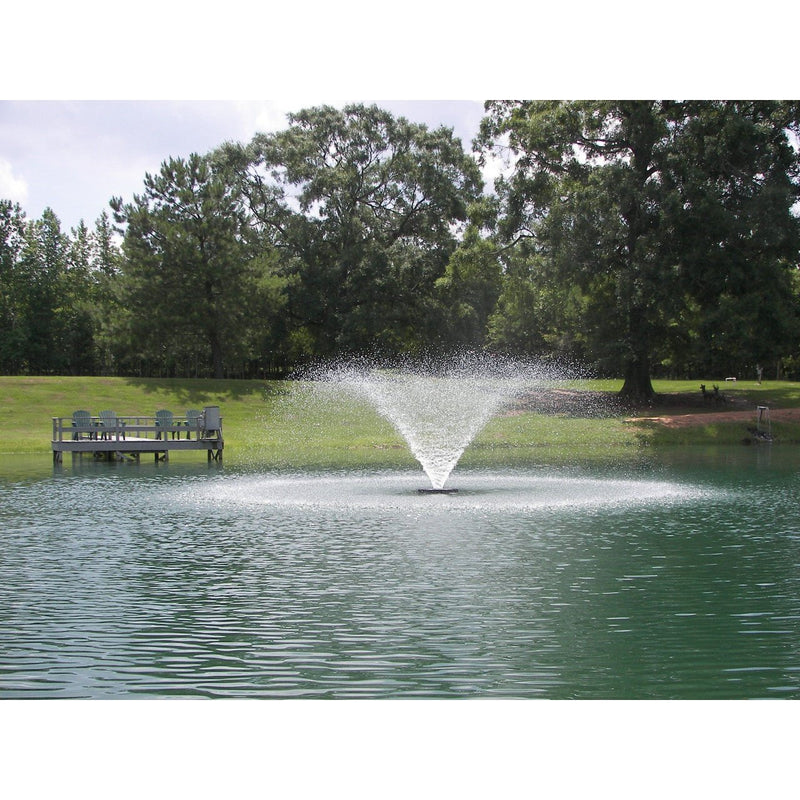
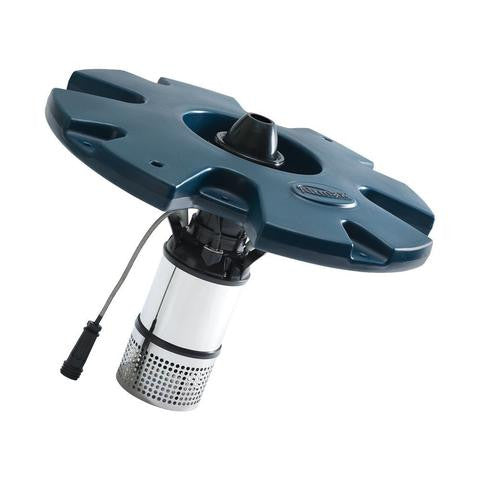
In extremely shallow, large-acreage ponds, surface aerators or fountains may be more efficient. Surface units specialize in high-volume oxygen transfer at the surface interface and create horizontal currents that are more effective in shallow environments. Additionally, in hyper-eutrophic ponds with massive existing sludge layers, starting an aeration system at full power can cause "turnover shock," where oxygen-depleted bottom water is mixed too quickly, potentially leading to fish kills. A staggered start-up schedule is required in these scenarios.
Comparison: Linear Diaphragm vs. Rocking Piston
| Feature | Linear Diaphragm | Rocking Piston |
|---|---|---|
| Max Depth | 8 Feet | 40+ Feet |
| Pressure Ceiling | ~10 PSI | ~30+ PSI |
| Noise Level | Very Low (35-45 dB) | Moderate (60-70 dB) |
| Energy Efficiency | Excellent (Low Watts) | Good (Industrial Load) |
| Primary Use | Koi Ponds, Shallow Gardens | Lakes, Deep Farm Ponds |
Practical Tips for System Optimization
Optimizing a pond aeration system requires attention to the infrastructure connecting the compressor to the water. Tubing diameter is critical. For runs under 50 feet, 3/8" tubing is acceptable. For runs between 50 and 150 feet, 1/2" tubing is necessary to keep friction loss manageable. If the compressor is located more than 200 feet from the pond, 3/4" or even 1" PVC pipe should be buried to act as a low-resistance main line.
Always install a pressure gauge at the compressor outlet. A gauge is the most important diagnostic tool in the system. If the pressure reads higher than the calculated depth PSI, you likely have a clog in the diffuser or a kink in the line. If the pressure is lower than expected, you have a leak.
Winter operation requires specific adjustments. If you are aerating to prevent a winter fish kill, the diffuser should be moved to a shallower shelf (roughly 1/3 the maximum depth). Keeping a diffuser at the deepest point in winter can super-chill the water by mixing the warm bottom layer with the freezing surface air, which can be lethal to certain fish species.
Advanced Considerations: DO Monitoring and VFDs
For serious practitioners managing high-value ponds or commercial aquaculture, relying on visual bubble patterns is insufficient. Dissolved Oxygen (DO) meters should be used to verify that the system is maintaining at least 5.0 mg/L of oxygen throughout the water column. DO levels fluctuate based on temperature and time of day, typically bottoming out just before dawn.
Advanced systems may also utilize Variable Frequency Drives (VFDs) on larger compressors. A VFD allows you to modulate the motor speed based on real-time oxygen demand. This is particularly useful in ponds with variable seasonal loads, allowing for energy savings during cool months when oxygen solubility is naturally higher, and maximum output during the "critical period" of late summer.
Scenario: 1-Acre Pond Comparison
To illustrate the necessity of depth-based sizing, consider two distinct 1-acre ponds.
Pond A: 1 Acre, 5ft Max Depth.
Surface Area: 1 Acre.
Volume: ~1.3 million gallons.
Pressure Requirement: (5 / 2.31) = 2.16 PSI.
Total System Pressure (with 0.5 PSI diffuser resistance): 2.66 PSI.
Recommended System: A high-volume linear diaphragm pump producing 4-5 CFM at 3 PSI. This system would be energy-efficient and quiet.
Pond B: 1 Acre, 20ft Max Depth.
Surface Area: 1 Acre.
Volume: ~4.5 million gallons.
Pressure Requirement: (20 / 2.31) = 8.66 PSI.
Total System Pressure (with 1.0 PSI diffuser and tubing friction): 10.0 PSI.
Recommended System: A 1/2 HP rocking piston compressor. A linear pump would fail immediately at this depth. The rocking piston is necessary to overcome the 10 PSI barrier while still delivering the higher CFM required by the larger volume of water.
Final Thoughts
Designing a pond aeration system is a mechanical engineering task that requires precise data. Sizing an aerator by surface area alone ignores the fundamental physics of hydrostatic pressure and volume. By calculating the total dynamic head of the system and matching it to the correct compressor technology, you ensure long-term mechanical reliability and optimal biological health for the water body.
The investment in a higher-pressure rocking piston or rotary vane compressor is often offset by reduced maintenance costs and the prevention of catastrophic fish kills. Technical accuracy in the planning stage prevents the common cycle of component failure and system under-performance.
Whether managing a small irrigation pond or a deep recreational lake, the focus must remain on the depth. Understand the back-pressure, calculate the friction loss, and select a compressor that operates comfortably within its design curve. This data-driven approach is the only way to guarantee a healthy, aerobic environment for the long term.