

How Much Electricity Does a Pond Aerator Actually Use?
Aerating your pond shouldn't cost as much as running your AC. Most pond owners overpay for electricity by using the wrong pumps. Learn how to get maximum oxygen for pennies a day using high-efficiency air compressors.
The operational cost of a pond depends primarily on the mechanical efficiency of its aeration system. Standard water pumps designed for waterfalls or fountains are often repurposed for aeration, yet they represent a significant waste of energy. Moving liquid is physically more demanding than compressing air, leading to a massive discrepancy in wattage requirements for the same dissolved oxygen (DO) gain.
High-efficiency air compressors utilize specific mechanical designs—such as linear diaphragms or rocking pistons—to deliver air directly to the pond floor. This method leverages the physics of the water column to maximize gas transfer. Understanding the data behind these systems allows a pond owner to maintain water quality without the financial burden of industrial-scale utility bills.
Efficiency in this context is measured by how much oxygen is dissolved into the water per watt of electricity consumed. Switching from a surface-based splash aerator to a sub-surface diffused system often results in a 60% to 80% reduction in power draw while simultaneously increasing the volume of water being treated.
How Much Electricity Does a Pond Aerator Actually Use?
Determining the electricity consumption of a pond aerator requires analyzing the pump’s wattage, runtime, and the local utility rate. Most professional-grade aeration compressors are designed for 24/7 operation, making their power draw a constant variable in a household's energy profile. A standard high-efficiency linear diaphragm pump typically draws between 20 and 100 watts, depending on the model and the depth at which it is operating.
To calculate the cost, use the standard electrical formula: (Amps × Volts) = Watts. For example, a common linear pump drawing 0.6 amps on a 120V circuit utilizes approximately 72 watts. Over a 24-hour period, this equals 1.728 kilowatt-hours (kWh). At a national average rate of $0.16 per kWh, this system costs approximately $0.27 per day, or roughly $8.20 per month.
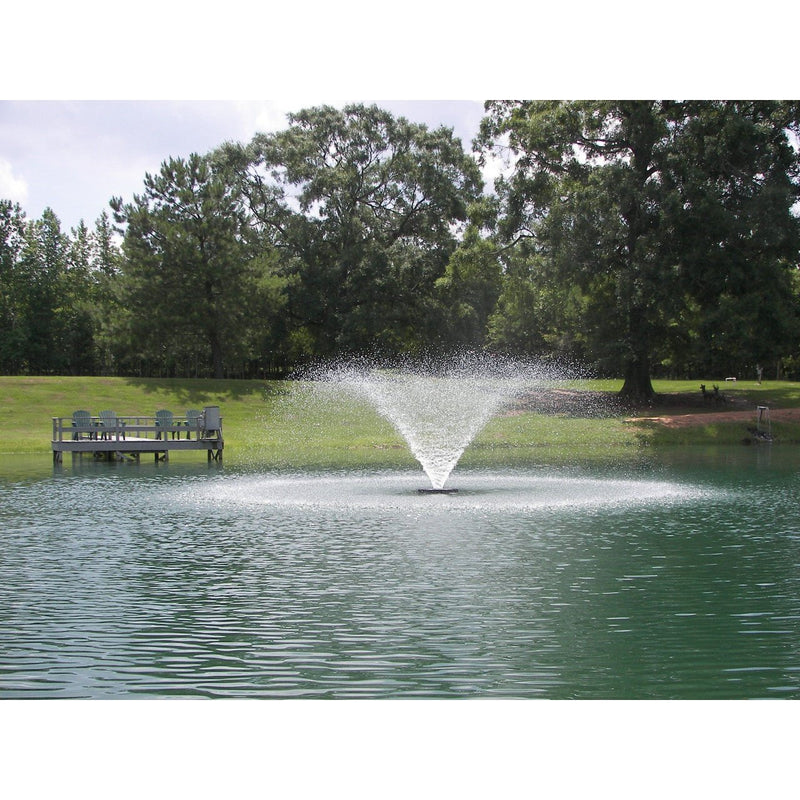
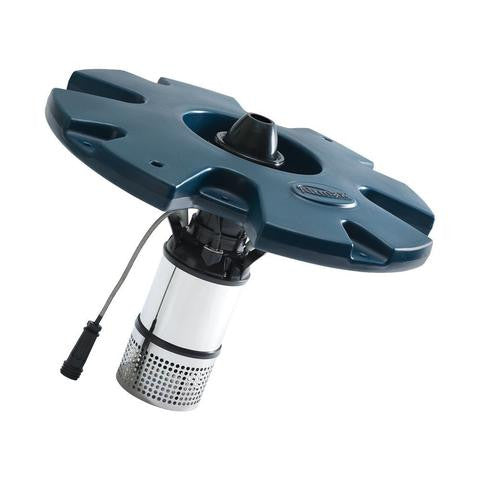
In contrast, a 1-horsepower surface fountain or a high-volume water pump might draw 750 to 1,000 watts. Running a 1,000-watt (1 kW) pump 24/7 consumes 24 kWh per day. At the same $0.16 rate, that costs $3.84 per day or $115.20 per month. The mechanical disparity is clear: the air compressor achieves superior oxygenation for less than 10% of the operational cost of the water pump.
Depth also influences power draw. As a compressor pushes air deeper into the water, it encounters increased backpressure. For every 2.31 feet of depth, the compressor must overcome 1 PSI (pound per square inch) of water pressure. Most compressors show a slight increase in amperage as the PSI rises, though high-efficiency units are engineered to maintain a relatively flat power curve within their intended operating range.
Mechanical Architectures of High-Efficiency Compressors
The "Expensive Inefficiency vs High-Efficiency Flow" debate is centered on how air is compressed and delivered. There are three primary mechanical designs used in high-efficiency pond aeration, each optimized for specific depth and volume parameters.
Linear Diaphragm Compressors
Linear diaphragm pumps are the most efficient option for shallow water applications, typically under 8 feet in depth. They operate using electromagnetic oscillation. An internal magnet is suspended between two electromagnets; as the AC current alternates, the magnet vibrates back and forth at 60 cycles per second. This movement flexes a rubber diaphragm, which draws in air and pushes it out through a check valve.
Because there are no rotating parts, friction is nearly eliminated. This allows the pump to operate at extremely low wattages—often under 40 watts for a system capable of aerating a 10,000-gallon pond. The primary trade-off is pressure; these units cannot easily overcome the resistance found in deep water, where the diaphragms may struggle to flex against high backpressure.
Rocking Piston Compressors
For ponds deeper than 8 feet, rocking piston compressors are the technical standard. These units feature a piston that "rocks" within a cylinder, sealed by a high-durability cup. Unlike a standard air compressor used for power tools, these are "oil-less," meaning they do not introduce lubricants into the air stream that could contaminate the water.
Rocking pistons can generate significantly higher PSI, allowing diffusers to be placed 20, 30, or even 50 feet deep. While they draw more power than linear pumps (typically 150 to 300 watts), they are still far more efficient than any water pump alternative. Their longevity is also a factor; they are designed for years of continuous service with minimal maintenance.
Rotary Vane Compressors
Rotary vane systems use a series of carbon vanes that spin within a chamber to move large volumes of air at medium pressure. These are frequently used in large-scale pond or lake applications where multiple diffusers are required. They are mechanically simple and provide a very consistent air flow, though they generally have a higher noise profile and slightly higher wattage draw per CFM (cubic foot per minute) than rocking pistons.
The Physics of Oxygen Transfer Efficiency (OTE)
The primary benefit of using an air compressor over a water pump is the Oxygen Transfer Efficiency (OTE). OTE is a metric that describes the percentage of oxygen from the air bubbles that actually dissolves into the water. In a surface-splashing system, like a fountain, OTE is notoriously low—often between 1% and 3%.
In a diffused aeration system, air is pumped to the bottom of the pond and released through a fine-bubble diffuser. As these millions of tiny bubbles rise through the water column, they provide a massive surface area for gas exchange. In 10 feet of water, a fine-bubble system can achieve an OTE of 15% to 20%. The deeper the water, the higher the efficiency, because the bubbles spend more time in contact with the water before reaching the surface.
Furthermore, the rising bubbles create a "chimney effect" known as an airlift. This upward current pulls oxygen-depleted water from the bottom of the pond to the surface, where it can vent toxic gases like carbon dioxide and hydrogen sulfide. A single 1-CFM compressor can move thousands of gallons of water per hour using only the energy of rising air bubbles, a feat that would require a massive, energy-hungry water pump to replicate mechanically.
Challenges and Common Efficiency Pitfalls
Even the most efficient compressor can be rendered inefficient through poor system design. The most common mistake is the use of undersized airlines. Air is a fluid; when forced through a small-diameter pipe over a long distance, it creates friction. This friction adds backpressure to the compressor, increasing heat and power consumption while reducing air output at the diffuser.
Another frequent error is the use of "stone" diffusers instead of EPDM membrane diffusers. Traditional air stones have high initial backpressure and tend to clog with mineral deposits or algae over time. As they clog, the compressor has to work harder to push the same amount of air, leading to premature diaphragm or piston cup failure. Modern membrane diffusers are designed to "flex" when the air turns on, which helps shed debris and maintain low backpressure throughout the life of the system.
Improper depth placement also impacts performance. Placing a linear diaphragm pump at a depth beyond its rated PSI will cause the internal magnet to hit the stroke limiters, causing a "knocking" sound and rapidly destroying the diaphragms. Always match the compressor's pressure curve to the actual depth of the diffuser, accounting for the 0.43 PSI per foot of water plus roughly 0.5 PSI for airline friction.
Limitations of High-Efficiency Air Compressors
While air compressors are superior for oxygenation and circulation, they have limitations in specific environments. They are not designed to create high-velocity water movement. If the goal is to physically "sweep" debris or muck into a specific area using a jet of water, a dedicated water pump is required. Aerators create vertical circulation, not horizontal "push."
Environmental temperature also plays a role. In extremely hot climates, an air compressor mounted in direct sunlight can overheat. High-efficiency units are often housed in ventilated cabinets, but they still require a shaded, well-ventilated location to ensure the motor does not exceed its thermal limits. In winter, if the airline is not buried below the frost line or lacks a proper moisture trap, condensation can freeze within the line, creating a total blockage and potential damage to the compressor.
Lastly, diffused aeration may not be ideal for very shallow ponds (under 2 feet). In shallow water, the "chimney effect" is minimized because the bubbles reach the surface too quickly. In these scenarios, the energy spent compressing air to the bottom might be better used by a small, high-efficiency surface aerator or a decorative water feature that provides surface agitation.
Comparing Aeration Methods: Data Table
The following table compares the typical performance metrics of different aeration technologies for a 1-acre pond with a 10-foot depth.
| System Type | Typical Wattage | Oxygen Transfer (OTE) | Monthly Cost (@ $0.16/kWh) |
|---|---|---|---|
| Decorative Fountain (1 HP) | 1,000W | 1.5 - 2.5% | $115.20 |
| Surface Splasher (1/2 HP) | 550W | 3.0 - 5.0% | $63.36 |
| Rocking Piston (Diffused) | 220W | 15 - 20% | $25.34 |
| Linear Diaphragm (Shallow) | 60W | 8 - 12% (at 6ft) | $6.91 |
Practical Tips for System Optimization
To maximize the "pennies a day" promise, start by installing the compressor as close to the power source as possible. It is much cheaper and more efficient to run 500 feet of weighted airline than it is to run 500 feet of electrical wire. Voltage drop over long electrical runs can cause compressors to run hot and inefficiently.
Use weighted airline (sink-and-rise) for all underwater sections. Non-weighted tubing will float, creating a hazard for boats and swimmers, and it is more susceptible to UV degradation at the surface. For the shore-to-water run, use 1/2-inch or 3/4-inch PVC or poly pipe to reduce friction before transitioning to the weighted line.
Clean your intake filters every 3 to 6 months. A clogged air filter forces the compressor to pull a vacuum, which increases internal heat and significantly reduces the volume of air delivered to the pond. In high-dust environments, such as near gravel roads or farm fields, consider an oversized external filter housing to extend maintenance intervals.
Advanced Considerations: SAE and SOTE
Professional pond managers look beyond simple wattage and focus on SAE (Standard Aeration Efficiency). SAE is expressed as pounds of oxygen transferred per horsepower-hour (lb O2/hp-hr). High-efficiency diffused systems often achieve an SAE of 4.0 to 12.0, whereas surface units rarely exceed 2.0.
Another advanced metric is SOTE (Standard Oxygen Transfer Efficiency), which is the oxygen transfer measured in clean water. While real-world "dirty" water (alpha factor) will reduce this efficiency, starting with a high SOTE ensures that your mechanical energy is being used as effectively as possible. Fine-pore membrane diffusers are the current industry leaders in this metric, producing bubbles less than 3mm in diameter for maximum surface area contact.
Consider the use of a manifold if you are running multiple diffusers from one compressor. A manifold with individual ball valves allows you to balance the air flow. Since air takes the path of least resistance, a diffuser in 5 feet of water will "steal" all the air from a diffuser in 10 feet of water unless you manually restrict the flow to the shallower unit. Proper balancing ensures the entire pond volume is treated equally.
Example Scenario: The 1/2-Acre Deep Pond
Consider a 1/2-acre pond with a maximum depth of 15 feet. A common mistake would be to install a large decorative fountain to "beautify" and aerate the water. This 1-HP fountain would cost roughly $115 per month to run and would only aerate the top 3-4 feet of the water, leaving the bottom 11 feet as an anaerobic "dead zone" where muck accumulates and fish cannot survive in summer.
Instead, an optimized setup would use a 1/4-HP rocking piston compressor. This unit draws 2.2 amps at 120V (264 watts). Pumping through two weighted airlines to two membrane diffusers at the 15-foot depth, the system provides total pond turnover and massive oxygenation at the bottom. The monthly cost would be approximately $30.41.
The result is a $1,000+ annual savings in electricity. Furthermore, the increased oxygen at the bottom supports aerobic bacteria that consume organic muck, potentially saving the owner thousands of dollars in future dredging costs. The high-efficiency approach solves the biological problem while optimizing the financial expenditure.
Final Thoughts
The transition to high-efficiency pond aeration is a move toward mechanical precision. By selecting an air compressor tailored to the specific depth and volume of a pond, owners can achieve superior biological results with a fraction of the energy required by traditional methods. Data confirms that sub-surface diffusion is the most effective way to manage dissolved oxygen and water health.
Focusing on metrics like OTE and SAE removes the guesswork from pond management. Whether using a whisper-quiet linear diaphragm pump for a koi pond or a robust rocking piston for a large lake, the goal remains the same: maximum oxygen for minimum wattage. This technical approach ensures a healthy aquatic ecosystem that is sustainable both ecologically and financially.
Experimenting with diffuser placement and ensuring low-friction delivery lines will further refine system performance. As electricity rates continue to fluctuate, the value of high-efficiency mechanical flow will only increase, making it the essential choice for the modern pond owner.