

Why Pond Depth Matters More Than Pond Size When Choosing an Aerator
An acre is just a measurement. Depth is a challenge. A shallow 5-acre pond is easier to aerate than a deep 1-acre pond. Why? Pressure. Your compressor has to work against the weight of the water. If you buy based on surface area alone, your motor won't last the season. Here's how to calculate for depth.
Why Pond Depth Matters More Than Pond Size When Choosing an Aerator
Pond aeration efficiency is governed by the laws of fluid dynamics rather than surface geometry. While surface area dictates the total volume of water requiring oxygenation, depth determines the mechanical load placed on the aeration compressor. This mechanical load is expressed as backpressure, measured in Pounds per Square Inch (PSI).
Every foot of water depth exerts a specific amount of downward force due to gravity. This is known as hydrostatic pressure. In fresh water, the constant is 0.433 PSI per foot. If a diffuser is placed at a depth of 10 feet, the compressor must generate at least 4.33 PSI just to push the first bubble out of the membrane. This does not account for friction loss or the internal resistance of the diffuser itself.
A 5-acre pond that is consistently 4 feet deep requires high-volume air delivery (Cubic Feet per Minute or CFM) but very low pressure. Conversely, a 1-acre pond that is 20 feet deep requires a compressor capable of sustained high-pressure output. If a low-pressure pump designed for a 5-acre shallow pond is installed in a deep 1-acre pond, the backpressure will exceed the pump's operating limit. The result is mechanical overheating, diaphragm rupture, or motor failure within weeks.
The Physics of Backpressure and Mechanical Resistance
To design an efficient aeration system, the total dynamic head (TDH) of the air system must be calculated. In the context of pond aeration, this is the sum of three distinct pressure variables: hydrostatic pressure, diffuser resistance, and friction loss in the delivery lines.
Hydrostatic Pressure: As previously noted, this is calculated as Depth in Feet × 0.433. This is a non-negotiable physical constant. You cannot "tune" this out of a system; you can only select a motor with a torque profile and cooling capacity suited to overcome it.
Diffuser Resistance: Every diffuser membrane has an "opening pressure." Fine-pore EPDM membranes or ceramic stones require a specific amount of force to expand the pores and allow air to pass. This typically adds 0.5 to 1.5 PSI to the total system load. As the diffuser ages and accumulates mineral scaling or bio-film, this resistance increases, further taxing the compressor.
Friction Loss: As air travels through the weighted tubing from the shore-based compressor to the underwater diffuser, it rubs against the interior walls of the pipe. This creates friction, which manifests as heat and backpressure. The variables here are the air velocity (CFM), the internal diameter of the tubing, and the total length of the run. Using a 3/8-inch tube for a 500-foot run will create significantly more backpressure than using a 5/8-inch tube for the same distance.
Compressor Performance Curves
Every professional-grade compressor comes with a performance curve or a flow chart. This chart shows a direct inverse relationship: as PSI (pressure) increases, CFM (flow) decreases. A compressor might be rated at 4.0 CFM at 0 PSI, but at 10 PSI, that same compressor might only deliver 2.2 CFM. If your depth calculation is incorrect, you will not only burn out the motor, but you will also fail to move the volume of water necessary for turnover.
Mechanical Architectures: Choosing the Right Compressor Technology
Compressors are not universal. Different mechanical designs are optimized for different pressure-to-volume ratios. Selecting the wrong architecture for your depth is the most common cause of system failure.
Linear Diaphragm Compressors
These pumps use an electromagnetic bar to vibrate a rubber diaphragm. They are extremely energy-efficient and whisper-quiet. However, they are "low-head" pumps. Their maximum operating depth is generally limited to 6 or 8 feet. Beyond this, the backpressure prevents the diaphragm from completing its full stroke, leading to rapid heat buildup and rubber fatigue. They are ideal for shallow decorative ponds or small koi ponds.
Rotary Vane Compressors
Rotary vane systems utilize a series of carbon vanes that spin within a cylindrical chamber. They are high-volume workhorses. They excel at moving massive amounts of air for large, medium-depth ponds (up to 18 feet). They are generally more efficient at lower pressures but lose significant CFM as they approach their 10-15 PSI limit. They require more frequent maintenance (vane replacement) but offer excellent longevity in the right environment.
Rocking Piston Compressors
This is the standard for deep-water aeration. A rocking piston uses a hard-walled cylinder and a flexible cup (piston seal) to compress air. Because the piston is a positive displacement mechanism, it can overcome much higher pressures—often up to 30 or 40 PSI. This allows for aeration at depths of 20, 30, or even 50 feet. While they are louder and consume more electricity than linear pumps, they are the only viable option for deep-water applications.
The Benefits of Depth-Optimized Aeration
When an aeration system is correctly sized for depth, it provides measurable improvements in water chemistry and pond ecology. The primary goal is "Total Turnover," which is the movement of the entire volume of water from the bottom to the surface to facilitate gas exchange.
Increased Oxygen Transfer Efficiency (OTE): Ironically, deeper water is more efficient for oxygen transfer. A bubble released at 20 feet stays in contact with the water for twice as long as a bubble released at 10 feet. Furthermore, the higher pressure at the bottom increases the solubility of oxygen according to Henry's Law. This means a smaller compressor can often provide higher dissolved oxygen levels in a deep pond than a larger compressor in a shallow one, provided the motor is rated for the pressure.
Thermal De-stratification: In the summer, deep ponds develop a "thermocline"—a sharp temperature boundary that separates the warm, oxygen-rich surface water (epilimnion) from the cold, oxygen-depleted bottom water (hypolimnion). A depth-optimized aerator breaks this barrier. By lifting the cold water to the surface, it forces the entire pond to mix, eliminating the "dead zone" at the bottom where toxic gases like hydrogen sulfide accumulate.
Muck Reduction: Aerobic bacteria—the kind that eat organic sludge or "muck"—require oxygen to survive. By delivering air to the deepest part of the pond, you stimulate these bacteria to digest decades of leaf litter and fish waste. This naturally increases pond depth over time and reduces nutrient loading that fuels algae blooms.
Common Pitfalls and Engineering Mistakes
Most failures in pond aeration occur during the specification phase. Ignoring the technical data leads to "nuisance maintenance" and premature equipment replacement.
Undersizing Tubing: Many beginners use 3/8-inch ID (Internal Diameter) tubing because it is cheaper. However, for a rocking piston compressor pushing 3-4 CFM, the friction loss in 3/8-inch tubing over 200 feet can add 2-3 PSI to the system. This unnecessary pressure generates heat, which hardens the compressor's piston cups and leads to failure. Always size up to 1/2-inch or 5/8-inch tubing for runs exceeding 100 feet.
Ignoring Diffuser Depth vs. Pond Depth: If a pond is 20 feet deep in the center, but the diffusers are placed on a shelf at 10 feet, the bottom 10 feet of water will remain anaerobic. The "synergistic lift" created by the bubbles only affects the water above the diffuser. You must place the diffusers at the deepest points to ensure a full vertical turnover of the water column.
Neglecting the Pressure Relief Valve: A high-pressure rocking piston compressor should always be equipped with a pressure relief valve and a pressure gauge. This allows the operator to see exactly how hard the motor is working. If the gauge shows 12 PSI on a system that should only be 8 PSI, it indicates a clog in the diffuser or a kink in the line. Without this data, the motor simply cooks itself until it seized.
Limitations and Trade-offs
While bottom-diffused aeration is superior for most deep-water applications, it is not a "magic bullet." There are specific scenarios where this approach is limited by physics or economics.
Extreme Depths (50+ Feet): Beyond 50 feet, the pressure requirements exceed the capabilities of standard single-stage rocking piston compressors. At these depths, the air itself becomes so compressed that the volume delivered is minimal. Specialized multi-stage compressors or industrial blowers are required, which are often cost-prohibitive for private pond owners.
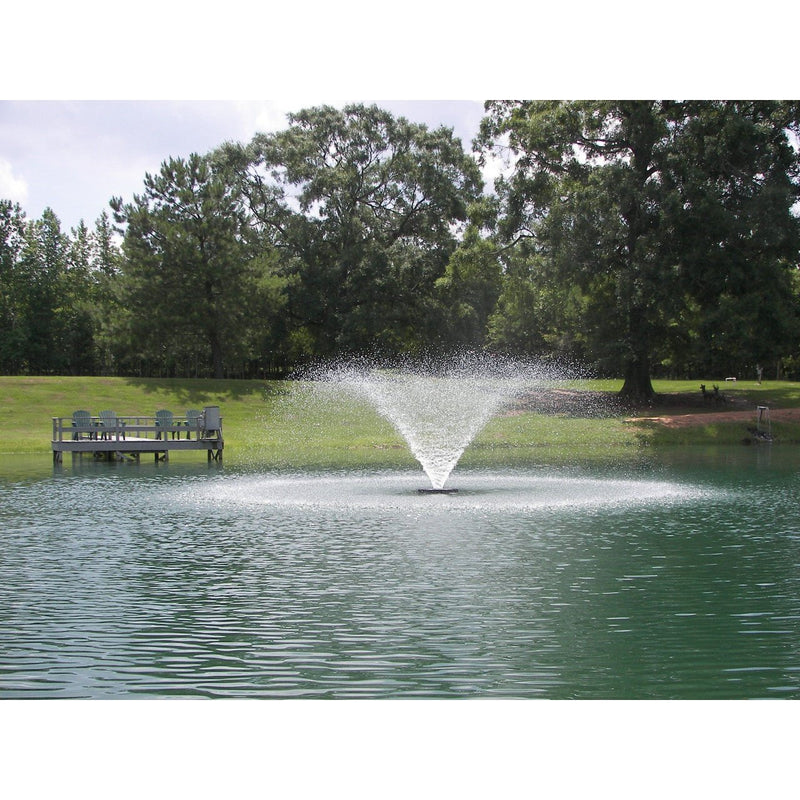
Surface-Level Gas Exchange: Aeration does not "add" oxygen solely through the bubbles. Most oxygen enters the water through the surface agitation caused by the "boil" of the bubbles. In very large, shallow lakes (e.g., 20 acres and 4 feet deep), the cost of running miles of weighted tubing to dozens of diffusers may exceed the cost of using a few high-velocity surface aerators or fountains. Surface aerators move more volume but have zero impact on the bottom muck in deep water.
Comparison of Compressor Technologies
| Feature | Linear Diaphragm | Rotary Vane | Rocking Piston |
|---|---|---|---|
| Max Depth | 7-9 Feet | 15-18 Feet | 40-50 Feet |
| Max Pressure | Low (4-5 PSI) | Medium (10-15 PSI) | High (30+ PSI) |
| Maintenance | Easy (Diaphragms) | Moderate (Vanes) | Moderate (Cups/Seals) |
| Noise Level | Very Quiet | Moderate Hum | Loud (Vibration) |
| Energy Efficiency | High | Medium | Lower (High Torque) |
Practical Tips for Depth-Based Sizing
To ensure your system operates at peak efficiency, follow these technical best practices during installation.
- Verify Maximum Depth: Do not guess your pond's depth based on the original excavation plans. Silt accumulation can reduce depth by feet over a decade. Use a weighted string or a handheld sonar unit to find the current deepest point.
- Calculate PSI Requirements: Use the formula (Max Depth × 0.433) + 2 PSI. The extra 2 PSI accounts for diffuser resistance and minor friction loss. Ensure your compressor is rated to deliver the required CFM at this total PSI.
- Use Weighted Airline: In deep water, standard poly tubing will float due to the air inside. This creates loops that can catch boat props or swimmers. Weighted airline stays on the bottom, ensuring the air follows the most efficient path to the diffuser.
- Monitor Heat: If your compressor cabinet is hot to the touch, your backpressure is likely too high. Check for clogged diffusers or undersized tubing. Heat is the number one killer of aeration motors.
- The 10-Foot Rule: If your pond is deeper than 10 feet, stop looking at linear diaphragm pumps. You are firmly in the territory of rotary vane or rocking piston compressors.
Advanced Considerations: Seasonal Adjustments and Gas Saturation
For serious practitioners, the interaction between depth and temperature requires a more nuanced management strategy. Dissolved oxygen (DO) saturation levels change with water temperature. Cold water holds significantly more oxygen than warm water.
In deep ponds with high nutrient loads, a sudden "startup" of an aeration system in mid-summer can be fatal to fish. This is called "Turnover Shock." If you haven't been aerating and you suddenly turn on a deep-water system, the aerator will lift a massive volume of anoxic (zero-oxygen), hydrogen-sulfide-rich water to the surface instantly. This can strip the oxygen from the surface layer and kill the fish.
The Startup Procedure: For any deep-water system started during warm months, use a staggered schedule. Run the system for 30 minutes the first day, 1 hour the second, 2 hours the third, and so on. This allows for a slow, controlled mixing of the water column and gives the biology of the pond time to adapt to the new oxygen levels.
Altitude Compensation: If your pond is located at high altitude (above 3,000 feet), the air is less dense. This means your compressor will deliver less oxygen by mass than it would at sea level. You may need to increase your CFM requirements by 10-20% to achieve the same biological results.
Example Scenarios: Shallow vs. Deep
Consider two different ponds, both requiring aeration to prevent fish kills and reduce algae.
Scenario A: The 5-Acre "Platter" Pond
This pond is 5 acres in surface area but only 5 feet deep.
Calculated Load: 5 ft × 0.433 = 2.16 PSI.
Requirement: High volume (CFM) to move water across a massive surface area, but very low pressure.
Recommended Gear: A large Rotary Vane compressor or multiple Linear Diaphragm units. Because the pressure is low, these pumps will move massive amounts of air efficiently without overheating.
Scenario B: The 1-Acre "Kettle" Pond
This pond is only 1 acre but is 20 feet deep.
Calculated Load: 20 ft × 0.433 = 8.66 PSI. Add 1 PSI for the diffuser and 1 PSI for friction. Total: 10.66 PSI.
Requirement: High pressure (PSI) to overcome the weight of 20 vertical feet of water.
Recommended Gear: A 1/2 HP Rocking Piston compressor. A rotary vane pump would be at the absolute limit of its pressure range, leading to shortened vane life. A linear pump would fail almost immediately. The rocking piston will handle 10.6 PSI easily, maintaining its CFM delivery to ensure the bottom water is circulated.
Final Thoughts
Success in pond management is determined by how well you respect the physics of your specific environment. Surface area tells you how much water you have, but depth tells you how much work your motor has to do. If you ignore the 0.433 PSI constant, you are designing a system that is destined for mechanical failure.
When selecting your next aerator, look past the "Acreage Rating" on the box. Instead, find the performance curve. Calculate your total system pressure by adding depth, diffuser resistance, and line friction. Match that total PSI to the compressor's output chart to ensure you are getting the CFM required for a full turnover.
A properly engineered system runs cooler, lasts years longer, and provides the consistent dissolved oxygen levels necessary for a healthy aquatic ecosystem. Whether you are managing a private fishing hole or a commercial aquaculture pond, depth is the most critical variable in your equation.