

Why Pond Depth Matters More Than Pond Size When Choosing an Aerator
An acre of water at 4 feet deep is a different world than an acre at 14 feet. Your compressor knows the difference. Buying an aerator based on 'acreage' alone is a recipe for failure. Pressure increases with depth. If you don't account for the 'lift' required, your pump will burn out in months.
Aeration systems are mechanical assemblies governed by the laws of fluid dynamics and thermodynamics. When selecting a system, the surface area of the pond provides a target for oxygen demand, but the depth determines the mechanical load on the motor. Ignoring this distinction leads to catastrophic equipment failure and inefficient oxygen transfer.
This guide analyzes the technical relationship between hydrostatic pressure and compressor performance. It provides the data necessary to size a system based on physical resistance rather than arbitrary surface measurements. Proper configuration ensures long-term operational efficiency and prevents premature diaphragm or piston wear.
Why Pond Depth Matters More Than Pond Size When Choosing an Aerator
Pond depth is the primary driver of backpressure in an aeration system. While the surface acreage determines how much total oxygen is required to maintain a healthy ecosystem, the depth determines whether the compressor can actually deliver that air. This is due to the physical weight of the water column pressing down on the diffuser membranes.
In a shallow pond of 4 feet, the water exerts approximately 1.73 PSI (pounds per square inch) of pressure. In a pond that is 14 feet deep, that pressure increases to 6.06 PSI. Every foot of water depth adds approximately 0.433 PSI of resistance. A compressor that is rated for high volume at low pressure will fail if forced to operate against the resistance of a deep-water column.
Real-world applications often see users install "linear diaphragm" pumps in deep ponds because they are advertised for 1-acre lakes. However, these pumps typically have a maximum operating pressure of 3 to 4 PSI. Forcing a diaphragm pump to push air into 10 feet of water creates internal heat levels that melt the rubber components and seize the motor. The size of the pond is irrelevant if the pump cannot overcome the depth.
Depth also influences the "lift" or the "chimney effect." As air bubbles rise from a diffuser, they pull cold, oxygen-depleted water from the bottom toward the surface. Deep ponds require more energy to move this vertical column of water. Therefore, the depth dictates the type of compressor technology required, while the acreage only dictates how many diffusers you need to distribute the air.
How Pressure and Depth Interact Mechanically
Understanding the relationship between depth and mechanical resistance requires a look at hydrostatic pressure. Water is heavy, weighing approximately 62.4 pounds per cubic foot. The deeper the diffuser is placed, the more weight sits on top of the air outlet. The compressor must generate enough force to exceed this weight before a single bubble can escape.
Compressors are rated by two primary metrics: CFM (Cubic Feet per Minute) and PSI. CFM represents the volume of air, while PSI represents the pressure or "pushing power." As PSI increases, CFM naturally drops. This is known as the performance curve. A high-quality technical data sheet for a compressor will show a graph where the air output tapers off as the depth increases.
System friction also plays a role. Air moving through 100 feet of weighted tubing encounters resistance from the interior walls of the pipe. This "friction loss" adds to the total dynamic head (TDH) the pump must overcome. In a deep-water system, the combination of hydrostatic pressure and friction loss can easily exceed the safe operating range of entry-level equipment.
The Performance Curve Analysis
Analyzing a compressor performance curve is the only way to ensure compatibility. For example, a 1/4 HP rocking piston compressor might produce 2.3 CFM at 0 PSI (open air). At 10 feet of depth (4.3 PSI), that same compressor might only produce 1.8 CFM. If the pond requires 2.0 CFM for a full turnover, this compressor is insufficient despite its "1-acre" marketing label.
Benefits of Proper Depth-Based Sizing
Sizing for depth ensures the compressor operates within its designed thermal limits. When a pump operates against manageable backpressure, the internal temperatures stay low. This extends the life of the seals, gaskets, and bearings. Reliability is the primary benefit of technical accuracy.
Electrical efficiency is another significant advantage. A compressor struggling against excessive depth consumes more amperage and generates more wasted heat. Selecting a pump specifically designed for high-pressure environments, such as a rocking piston or a rotary vane, ensures that every watt of electricity is used to move air rather than generate heat.
Proper depth placement also maximizes the oxygen transfer rate (OTR). In deeper water, bubbles have a longer "residence time" as they travel to the surface. This allows more oxygen to dissolve into the water column. When the pump is correctly matched to the depth, you can utilize smaller, more efficient bubbles that provide superior aeration compared to the turbulent, large-bubble surface fountains used in shallow water.
Challenges of Miscalculating Total Dynamic Head
The most common challenge is the "premature failure loop." This occurs when a user replaces a failed pump with the same model, only to have it fail again in six months. The failure is not a manufacturing defect; it is an application error. The system is operating too far to the right on the performance curve, leading to heat-induced fatigue.
Tubing diameter is a frequently overlooked factor in depth calculations. Using 3/8-inch tubing for a long run to a deep diffuser creates massive backpressure. Switching to 1/2-inch or 5/8-inch tubing reduces friction, effectively "lowering" the pressure the compressor feels. Failing to calculate this friction often results in a system that produces almost no bubbles at the diffuser site.
Another challenge involves seasonal fluctuations. In winter, if the pond surface freezes, the pressure dynamics can shift. Furthermore, as diffuser membranes age, they can become "blinded" or clogged with mineral deposits and biofilm. This clogging increases the PSI requirements. If the system was sized with zero margin for error, these minor changes will push the compressor into a failure state.
Limitations of Standard Aeration Systems
Linear diaphragm pumps are limited to shallow applications, typically under 6 feet. They are quiet and energy-efficient but lack the mechanical leverage to push air into deep water. Attempting to use them in 10-foot or 12-foot ponds is a common mistake that ends in torn diaphragms.
Rotary vane compressors provide high CFM but generally have a pressure ceiling around 10-12 PSI. For extremely deep reservoirs or industrial pits exceeding 25 feet, even standard rotary vane units may reach their limit. In these specialized cases, multi-stage blowers or high-pressure industrial pistons are required.
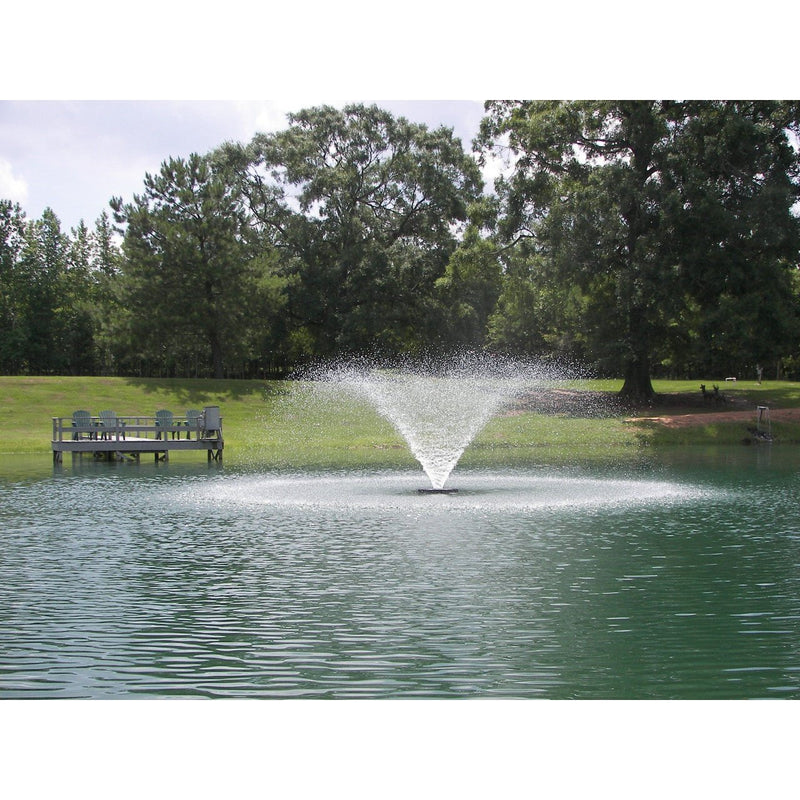
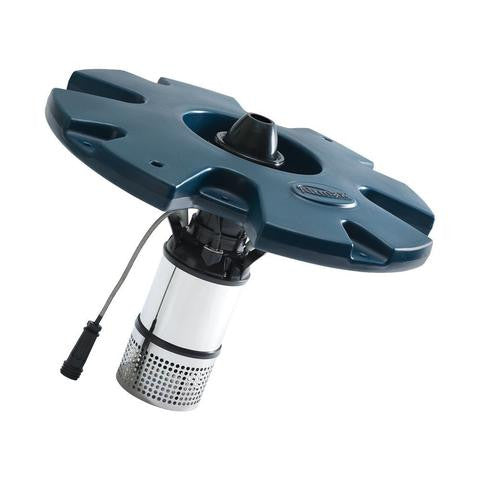
Surface aerators and fountains have the most significant limitation regarding depth. These units only affect the top 2 to 3 feet of the water column. In a 15-foot pond, a surface fountain is purely aesthetic; it does nothing to prevent the buildup of toxic gases like hydrogen sulfide at the bottom. It provides zero "lift" for the anaerobic zone.
Comparing Compressor Technologies by Depth Capability
Choosing the right mechanical platform depends entirely on the PSI requirements of the pond's deepest point. The following table compares common compressor types based on their effective depth ranges and mechanical characteristics.
| Compressor Type | Max Effective Depth | Durability | Maintenance Frequency | Best Use Case |
|---|---|---|---|---|
| Linear Diaphragm | 6 Feet | Low-Medium | Annual | Small, shallow backyard ponds. |
| Rocking Piston | 30+ Feet | Very High | Every 2-3 Years | Deep lakes, steep slopes, long runs. |
| Rotary Vane | 18 Feet | High | Annual (Vanes) | Large, medium-depth ponds needing high CFM. |
| Regenerative Blower | 4 Feet | Medium | Low | High volume, very shallow aquaculture tanks. |
Practical Tips for System Optimization
Always measure the actual depth of the pond using a weighted line or a fish finder before purchasing equipment. Do not rely on old surveys or "best guesses." A 2-foot difference in depth can be the difference between a rocking piston lasting five years or five months.
Install a pressure gauge at the compressor outlet. This is the single most important diagnostic tool in aeration. If the gauge shows a higher PSI than the compressor's rated maximum, you know immediately that you have a clog in the diffuser or that the tubing is too narrow. A gauge allows you to "see" the stress on the motor.
Use oversized weighted tubing for long distances. If the compressor is 200 feet away from the water's edge, use 5/8-inch or even 1-inch PVC pipe for the run to the shoreline, then transition to weighted tubing. This minimizes friction loss and keeps the operating pressure within the "sweet spot" of the compressor's efficiency curve.
- Clean or replace air filters every 3 to 6 months to prevent vacuum-side restriction.
- Check diffuser membranes for calcium buildup, which increases backpressure.
- Ensure the compressor cabinet has adequate ventilation; heat is the primary killer of high-pressure pumps.
- Position diffusers in the deepest part of the pond to maximize the volume of water moved per bubble.
Advanced Considerations: The Turnover Rate
Serious practitioners must calculate the "turnover rate" to ensure the aeration system is effective. The goal is typically to move the entire volume of the pond to the surface at least once every 24 hours. This requires knowing the total gallons of water and the GPM (Gallons Per Minute) of the "lift" created by the diffusers.
Lift efficiency increases with depth. A diffuser at 15 feet moves significantly more water than a diffuser at 5 feet because the "cone" of rising bubbles expands as it ascends. This expansion creates a larger vacuum that pulls more bottom water upward. Therefore, a deeper pond actually allows for a more efficient turnover, provided you have a compressor capable of reaching that depth.
If the pond has an irregular shape (L-shaped or long and narrow), you may need multiple diffusers to avoid "dead zones." In these cases, a manifold system is required. When using a manifold, it is vital to balance the airflow. Air follows the path of least resistance. If one diffuser is at 10 feet and another is at 5 feet, the shallow diffuser will take all the air unless you use valves to restrict the flow to the shallow side.
Example Scenario: The 1-Acre Challenge
Consider two ponds, both exactly 1 acre in surface area. Pond A has a uniform depth of 5 feet. Pond B has a center hole that reaches 16 feet. Using a standard "1-acre aeration kit" designed for shallow water will work perfectly for Pond A.
In Pond B, the user places the diffuser in the 16-foot hole to maximize oxygenation. The hydrostatic pressure at 16 feet is roughly 6.9 PSI. The shallow-water compressor included in the kit is only rated for 5 PSI. Within 90 days, the heat from the excessive backpressure causes the internal seals to fail. The motor continues to run, but it no longer produces air. The user blames the brand, but the failure was caused by ignoring the 16-foot depth.
The correct solution for Pond B would be a 1/2 HP rocking piston compressor. While it may produce less "raw air" than a high-volume blower, it has the mechanical torque to maintain its CFM at 7 PSI without overheating. By choosing based on depth, the owner of Pond B ensures a lifespan of several years rather than months.
Final Thoughts
Successful pond aeration is a matter of matching mechanical capability to physical resistance. The surface area of your pond tells you how much work needs to be done, but the depth tells you what kind of machine is required to do it. Ignoring the PSI requirements of deep water is the fastest way to destroy expensive equipment and leave your pond in a state of hypoxia.
Focus on the technical data: hydrostatic pressure, friction loss, and compressor performance curves. A well-designed system operates quietly, stays cool, and maintains consistent oxygen levels throughout the entire water column. By prioritizing depth over acreage, you transition from "guessing" to "engineering" your pond's health.
Take the time to measure your depths and audit your tubing runs. Small adjustments in pipe diameter or compressor type can result in massive gains in efficiency and equipment longevity. Aeration is a long-term investment in your ecosystem; treat the mechanical selection with the precision it deserves.