

When Hot Weather Strikes Aeration Can Protect Your Fish
Hot water holds less oxygen. During a heat wave, your pond is literally running out of air. When the thermometer hits 90°F, your pond is in the danger zone. Aeration is the only thing standing between a healthy pond and a total fish kill.
Maintaining high dissolved oxygen (DO) levels is the most critical variable in pond management during extreme thermal events. High temperatures decrease gas solubility while simultaneously accelerating the metabolic rates of all aquatic organisms. This creates a "thermal-oxygen squeeze" where demand for air rises exactly as the supply collapses.
Aeration systems function as mechanical life support by facilitating gas exchange at the water-air interface. These systems prevent the development of toxic anoxic zones and ensure that fish have a oxygenated refuge when surface temperatures become lethal.
Does Aeration Prevent Fish Kills?
Aeration is a primary preventative measure against catastrophic fish kills during high-heat cycles. In a stagnant pond, oxygen enters primarily through surface diffusion and photosynthesis. During a heat wave, still air and high humidity reduce natural diffusion rates to near-zero.
Thermal stratification further complicates this by dividing the pond into layers. The upper layer (epilimnion) becomes dangerously hot but remains oxygenated, while the deeper layer (hypolimnion) remains cool but becomes anoxic due to decomposition. Fish are trapped between heat they cannot survive and a depth they cannot breathe.
Mechanical aeration breaks this stratification by inducing vertical mixing. This process, often called destratification, moves cool water toward the surface and oxygen-rich water toward the bottom. Continuous circulation ensures that the entire water column remains habitable, preventing the sudden "turnover" events that cause overnight mass mortality.
The Thermodynamics of Dissolved Oxygen Solubility
The relationship between water temperature and its capacity to hold dissolved oxygen is governed by Henry’s Law. As water temperature increases, the kinetic energy of water molecules rises, making it easier for dissolved gas molecules to escape into the atmosphere.
At a temperature of 50°F (10°C), fresh water at sea level reaches 100% saturation at approximately 11.3 mg/L of dissolved oxygen. When the water temperature rises to 90°F (32°C), that saturation point drops to roughly 7.3 mg/L. This represents a 35% reduction in the total available oxygen "ceiling" before any biological consumption is factored in.
Biological Oxygen Demand (BOD) also responds to heat. The metabolic rate of ectothermic organisms, such as fish and bacteria, typically doubles with every 18°F (10°C) increase in temperature. This means that at 90°F, fish require twice the oxygen they did at 72°F, even though the water holds significantly less.
How Mechanical Aeration Systems Function
Aeration systems work by increasing the surface area of the water-air interface. This is achieved through two primary mechanical methods: subsurface diffusion and surface agitation. Each method has specific mechanical advantages depending on pond depth and volume.
Subsurface Diffused Aeration
Diffused systems utilize an onshore compressor to pump air through weighted tubing to diffusers located at the pond's deepest point. These diffusers release millions of tiny "fine bubbles" (less than 2mm in diameter). As these bubbles rise, they create a "laminar flow" that pulls cold, oxygen-depleted water from the bottom to the surface.
This method is highly efficient because it utilizes the entire water column for gas exchange. The rising column of bubbles also creates a "boil" at the surface, which breaks surface tension and facilitates the release of trapped gases like carbon dioxide and methane.
Surface Aerators and Agitators
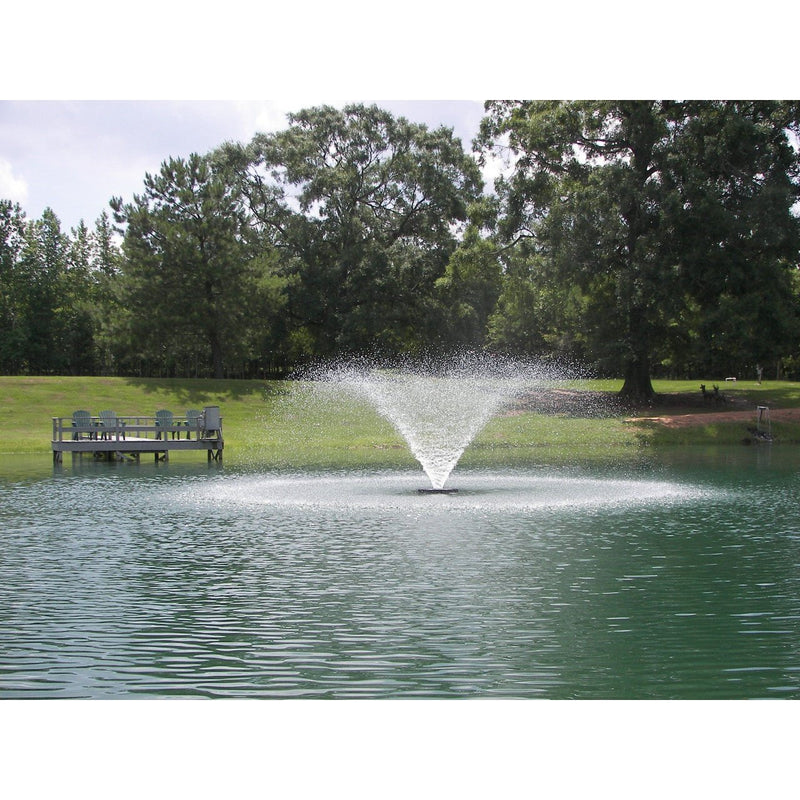
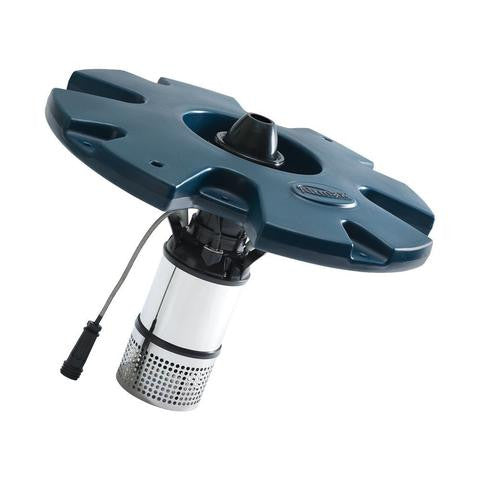
Surface aerators consist of a motor and a propeller or paddlewheel that splashes water into the air. This mechanical action creates a high-velocity spray, maximizing the contact time between water droplets and the atmosphere.
These systems are measured by their Standard Oxygen Transfer Rate (SOTR) and Standard Aeration Efficiency (SAE). Surface agitators often have higher SAE ratings in shallow environments (under 6 feet) because they do not have to overcome the hydrostatic backpressure associated with deep-water diffusion.
Benefits of Proactive Aeration Management
Implementing a high-efficiency aeration system provides measurable improvements to the pond's chemical and biological stability. Beyond simply keeping fish alive, consistent DO levels prevent the collapse of the entire ecosystem.
Aeration promotes the growth of aerobic beneficial bacteria. These bacteria are responsible for breaking down organic "muck" and nitrogenous waste at the pond bottom. Without oxygen, these processes switch to anaerobic pathways, which produce toxic hydrogen sulfide and ammonia.
* Prevents Thermal Stratification: Eliminates the "dead zone" at the bottom of the pond.
* Accelerates Waste Decomposition: Enhances the efficiency of aerobic bacteria.
* Reduces Algal Bloom Severity: Circulates nutrients away from the surface where algae thrive.
* Gas Stripping: Removes harmful gases like methane and CO2 from the water column.
Challenges and Common Operational Failures
The most frequent cause of aeration failure during a heat wave is undersizing. Many pond owners install systems based on surface acreage without accounting for depth or the high Biological Oxygen Demand (BOD) of a heavily stocked pond.
Mechanical failure of compressors is another common risk during heat waves. High ambient air temperatures can cause compressor housings to overheat, leading to thermal shutdown or premature piston seal failure. If a system fails during the peak of a heat wave, the oxygen levels can crash within hours, as the pond has become dependent on mechanical life support.
Power outages during summer storms are also a critical threat. When a storm breaks a heat wave, it often brings high winds that can cause a "partial turnover." If the aerator is off due to a power failure, the mixing of anoxic bottom water with the rest of the pond can trigger an immediate fish kill.
Limitations: When Aeration May Not Be Sufficient
Aeration cannot lower the water temperature significantly; it primarily manages the oxygen levels within that heat. If a heat wave pushes water temperatures above the critical thermal maximum for a specific species, such as trout or certain cool-water fish, they may perish regardless of oxygen saturation.
In ponds with extreme nutrient loading (hyper-eutrophic), the oxygen demand from decomposing algae can exceed the mechanical capacity of standard aerators. In these cases, the "Oxygen Transfer Rate" of the equipment is simply too low to keep up with the chemical decay happening in the sediment.
Shallow ponds (under 4 feet) are also difficult to aerate effectively with subsurface diffusers. There is not enough "rise time" for the bubbles to create a strong enough current to move the entire water column. In these environments, surface splashers or paddlewheels are often mandatory.
Exposed Stagnant Heat vs Sheltered Aerated Refuge
The difference between a pond experiencing Exposed Stagnant Heat and one maintained as a Sheltered Aerated Refuge is often a matter of survival for larger fish. Larger fish have higher metabolic requirements and are usually the first to die during an oxygen crash.
| Factor | Exposed Stagnant Heat | Sheltered Aerated Refuge |
|---|---|---|
| Oxygen Distribution | Surface only; bottom is anoxic | Uniform throughout water column |
| Gas Exchange Rate | Minimal; limited by wind speed | High; mechanically driven |
| Toxic Gas Accumulation | High (Ammonia, H2S) | Low (Continuous stripping) |
| Fish Stress Levels | Critical; limited habitat space | Manageable; full habitat access |
| Risk of Turnover | Extreme during summer storms | Near-zero; already mixed |
Practical Tips and Best Practices
Maximizing aeration efficiency requires more than just turning on a pump. Proper placement and timing are essential for survival during a 90°F+ heat cycle.
Run aerators 24/7 during heat waves. While many owners run systems only at night to save electricity, the daytime oxygen demand in hot water is so high that any pause in circulation can allow the thermocline to re-establish.
Position diffusers in the deepest water. To achieve a full "pond turnover" every 24 hours, the diffuser must be at the lowest point to ensure the cold water at the bottom is consistently brought to the surface for gas exchange.
Monitor compressor ventilation. Ensure the compressor cabinet is in the shade and has functioning cooling fans. A compressor that pulls in 100°F air will operate at lower efficiency and have a shorter lifespan than one pulling in cooler, shaded air.
Observe fish behavior. If fish are "piping" or gasping at the surface, your current aeration capacity is failing. Immediate supplemental aeration, such as a trash pump or garden hose spray, may be needed as an emergency measure.
Advanced Considerations: Calculating Oxygen Transfer
For professional managers, sizing an aeration system involves calculating the Standard Aeration Efficiency (SAE). This is the amount of oxygen (in kilograms or pounds) that an aerator can transfer per horsepower (or kilowatt) per hour.
Most high-quality diffused systems provide an SAE of 2.0 to 4.0 lbs of O2 per horsepower-hour. However, this is measured in "clean water" at 20°C. In a warm pond (30°C) with high organic loading, the "Actual Oxygen Transfer Rate" (AOTR) might be only 50% of the standard rating.
Serious practitioners should aim for an aeration system capable of turning the entire pond volume at least 1.5 to 2 times per day. This ensures that the rate of oxygen introduction stays ahead of the rate of respiratory and chemical consumption.
Example Scenario: 1-Acre Pond Management
Consider a 1-acre pond with an average depth of 8 feet. During a standard summer, natural wind-driven mixing might be sufficient. However, during a 10-day heat wave with 95°F air temperatures and no wind, the pond will stratify within 48 hours.
An undersized 1/4 HP compressor might only be able to move 1,500 gallons per minute (GPM). For a pond containing roughly 2.6 million gallons, this system would take over 28 hours for a single turnover. During a heat wave, this is insufficient.
A 1/2 HP rocking piston compressor paired with dual fine-bubble diffusers can move over 4,000 GPM. This achieves a full turnover every 10-12 hours. By moving the water twice as fast, the system prevents the bottom from ever becoming anoxic and ensures the fish have a stable, oxygenated environment even at the peak of the heat.
Final Thoughts
Pond aeration is the most effective insurance policy against summer fish kills. By understanding the inverse relationship between water temperature and oxygen solubility, you can design a system that compensates for the metabolic demands of a heat wave.
The transition from a stagnant, high-risk environment to an aerated refuge requires mechanical efficiency and consistent operation. Focus on high SAE equipment and ensure that your system is sized for the "worst-case scenario" of 90°F+ temperatures.
Proactive management, including regular maintenance of compressors and diffusers, will protect your aquatic investment. When the next heat wave arrives, a properly aerated pond will remain a healthy, thriving ecosystem rather than a biological liability.