

Why Only Large Fish Died In Your Pond
Your biggest fish have the biggest needs. Is your air reaching them? When oxygen drops, the 'heavy hitters' go first. Large fish require significantly more dissolved oxygen than small fry. If you're losing your prize koi or bass, your 'standard' aeration might be failing them.
Oxygen management in a closed aquatic ecosystem is a matter of mechanical efficiency and physiological limits. Understanding why a die-off targets your largest specimens requires a look into the physics of gas transfer and the biological constraints of fish anatomy. This guide examines the technical causes of size-specific mortality and the engineering solutions required to prevent it.
Why Only Large Fish Died In Your Pond
Size-specific mortality is a common phenomenon in ponds experiencing acute oxygen depletion. Large fish, such as mature koi or trophy bass, possess a much higher total metabolic demand than smaller fish. While a 5-inch fingerling may survive a temporary dip in dissolved oxygen (DO), a 24-inch adult often cannot.
The primary biological reason for this disparity is the relationship between body mass and gill surface area. As a fish grows, its volume increases at a much faster rate than the surface area of its gills. This is known as the square-cube law. Smaller fish have a higher gill-surface-area-to-body-mass ratio, allowing them to extract oxygen more efficiently from water with low DO concentrations.
Environmental factors often trigger these events during the summer months. Warm water is physically incapable of holding as much dissolved oxygen as cold water. At 32°F (0°C), freshwater can hold approximately 14.6 mg/L of oxygen at saturation, but at 86°F (30°C), that capacity drops to roughly 7.6 mg/L. When water temperatures rise, the metabolic rate of the fish also increases, doubling for every 10°C rise in temperature (the Q10 rule). This creates a "perfect storm" where oxygen supply is at its lowest while the demand from large fish is at its highest.
How Oxygen Dynamics Work in a Pond
Dissolved oxygen enters the pond through two primary pathways: atmospheric diffusion at the surface and photosynthesis by aquatic plants and algae. During the day, photosynthesis typically produces a surplus of oxygen. However, this process reverses at night.
Plants, algae, and fish all switch to respiration, consuming oxygen and releasing carbon dioxide. This results in a diurnal cycle where DO levels are highest in the late afternoon and lowest just before dawn. Most fish kills occur between 2:00 AM and 6:00 AM because the "oxygen bank" has been depleted by hours of respiration without any new production from sunlight.
Mechanical aeration systems intervene in this cycle by forcing gas exchange. The efficiency of this exchange is governed by Henry’s Law, which states that the amount of dissolved gas in a liquid is proportional to its partial pressure above the liquid. Higher pressure and increased surface area lead to faster oxygen transfer.
Benefits of Pro Bottom-Up Diffusion
Pro Bottom-Up Diffusion systems utilize a shore-mounted compressor to push air through weighted tubing to diffusers placed at the deepest part of the pond. This method offers several technical advantages over traditional surface-level splashing.
One of the most measurable benefits is the destratification of the water column. In summer, ponds develop a thermocline—a sharp temperature gradient that separates warm, oxygen-rich surface water (epilimnion) from cold, oxygen-poor bottom water (hypolimnion). Bottom-up aeration creates a "bubble curtain" that acts as an airlift pump, pulling the cold, anoxic water from the bottom to the surface where it can vent toxic gases and absorb oxygen.
Fine-bubble diffusers are the industry standard for this application. These units produce millions of tiny bubbles, typically 1mm to 3mm in diameter. Because smaller bubbles have a much higher total surface area relative to their volume, they provide significantly more opportunities for oxygen to dissolve into the water as they rise. Furthermore, fine bubbles rise more slowly than large ones, increasing the "dwell time" or contact time between the air and the water.
Challenges and Common Mistakes
Undersizing the compressor is a frequent error in pond management. A compressor must produce enough Cubic Feet per Minute (CFM) to turn over the entire volume of the pond at least once every 24 hours. Failure to achieve this means that large pockets of stagnant, anoxic water remain at the bottom, ready to mix and crash the pond’s DO levels during a storm or sudden temperature shift.
Improper placement of diffusers also compromises system integrity. Placing a diffuser in a shallow area reduces the bubble's rise time and the pressure at which oxygen is forced into the water. For every 2.31 feet of water depth, the compressor must overcome 1 PSI of backpressure. Operating a system at a depth of 10 feet provides significantly better Standard Oxygen Transfer Efficiency (SOTE) than operating at 4 feet, provided the compressor is rated for the required PSI.
Over-treating algae with chemical algaecides is another critical risk. When a large mass of algae dies simultaneously, the bacteria that decompose the dead plant matter consume massive amounts of oxygen. This Biological Oxygen Demand (BOD) can strip a pond of its DO in hours, leading to an immediate fish kill. Always treat algae in sections—no more than 25% of the pond at a time—to ensure the remaining oxygen can support the fish and the decomposition process.
Limitations of Aeration Systems
Aeration is not a universal cure for poor pond design or extreme overstocking. Every pond has a "carrying capacity," which is the maximum biomass of fish the ecosystem can support. Even the most efficient Pro Bottom-Up Diffusion system cannot save fish if the density of the population exceeds the physical limits of the water's oxygen-holding capacity.
Depth also acts as a mechanical constraint. In very shallow ponds (less than 4 feet deep), diffused aeration is less efficient because the bubbles reach the surface too quickly to transfer a high percentage of their oxygen. In these specific environments, high-volume surface aeration may be necessary to supplement sub-surface systems.
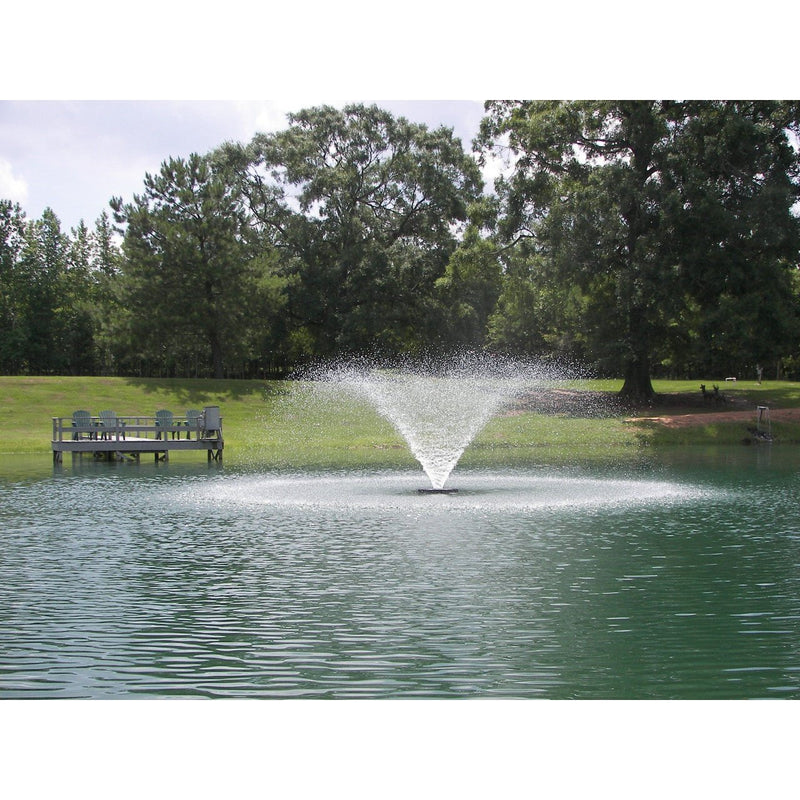
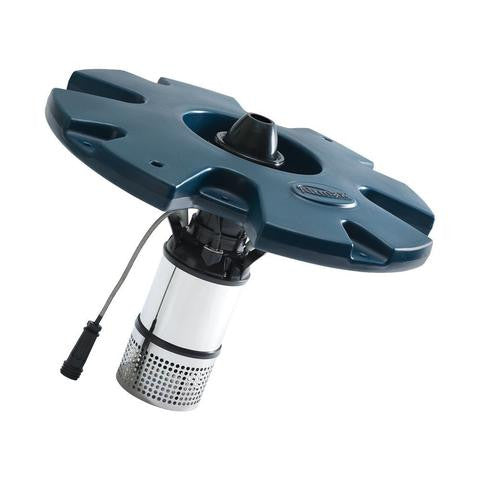
Comparing Standard Surface Aeration vs Pro Bottom-Up Diffusion
The choice between surface and bottom aeration depends on the primary goal: aesthetics or ecological stability. The following table highlights the mechanical differences between the two approaches.
| Metric | Standard Surface Aeration | Pro Bottom-Up Diffusion |
|---|---|---|
| Operating Principle | Splashing water into the air to create surface contact. | Releasing air at the bottom to create an airlift effect. |
| Oxygen Transfer Efficiency (SAE) | 1.5–2.0 kg O2/kWh | 3.5–8.0 kg O2/kWh |
| Destratification | Minimal; only affects the top 2–4 feet. | Total; mixes the entire water column. |
| Energy Consumption | High; requires moving heavy water. | Low; requires moving light air. |
| Noise Level | Audible splashing and motor hum. | Silent at the pond; compressor is shore-mounted. |
Practical Tips for Pond Stability
Maintaining a healthy environment for large fish requires proactive monitoring. A reliable dissolved oxygen meter is an essential tool for any serious pond owner. Testing the water at 5:00 AM provides the most accurate "worst-case" data. If DO levels are consistently below 5 mg/L at dawn, the aeration system needs an upgrade or the fish biomass must be reduced.
Calculations for air requirements should be based on the pond's surface acreage and depth. A general rule of thumb for Pro Bottom-Up Diffusion is to provide approximately 1.0 to 1.5 CFM of air per acre of surface area for basic maintenance, or up to 2.5 CFM for heavily stocked koi ponds.
Ensuring the compressor is housed in a ventilated, weather-proof cabinet extends the life of the motor. Heat is the primary enemy of compressor diaphragms and pistons. Proper airflow around the unit prevents premature mechanical failure during the peak summer months when the system is most critical.
Advanced Considerations: The BOD Load
Experienced practitioners must account for the Biological Oxygen Demand (BOD) beyond just the fish. The "muck" or organic sediment at the bottom of a pond is a massive oxygen consumer. Bacteria working to break down fish waste, fallen leaves, and dead algae require oxygen to function.
A pond with a thick layer of organic sludge will have a much higher "base-load" oxygen demand than a clean pond. Pro Bottom-Up Diffusion helps this process by providing oxygen directly to the sediment-water interface, allowing aerobic bacteria to digest the muck more efficiently. This process, known as bio-augmentation, can eventually reduce the sludge layer and increase the total volume of usable water in the pond.
Nitrogen management is also linked to aeration. Nitrifying bacteria, which convert toxic ammonia into nitrate, are aerobic. If oxygen levels drop, the nitrification process slows down, leading to a spike in ammonia. This chemical stress, combined with low oxygen, is often what ultimately kills large, sensitive fish.
Scenario: The Midnight Turnover
Imagine a 1-acre pond that is 10 feet deep. It is mid-August, and the water has been stratified for weeks. The surface is 85°F and rich in oxygen, but the bottom 5 feet of water is 60°F and has 0 mg/L of dissolved oxygen. A sudden, violent thunderstorm hits at midnight, bringing cold rain and high winds.
The cold rain quickly cools the surface water, making it denser than the water below. The wind provides the mechanical force to flip the pond, mixing the 0 mg/L bottom water with the oxygenated surface water. Within minutes, the average DO level of the entire pond drops from 7 mg/L to 2 mg/L.
The large fish, already stressed by the heat and high metabolic demands, cannot adapt to this 70% drop in available oxygen. By morning, the largest bass and koi are floating, while the smaller bluegill and fingerlings remain active. A Pro Bottom-Up Diffusion system would have prevented this by keeping the water mixed all summer, ensuring no anoxic zone ever developed.
Final Thoughts
The loss of large fish is rarely a random event. It is almost always a predictable outcome of physiological limits meeting mechanical failure. Large-bodied fish are the most vulnerable members of your aquatic community, and they serve as the "canary in the coal mine" for the health of your ecosystem.
Focusing on deep-water gas transfer and vertical mixing is the most effective way to safeguard your investment. Standard surface units may provide a pleasing aesthetic, but they often fail to address the critical oxygen needs of the lower water column where large fish often retreat to escape summer heat.
Implementing a robust bottom-up aeration strategy ensures that oxygen levels remain stable even during the most challenging weather events. By prioritizing mechanical efficiency and understanding the biological requirements of your "heavy hitters," you can maintain a thriving, resilient pond for years to come.