

Diagnosing A Fish Kill After A Thunderstorm
Why did grandpa's pond survive the storm while yours didn't? Thunderstorms are the ultimate stress test for a pond. Modern shallow designs are prone to 'turnovers' where toxic gases from the bottom flip to the top. Learn how to diagnose the cause and prevent the next catastrophe.
A serene pond can transform into a biological disaster zone in the hours following a significant weather event. When hundreds of fish surface simultaneously, the cause is rarely "toxic runoff" from a neighbor’s lawn, despite common assumptions. Instead, the failure is usually mechanical and thermal in nature.
Understanding the physics of water density and the chemistry of dissolved oxygen is the only way to safeguard an aquatic investment. This guide breaks down the technical mechanisms of pond turnover, the data metrics that define risk, and the engineering solutions required to maintain a stable ecosystem through extreme weather.
Diagnosing A Fish Kill After A Thunderstorm
Diagnosing the root cause of fish mortality requires immediate observation of the water column and the specimens themselves. A fish kill following a thunderstorm is almost always an acute respiratory event caused by rapid de-stratification, also known as a pond turnover.
The primary symptom of a turnover-induced fish kill is "piping." You will observe fish of all species and sizes gulping for air at the surface, particularly in the hours just before dawn when dissolved oxygen (DO) levels are at their natural minimum. Large fish typically perish first because they have a lower gill-surface-to-body-mass ratio, making them less efficient at extracting oxygen from depleted water.
Visual and olfactory clues provide further diagnostic data. If the pond water has shifted from a clear or green tint to a dark brown, "coffee" color, or if it emits a distinct rotten-egg odor, you are dealing with a turnover. This smell is hydrogen sulfide (H2S), a byproduct of anaerobic decomposition that was previously trapped in the pond's bottom layer.
Data-driven diagnosis involves measuring dissolved oxygen. In a healthy system, DO should be between 7 and 10 mg/L. If your meter reads below 3 mg/L for warmwater species like bass and bluegill, or below 5 mg/L for coldwater species like trout, the system has reached a lethal threshold. Sudden drops in atmospheric pressure during a storm can further reduce the water's oxygen-carrying capacity by approximately 1% for every 10 mbar drop.
The Physics of Thermal Stratification
To understand why a storm triggers a kill, one must understand thermal stratification. During summer, sunlight warms the upper layer of water, known as the epilimnion. Because water is less dense when warm, this layer floats on top of the deeper, colder, and denser water called the hypolimnion.
The boundary between these two layers is the thermocline (or metalimnion). This layer acts as a physical barrier to gas exchange. While the epilimnion remains oxygenated through atmospheric diffusion and photosynthesis, the hypolimnion becomes anoxic (devoid of oxygen) as bacteria consume the available supply while decomposing organic matter at the bottom.
Water reaches its maximum density at 39°F (4°C). As the temperature differential between the top and bottom layers increases throughout the summer, the "stability" of the stratification grows. In ponds deeper than 8 feet, this layering becomes so stable that only a massive energy input—like the high winds and cold rain of a thunderstorm—can break the thermal curtain.
How It Works: The Mechanics of a Turnover
A pond turnover is essentially a rapid vertical mixing event. It occurs when the density of the surface water suddenly increases, causing it to sink and displace the bottom water. Several factors during a thunderstorm drive this process:
- Cold Rain Influx: A heavy downpour of cool rain rapidly lowers the temperature of the epilimnion. As this water cools, it becomes denser and begins to sink through the thermocline.
- Wind-Driven Kinetic Energy: High-velocity winds create surface waves and internal currents that physically shear the layers apart, forcing the anoxic bottom water upward.
- Mechanical Displacement: The sinking surface water "flips" the pond, bringing the hypolimnion’s toxic gases and oxygen-depleted water to the surface.
Once the layers mix, the small amount of oxygen in the top few feet is instantly diluted by the massive volume of oxygen-poor water from the bottom. Furthermore, the stirred-up organic "muck" creates a sudden spike in chemical oxygen demand, which can strip the remaining oxygen from the water in minutes.
The Chemistry of Oxygen Depletion: BOD and COD
The severity of a turnover is dictated by the Biochemical Oxygen Demand (BOD) and Chemical Oxygen Demand (COD) within the system. These metrics represent the amount of oxygen required to break down organic and inorganic matter.
In the anaerobic environment of the hypolimnion, decomposition is slow and inefficient. This leads to the accumulation of "sapropel" muck—a black, organic-rich sludge. When a turnover occurs, this muck is suspended in the water column. Aerobic bacteria immediately begin to oxidize this material, a process that consumes oxygen at an exponential rate (BOD).
In ponds with thick anaerobic sediment, the COD can account for 70% to 90% of the total oxygen consumption during a turnover. This is because reduced chemical compounds, like ferrous iron and sulfides, react almost instantly with any available oxygen. This dual demand—biological and chemical—creates an "oxygen crash" that the pond’s natural diffusion cannot recover from in time to save the fish.
Benefits of Mechanical Aeration and Circulation
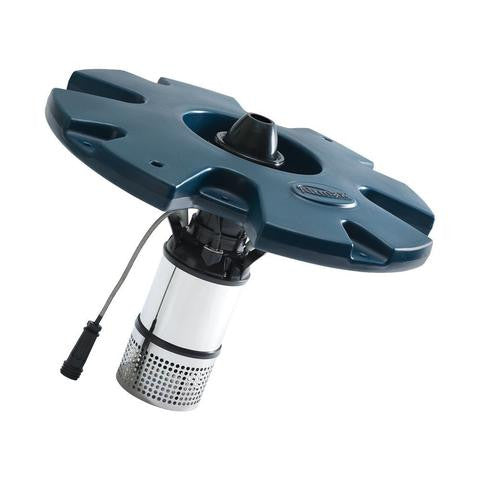
The most effective engineering solution for preventing turnovers is the installation of a bottom-diffused aeration system. Unlike surface fountains, which are primarily aesthetic, bottom aerators address the root cause of stratification.
- Thermal Homogenization: By releasing air bubbles at the deepest point of the pond, these systems create a "rising curtain" of water. This constantly moves cold bottom water to the surface, maintaining a uniform temperature and preventing a thermocline from ever forming.
- Oxidation of the Muck Layer: Constant aeration keeps the sediment-water interface oxygenated. This allows aerobic bacteria to "digest" the muck layer over time, reducing the total BOD and COD of the system.
- Increased Habitat Volume: In a stratified pond, fish are restricted to the top few feet. Aeration makes the entire volume of the pond habitable, reducing stress and overcrowding.
Mechanical circulation ensures that when a storm does arrive, the pond is already mixed and fully oxygenated. There is no "toxic flip" because there is no anaerobic layer to flip.
Challenges and Common Mistakes
The most dangerous time for a pond is often the day a new aeration system is turned on. A common mistake is the "Instant On" error. If you install a bottom aerator in a heavily stratified pond in mid-July and run it 24/7 immediately, you will trigger a manual turnover and kill your fish.
To avoid this, practitioners must follow a "Slow Start" procedure. This involves running the system for only 30 minutes the first day, 1 hour the second, and doubling the time daily until the pond is fully homogenized. This allows the oxygen demand to be met gradually without crashing the entire system.
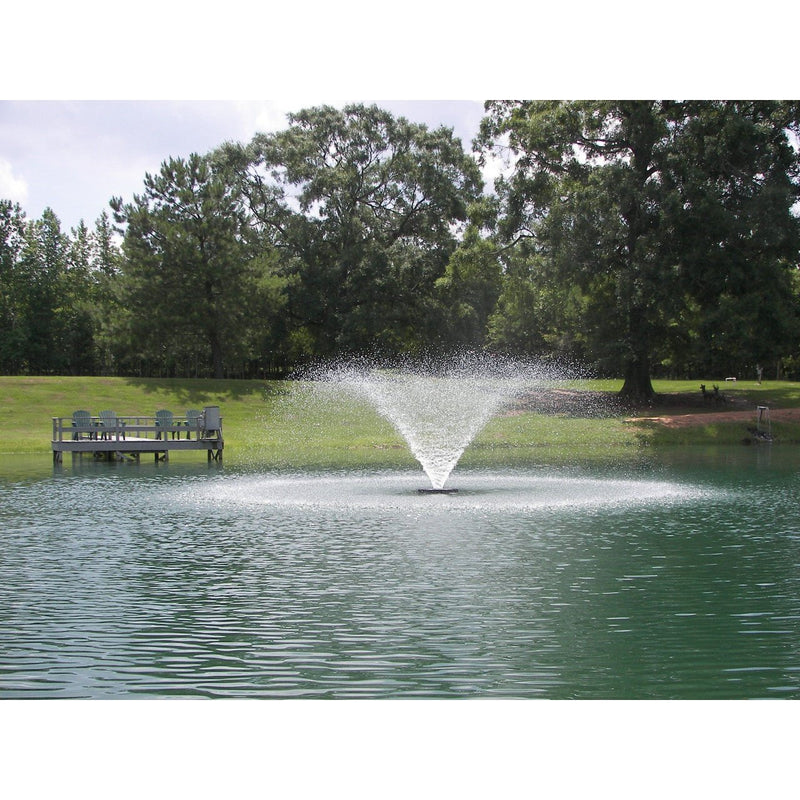
Another common mistake is relying on surface fountains for deep ponds. Fountains typically only circulate the top 2–4 feet of water. In a 10-foot deep pond, a fountain can actually "seal" the stratification by keeping the top layer even warmer, while the bottom 6 feet remains a ticking time bomb of anoxic gases.
Limitations of Emergency Interventions
Once a turnover is in progress and fish are piping at the surface, options are limited. Emergency aeration is a "localized refuge" strategy rather than a total pond cure. If you use a high-pressure water pump or a trash pump to spray water into the air, you are only oxygenating the immediate area around the spray.
Chemical interventions, such as adding hydrogen peroxide or sodium percarbonate, can provide a temporary oxygen boost but are difficult to dose accurately in a crisis and can be cost-prohibitive for large bodies of water. Furthermore, these do not address the suspended solids and gases that are causing the underlying distress.
It is important to realize that once the BOD/COD exceeds the oxygenation rate, the pond must "run its course." In many cases, the system will stabilize within 48 to 72 hours, but not before significant biomass is lost.
Comparison: Deep Resilience vs. Shallow Vulnerability
Grandpa's pond often survived because it was built with "Deep Resilience" in mind—lower nutrient loads and higher volumes. Modern ponds, especially in suburban developments, often suffer from "Shallow Vulnerability."
| Feature | Deep Resilience (Old Style) | Shallow Vulnerability (Modern) |
|---|---|---|
| Average Depth | 10–15 feet (Large thermal mass) | 4–6 feet (Rapid heating/cooling) |
| Nutrient Load | Natural buffers, low runoff | High nitrogen/phosphorus from lawns |
| BOD Levels | Stable; slow organic accumulation | Extremely high due to algae blooms |
| Turnover Risk | Low (Stable stratification) | High (Frequent, rapid mixing) |
| Management | Passive; relies on volume | Active; requires mechanical support |
Practical Tips for Pond Stability
Prevention is a 365-day process. You cannot wait for the storm clouds to appear before taking action. Implement these best practices to ensure your system can handle a 2-inch rain event without collapsing.
- Monitor Muck Levels: Use a "muck stick" (a PVC pipe) to measure the soft sediment at the bottom. If you have more than 6 inches of soft sludge, your COD/BOD is high, and your turnover risk is extreme.
- Reduce Nutrient Inputs: Establish a 10-foot "no-mow" buffer zone around the pond to filter out lawn fertilizers. Switch to high-quality, low-phosphorus fish feed and avoid overfeeding.
- Check DO at Dawn: The most critical data point is the dissolved oxygen level at sunrise. If it is consistently below 5 mg/L, your pond is over-taxed and needs mechanical aeration.
- Install a Bottom Diffuser: For any pond deeper than 6 feet, a bottom-diffused aeration system is the primary mechanical defense against turnover.
Advanced Considerations: Gas Solubility and Pressure
For serious practitioners, the relationship between gas solubility and temperature is a critical metric. Cold water holds more oxygen than warm water. At 50°F, water can hold 11.3 mg/L of DO at saturation. At 90°F, that capacity drops to 7.5 mg/L.
When you add the "biological load" of fish and bacteria, a 90°F pond is often operating at 80% saturation or less, meaning it only has 6 mg/L of oxygen to start with. A storm-induced turnover that brings up 0 mg/L water from the bottom and introduces a high COD load can drop that 6 mg/L to 1 mg/L in under an hour. This leaves zero margin for error.
Furthermore, the solubility of toxic gases like methane and H2S increases at the higher pressures found at the pond bottom. When these gases are brought to the surface during a turnover, the sudden drop in pressure causes them to "fizz" out of solution, further displacing oxygen and directly poisoning the fish through their gills.
Example Scenario: The 1-Acre Storm Event
Consider a 1-acre sport fish pond with an average depth of 8 feet. The top 3 feet (epilimnion) is 85°F with 6 mg/L DO. The bottom 5 feet (hypolimnion) is 60°F with 0 mg/L DO and high H2S concentrations.
A severe thunderstorm drops 2 inches of 55°F rain. This cold rain sinks, causing a total vertical mix. The resulting 8-foot water column now has an average DO of approximately 2.2 mg/L (3/8 * 6 mg/L + 5/8 * 0 mg/L). Within minutes, the suspended organic muck (BOD) and reduced chemicals (COD) consume another 1.5 mg/L of oxygen.
The pond is now at 0.7 mg/L DO. The large largemouth bass, requiring at least 3 mg/L for basic metabolic function, begin to suffocate. Within 12 hours, the entire trophy bass population is lost, while smaller, more resilient bluegill struggle at the surface. This is the "Grandpa's Pond" vs. "Your Pond" reality: without mechanical prevention, the math is against you.
Final Thoughts
A fish kill after a thunderstorm is a mechanical failure of the pond's stratification. By understanding that water density and oxygen demand are quantifiable metrics, pond owners can move from reactive panic to proactive engineering. The goal is to eliminate the anaerobic "dead zone" at the bottom through constant, bottom-up circulation.
Investing in a diffused aeration system and managing nutrient runoff are the only ways to ensure that your pond remains a resilient ecosystem rather than a vulnerable retention basin. Data, physics, and proper design are the keys to surviving the next ultimate stress test.
Begin by assessing your pond's depth and muck levels today. Implementing even a small mechanical circulation strategy can provide the margin of safety your fish need to survive the summer heat and the storms that follow.