

Why Is My Pond Getting Shallower Every Year?
Is your 10-foot pond now only 6 feet deep? You're watching your pond turn into a swamp in real-time. Every year, leaves and debris turn into muck. If you don't manage the 'compost' at the bottom, your pond has an expiration date. Here's how to ensure a legacy of depth.
Why Is My Pond Getting Shallower Every Year?
Pond shallowing is a predictable thermodynamic and biological process known as aquatic succession. This phenomenon occurs when a water body gradually fills with organic and inorganic material, transitioning from an open-water system to a wetland and eventually to terrestrial land. In a managed environment, this shift represents a failure in nutrient and sediment oversight.
The accumulation of material at the bottom—often called "muck"—is composed of two primary fractions: allochthonous and autochthonous matter. Allochthonous material originates from outside the pond, such as leaf litter, grass clippings, and soil eroded from the banks. Autochthonous material is generated within the pond, primarily through the life and death cycles of algae, aquatic plants, and fish waste. Without intervention, these layers compact and dehydrate over time, raising the pond floor and reducing the total water volume.
Data from hydraulic studies suggests that unmanaged ponds can lose significant depth annually. In some ecosystems, such as beaver ponds or high-runoff basins, sedimentation rates can range from 0.26 cm to as much as 11.6 cm per year. For a standard 10-foot-deep pond, a median accumulation rate of 1 inch (2.54 cm) per year means the pond will effectively lose 25% of its depth in just three decades. This process transforms a stable aquatic environment into a Temporary Basin, losing the Legacy Depth required for long-term ecological stability.
The Mechanics of Sedimentation and Muck Accumulation
The rate at which a pond loses depth depends on the balance between "loading" and "decomposition." Loading refers to the total mass of organic and inorganic solids entering the system. In many residential or agricultural ponds, the primary driver is nutrient loading—specifically phosphorus and nitrogen—which fuels the growth of biomass.
Once this biomass dies, it sinks to the benthic zone (the bottom). At this interface, microorganisms attempt to break down the material. If the loading rate exceeds the microbial decomposition rate, the residue stays on the floor as muck. Over time, this muck undergoes physical compaction. Fresh organic matter might have a high water content and low density, but as it is buried, the weight of the water column and subsequent layers of sediment compress it into a dense, peat-like substance.
Inorganic vs. Organic Fractions
The composition of your pond floor dictates the strategy for depth recovery. Inorganic sediment consists of sand, silt, and clay. This material does not "decompose" and can only be removed through mechanical means. Organic muck, however, consists of carbon-based molecules that can be oxidized into gases like carbon dioxide. Managing a pond involves maximizing the oxidation of organic matter to prevent it from becoming a permanent part of the geological record.
Aerobic vs. Anaerobic Decomposition: Efficiency Metrics
Microbial activity is the engine of pond depth maintenance. There are two primary pathways for this activity: aerobic and anaerobic decomposition. The efficiency of these pathways varies by orders of magnitude.
Aerobic Oxidation Efficiency
Aerobic bacteria require dissolved oxygen (DO) to oxidize organic matter. The chemical reaction follows a generic formula: C6H12O6 + 6O2 ? 6H20 + 6CO2. This process is rapid and complete. Aerobic bacteria can consume muck at a rate significantly higher than their anaerobic counterparts. Research indicates that non-woody plant leaves break down at approximately 0.0109 per day under aerobic conditions, whereas woody materials degrade at 0.0035 per day.
Anaerobic Fermentation and Its Risks
In the absence of oxygen—a state known as anoxia—anaerobic bacteria take over. These organisms are far less efficient. They utilize fermentation or alternative electron acceptors, producing toxic byproducts such as hydrogen sulfide (H2S), ammonium (NH4), and methane (CH4). Anaerobic decomposition is so slow that it often fails to keep pace with annual leaf fall, leading to the "rotten egg" smell often associated with shallow, stagnant ponds. In these environments, phosphorus is released from the sediment back into the water column, fueling more algae growth and creating a feedback loop of shallowing.
Benefits of Maintaining Legacy Depth
Sustaining the original engineered depth of a pond provides measurable hydrological and biological benefits. A deep pond possesses greater thermal mass, which stabilizes water temperatures during extreme weather events.
Thermal Stratification and Habitat
Deep water allows for the formation of a thermocline—a distinct layer where temperature changes rapidly with depth. In the summer, the deeper, cooler water (the hypolimnion) provides a thermal refuge for fish. If a pond shallows to 6 feet or less, it may become "polymictic," meaning it mixes fully and frequently. This prevents thermal refuge and can lead to lethal temperatures for cold-water species.
Hydraulic Retention and Stormwater Management
Ponds often serve as detention basins for stormwater. Maintaining depth ensures the basin has the volume to handle peak flow events. A shallow pond has a reduced Hydraulic Retention Time (HRT), meaning water moves through the system too quickly to allow for the settling of pollutants. Maintaining Legacy Depth ensures that the pond functions as a filter rather than just a pass-through for nutrients.
Challenges and Pitfalls in Pond Depth Management
Management failures often stem from a lack of understanding regarding the pond's "Biochemical Oxygen Demand" (BOD). BOD measures the amount of oxygen required by microorganisms to break down the organic material currently in the pond.
Over-Fertilization and Nutrient Runoff
The most common mistake is allowing excessive nitrogen and phosphorus to enter the pond. Every pound of phosphorus can support up to 500 pounds of algae growth. When that algae dies, it creates a massive BOD. If the BOD exceeds the oxygen supply, the pond enters an anoxic state, decomposition halts, and muck accumulation accelerates.
Improper Aeration Placement
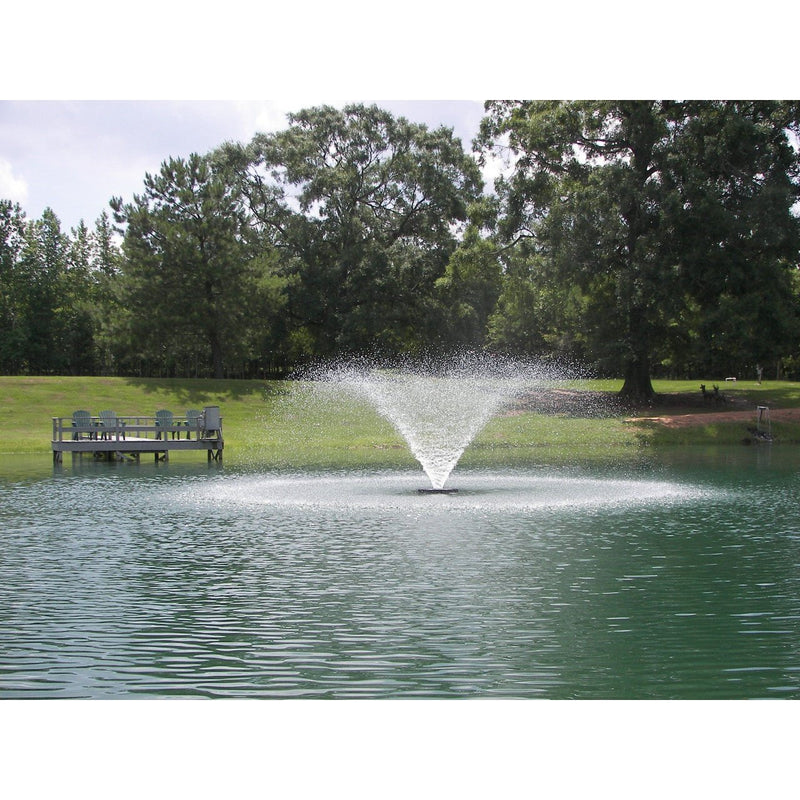
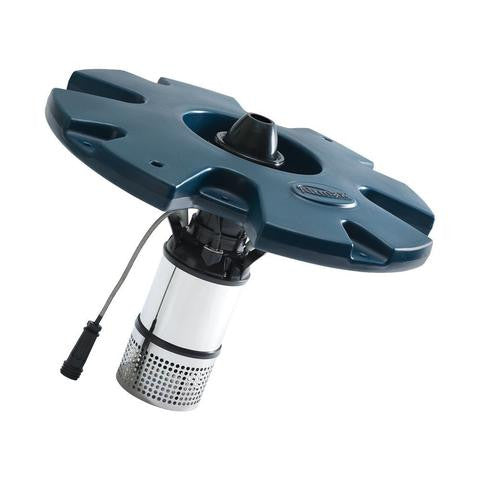
Installing a surface fountain is often mistaken for effective aeration. While fountains improve aesthetics and add some surface oxygen, they rarely provide oxygen to the benthic zone where the muck resides. Effective depth management requires bottom-diffused aeration, which moves water from the bottom to the surface to ensure oxygen reaches the sediment-water interface.
Limitations of Biological and Mechanical Remediation
While many technologies exist to combat shallowing, each has physical and economic limits. It is essential to diagnose the primary cause of depth loss before selecting a tool.
The Limit of Probiotics
Bioaugmentation—adding specific strains of beneficial bacteria—is effective for organic muck. However, it cannot remove sand or clay. If your pond is shallowing because of bank erosion or road runoff, biological treatments will yield zero results. Probiotics typically require a DO level of at least 2.0 mg/L to function effectively. In a completely anoxic pond, these bacteria will go dormant or die.
Mechanical Constraints
Dredging is the ultimate solution for depth recovery, but it is surgically invasive and expensive. Mechanical dredging involves heavy excavators that can damage pond liners and destroy established littoral vegetation. Furthermore, the disposal of "spoils" (the removed muck) is often the most significant cost driver. If the sediment contains heavy metals or high levels of certain chemicals, it may require disposal at a specialized landfill, doubling or tripling the project cost.
Comparison: Mechanical Dredging vs. Bioaugmentation
The choice between biological and mechanical remediation is a function of cost, time, and material type.
| Factor | Mechanical Dredging | Bioaugmentation (Bio-Dredging) |
|---|---|---|
| Cost per Cubic Yard | $20 – $90 | $2 – $10 (Equivalent) |
| Removal Type | Organic and Inorganic | Organic Only |
| Timeline | Days to Weeks | Months to Years |
| Ecological Impact | High (Disruptive) | Low (Restorative) |
| Success Rate | 100% of material removed | 15% – 50% volume reduction |
Bioaugmentation is best used as a preventative maintenance tool or for ponds with primarily organic "muck." Mechanical dredging is reserved for systems that have reached a terminal state of succession or are filled with inorganic silt.
Practical Tips for Depth Optimization
Maintaining Legacy Depth requires a multi-pronged technical approach. Implementing these strategies can extend the life of your pond by decades.
- Install Bottom-Diffused Aeration: Ensure the system is sized to provide at least two "total volume turnovers" per 24 hours. This keeps the benthic zone aerobic.
- Manage the Riparian Buffer: Maintain a 10-to-20-foot "no-mow" zone around the pond perimeter. Tall grasses and native plants act as a filter, trapping leaves and sediment before they enter the water.
- Dose Beneficial Bacteria: Apply concentrated microbial tablets during the growing season (water temperatures above 50°F). These tablets sink into the muck, delivering bacteria directly to the target area.
- Monitor BOD and DO: Use a dissolved oxygen meter to ensure levels stay above 3.0 mg/L at the bottom. If DO drops, increase aeration run times or reduce nutrient inputs.
Advanced Considerations: Redox Potential and Nutrient Sequestration
For the serious practitioner, depth management involves controlling the "Redox Potential" (oxidation-reduction potential) of the sediment. Redox potential measures the tendency of the environment to gain or lose electrons.
In an aerobic pond, the redox potential is positive, meaning the environment is oxidative. In this state, iron and aluminum naturally present in the soil bind to phosphorus, "sequestrating" it in a stable mineral form. This prevents the phosphorus from fueling algae blooms. If the pond becomes anoxic, the redox potential turns negative. The chemical bonds between iron and phosphorus break, releasing a "nutrient surge" into the water.
Advanced practitioners may use chemical binders like lanthanum-modified clay or aluminum sulfate (alum) to manually lock phosphorus in the sediment. This technique, combined with aeration, creates a chemical and biological "cap" over the muck, effectively halting the feedback loop that leads to rapid shallowing.
Example Scenario: Managing a 1-Acre Retention Pond
Consider a 1-acre retention pond with an original depth of 10 feet, now measured at 7 feet. A bathymetric survey reveals 3 feet of soft organic muck across 75% of the floor, totaling approximately 3,600 cubic yards of material.
Option A: Mechanical Dredging
Removing 3,600 cubic yards at an average cost of $30 per yard would cost $108,000. This does not include mobilization or disposal fees. The pond would be restored to 10 feet instantly.
Option B: Integrated Bio-Management
The owner installs a 1/2 HP diffused aeration system ($2,500) and begins a monthly bioaugmentation program ($400/month). Over a period of three seasons, the microbial activity digests approximately 12 inches of muck and compacts the remaining layers. The pond depth increases to 8.5 feet. The total three-year cost is roughly $7,300.
While Option B did not restore 100% of the depth, it achieved a 50% depth recovery for less than 7% of the cost of dredging. This demonstrates the efficiency of managing the pond as a biological reactor rather than a simple basin.
Final Thoughts
Pond shallowing is an inevitable consequence of physics, but the speed of the process is within your control. By shifting from a reactive mindset to a proactive management strategy, you can halt the transition from pond to swamp. The key lies in maintaining an aerobic benthic zone and managing the nutrient inputs that fuel muck accumulation.
Legacy Depth is not merely a measurement; it is a metric of the pond's health and longevity. Whether through mechanical removal or optimized biological oxidation, preserving the water volume ensures the system remains a stable, productive asset for years to come.
Experiment with aeration schedules and microbial dosing to find the equilibrium point for your specific environment. Every inch of muck removed or prevented is a victory for the long-term viability of your water body.