

Why Does My Pond Have Oily Slicks On The Surface?
That rainbow on your pond isn't a treasure—it's a sign of a broken biological cycle. Not all oil comes from a leak! Often, it's 'bio-film' from rotting organic matter that hasn't been integrated back into the pond's ecosystem. Let's fix your surface tension.
The presence of an iridescent sheen or a persistent oily slick on a pond’s surface is a mechanical and biological indicator of organic overloading. These films represent a failure in the transition from **Stagnant Waste to a Living Cycle**. When organic molecules—specifically lipids and proteins—accumulate faster than the indigenous microbial population can process them, they migrate to the air-water interface. This layer does more than affect aesthetics; it functions as a physical barrier that restricts vital gaseous exchange.
Why Does My Pond Have Oily Slicks On The Surface?
Oily slicks on a pond surface are typically composed of lipids (fats), proteins, and extracellular polymeric substances (EPS). These substances are hydrophobic or amphiphilic, meaning they do not mix easily with water and naturally rise to the surface. In a balanced system, heterotrophic bacteria degrade these compounds before they can coalesce into a visible film. However, when the biological cycle is disrupted or overwhelmed, these materials accumulate.
Common biological sources of these slicks include decomposing leaf litter, fish waste, uneaten protein-rich fish food, and the natural "die-off" of algae blooms. During the decomposition process, cell membranes rupture and release long-chain fatty acids and oils. If the water lacks sufficient circulation or specialized bacteria to break these chains, they create a molecular layer one to several microns thick.
Another frequent cause is the presence of iron-oxidizing bacteria, such as Leptothrix or Gallionella. These microorganisms thrive in slow-moving, iron-rich water. As they oxidize ferrous iron into ferric iron for energy, they produce an insoluble byproduct that manifests as an iridescent, oily-looking film. This phenomenon is purely biological and is not indicative of petroleum contamination, though the visual similarity often causes alarm for pond managers.
The Fracture Test: Differentiating Bio-film from Hydrocarbons
Distinguishing between a biological film and a petroleum-based leak is a critical first step in remediation. The "Fracture Test" is the primary field diagnostic tool used by limnologists and pond technicians. Because biological films are comprised of rigid bacterial structures and protein matrices, they lack the high surface tension and elasticity of petroleum.
To perform the test, disturb the slick with a clean stick or a leaf. If the film shatters into jagged, geometric "plates" or islands that do not rejoin, it is a biological film or iron bacteria. If the film swirls like liquid silk and immediately flows back together to close the gap, it is likely a hydrocarbon-based oil spill. Identifying the specific chemical nature of the slick determines whether the solution is mechanical, biological, or a matter of hazardous material containment.
Mechanics of Surface Tension and Gas Exchange Inhibition
The pond surface is the primary interface for atmospheric oxygen diffusion. According to Henry’s Law, the amount of dissolved gas in a liquid is proportional to its partial pressure above the liquid. A surface film acts as a surfactant, increasing the resistance to oxygen transfer. Even a microscopic layer of lipids can reduce the oxygen transfer coefficient (Kla) by as much as 30% to 50%.
When surface tension is altered by these films, the water's ability to "off-gas" carbon dioxide and methane is also compromised. This leads to a buildup of dissolved gases that lower the pH and create a hostile environment for aerobic bacteria and fish. Managing surface tension is therefore not just an aesthetic goal; it is a prerequisite for maintaining high dissolved oxygen (DO) levels, especially during the warm summer months when water’s natural oxygen-carrying capacity is at its lowest.
Mechanical Remediation Strategies
Mechanical solutions focus on the physical removal or disruption of the surface film to restore gas exchange. Efficiency in mechanical skimming is measured by the volume of surface water processed per hour relative to the total surface area of the pond.
Surface Skimmers
Automatic surface skimmers are the most effective mechanical tool for removing lipids and floating debris. These devices use a weir—a floating gate—that sits just below the surface, drawing in the top few millimeters of the water column where oils and proteins reside.
- Standard Skimmers: These are usually integrated into the pond's filtration circuit and pull water through a basket and a fine-mesh pad.
- Floating Skimmers: These units are self-contained and move with the water level, making them ideal for larger ponds or those with significant water level fluctuations.
Surface Agitators and Fountains
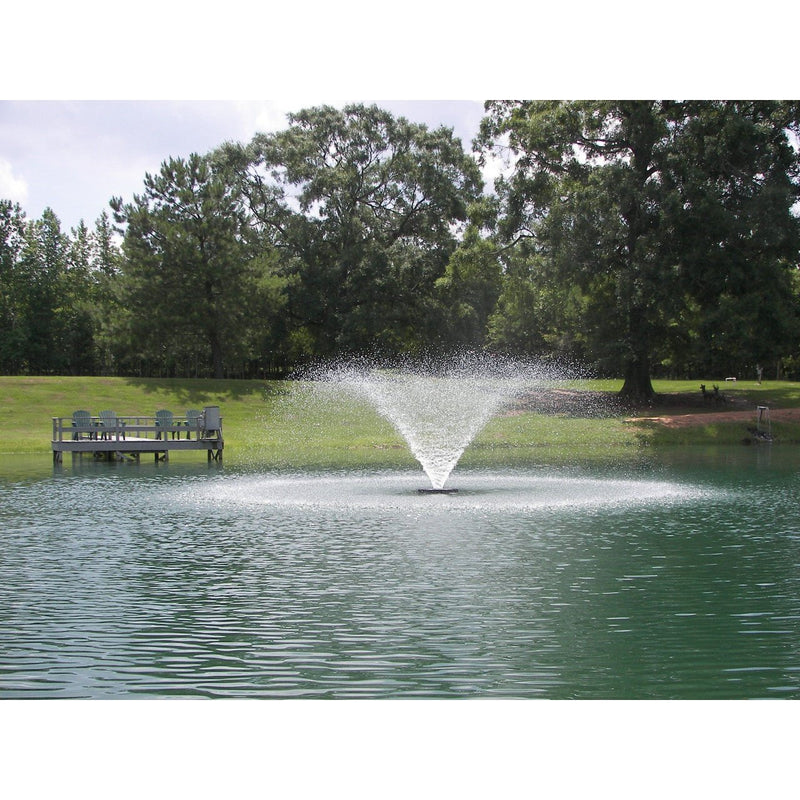
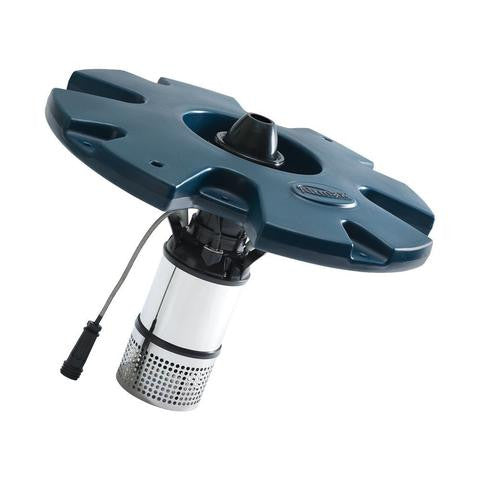
Agitation breaks the physical bond of the biofilm. Fountains and surface aerators increase the surface area of the water in contact with the air. The physical impact of falling water droplets shatters the film, pushing it toward the edges where it can be consumed by terrestrial bacteria or collected manually. However, agitation alone may not remove the lipids from the system; it often merely suspends them until they can settle and be degraded by bottom-dwelling microbes.
Biological Remediation: Optimizing the Nutrient Cycle
Long-term resolution of oily slicks requires addressing the root cause: the accumulation of organic waste. Enhancing the pond's "Living Cycle" involves the strategic introduction of specialized microbial strains and enzymes.
Heterotrophic bacteria, particularly strains of Bacillus and Pseudomonas, are highly efficient at producing lipases and proteases—enzymes that specifically target and break down fats and proteins. When these bacteria are added to the system, they consume the molecular precursors of the oily slick. This process turns the "Stagnant Waste" into bacterial biomass, which is then filtered out or consumed by higher-level organisms like zooplankton.
For biological remediation to be successful, the Carbon:Nitrogen (C:N) ratio of the pond must be balanced. Excessive nitrogen from fish feed often fuels the growth of the very proteins that form surface films. Increasing the concentration of beneficial bacteria ensures that the decomposition process is aerobic and complete, preventing the formation of oily byproducts.
Benefits of Maintaining a Clear Surface
A clear pond surface provides measurable advantages for the entire aquatic ecosystem. Beyond the obvious visual improvement, the technical benefits include:
- Maximized Dissolved Oxygen: Without a lipid barrier, atmospheric oxygen can diffuse freely, supporting fish health and aerobic decomposition.
- Improved UV Penetration: Surface films can reflect or scatter incoming sunlight. A clear surface allows UV rays to penetrate the water column, which provides a natural sanitizing effect and fuels the photosynthesis of beneficial submerged plants.
- Reduced Methane Production: By facilitating better off-gassing, the pond is less likely to accumulate the anaerobic gases that lead to "pond muck" and foul odors.
Challenges and Common Mistakes
One of the most frequent errors in managing surface slicks is the use of chemical surfactants or "dish soap" methods. While these may temporarily disperse a film, they often kill the beneficial bacteria needed for long-term health and can damage the protective slime coat of fish.
Another common mistake is over-reliance on mechanical skimming without addressing the nutrient load. If the pond continues to receive high amounts of organic input (e.g., from heavy feeding or overhanging trees), a skimmer will eventually become a maintenance burden. The goal should be a hybrid approach where mechanical tools assist a robust biological system.
Limitations of Surface Management
It is important to recognize that some surface phenomena are seasonal and temporary. During the spring, heavy pollen loads can create a yellow, oily-looking film that persists for several weeks. Because pollen is highly resistant to rapid bacterial decay, mechanical removal is often the only viable option during peak seasons.
Furthermore, in very large ponds or lakes, mechanical skimming may be cost-prohibitive. In these scenarios, management focus must shift entirely to biological control and large-scale aeration. Thermal stratification can also limit the effectiveness of surface treatments, as the "slick" may be a symptom of deeper anaerobic conditions that surface-level fixes cannot reach.
Technical Comparison: Remediation Methods
| Method | Mechanism | Target | Primary Benefit |
|---|---|---|---|
| Surface Skimming | Mechanical Removal | Lipids, Debris, Proteins | Immediate clarity, debris removal |
| Surface Aeration | Physical Disruption | Bio-films, Gas barrier | Increased O2, CO2 off-gassing |
| Microbial Augmentation | Biological Digestion | Dissolved Organics, Oils | Long-term nutrient reduction |
| Protein Skimming | Foam Fractionation | Dissolved Proteins | Removes waste at molecular level |
Practical Tips for Pond Operators
Efficiency in surface management is often a matter of placement and timing.
- Skimmer Placement: Position skimmers opposite the prevailing wind. The wind will act as a natural "pusher," driving surface oils and debris directly into the skimmer’s mouth.
- Flow Rate Optimization: Ensure your skimmer pump provides at least one full turnover of the pond's surface area every two hours. For a 1,000-square-foot pond, a flow rate of 2,500 to 3,500 GPH is generally recommended to create an effective "pull" across the surface.
- Routine Maintenance: Clean skimmer mats and baskets weekly. A clogged skimmer loses its "weir effect," allowing the very oils it was designed to catch to flow back into the pond.
Advanced Considerations: Foam Fractionation
For ponds with heavy fish loads (such as high-density Koi ponds), traditional skimming may not be enough. Advanced practitioners utilize **protein skimmers** or **foam fractionators**. These devices exploit the polar nature of protein molecules. By injecting fine air bubbles into a column of pond water, the proteins and lipids "stick" to the bubbles and are carried upward, forming a dry foam that is then discarded.
While common in saltwater aquariums, protein skimming in freshwater is technically more difficult due to the higher surface tension of freshwater. However, specialized freshwater units use higher air-to-water ratios to successfully strip out the dissolved organics before they can ever form a slick on the pond surface.
Example Scenario: Calculating Surface Turnover
Consider a pond with a surface area of 400 square feet and a persistent oily film. If using a standard floating skimmer with a 1,500 GPH pump, the theoretical surface turnover rate is high. However, if the skimmer is placed in a corner where the wind blows away from it, the effective "cleaning area" may only be 50 square feet.
By relocating the skimmer to the leeward side of the pond and increasing the flow to 2,000 GPH, the operator ensures that the entire 400-square-foot surface is drawn through the filter multiple times per day. This mechanical adjustment, combined with a bi-weekly application of lipase-producing bacteria, typically clears a biological film within 7 to 10 days.
Final Thoughts
Oily slicks and biological films are diagnostic tools for the observant pond manager. They indicate that the pond's internal processing capacity has been exceeded by its organic input. By understanding the mechanical and molecular principles behind surface tension, you can transition your system from a state of stagnant waste to a healthy, living cycle.
Focus on a multi-tiered approach: use mechanical skimmers to manage the immediate surface load, aeration to maintain gas exchange, and biological augmentation to digest the underlying organic waste. This technical balance ensures that the "rainbow" on your water remains a sign of life rather than a symptom of decay.
Experiment with your skimmer placement and microbial dosing schedules. Every pond has unique fluid dynamics and nutrient inputs, but the laws of physics and biology remain constant. Consistent monitoring and technical optimization will eventually result in a crystal-clear surface that supports a thriving aquatic environment.