

Why Fall Is One of the Most Important Times to Aerate Your Pond
Fall isn't the end of the season; it's the start of the survival race. As temperatures drop, your pond's layers want to flip. Without 'Dynamic' aeration, that flip can be deadly. Here is why fall is the most critical time to keep the bubbles flowing.
Pond ecosystems operate on a delicate thermal and chemical balance that shifts radically as ambient air temperatures decrease. While summer management focuses on algae control and recreational clarity, autumn management is a strictly mechanical necessity to prevent catastrophic biological collapse. This period marks the transition from thermal stratification to a state of potential instability known as turnover.
Maintaining active gas exchange during this transition ensures that dissolved oxygen (DO) levels remain above the critical thresholds required for fish metabolism. Technical intervention at this stage prevents the accumulation of toxic metabolic byproducts that otherwise become trapped in the lower water column. Understanding the physics of water density and gas solubility is essential for any professional or advanced hobbyist managing a closed aquatic system.
Why Fall Is One of the Most Important Times to Aerate Your Pond
Fall represents a period of high risk due to the physical property of water reaching its maximum density at approximately 3.98°C (39.2°F). During the summer, ponds undergo thermal stratification, where a warm, oxygen-rich upper layer (epilimnion) floats above a cold, oxygen-depleted bottom layer (hypolimnion). These layers are separated by a thermocline, which acts as a physical barrier to vertical mixing.
As autumn progresses, surface waters cool and increase in density. Once the surface water becomes heavier than the water below it, gravity forces it to sink, initiating a full-column mix known as fall turnover. This event is not merely a temperature adjustment; it is a massive redistribution of nutrients and gases. If a pond has spent the summer in a stagnant state, the hypolimnion will contain high concentrations of carbon dioxide, methane, and hydrogen sulfide.
Without the intervention of a dynamic aeration system, the sudden mixing of these toxic gases and deoxygenated water into the upper layer can drop the total dissolved oxygen levels below 3 parts per million (ppm). Most sport fish and high-value koi experience acute respiratory stress at 3 ppm and face high mortality rates if levels drop below 2 ppm. Continuous aeration throughout the fall prevents this "dead zone" from forming by keeping the entire water column homogenized and oxygenated.
Mechanical Dynamics: How Sub-Surface Aeration Prevents Turnovers
Sub-surface diffused aeration operates on the principle of the "airlift" effect. Compressed air is pumped through weighted tubing to diffusers located at the deepest point of the pond. As the diffusers release millions of fine bubbles, they rise toward the surface, creating a localized upward current. This current pulls deoxygenated water from the hypolimnion to the surface, where it can engage in atmospheric gas exchange.
Mechanical optimization of this process requires a precise calculation of the Standard Oxygen Transfer Rate (SOTR). This metric defines how much oxygen the system can move into the water under standard conditions. In a fall environment, the system must overcome the Biological Oxygen Demand (BOD) created by decaying organic matter. Deciduous leaf litter and dying aquatic plants enter the system at an accelerated rate, providing a massive fuel source for aerobic bacteria.
If the aeration system is undersized, these bacteria will consume oxygen faster than the system can replenish it. Engineers typically recommend a minimum airflow of 1 to 1.5 cubic feet per minute (CFM) per surface acre for standard ponds. For ponds with high organic loading, such as those situated under heavy tree canopies, doubling this airflow may be necessary to maintain a positive oxygen balance.
Technical Benefits of Year-Round Oxygen Management
Maintaining active aeration through the autumn transition provides measurable improvements in water chemistry and biological stability. One primary benefit is the accelerated decomposition of organic muck. Aerobic bacteria are approximately 20 times more efficient at breaking down organic waste than their anaerobic counterparts. By keeping the pond floor oxygenated, you prevent the accumulation of "muck" that leads to nutrient spikes in the spring.
The removal of toxic gases is another critical advantage. Hydrogen sulfide (H2S) is a byproduct of anaerobic decomposition and is highly toxic to gill tissue. Dynamic aeration forces this gas to the surface where it can be off-gassed into the atmosphere. This process prevents the "rotten egg" smell often associated with ponds that undergo a natural, unassisted turnover.
Consistent vertical mixing also stabilizes the thermal profile of the pond. Rapid temperature fluctuations can shock the immune systems of fish, making them susceptible to late-season parasitic infections. A homogenized water column cools more gradually and uniformly, allowing the resident biology to adapt to the metabolic slowdown required for winter survival.
Common Engineering Failures in Autumn Pond Systems
System failures in the fall often stem from a lack of pressure management and improper diffuser placement. As water temperatures drop, the viscosity of the water changes slightly, which can impact the efficiency of fine-bubble diffusers. A common mistake is using an undersized compressor that cannot overcome the hydrostatic pressure of the pond's maximum depth plus the friction loss of the airline.
Compressor sizing should be based on the formula: PSI Required = (0.433 × Depth in feet) + Friction Loss. Neglecting the friction loss in long runs of 3/8-inch tubing often leads to reduced CFM at the diffuser head. This results in inadequate "lift," leaving the deepest pockets of the pond stagnant. These pockets then become reservoirs for toxic gas that will eventually be released during a storm or rapid cold front.
Another significant error is the "late-start shock." If an aeration system has been off all summer, turning it on at full power in late October can trigger an artificial turnover. This sudden mixing of months' worth of stagnant water can kill a fish population in hours. In these scenarios, a "slow-start" protocol is mandatory to safely integrate the water layers.
Environmental Constraints and System Limitations
Aeration is not a universal solution for every environmental variable. One significant limitation is the "thermal sink" effect. In extremely shallow ponds (under 4 feet), aggressive aeration can cause the water to cool much faster than it would naturally. While oxygen levels remain high, the rapid drop in temperature can exceed the physiological tolerance of certain tropical or sensitive fish species.
Environmental constraints also include the sheer volume of organic input. No aeration system can compensate for a pond that is being physically filled with leaves. In these cases, mechanical filtration or netting must be used in conjunction with aeration. The aeration system is a chemical and biological stabilizer, not a replacement for physical debris removal.
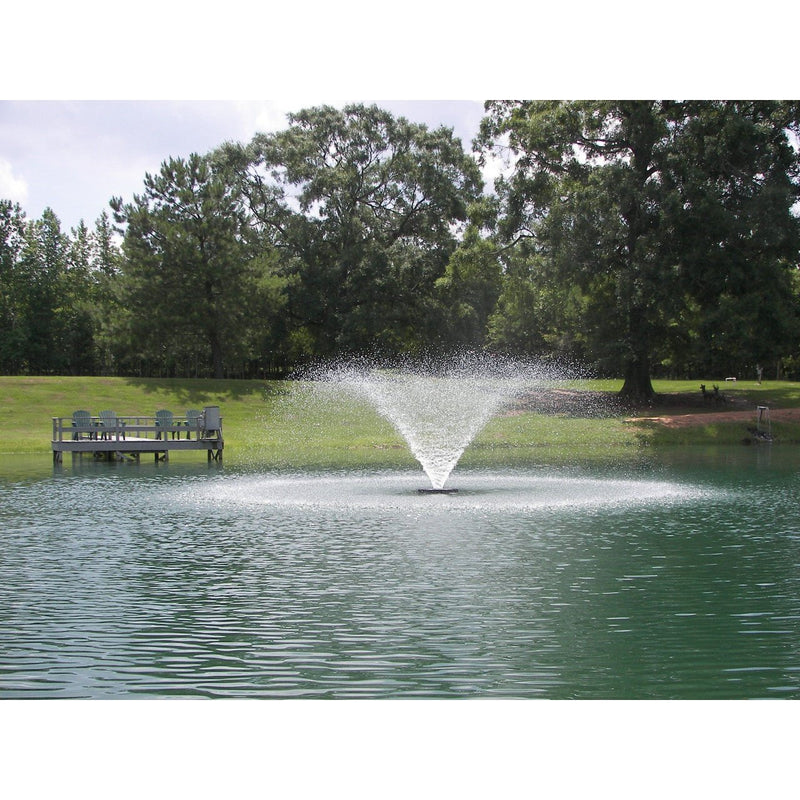
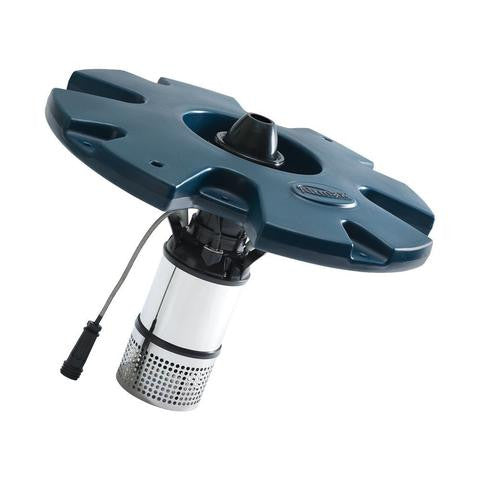
Furthermore, the effectiveness of surface-based aeration (fountains) is severely limited in the fall. Surface fountains only oxygenate the top 2 to 4 feet of the water column. They provide almost zero benefit for the deoxygenated hypolimnion. Relying on a fountain to prevent a fall turnover is a common tactical error that provides aesthetic value while ignoring the underlying mechanical risk.
Comparison: Surface Fountains vs. Bottom-Diffused Systems
Selecting the correct mechanical approach requires an objective comparison of efficiency metrics. The following table outlines the performance differences between the two primary aeration types during the fall transition.
| Feature | Surface Fountain | Bottom-Diffused System |
|---|---|---|
| Primary Function | Aesthetics / Surface Agitation | Destratification / Deep Oxygenation |
| Depth Efficiency | Poor (>6 feet ineffective) | Excellent (up to 40+ feet) |
| Oxygen Transfer Rate | Medium at surface | High throughout water column |
| Operating Cost | Higher (High HP required) | Lower (Energy-efficient compressors) |
| Winter Utility | Low (Must be removed) | High (Prevents ice-over) |
Bottom-diffused systems are the clear choice for fall management. They address the "Stagnant Layer vs The Active Turnover" dynamic by ensuring that no part of the water column remains isolated from oxygen.
Operational Best Practices for Transitioning Seasons
The transition from summer to fall requires a shift in system monitoring. You should increase the frequency of dissolved oxygen testing, ideally taking measurements at dawn when DO levels are at their natural daily low. If levels drop below 5 ppm, it is an indication that the biological load is outpacing the system's current capacity.
Another best practice is the cleaning of diffuser membranes. Over the summer, bio-film and mineral deposits can clog the fine pores of the diffuser, increasing backpressure on the compressor. Higher backpressure leads to heat buildup and premature diaphragm failure. Pulling the diffusers in early fall for a quick acid dip or scrub ensures the system is running at peak CFM during the critical turnover window.
If you are installing a system for the first time in a stratified pond, follow the "1-2-3 Rule." Run the system for 1 hour the first day, 2 hours the second, and 4 hours the third, doubling the time daily until 24-hour operation is reached. This graduated approach allows the deoxygenated water to be processed by the surface atmosphere without overwhelming the resident fish population.
Advanced Load Calculations and Efficiency Metrics
Serious practitioners should evaluate their systems based on the Oxygen Transfer Efficiency (OTE). OTE is the percentage of oxygen from the air bubbles that actually dissolves into the water. In cold water, OTE increases because oxygen is more soluble at lower temperatures. This means that your aeration system actually becomes more efficient as the season progresses, provided the mechanical components are maintained.
When calculating the load, consider the "Decay Constant" of the organic material entering the pond. Soft tissues like algae decay rapidly, consuming oxygen in a spike. Fibrous materials like oak leaves decay slowly, creating a sustained "oxygen drag" over several months. If your pond has a high influx of slow-decaying material, you must plan for sustained aeration well into the winter months.
Compressor efficiency is also a factor. Linear diaphragm pumps are highly efficient for shallow applications (under 8 feet) but lose flow rapidly as pressure increases. For deeper ponds, a rocking piston compressor is necessary to maintain the required CFM. Monitoring the heat output of the compressor cabinet can give you an early warning of mechanical strain before a system failure occurs.
Scenario Analysis: Impact of Rapid Temperature Drops
Consider a 1-acre pond with a maximum depth of 12 feet. During a standard summer, the bottom 6 feet may become completely anoxic (0 ppm DO). If a sudden cold front drops surface temperatures by 15 degrees in 24 hours, the surface water will sink rapidly. This creates a vertical mixing event that averages the oxygen across the entire 12-foot column.
Without aeration, the math is grim: 6 feet of 8 ppm water mixed with 6 feet of 0 ppm water results in a 4 ppm average. However, the presence of H2S and methane further consumes oxygen during the mixing process, often dragging that average down to 1.5 or 2 ppm. This is the mechanism behind the classic "fall fish kill."
With a diffused aeration system running, the same pond would have been maintained at a consistent 6-7 ppm throughout the summer. When the cold front hits, the water is already homogenized. There is no "dead zone" to mix in, and the fish experience zero respiratory stress. The cost of running the compressor is an insurance premium against the total loss of the pond's biological assets.
Final Thoughts
Fall pond aeration is a technical requirement, not an optional upgrade. The physical realities of water density and the biological demands of organic decomposition create a high-stakes environment where mechanical failure leads directly to ecosystem collapse. By prioritizing deep-water diffusion and maintaining 24/7 operation, you eliminate the risks associated with thermal turnover.
A well-designed system, sized appropriately for depth and organic load, ensures that your pond transitions into winter in a state of aerobic health. This proactive management reduces the spring cleanup load and protects the investment you have made in your aquatic population. Consider evaluating your current compressor's CFM output and diffuser condition before the first major cold front arrives.
Applying these engineering principles transforms pond management from a reactive struggle into a controlled, predictable process. Experiment with diffuser placement and monitor your DO levels to find the optimal configuration for your specific site conditions. Deep technical understanding is the most effective tool for ensuring long-term pond stability.