

Should You Keep Your Pond Aerator Running During Fall Turnover?
Don't let the 'Fall Turnover' turn your pond into a swamp. When a pond 'turns over' in the fall, it can be a disaster for fish. Learn why keeping your aerator running transforms a chaotic event into a healthy transition.
Understanding the transition from summer stratification to winter dormancy is critical for maintaining a stable aquatic environment. In many ponds, particularly those exceeding six feet in depth, the water column undergoes a physical separation during the summer months known as thermal stratification. This process creates distinct layers that do not mix, leading to significant chemical imbalances between the surface and the bottom. When the ambient temperature drops in autumn, this structure becomes unstable, leading to a rapid mixing event that can be lethal to fish if not managed correctly.
The transition between these states—often called "The Toxic Upheaval"—occurs when anoxic bottom water suddenly rises to the surface. Without mechanical intervention, this can deplete dissolved oxygen levels instantly. However, by maintaining a "Controlled Mix" through continuous aeration, you ensure that these layers never become dangerously isolated in the first place. This article provides a technical deep-dive into the mechanics of pond turnover and the precise aeration strategies required to protect your ecosystem.
Should You Keep Your Pond Aerator Running During Fall Turnover?
The short answer is yes: keeping your pond aerator running is the most effective way to manage the transition. Fall turnover is a natural limnological process driven by the unique density properties of water. During the summer, the sun warms the surface layer (epilimnion), making it less dense. It floats on top of the much colder, denser bottom layer (hypolimnion). These layers are separated by a transition zone called the thermocline. In a stratified pond, the bottom layer receives no sunlight for photosynthesis and has no contact with the atmosphere, eventually becoming anoxic (devoid of oxygen).
As autumn approaches and air temperatures drop, the surface water cools. Freshwater reaches its maximum density at approximately 39.2°F (4°C). When the surface water cools and approaches this temperature, it becomes heavier than the water beneath it and begins to sink. This downward movement, often accelerated by wind or heavy autumn rains, forces the stagnant, deoxygenated bottom water to the surface. This is "turnover." If this happens all at once, the result is a massive surge of hydrogen sulfide and methane into the upper water column, often causing a total fish kill within hours.
Maintaining your aeration system throughout the fall prevents this sudden inversion. By continuously moving water from the bottom to the surface, an aerator breaks the thermocline and keeps the entire water column oxygenated. Instead of a single, catastrophic mixing event, you create a state of constant, low-impact circulation. This ensures that the biological oxygen demand (BOD) is met even as organic matter—like falling leaves—increases the workload on your pond's aerobic bacteria.
How Fall Turnover Works: The Physics of Density and Dissolved Oxygen
To optimize your aeration system, you must understand the mechanical forces at play. Thermal stratification is not just a temperature difference; it is a physical barrier. The density difference between 80°F surface water and 55°F bottom water is sufficient to prevent wind from mixing the pond. During this period, the hypolimnion becomes a "dead zone" where anaerobic bacteria take over the decomposition of muck and organic debris. These bacteria produce toxic byproducts, including ammonia and hydrogen sulfide, which remain trapped under the thermocline.
When the surface cools to the point where it matches the temperature of the bottom layer, the physical barrier disappears. At this stage, even a light breeze can trigger a full turnover. The immediate impacts of an unmanaged turnover include:
- Sudden Oxygen Depletion: The anoxic bottom water mixes with the oxygen-rich surface water, often pulling the total dissolved oxygen (DO) level below 3.0 mg/L, the minimum threshold for many fish species.
- Gas Supersaturation: Toxic gases that have accumulated all summer are suddenly released into the upper water column.
- Nutrient Resuspension: Phosphorus and nitrogen from the bottom sediment are stirred up, which can lead to late-season algae blooms or "pea soup" water conditions.
Mechanical aeration works by introducing compressed air at the pond's deepest point. As the bubbles rise, they create an "airlift" effect, physically pulling the cold bottom water to the surface. This process is known as destratification. By starting or maintaining this process before the temperature drops, you eliminate the thermocline entirely, ensuring a uniform temperature and chemical profile from top to bottom.
Benefits of Continuous Aeration During Seasonal Transitions
The primary advantage of running an aerator through the fall is the prevention of fish kills, but the benefits extend to the overall efficiency of the pond's biological filtration. A well-oxygenated pond is a more efficient pond. Here are the measurable benefits of continuous aeration:
1. Accelerated Organic Decomposition
Autumn brings a heavy "litter fall" of leaves and organic debris. In a stagnant pond, this material sinks to the bottom and contributes to "muck" buildup. Aerobic bacteria, which are 20 to 30 times more efficient at breaking down organic matter than anaerobic bacteria, require dissolved oxygen to function. By keeping the pond bottom oxygenated, you ensure that fall debris is processed quickly, reducing the nutrient load that would otherwise fuel algae in the spring.
2. Uniform Water Chemistry
Continuous circulation prevents the buildup of ammonia and hydrogen sulfide. Instead of these gases reaching toxic concentrations in the hypolimnion, they are constantly brought to the surface and "off-gassed" into the atmosphere. This creates a safer, more stable environment for your fish, even during sudden weather changes.
3. Enhanced Fish Habitat
In stratified ponds, fish are restricted to the upper few feet of water because the bottom is deoxygenated. Aeration expands the "habitable zone" to the entire volume of the pond. This reduces crowding stress and allows fish to access cooler, deeper water without suffocating.
Common Challenges and Mechanical Pitfalls
While aeration is vital, there are technical mistakes that can actually trigger the very disaster you are trying to avoid. One of the most frequent errors is the "Sudden Start-Up." If you have a deep pond that has been stratified all summer and you suddenly turn on a powerful bottom-diffused aerator in late August or September, you will force an immediate, artificial turnover. The rapid mixing of toxic bottom water can kill your fish within minutes.
To avoid this, systems must be started gradually. Start by running the aerator for only 30 minutes on the first day, doubling the run-time each day until the system is running 24/7. This allows the water column to mix slowly, giving the gases time to vent and the oxygen levels time to stabilize. If your system has been running all summer, simply leave it on to maintain the "Controlled Mix."
Another challenge is compressor maintenance. As temperatures drop, condensation can form in the airline. In colder climates, this water can freeze, creating a blockage that back-pressures the compressor and causes mechanical failure. Installing a "moisture trap" or ensuring the airline is buried below the frost line is a technical necessity for late-fall and winter operation.
Limitations and When Aeration May Not Be Ideal
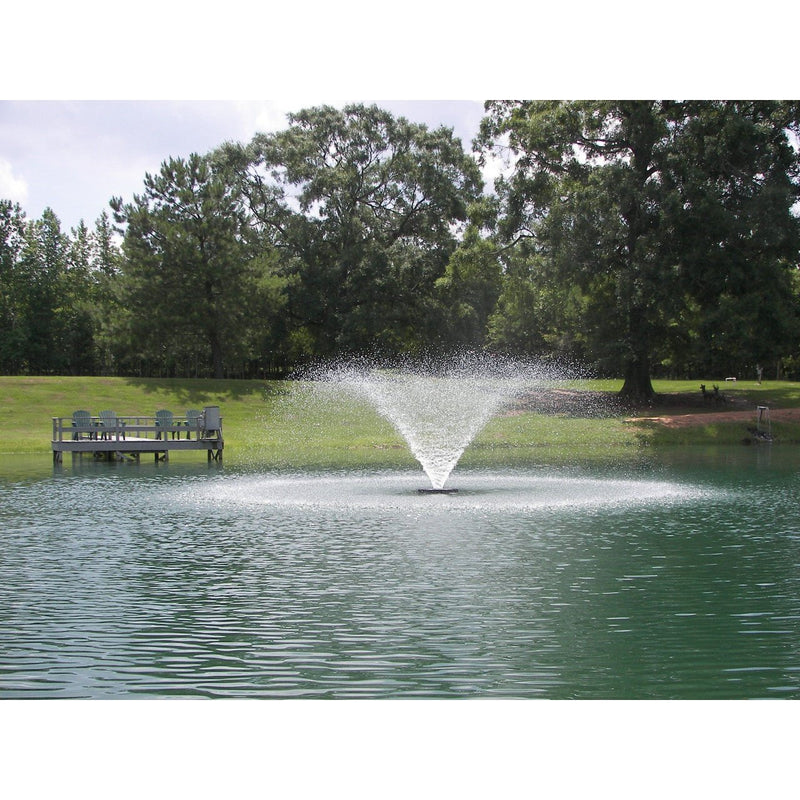
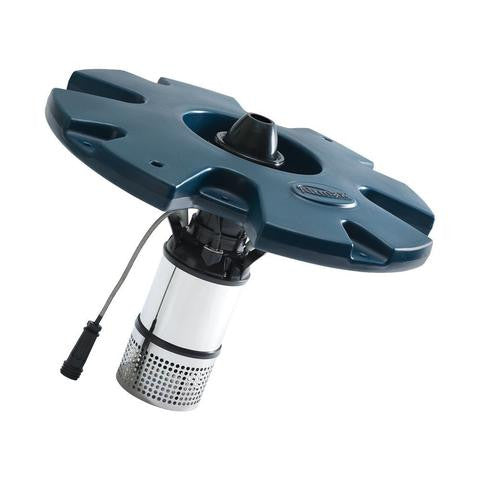
There are specific scenarios where standard bottom aeration might need adjustment. In very small, shallow ponds (less than 4 feet deep), thermal stratification is rarely a significant issue because wind action is usually sufficient to mix the water. In these cases, a simple surface fountain may be enough for gas exchange without the need for a complex diffused system.
Environmental constraints also play a role. If your pond is used for ice skating in the winter, running a bottom aerator can be dangerous. The rising air bubbles create a "hole" in the ice and significantly thin the surrounding ice surface, making it unstable for foot traffic. Furthermore, in extremely cold climates, over-aerating can actually super-cool the water. While 39°F water is most dense and sinks to the bottom (providing a warm refuge for fish), a high-powered aerator can mix 32°F surface water all the way to the bottom, potentially stressing or killing fish through thermal shock.
Comparison: Diffused Aeration vs. Surface Aeration
Choosing the right mechanical system depends on the depth and volume of your pond. The following table compares the two primary methods of aeration for fall turnover management.
| Feature | Bottom-Diffused Aeration | Surface Fountains/Aerators |
|---|---|---|
| Effective Depth | Up to 40+ feet | Top 2 to 4 feet only |
| Destratification | Highly efficient; removes thermocline | Minimal; does not reach bottom |
| Electrical Efficiency | Higher (less HP per acre-foot) | Lower (high energy for spray patterns) |
| Winter Usage | Excellent for keeping ice open | Prone to freezing and damage |
Practical Tips for Fall Aeration Success
To maximize the efficiency of your system during the autumn transition, follow these best practices:
- Monitor Dissolved Oxygen (DO): If possible, use a DO meter. Levels should stay above 5.0 mg/L for optimal fish health. If levels drop below 3.0 mg/L, increase aeration immediately.
- Clear Surface Debris: Use a pond skimmer or rake to remove fallen leaves. Even with aeration, an excessive organic load can overwhelm the system's ability to provide oxygen.
- Check Compressor Filters: Fall can be dusty or full of pollen. Check and clean the intake filters on your compressor every 2–4 weeks to prevent overheating.
- Relocate Diffusers for Winter: If you plan to run the system through winter in a freezing climate, move your diffusers to a shallower area (about half the maximum depth). This maintains an open hole for gas exchange while preserving a pocket of warmer water at the deepest point for the fish.
Advanced Considerations: Sizing and Pressure Metrics
For the serious practitioner, aeration is a matter of fluid dynamics. To ensure your system can handle the turnover load, you must calculate the required Cubic Feet per Minute (CFM) and the Pounds per Square Inch (PSI) your compressor must overcome. The standard formula for pressure is 0.433 PSI per foot of depth, plus friction loss from the airline. If your diffuser is at 10 feet, your compressor must produce at least 4.33 PSI just to push air out of the membrane.
Flow rate is equally important. For a standard farm pond, you should aim for at least one full water turnover per 24 hours. If your pond is 1 acre-foot (325,851 gallons), your aeration system must move that entire volume to the surface daily. High-efficiency rocking piston compressors are typically rated for deeper applications (8+ feet), whereas linear diaphragm pumps are optimized for quiet, low-pressure operation in shallow ponds.
Example Scenario: Managing a 1-Acre Farm Pond
Consider a 1-acre farm pond with a maximum depth of 12 feet. By August, this pond has likely developed a thermocline at 5 feet. The 7 feet of water beneath that are anoxic and likely contain high levels of ammonia. The total volume is roughly 2.5 million gallons.
In this scenario, a 1/2 HP rocking piston compressor delivering 4.5 CFM through two weighted diffusers would be an ideal setup. If the owner keeps this system running through the fall, the constant circulation ensures the 12-foot water column stays at a uniform 6.0 mg/L of dissolved oxygen. When a cold front hits in October, the surface water cools, but since the pond is already mixed, there is no "Toxic Upheaval." The fish remain active, and the increased oxygen allows the pond to process the autumn leaf fall without creating a "muck" problem for the following spring.
Final Thoughts
Maintaining a pond aerator during the fall is not just a matter of convenience; it is a critical safeguard for your aquatic ecosystem. By understanding the physics of thermal stratification and the mechanical requirements of destratification, you can prevent the catastrophic "Toxic Upheaval" that characterizes unmanaged turnover events. A "Controlled Mix" ensures that your pond remains a stable, oxygen-rich environment regardless of external temperature fluctuations.
Success in pond management relies on proactive technical optimization rather than reactive crisis management. By monitoring your system's performance, maintaining your compressor, and ensuring your aeration is appropriately sized for your pond's depth, you transform a potentially lethal seasonal shift into a healthy transition. Whether you are managing a small koi pond or a large acreage lake, continuous aeration is the most reliable tool in your arsenal.